
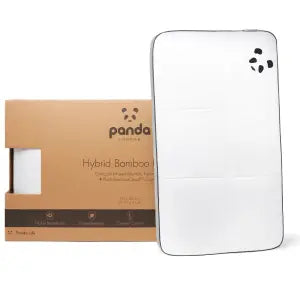
 Hybrid Bambuskissen
 Memory Foam Bambuskissen
 Memory Foam Bambuskissen für Kinder
 Baby Memory Foam Bambuskissen
 Panda Bettdecke Cloud
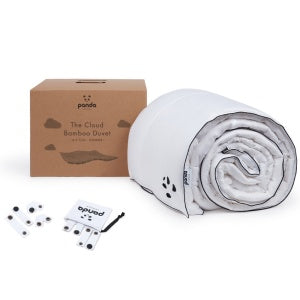 Sommerbettdecke aus Bambus
 Kinder Cloud Bettdecke
![[MattressTopper] Bamboo_Mattress_Topper_Package_Box-updated](http://pandalondon.com/cdn/shop/files/Bamboo_Mattress_Topper_Package_Box-updated.webp?crop=region&crop_height=1315&crop_left=92&crop_top=0&crop_width=1315&v=1782726992&width=1500)
![[MattressTopper] Woman laying on a Panda Bamboo Mattress Topper](http://pandalondon.com/cdn/shop/files/Bamboo_Mattress_Topper_Product_Image_01.webp?v=1782726484&width=1080)
![[MattressTopper] Guy laying on a Panda Bamboo Mattress Topper](http://pandalondon.com/cdn/shop/files/Bamboo_Mattress_Topper_Product_Image_02.webp?v=1782726484&width=1080)
![[MattressTopper] Woman setting up a Panda Bamboo Mattress Topper](http://pandalondon.com/cdn/shop/files/Bamboo_Mattress_Topper_Product_Image_03.webp?v=1782726484&width=1080)
![[MattressTopper] Panda London Memory Foam Bamboo Mattress Topper side](http://pandalondon.com/cdn/shop/files/Mattress_Topper_Isolated_-_resized.jpg?v=1773853354&width=800)
![[HybridMattressPro] Hybrid_Bamboo_Mattress_Pro_Product_Image_2026](http://pandalondon.com/cdn/shop/files/Hybrid_Bamboo_Mattress_Pro_Product_Image_2026.webp?v=1764944771&width=1000)
![[HybridMattressPro] A woman in white pajamas lies on her side on a mattress atop a gray upholstered bed frame in a softly lit bedroom. The mattress has a white top layer with a subtle geometric pattern and a black center band, with a small Panda Mattress logo patch visible on the side.](http://pandalondon.com/cdn/shop/files/Mattress_PRO-01.webp?v=1790672728&width=2049)
![[HybridMattressPro] Hybrid Bamboo Mattress Pro Cover Zip](http://pandalondon.com/cdn/shop/files/Hybrid_Bamboo_Mattress_Cover.jpg?v=1764944771&width=800)
![[HybridMattressPro] A woman in a cream-colored pajama set kneels beside a bed, holding down a mattress protector on a Panda Mattress to show its support and comfort.](http://pandalondon.com/cdn/shop/files/Mattress_PRO-03.webp?v=1790672728&width=2049)
![[HybridMattressPro] A woman in light pink pajamas sits on a Panda Bamboo mattress](http://pandalondon.com/cdn/shop/files/Mattress_PRO-04.webp?v=1790672728&width=2049)
![[CloudDuvet] Panda London The Cloud Bamboo Duvet Packaging](http://pandalondon.com/cdn/shop/products/Panda-London-The-Cloud-Bamboo-Duvet-Panda-Life-scaled_00a651ad-4ca3-4105-b520-12a94c1a4f71.jpg?v=1713363286&width=1920)
![[CloudDuvet] Panda London The Cloud Bamboo Duvet Rolled](http://pandalondon.com/cdn/shop/products/Duvet-Listing-Images03.jpg?v=1764079307&width=1000)
![[CloudDuvet] Guy making the bed with Panda Cloud Duvet 10.5 TOG](http://pandalondon.com/cdn/shop/files/Duvet_10.5_Tog-02.webp?v=1790607319&width=2049)
![[CloudDuvet] Guy reading a book on the bed covered with Panda Cloud Duvet 10.5 TOG](http://pandalondon.com/cdn/shop/files/Duvet_10.5_Tog-03.webp?v=1790607319&width=2049)
![[CloudDuvet] Guy making his bed with Panda Cloud Duvet 10.5 TOG](http://pandalondon.com/cdn/shop/files/Duvet_10.5_Tog-04.webp?v=1790607319&width=2049)
![[BBWhite] 100_Bamboo_Bedding_Set_Pure_White](http://pandalondon.com/cdn/shop/files/100_Bamboo_Bedding_Set_Pure_White_01.webp?v=1781082973&width=1080)
![[BBWhite] White 100% Bamboo Bedding Texture](http://pandalondon.com/cdn/shop/files/100_Bamboo_Bedding_-_Pure_White_-_Close_Up_02.webp?v=1773611287&width=1000)
![[BBWhite] 100_Bamboo_Bedding_Set_Pure_White couple laughing](http://pandalondon.com/cdn/shop/files/100_Bamboo_Bedding_Set_Pure_White_02.webp?v=1781082974&width=1080)
![[BBWhite] White 100% Bamboo Bedding Woman Duvet cover buttons](http://pandalondon.com/cdn/shop/files/hand_and_buttons_1.webp?v=1773611287&width=1000)
![[BBWhite] 100_Bamboo_Bedding_Set_Pure_White woman sleeping](http://pandalondon.com/cdn/shop/files/100_Bamboo_Bedding_Set_Pure_White_03.webp?v=1781082973&width=1080)
![[BBUrbanGrey] 100_Bamboo_Bedding_Set_Urban_Grey_guy laying on the bedding](http://pandalondon.com/cdn/shop/files/100_Bamboo_Bedding_Set_Urban_Grey_01.webp?v=1781083567&width=1080)
![[BBUrbanGrey] Cloud Duvet Urban Grey 100% Bamboo Bedding Set](http://pandalondon.com/cdn/shop/files/Cloud_Duvet_-_Grey_-_Close_up_2.webp?v=1773611287&width=1000)
![[BBUrbanGrey] 100_Bamboo_Bedding_Set_Urban_Grey_woman opening the bedding bag](http://pandalondon.com/cdn/shop/files/100_Bamboo_Bedding_Set_Urban_Grey_02.webp?v=1781083568&width=1080)
![[BBUrbanGrey] 100_Bamboo_Bedding_Set_Urban_Grey_woman making the bed](http://pandalondon.com/cdn/shop/files/100_Bamboo_Bedding_Set_Urban_Grey_04.webp?v=1781083567&width=1080)
![[BBUrbanGrey] 100_Bamboo_Bedding_Set_Urban_Grey_couple reading magazines](http://pandalondon.com/cdn/shop/files/100_Bamboo_Bedding_Set_Urban_Grey_03.webp?v=1781083567&width=1080)
![[BBNavyBlue] Deep Sea Navy Blue 100% Bamboo Bedding Set couple reading a magazine](http://pandalondon.com/cdn/shop/files/100_Bamboo_Bedding_Set_Deep_Sea_Navy_01.webp?v=1781083134&width=1080)
![[BBNavyBlue] Deep Sea Navy Blue 100% Bamboo Bedding Texture](http://pandalondon.com/cdn/shop/files/Cloud_Duvet_-_Navy_-_Close_up_2.webp?v=1773611287&width=1000)
![[BBNavyBlue] Deep Sea Navy Blue 100% Bamboo Bedding Set couple reading a magazine and smiling](http://pandalondon.com/cdn/shop/files/100_Bamboo_Bedding_Set_Deep_Sea_Navy_02.webp?v=1781083135&width=1080)
![[BBNavyBlue] Deep Sea Navy Blue 100% Bamboo Bedding Set woman resting](http://pandalondon.com/cdn/shop/files/100_Bamboo_Bedding_Set_Deep_Sea_Navy_04.png?v=1781083138&width=1080)
![[BBNavyBlue] Deep Sea Navy Blue 100% Bamboo Bedding Set guy laying and smiling](http://pandalondon.com/cdn/shop/files/100_Bamboo_Bedding_Set_Deep_Sea_Navy_03.webp?v=1781083134&width=1080)
![[BBPink] Vintage Pink Blue 100% Bamboo Bedding woman making the bed](http://pandalondon.com/cdn/shop/files/100_Bamboo_Bedding_Set_Pink_01.webp?v=1781083678&width=1080)
![[BBPink] Vintage Pink Texture 100% Bamboo Bedding](http://pandalondon.com/cdn/shop/files/Cloud_Duvet_-_Pink_-_Close_up_2.webp?v=1773611287&width=1000)
![[BBPink] Vintage Pink Blue 100% Bamboo Bedding woman hugging the pillow with vintage pink pillow case](http://pandalondon.com/cdn/shop/files/100_Bamboo_Bedding_Set_Pink_02.webp?v=1781083678&width=1080)
![[BBPink] Vintage Pink Blue 100% Bamboo Bedding woman hiding under duvet with pink duvet cover](http://pandalondon.com/cdn/shop/files/100_Bamboo_Bedding_Set_Pink_03.webp?v=1781083679&width=1080)
![[BBPink] Vintage Pink Blue 100% Bamboo Bedding woman laying and smiling on the panda bedding set](http://pandalondon.com/cdn/shop/files/100_Bamboo_Bedding_Set_Pink_04.webp?v=1781083679&width=1080)
![[BBGrey] 100_Bamboo_Bedding_Set_Quiet_Grey_ woman holding the bedding](http://pandalondon.com/cdn/shop/files/100_Bamboo_Bedding_Set_Quiet_Grey_01.webp?v=1781083287&width=1080)
![[BBGrey] Light Grey 100% Bamboo Bedding texture](http://pandalondon.com/cdn/shop/files/Texture17.webp?v=1773611287&width=1000)
![[BBGrey] 100_Bamboo_Bedding_Set_Quiet_Grey_0guy laying and smiling](http://pandalondon.com/cdn/shop/files/100_Bamboo_Bedding_Set_Quiet_Grey_02.webp?v=1781083287&width=1080)
![[BBGrey] 100_Bamboo_Bedding_Set_Quiet_Grey_0guy reading a magazine on the bed](http://pandalondon.com/cdn/shop/files/100_Bamboo_Bedding_Set_Quiet_Grey_03.webp?v=1781083287&width=1080)
![[BBGrey] 100_Bamboo_Bedding_Set_Quiet_Grey_0woman making the bed](http://pandalondon.com/cdn/shop/files/100_Bamboo_Bedding_Set_Quiet_Grey_04.webp?v=1781083287&width=1080)

Winter brings chilly nights, darker days, and a longing for comfort. But while the season has its magic, it can also disrupt our sleep routines. From struggling with the cold to dealing with shorter daylight hours, many of us find winter sleep trickier to manage. The good news? With a mix of cosy bedroom upgrades and simple lifestyle changes, you can enjoy restful nights all season long.
Why Winter Changes the Way We Sleep
Cold weather and darker mornings affect more than just your mood. Shorter days can throw off your circadian rhythm, while cold air and dry heating make it harder to stay comfortable. On top of that, festive stress and late-night socialising often disturb routines. All these changes make prioritising winter sleep habits even more important.
Create a Cosy Winter Sleep Environment
Your bedroom should feel like a warm retreat. Here are a few ways to make it winter-ready:
- Decor touches: Think snowflake accents, evergreen branches, and fairy lights.
- Textures: Add faux fur throws, velvet cushions, or a chunky knit blanket.
- DIY projects: Handmade pillows, crochet blankets, or custom artwork add a personal touch.
These details not only boost comfort but also set the tone for better sleep.

Choose the Best Winter Bedding for Comfort
The right bedding can make all the difference:
- Switch to a higher tog duvet for warmth.
- Layer up with throws and decorative pillows.
-
Bamboo bedding is a smart choice—it’s thermoregulating, hypoallergenic, and silky soft, keeping you warm without overheating.
Set the Mood With Lighting & Ambience
Lighting shapes your sleep quality more than you think:
- Swap harsh, cool bulbs for warm-toned lights.
- Use fairy lights or candles to create a soothing glow.
- Install dimmer switches to control brightness as bedtime approaches.
This keeps your circadian rhythm balanced and helps you wind down naturally.
Keep Your Sleep Space Warm and Snug
Nothing ruins sleep like shivering under the covers. Try these:
- Add a thick rug to warm cold floors.
- Invest in thermal curtains to keep drafts out.
- Maintain your bedroom at 15–20°C for the best sleep.
- Consider safe use of an electric blanket or space heater for extra cosiness.
Build a Healthy Winter Sleep Routine
Consistency is key:
- Go to bed and wake up at the same time daily.
- Wind down with a warm bath, herbal tea, or light reading.
- Avoid phones and laptops at least an hour before bed to reduce blue-light exposure.
These habits train your body to relax and signal when it’s time to sleep.
Support Sleep Through Diet & Lifestyle
Your diet plays a role too:
- Eat foods rich in tryptophan (turkey, nuts, seeds) to boost melatonin.
- Limit caffeine after mid-afternoon and cut back on alcohol late at night.
- Stay hydrated but ease up on drinks before bed to prevent waking in the night.
Manage Winter Sleep Challenges
- Dry air: Use a humidifier to ease congestion and prevent waking up parched.
- Allergies: Keep your room dust-free and try hypoallergenic bamboo bedding.
-
Seasonal Affective Disorder (SAD): Combat low moods and energy with phototherapy lamps and more daylight exposure.
Stay Active, Stress-Free and Tech-Savvy
- Exercise during daylight hours—yoga, indoor workouts, or winter walks all help regulate sleep.
- Manage stress with meditation, journaling, or deep breathing.
- Limit screen use, but use smart sleep tech like white noise machines or light-controlling gadgets if they help.
Final Winter Sleep Tips for Sweet Dreams
Winter doesn’t have to disrupt your sleep—it can enhance it. By combining cosy decor, supportive bedding, and simple routines, you’ll create a sleep environment that’s warm, peaceful, and restorative. Make your bedroom your haven this season, and enjoy brighter mornings and calmer nights.
FAQ
1. How can I make my bedroom cosy for winter?
You can make your bedroom cosy for winter with warm bedding, layered throws, plush rugs, and soft lighting. Adding seasonal accents like candles or fairy lights also creates a snug, inviting space.
2. What bedding is best for winter sleep?
Winter bedding should keep you warm but still breathable. High-tog duvets, brushed cotton, fleece, or thermoregulating bamboo bedding are ideal options for staying cosy without overheating.
3. Why is it harder to sleep in winter?
Shorter daylight hours, colder temperatures, and holiday stress can disrupt sleep in winter. Reduced exposure to natural light may also affect your circadian rhythm, making it harder to fall asleep.
4. How can I improve my sleep routine in winter?
Stick to a consistent bedtime, limit screen time, and wind down with relaxing rituals like reading or a warm bath. Using soft lighting and keeping your room at 15–20°C can also improve your sleep quality during winter.
5. What foods help you sleep better in winter?
Foods rich in tryptophan, such as turkey, nuts, and seeds, support melatonin production for better sleep. Warm, soothing drinks like herbal tea or hot milk before bed can also help you relax.