
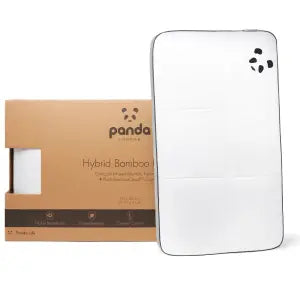
 Hybrid Bamboo Pillow
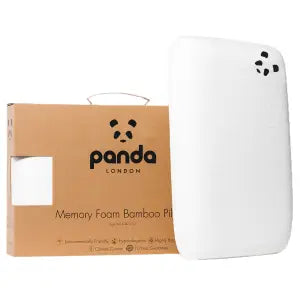 Memory Foam Bamboo Pillow
 Kids Memory Foam Bamboo Pillow
 Baby Memory Foam Bamboo Pillow
 Panda Cloud Duvet
 Bamboo Summer Duvet
 Kids Cloud Duvet
![[MattressTopper] Bamboo_Mattress_Topper_Package_Box-updated](http://pandalondon.com/cdn/shop/files/Bamboo_Mattress_Topper_Package_Box-updated.webp?crop=region&crop_height=1315&crop_left=92&crop_top=0&crop_width=1315&v=1782726992&width=1500)
![[MattressTopper] Woman laying on a Panda Bamboo Mattress Topper](http://pandalondon.com/cdn/shop/files/Bamboo_Mattress_Topper_Product_Image_01.webp?v=1782726484&width=1080)
![[MattressTopper] Guy laying on a Panda Bamboo Mattress Topper](http://pandalondon.com/cdn/shop/files/Bamboo_Mattress_Topper_Product_Image_02.webp?v=1782726484&width=1080)
![[MattressTopper] Woman setting up a Panda Bamboo Mattress Topper](http://pandalondon.com/cdn/shop/files/Bamboo_Mattress_Topper_Product_Image_03.webp?v=1782726484&width=1080)
![[MattressTopper] Panda London Memory Foam Bamboo Mattress Topper side](http://pandalondon.com/cdn/shop/files/Mattress_Topper_Isolated_-_resized.jpg?v=1773853354&width=800)
![[HybridMattressPro] Hybrid_Bamboo_Mattress_Pro_Product_Image_2026](http://pandalondon.com/cdn/shop/files/Hybrid_Bamboo_Mattress_Pro_Product_Image_2026.webp?v=1764944771&width=1000)
![[HybridMattressPro] A woman in white pajamas lies on her side on a mattress atop a gray upholstered bed frame in a softly lit bedroom. The mattress has a white top layer with a subtle geometric pattern and a black center band, with a small Panda Mattress logo patch visible on the side.](http://pandalondon.com/cdn/shop/files/Mattress_PRO-01.webp?v=1790672728&width=2049)
![[HybridMattressPro] Hybrid Bamboo Mattress Pro Cover Zip](http://pandalondon.com/cdn/shop/files/Hybrid_Bamboo_Mattress_Cover.jpg?v=1764944771&width=800)
![[HybridMattressPro] A woman in a cream-colored pajama set kneels beside a bed, holding down a mattress protector on a Panda Mattress to show its support and comfort.](http://pandalondon.com/cdn/shop/files/Mattress_PRO-03.webp?v=1790672728&width=2049)
![[HybridMattressPro] A woman in light pink pajamas sits on a Panda Bamboo mattress](http://pandalondon.com/cdn/shop/files/Mattress_PRO-04.webp?v=1790672728&width=2049)
![[CloudDuvet] Panda London The Cloud Bamboo Duvet Packaging](http://pandalondon.com/cdn/shop/products/Panda-London-The-Cloud-Bamboo-Duvet-Panda-Life-scaled_00a651ad-4ca3-4105-b520-12a94c1a4f71.jpg?v=1713363286&width=1920)
![[CloudDuvet] Panda London The Cloud Bamboo Duvet Rolled](http://pandalondon.com/cdn/shop/products/Duvet-Listing-Images03.jpg?v=1764079307&width=1000)
![[CloudDuvet] Guy making the bed with Panda Cloud Duvet 10.5 TOG](http://pandalondon.com/cdn/shop/files/Duvet_10.5_Tog-02.webp?v=1790607319&width=2049)
![[CloudDuvet] Guy reading a book on the bed covered with Panda Cloud Duvet 10.5 TOG](http://pandalondon.com/cdn/shop/files/Duvet_10.5_Tog-03.webp?v=1790607319&width=2049)
![[CloudDuvet] Guy making his bed with Panda Cloud Duvet 10.5 TOG](http://pandalondon.com/cdn/shop/files/Duvet_10.5_Tog-04.webp?v=1790607319&width=2049)
![[BBWhite] 100_Bamboo_Bedding_Set_Pure_White](http://pandalondon.com/cdn/shop/files/100_Bamboo_Bedding_Set_Pure_White_01.webp?v=1781082973&width=1080)
![[BBWhite] White 100% Bamboo Bedding Texture](http://pandalondon.com/cdn/shop/files/100_Bamboo_Bedding_-_Pure_White_-_Close_Up_02.webp?v=1773611287&width=1000)
![[BBWhite] 100_Bamboo_Bedding_Set_Pure_White couple laughing](http://pandalondon.com/cdn/shop/files/100_Bamboo_Bedding_Set_Pure_White_02.webp?v=1781082974&width=1080)
![[BBWhite] White 100% Bamboo Bedding Woman Duvet cover buttons](http://pandalondon.com/cdn/shop/files/hand_and_buttons_1.webp?v=1773611287&width=1000)
![[BBWhite] 100_Bamboo_Bedding_Set_Pure_White woman sleeping](http://pandalondon.com/cdn/shop/files/100_Bamboo_Bedding_Set_Pure_White_03.webp?v=1781082973&width=1080)
![[BBUrbanGrey] 100_Bamboo_Bedding_Set_Urban_Grey_guy laying on the bedding](http://pandalondon.com/cdn/shop/files/100_Bamboo_Bedding_Set_Urban_Grey_01.webp?v=1781083567&width=1080)
![[BBUrbanGrey] Cloud Duvet Urban Grey 100% Bamboo Bedding Set](http://pandalondon.com/cdn/shop/files/Cloud_Duvet_-_Grey_-_Close_up_2.webp?v=1773611287&width=1000)
![[BBUrbanGrey] 100_Bamboo_Bedding_Set_Urban_Grey_woman opening the bedding bag](http://pandalondon.com/cdn/shop/files/100_Bamboo_Bedding_Set_Urban_Grey_02.webp?v=1781083568&width=1080)
![[BBUrbanGrey] 100_Bamboo_Bedding_Set_Urban_Grey_woman making the bed](http://pandalondon.com/cdn/shop/files/100_Bamboo_Bedding_Set_Urban_Grey_04.webp?v=1781083567&width=1080)
![[BBUrbanGrey] 100_Bamboo_Bedding_Set_Urban_Grey_couple reading magazines](http://pandalondon.com/cdn/shop/files/100_Bamboo_Bedding_Set_Urban_Grey_03.webp?v=1781083567&width=1080)
![[BBNavyBlue] Deep Sea Navy Blue 100% Bamboo Bedding Set couple reading a magazine](http://pandalondon.com/cdn/shop/files/100_Bamboo_Bedding_Set_Deep_Sea_Navy_01.webp?v=1781083134&width=1080)
![[BBNavyBlue] Deep Sea Navy Blue 100% Bamboo Bedding Texture](http://pandalondon.com/cdn/shop/files/Cloud_Duvet_-_Navy_-_Close_up_2.webp?v=1773611287&width=1000)
![[BBNavyBlue] Deep Sea Navy Blue 100% Bamboo Bedding Set couple reading a magazine and smiling](http://pandalondon.com/cdn/shop/files/100_Bamboo_Bedding_Set_Deep_Sea_Navy_02.webp?v=1781083135&width=1080)
![[BBNavyBlue] Deep Sea Navy Blue 100% Bamboo Bedding Set woman resting](http://pandalondon.com/cdn/shop/files/100_Bamboo_Bedding_Set_Deep_Sea_Navy_04.png?v=1781083138&width=1080)
![[BBNavyBlue] Deep Sea Navy Blue 100% Bamboo Bedding Set guy laying and smiling](http://pandalondon.com/cdn/shop/files/100_Bamboo_Bedding_Set_Deep_Sea_Navy_03.webp?v=1781083134&width=1080)
![[BBPink] Vintage Pink Blue 100% Bamboo Bedding woman making the bed](http://pandalondon.com/cdn/shop/files/100_Bamboo_Bedding_Set_Pink_01.webp?v=1781083678&width=1080)
![[BBPink] Vintage Pink Texture 100% Bamboo Bedding](http://pandalondon.com/cdn/shop/files/Cloud_Duvet_-_Pink_-_Close_up_2.webp?v=1773611287&width=1000)
![[BBPink] Vintage Pink Blue 100% Bamboo Bedding woman hugging the pillow with vintage pink pillow case](http://pandalondon.com/cdn/shop/files/100_Bamboo_Bedding_Set_Pink_02.webp?v=1781083678&width=1080)
![[BBPink] Vintage Pink Blue 100% Bamboo Bedding woman hiding under duvet with pink duvet cover](http://pandalondon.com/cdn/shop/files/100_Bamboo_Bedding_Set_Pink_03.webp?v=1781083679&width=1080)
![[BBPink] Vintage Pink Blue 100% Bamboo Bedding woman laying and smiling on the panda bedding set](http://pandalondon.com/cdn/shop/files/100_Bamboo_Bedding_Set_Pink_04.webp?v=1781083679&width=1080)
![[BBGrey] 100_Bamboo_Bedding_Set_Quiet_Grey_ woman holding the bedding](http://pandalondon.com/cdn/shop/files/100_Bamboo_Bedding_Set_Quiet_Grey_01.webp?v=1781083287&width=1080)
![[BBGrey] Light Grey 100% Bamboo Bedding texture](http://pandalondon.com/cdn/shop/files/Texture17.webp?v=1773611287&width=1000)
![[BBGrey] 100_Bamboo_Bedding_Set_Quiet_Grey_0guy laying and smiling](http://pandalondon.com/cdn/shop/files/100_Bamboo_Bedding_Set_Quiet_Grey_02.webp?v=1781083287&width=1080)
![[BBGrey] 100_Bamboo_Bedding_Set_Quiet_Grey_0guy reading a magazine on the bed](http://pandalondon.com/cdn/shop/files/100_Bamboo_Bedding_Set_Quiet_Grey_03.webp?v=1781083287&width=1080)
![[BBGrey] 100_Bamboo_Bedding_Set_Quiet_Grey_0woman making the bed](http://pandalondon.com/cdn/shop/files/100_Bamboo_Bedding_Set_Quiet_Grey_04.webp?v=1781083287&width=1080)

Reviewed by Bethany Lawrence, Osteopath, Osteobeth
Quick Answer:
Choose your pillow based on how you sleep. Side sleepers usually need a firmer, higher-loft pillow, back sleepers suit a medium-loft pillow, and front sleepers are best with a low-loft option for gentler support.
A good night’s sleep is important for both good mental and physical health – choosing the right pillow for you is one of the best ways to improve that. If you don’t have the right support, you could end up with neck pain. If you’re reading this because you already have neck pain, you’re not alone. It’s estimated that half of the world’s population will experience a significant episode of neck pain in their lifetime. The wrong pillow is one of the most overlooked causes of morning neck and shoulder pain, but the easiest to fix. Below you’ll find a comprehensive pillow-buying guide to help you find the support you need.
What are the different pillow types?
There are several different types of pillows to choose from, each designed to cater to different sleeping preferences and needs. Common pillow types include memory foam, bamboo, and down pillows.
Memory foam pillows
Memory foam pillows are made from polyurethane foam, designed to contour to your head shape and position when pressure is applied. This means your head and neck are supported, and it also ensures your spine is aligned, resulting in a comfortable night’s sleep.
These pillows are generally best for people who sleep on their back, as this complements the alignment benefits. However, they are comfortable for most sleepers, no matter which way you lie!
Bamboo pillow
There are so many benefits to choosing a bamboo pillow; bamboo is moisture-wicking and highly breathable, meaning you’ll stay cool as you sleep and wake up fresh. Also containing memory foam, you’ll benefit from those incredible body-aligning properties too! Bamboo is super soft, meaning a very comfortable night’s sleep.
Bamboo is the perfect choice for those with allergies – naturally hypoallergenic and antibacterial, and it’s inhospitable to bed bugs and dust mites. You’ll know you’re getting a safe night’s sleep and protecting your skin in the process.
![[BBPureWhitePillowcases] Bamboo Bedding Two Pure White Pillowcases Couples Changing Pillows](https://cdn.shopify.com/s/files/1/0807/7331/6934/files/Pure_White_Pillowcase_Bamboo_Bedding_Pillowcases_Changing.webp?v=1721308653)
Why does the wrong pillow cause pain?
When choosing a new pillow, there are a few different things to consider. Picking the perfect pillows for the whole family is an important task!
Sleep position
The way you sleep plays a major role in what pillow will best support your neck and spine.
Pillow loft/height
Pillows come in low, medium, and high lofts. If it is too low or too high, it can cause misalignment with your head and neck, causing pressure over time, resulting in neck pain.
- Too thick → chin to chest → neck extensors strained
- Too flat → head drops → neck flexors strained
If you sleep for eight hours in these positions, you will end up with chronic tension. Approximately 40–70% of people will experience a significant episode of neck pain at some point in their lifetime, so it is best to invest in a more supportive pillow before you reach the point of pain.
Material and fill
Bamboo, memory foam, feather, and down all offer different benefits. Bamboo is breathable and hypoallergenic; memory foam provides contouring support.
Pillow cover and maintenance
Look for removable, washable covers. Bamboo covers get softer with every wash and stay antimicrobial.
Budget and extras
Bamboo pillows are long-lasting and often come with warranties or trial periods for peace of mind.
Pillow selections by sleeping position
If you don’t consider your sleeping position when shopping for a pillow, you may be heading for aches and pains, or even incorrect spinal alignment. A bamboo memory foam pillow could be considered head and shoulders above the rest, as it's a good choice for all sleeping positions. Still, we’ll advise on the optimum support depending on your preferred position.
Back sleepers
The best pillows for back sleepers are ones that have a medium loft and medium to firm support. It’s important that back sleepers have a pillow which relieves pressure from the neck and spine because they can develop pain in these areas. The recommended loft height for those who sleep on their back is between 7–10cm, and in terms of fill, hollowfibre and wool are among the best pillows for back sleepers, but we’d also advise a memory foam pillow, such as our Memory Foam Bamboo Pillow. As well as being highly breathable and hypoallergenic, it’s filled with 3rd generation orthopaedic memory foam and fresh bamboo, intuitively adapting to your back and alleviating aches.
Side sleepers
Most people choose to sleep on their side, and it's considered the most comfortable and healthy way to position yourself for sleep. The best pillows for side sleepers are those with a higher loft that provide support for your neck and shoulders while you sleep. When sleeping on your side, you’re at risk of pressure-point pain or alignment issues. A firm or medium-firm pillow at a loft height of 10-14 cm will give the support needed for the spine. Shoulder width varies from person to person, so if you have broader shoulders, you may find a loft of 12-14cm is better. Look for a pillow that relieves pressure points, such as our Hybrid Bamboo Pillow. Made with charcoal-infused memory foam, it adapts to your sleeping position.
Front sleepers
Some experts suggest that those who sleep on their front don’t need a pillow; however, a low-loft pillow will help improve comfort and support. Spinal alignment is more difficult in this position, which can cause neck or lower back pain. The best pillows are feather or down fill varieties, at a loft height of under 7cm or a flat, providing a cushioned buffer between yourself and the mattress. Our Hybrid Bamboo Pillow features a cloud-like, soft bamboo cover and our innovation, Active O2 Micro-pods™, which help circulate air within the memory foam.
Memory foam vs hybrid vs latex vs down for pain — comparison table
Our table below helps you to decide at a glance which pillow is the most suited to your needs and your budget.
|
Material |
Support for Pain |
Cooling |
Durability |
Price Range per pillow |
|
Bamboo memory foam |
Good contouring support for pressure points, especially shoulders, hips, and lower back. Best for people who need cushioning with moderate support. |
Better than traditional memory foam if paired with breathable bamboo covers, but still may retain some heat. |
Moderate to good; can soften over time depending on foam density. |
£9–£45 per pillow |
|
Hybrid |
Strong support for back, hip, and shoulder pain because it combines cushioning foam with supportive springs. Good for most sleeping positions. |
Good airflow from the coil layer, usually cooler than all-foam options. |
Good to very good; coils help maintain structure longer. |
£55–£109 |
|
Latex |
Responsive, supportive, and pressure-relieving. Often good for back pain because it prevents too much sinking. |
Very good, especially natural latex, which tends to sleep cooler than memory foam. |
Excellent; one of the longest-lasting materials. |
£40–£120+ |
|
Polyester |
Limited support for pain. Better for soft comfort than spinal alignment or pressure relief. May flatten quickly. |
Fair; usually breathable but not highly temperature-regulating. |
Low to moderate; tends to compress faster than foam, latex, or hybrid materials. |
£10–£70 |
|
Down |
Soft and plush but usually poor for structured pain support. Better for comfort layers than people needing firm alignment. |
Good; naturally breathable and lightweight. |
Moderate to good with proper care, but can lose loft and require fluffing. |
£45–£315 |
Pillow loft and firmness
Our orthopaedic expert, Bethany, believes a pillow's firmness is important to its supportiveness: "Pillow loft and firmness can be down to personal preference; however, it is important to balance softness with support so that you wake up pain-free and well-rested."
The term ‘pillow loft’ relates to how high your pillow is – or how thick. Pillows generally come in three lofts:
- Low loft – three inches thick or less.
- Mid loft – between three and five inches thick.
- High loft – five inches thick or more.
The great thing about memory foam and bamboo pillows is that they mould to you when pressure is applied so that you can find the right thickness for you.
It is also important to balance softness and support; while a super soft and squishy pillow might sound absolutely dreamy, it’s vital that the pillow you choose offers the right amount of support for you. If you find yourself waking up with a sore neck or aching shoulders, it might be that yours isn’t offering you the support you need.

Loft height guide
Our loft height guide below helps you to find which pillow height is suitable for your sleeping position. You can also find out the best pillow height by asking someone to check if your head is level with your spine when you’re lying on your bed. They could also take a picture for your reference.
|
Sleeping Position |
Recommended Loft |
Why |
|
Back sleeper |
7–10cm |
Supports the natural cervical curve without pushing the head too far forward. |
|
Side sleeper |
10–14cm |
Fills the gap between the shoulder and ear, helping to keep the spine aligned. The ideal height will vary depending on shoulder width. |
|
Stomach sleeper |
Under 7cm or flat |
Helps minimise strain caused by neck rotation and extension. |
|
Combination sleeper |
Adjustable or medium loft |
Adapts more easily as sleeping position changes throughout the night. |
Material and fill
Another factor in choosing where to lay your head at night is the material and fill used. If you have allergies or sensitivities, take this into account. Bethany confirms,
"If you have allergies or sensitivities, you may not respond well to feather or synthetic materials. Choose bamboo for it’s hypoallergenic, breathability and thermoregulating properties."
Bamboo is naturally hypoallergenic, so it’s great for those with difficulties. Feathers can be too itchy, and cotton might be too abrasive; bamboo is the perfect option.
We all love the cool side of the pillow, so finding one which is temperature-regulating is a good idea. Bamboo does just that with its thermoregulating properties, and it’s breathable meaning there is a good oxygen flow.
Pillow cover and maintenance
Accidents happen, and finding pillows with removable covers is a great way to ensure their longevity: being able to wash the cover means the pillow itself won’t incur any stains! Bamboo gets softer with every wash, which doesn’t take away from the hypoallergenic and antimicrobial properties. Bethany advises that regular cleaning will increase durability,
"Maintenance, i.e removal of covers, is a great way to ensure longevity and allow for regular washing."
When to replace your pillow
Here are the signs you need to buy a new pillow:
- Does not spring back when folded in half
- Visible lumps or spots
- Waking up with a stiff neck
- Over 18-24 months old
- When you sleep better in a hotel
Pillow recommendation table by pain type
In our table below you’ll find your perfect Panda pillow for your pain type.
|
Pain Type |
Panda Pillow |
Why |
|
Neck pain |
If the issue is neck alignment, our medium-firm memory foam is designed to contour around the head and neck, while supporting spinal alignment. |
|
|
Shoulder pain |
Better suited if shoulder pressure or side-sleeping posture is part of the problem. The higher loft helps fill the shoulder gap, while the responsive foam is designed to support the head and neck without collapsing. |
|
|
Back pain (back sleeper) |
Back sleepers usually need enough support to keep the neck neutral without pushing the head too far forward. Our Memory Foam Bamboo Pillow is medium-firm and 12cm high, making it the more moderate option. |
|
|
Back pain (side sleeper) |
Side sleepers often need a slightly taller, more structured pillow to keep the head, neck and spine aligned over the shoulder. Our Hybrid Bamboo Pillow is 13cm high and suitable for side sleepers. |
Additional considerations
Budget and value for money can be big things to consider when making purchases for your home and family; bamboo pillows are great value for money as they are so long lasting. You can also look for handy trial periods and longer warranties offered by brands for extra peace of mind!
Like many things, buying new pillows often comes down to personal preference. This is where it might be handy to shop in-store and get a feel for the type of pillow you want to buy – and it’s also where those trials come in handy.
Tips for pillow care and maintenance
You don’t want to make life difficult, so choosing a pillow with easy cleaning instructions is a great way to go. Traditional pillows without a removable cover are much harder to clean and can get lumpy when you do try, whereas bamboo covers can go straight in a cool wash and come out softer than ever!
Panda London Bamboo Pillows are guaranteed for 10 years, meaning you won’t need to replace them for a decade; traditional pillows often need to be replaced much faster, meaning you’re spending more and also adding to landfill.
Buying a new pillow
Choosing which pillow to buy is all down to guaranteeing yourself a comfortable night’s sleep – what’s best for the position you snooze in and what will help you wake up feeling rested. It’s also worth considering any allergies you may have and what’s best for your price point. A quality pillow is a worthwhile investment for optimal sleep, and it’s always a good time to treat yourself!
FAQs
1. Why is choosing the right pillow important?
Choosing the right pillow is crucial because it directly impacts your sleep quality and overall comfort. A suitable pillow properly supports your neck and spine, reduces the risk of developing aches and pains, and promotes restful sleep.
2. How do I determine the right pillow for me?
Finding the right pillow involves considering factors such as your sleeping position, personal preferences, specific health conditions, and pillow materials. Assessing your needs and trying different options to determine what works best is important.
3. How often should I replace my pillow?
Traditional pillows should be replaced every 1 to 2 years, depending on the type and quality of the pillow. Over time, pillows lose their shape, accumulate allergens, and may no longer provide adequate support. If you notice your pillow has become lumpy, flat, or uncomfortable, it's likely time for a replacement.
4. How do I determine the best pillow thickness or loft?
The thickness or loft of a pillow should be determined based on your sleeping position and personal preference. Side sleepers generally benefit from higher lofts to maintain proper spinal alignment, while back and stomach sleepers may prefer lower lofts to avoid excessive neck strain.
5. Can I wash my pillow?
Bamboo pillows come with a luxurious removable cover which can be washed on a cool setting and air dried, getting softer with every wash. This cover protects your pillow and helps it last longer, meaning you can sleep well for years to come.
6. Can I try a pillow before purchasing it?
Testing out a pillow in-store gives you a good feel for how comfortable it is, but you should also look for a trial period, allowing you to fall in love with your new pillow at home before you truly commit!
About the Author:
Katy Gilroy is the Partnerships and Community Lead at Panda London, specialising in sleep wellbeing, sustainable living and thoughtful home comforts. She studied journalism and creative writing, and now writes across topics such as bedding, mattresses, sleep hygiene, bamboo materials and lifestyle-led sustainability. Her goal is to turn expert-backed ideas and product knowledge into practical content that helps the Panda community sleep better and live a little more consciously.
![[HybridPillow] Hybrid Bamboo Pillow - Mattress Campaign](http://pandalondon.com/cdn/shop/products/Hybrid-Bamboo-Pillow-Mattress-Campaign.jpg?crop=region&crop_height=1615&crop_left=152&crop_top=0&crop_width=1615&v=1771199164&width=1920)
![[HybridPillow] Hybrid_Bamboo_Pillow_-_Woman_laying_on_a_Hybrid_Bamboo_Pillow_with_an_Eye_Mask](http://pandalondon.com/cdn/shop/files/Hybrid_Bamboo_Pillow_-_Woman_laying_on_a_Hybrid_Bamboo_Pillow_with_an_Eye_Mask.webp?v=1783514966&width=1080)
![[HybridPillow] Hybrid_Bamboo_Pillow_02_-_Woman_taking_off_the_Hybrid_Bamboo_Pillow_Cover](http://pandalondon.com/cdn/shop/files/Hybrid_Bamboo_Pillow_02_-_Woman_taking_off_the_Hybrid_Bamboo_Pillow_Cover.webp?v=1783514763&width=1080)
![[HybridPillow] Hybrid Pillow with Panda brand marking](http://pandalondon.com/cdn/shop/products/Hybrid-Pillow_8.jpg?v=1771199164&width=1920)
![[HybridPillow] Hybrid_Bamboo_Pillow_03_-_Couple_pillow_fighting_with_Hybrid_Bamboo_Pillows](http://pandalondon.com/cdn/shop/files/Hybrid_Bamboo_Pillow_03_-_Couple_pillow_fighting_with_Hybrid_Bamboo_Pillows.webp?v=1783514763&width=1080)
![[PillowcoversHBP] Spare Pillow Cover Hybrid Bamboo Pillow](http://pandalondon.com/cdn/shop/files/Spare_Pillow_Cover_-_Hybrid_Bamboo_Pillow.webp?v=1775045389&width=1000)
![[PillowcoversMFBP] Spare Pillow Cover Memory_Foam_Bamboo_Pillow](http://pandalondon.com/cdn/shop/files/Spare_Pillow_Cover_-_Memory_Foam_Bamboo_Pillow.webp?v=1775045389&width=1000)
![[PillowcoversBBP] Spare Pillow Cover Baby_Bamboo_Pillow](http://pandalondon.com/cdn/shop/files/Spare_Pillow_Cover_-_Baby_Bamboo_Pillow.webp?crop=region&crop_height=667&crop_left=166&crop_top=0&crop_width=667&v=1775045389&width=1000)
![[PillowcoversTBP] Spare Pillow Cover Toddler_Bamboo_Pillow](http://pandalondon.com/cdn/shop/files/Spare_Pillow_Cover_-_Toddler_Bamboo_Pillow.webp?crop=region&crop_height=667&crop_left=166&crop_top=0&crop_width=667&v=1775045389&width=1000)
![[PillowcoversKBP] Spare Pillow Cover Kids_Pillow](http://pandalondon.com/cdn/shop/files/Spare_Pillow_Cover_-_Kids_Pillow.webp?crop=region&crop_height=667&crop_left=166&crop_top=0&crop_width=667&v=1775045389&width=1000)
![[A] Panda Bamboo Pillow CoversL](http://pandalondon.com/cdn/shop/products/Panda-Bamboo-Pillow-Covers.jpg?v=1775045389&width=1920)
![[MemoryFoamPillow] Panda Luxury Memory Foam Bamboo product image](http://pandalondon.com/cdn/shop/products/Panda-Memory-Foam-Bamboo-Pillow-Panda-Life-scaled-e1623788835840.jpg?v=1771199183&width=800)
![[MemoryFoamPillow] Panda London Bamboo Memory Foam Pillow Girl Holding Pillow Lifestyle](http://pandalondon.com/cdn/shop/files/01_Memory_Foam_Bamboo_Pillow__alt04.jpg?v=1771199183&width=800)
![[MemoryFoamPillow] Panda London Bamboo Memory Foam Pillow](http://pandalondon.com/cdn/shop/files/03_Memory_Foam_Bamboo_Pillow__alt01.jpg?v=1771199183&width=800)
![[MemoryFoamPillow] Panda London Bamboo Memory Foam Pillow girl hugging the pillow](http://pandalondon.com/cdn/shop/files/02_Memory_Foam_Bamboo_Pillow__alt02.jpg?v=1771199183&width=800)
![[MemoryFoamPillow] Panda London Bamboo Memory Foam Pillow on a Panda Topper](http://pandalondon.com/cdn/shop/files/Memory-Foam-Bamboo-Pillow-on-Bed-Topper-and-Adjustable-Straps-Shown-Lifestyle-Square-768x768_png.webp?v=1771199183&width=768)

