
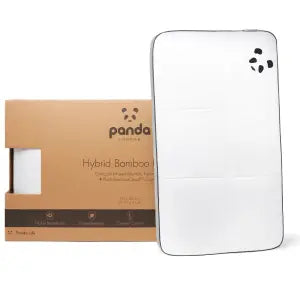
 Hybrid Bamboo Pillow
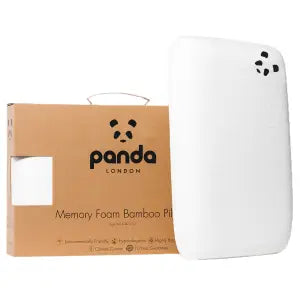 Memory Foam Bamboo Pillow
 Kids Memory Foam Bamboo Pillow
 Baby Memory Foam Bamboo Pillow
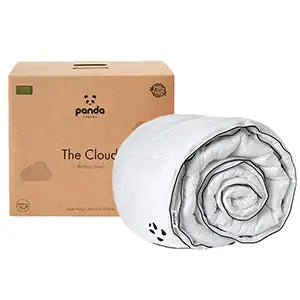 Panda Cloud Duvet
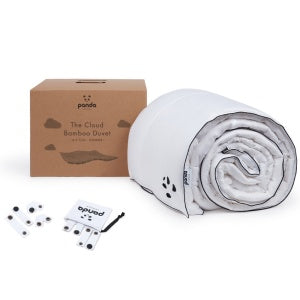 Bamboo Summer Duvet
 Kids Cloud Duvet
![[MattressTopper] Bamboo_Mattress_Topper_Package_Box-updated](http://pandalondon.com/cdn/shop/files/Bamboo_Mattress_Topper_Package_Box-updated.webp?crop=region&crop_height=1315&crop_left=92&crop_top=0&crop_width=1315&v=1782726992&width=1500)
![[MattressTopper] Woman laying on a Panda Bamboo Mattress Topper](http://pandalondon.com/cdn/shop/files/Bamboo_Mattress_Topper_Product_Image_01.webp?v=1782726484&width=1080)
![[MattressTopper] Guy laying on a Panda Bamboo Mattress Topper](http://pandalondon.com/cdn/shop/files/Bamboo_Mattress_Topper_Product_Image_02.webp?v=1782726484&width=1080)
![[MattressTopper] Woman setting up a Panda Bamboo Mattress Topper](http://pandalondon.com/cdn/shop/files/Bamboo_Mattress_Topper_Product_Image_03.webp?v=1782726484&width=1080)
![[MattressTopper] Panda London Memory Foam Bamboo Mattress Topper side](http://pandalondon.com/cdn/shop/files/Mattress_Topper_Isolated_-_resized.jpg?v=1773853354&width=800)
![[HybridMattressPro] Hybrid_Bamboo_Mattress_Pro_Product_Image_2026](http://pandalondon.com/cdn/shop/files/Hybrid_Bamboo_Mattress_Pro_Product_Image_2026.webp?v=1764944771&width=1000)
![[HybridMattressPro] A woman in white pajamas lies on her side on a mattress atop a gray upholstered bed frame in a softly lit bedroom. The mattress has a white top layer with a subtle geometric pattern and a black center band, with a small Panda Mattress logo patch visible on the side.](http://pandalondon.com/cdn/shop/files/Mattress_PRO-01.webp?v=1790672728&width=2049)
![[HybridMattressPro] Hybrid Bamboo Mattress Pro Cover Zip](http://pandalondon.com/cdn/shop/files/Hybrid_Bamboo_Mattress_Cover.jpg?v=1764944771&width=800)
![[HybridMattressPro] A woman in a cream-colored pajama set kneels beside a bed, holding down a mattress protector on a Panda Mattress to show its support and comfort.](http://pandalondon.com/cdn/shop/files/Mattress_PRO-03.webp?v=1790672728&width=2049)
![[HybridMattressPro] A woman in light pink pajamas sits on a Panda Bamboo mattress](http://pandalondon.com/cdn/shop/files/Mattress_PRO-04.webp?v=1790672728&width=2049)
![[CloudDuvet] Panda London The Cloud Bamboo Duvet Packaging](http://pandalondon.com/cdn/shop/products/Panda-London-The-Cloud-Bamboo-Duvet-Panda-Life-scaled_00a651ad-4ca3-4105-b520-12a94c1a4f71.jpg?v=1713363286&width=1920)
![[CloudDuvet] Panda London The Cloud Bamboo Duvet Rolled](http://pandalondon.com/cdn/shop/products/Duvet-Listing-Images03.jpg?v=1764079307&width=1000)
![[CloudDuvet] Guy making the bed with Panda Cloud Duvet 10.5 TOG](http://pandalondon.com/cdn/shop/files/Duvet_10.5_Tog-02.webp?v=1790607319&width=2049)
![[CloudDuvet] Guy reading a book on the bed covered with Panda Cloud Duvet 10.5 TOG](http://pandalondon.com/cdn/shop/files/Duvet_10.5_Tog-03.webp?v=1790607319&width=2049)
![[CloudDuvet] Guy making his bed with Panda Cloud Duvet 10.5 TOG](http://pandalondon.com/cdn/shop/files/Duvet_10.5_Tog-04.webp?v=1790607319&width=2049)
![[BBWhite] 100_Bamboo_Bedding_Set_Pure_White](http://pandalondon.com/cdn/shop/files/100_Bamboo_Bedding_Set_Pure_White_01.webp?v=1781082973&width=1080)
![[BBWhite] White 100% Bamboo Bedding Texture](http://pandalondon.com/cdn/shop/files/100_Bamboo_Bedding_-_Pure_White_-_Close_Up_02.webp?v=1773611287&width=1000)
![[BBWhite] 100_Bamboo_Bedding_Set_Pure_White couple laughing](http://pandalondon.com/cdn/shop/files/100_Bamboo_Bedding_Set_Pure_White_02.webp?v=1781082974&width=1080)
![[BBWhite] White 100% Bamboo Bedding Woman Duvet cover buttons](http://pandalondon.com/cdn/shop/files/hand_and_buttons_1.webp?v=1773611287&width=1000)
![[BBWhite] 100_Bamboo_Bedding_Set_Pure_White woman sleeping](http://pandalondon.com/cdn/shop/files/100_Bamboo_Bedding_Set_Pure_White_03.webp?v=1781082973&width=1080)
![[BBUrbanGrey] 100_Bamboo_Bedding_Set_Urban_Grey_guy laying on the bedding](http://pandalondon.com/cdn/shop/files/100_Bamboo_Bedding_Set_Urban_Grey_01.webp?v=1781083567&width=1080)
![[BBUrbanGrey] Cloud Duvet Urban Grey 100% Bamboo Bedding Set](http://pandalondon.com/cdn/shop/files/Cloud_Duvet_-_Grey_-_Close_up_2.webp?v=1773611287&width=1000)
![[BBUrbanGrey] 100_Bamboo_Bedding_Set_Urban_Grey_woman opening the bedding bag](http://pandalondon.com/cdn/shop/files/100_Bamboo_Bedding_Set_Urban_Grey_02.webp?v=1781083568&width=1080)
![[BBUrbanGrey] 100_Bamboo_Bedding_Set_Urban_Grey_woman making the bed](http://pandalondon.com/cdn/shop/files/100_Bamboo_Bedding_Set_Urban_Grey_04.webp?v=1781083567&width=1080)
![[BBUrbanGrey] 100_Bamboo_Bedding_Set_Urban_Grey_couple reading magazines](http://pandalondon.com/cdn/shop/files/100_Bamboo_Bedding_Set_Urban_Grey_03.webp?v=1781083567&width=1080)
![[BBNavyBlue] Deep Sea Navy Blue 100% Bamboo Bedding Set couple reading a magazine](http://pandalondon.com/cdn/shop/files/100_Bamboo_Bedding_Set_Deep_Sea_Navy_01.webp?v=1781083134&width=1080)
![[BBNavyBlue] Deep Sea Navy Blue 100% Bamboo Bedding Texture](http://pandalondon.com/cdn/shop/files/Cloud_Duvet_-_Navy_-_Close_up_2.webp?v=1773611287&width=1000)
![[BBNavyBlue] Deep Sea Navy Blue 100% Bamboo Bedding Set couple reading a magazine and smiling](http://pandalondon.com/cdn/shop/files/100_Bamboo_Bedding_Set_Deep_Sea_Navy_02.webp?v=1781083135&width=1080)
![[BBNavyBlue] Deep Sea Navy Blue 100% Bamboo Bedding Set woman resting](http://pandalondon.com/cdn/shop/files/100_Bamboo_Bedding_Set_Deep_Sea_Navy_04.png?v=1781083138&width=1080)
![[BBNavyBlue] Deep Sea Navy Blue 100% Bamboo Bedding Set guy laying and smiling](http://pandalondon.com/cdn/shop/files/100_Bamboo_Bedding_Set_Deep_Sea_Navy_03.webp?v=1781083134&width=1080)
![[BBPink] Vintage Pink Blue 100% Bamboo Bedding woman making the bed](http://pandalondon.com/cdn/shop/files/100_Bamboo_Bedding_Set_Pink_01.webp?v=1781083678&width=1080)
![[BBPink] Vintage Pink Texture 100% Bamboo Bedding](http://pandalondon.com/cdn/shop/files/Cloud_Duvet_-_Pink_-_Close_up_2.webp?v=1773611287&width=1000)
![[BBPink] Vintage Pink Blue 100% Bamboo Bedding woman hugging the pillow with vintage pink pillow case](http://pandalondon.com/cdn/shop/files/100_Bamboo_Bedding_Set_Pink_02.webp?v=1781083678&width=1080)
![[BBPink] Vintage Pink Blue 100% Bamboo Bedding woman hiding under duvet with pink duvet cover](http://pandalondon.com/cdn/shop/files/100_Bamboo_Bedding_Set_Pink_03.webp?v=1781083679&width=1080)
![[BBPink] Vintage Pink Blue 100% Bamboo Bedding woman laying and smiling on the panda bedding set](http://pandalondon.com/cdn/shop/files/100_Bamboo_Bedding_Set_Pink_04.webp?v=1781083679&width=1080)
![[BBGrey] 100_Bamboo_Bedding_Set_Quiet_Grey_ woman holding the bedding](http://pandalondon.com/cdn/shop/files/100_Bamboo_Bedding_Set_Quiet_Grey_01.webp?v=1781083287&width=1080)
![[BBGrey] Light Grey 100% Bamboo Bedding texture](http://pandalondon.com/cdn/shop/files/Texture17.webp?v=1773611287&width=1000)
![[BBGrey] 100_Bamboo_Bedding_Set_Quiet_Grey_0guy laying and smiling](http://pandalondon.com/cdn/shop/files/100_Bamboo_Bedding_Set_Quiet_Grey_02.webp?v=1781083287&width=1080)
![[BBGrey] 100_Bamboo_Bedding_Set_Quiet_Grey_0guy reading a magazine on the bed](http://pandalondon.com/cdn/shop/files/100_Bamboo_Bedding_Set_Quiet_Grey_03.webp?v=1781083287&width=1080)
![[BBGrey] 100_Bamboo_Bedding_Set_Quiet_Grey_0woman making the bed](http://pandalondon.com/cdn/shop/files/100_Bamboo_Bedding_Set_Quiet_Grey_04.webp?v=1781083287&width=1080)

Quick Answer:
The best pillow for neck and shoulder support keeps your head, neck and shoulders properly aligned while you sleep. The right choice depends on your sleeping position, but in general, a supportive pillow that adapts to your body can help reduce strain, ease stiffness and improve sleep quality. Panda’s article highlights memory foam as a strong option because it consistently supports the neck and shoulders throughout the night.
Reviewed by Bethany Lawrence, Osteopath, Osteobeth
Tend to wake up with a sore neck? You’re definitely not alone, according to Physiopedia, 54% of individuals have experienced neck pain within the last 6 months. NHS Scotland reported that in the UK, the estimated lifetime prevalence of a significant episode of neck pain is 40-70%. Your sleeping habits and the lack of proper support during the night play a big role in this.
everything should kind of be aligned neutrally, head on top of your shoulders
— Elizabeth T. Nguyen, MD, physiatrist, HSS
If your days are consistently ruined by nagging pain, a very likely cause is the pillow you sleep on. Most of us dismiss waking up with neck pain for the following reasons:
- Slept in an awkward position
- Poor posture
- A gym injury
- Draft from an open window
Many believe it is only temporary and not a lasting pain; however, depending on your sleeping position, it can be damaging to your spine and can have a huge impact on the quality of your sleep. Choosing the right pillow to support your neck and shoulders can help you wake up without pain.
First things first – take a look at how you sleep at night. Do you tend to lie flat on your back or are you a side sleeper? Choosing the right pillow (and mattress, for that matter) depends on the level of support your neck currently gets.
Many of us toss and turn during the night, waking up in a different position than the one we fell asleep in. Support and alignment are essential here, so try to get a versatile pillow that adapts to your body and relieves strain on your neck and shoulders.
Memory foam is the material that is currently unsurpassed in this domain. One of the most common factors contributing to a poor night’s sleep is restlessness and movement. When moving during the night, typically, we are trying to find the most comfortable position. It’s important to find a pillow which is able to keep you supported and comfortable throughout the night.
Why poor neck support causes pain
One of the areas most affected by poor sleeping posture is your cervical spine. This is the part that connects the base of the skull with the upper back and if it’s under strain, it can cause you serious pain. With a natural forward curve, your cervical spine needs support from a pillow. Below are problems pillows can cause by either being too flat or too high:
- Too flat, your head drops, and neck flexors are strained
- Too high, head is pushed forward and neck extensors strained.
In both these situations, you’ll wake up with stiffness in your neck in the morning. If you’re unsure whether your pillow needs an upgrade, test out your sleeping position tonight. If your chin is pushed towards your chest, your pillow is too thick, but if your head drops back, it’s too flat. Consider your occasional stiffness in these terms – sleep maths. Start with eight hours every night of misalignment, then add in weeks, and then months, this will eventually result in chronic pain.
From the neck to the shoulders, the levator scapulae muscles can easily be overworked. If your pillow isn’t giving you the support necessary, you may experience stiffness and pain when moving your head to the sides. If your poor sleeping posture persists, you may even develop a pinched nerve in your upper back. It’s essential to consider how much you exert yourself during the night.
A supportive pillow designed to cradle the neck could be helpful.
— Rachel Salas, M.D., Johns Hopkins Medicine
It’s hard to change your sleeping habits. Improving your posture is extremely important to help prevent neck, shoulder, and back pain. An important thing to keep in mind is to give your new pillow time to get results. As with everything, try to reduce stress in your life, maintain good posture and minimise unhealthy habits. This will help you sleep better and relax more, giving your new pillow a chance to work its magic. Once you start enjoying the benefits of regular rejuvenating sleep, we’re sure that you’ll appreciate a well-crafted, supportive pillow.
Neck and shoulder pain by sleeping position
People with sciatica often find sleeping postures painful, and prolonged positions can increase discomfort, especially if the spine is twisted or the hips are not well supported. Sciatica is pain caused by irritation or compression of the sciatic nerve, often from a problem in the lower spine, so certain sleeping positions or an unsupportive pillow can make symptoms feel worse.
In our table below are all the different sleeping positions with pillow recommendations for the best support.
|
Sleeping Position |
Best Pillow Type |
Why It Works |
|
Side sleeper |
Medium to high loft pillow 10-14 cm loft |
Fills the gap between the head and shoulder to help keep the neck aligned with the spine |
|
Back sleeper |
Medium loft pillow 7-10 cm loft |
Supports the natural curve of the neck without pushing the head too far forward |
|
Front Sleeper |
Low loft pillow - as flat as possible |
Helps reduce neck strain caused by turning the head to one side |
|
Combination Sleeper |
Adaptive medium loft pillow |
Balances support and flexibility for people who change position during the night |
Work from home and tech neck
You may have heard the phrase ‘tech neck’, but not realised the implications it has on your spine. In short, hunching over our mobile phone screens is causing strain on our necks. In this forward head posture, we move our heads away from our shoulders. Your head behaves more like a lever: the farther forward it moves, the longer the lever arm becomes, so the neck muscles, joints and discs have to work harder to hold it up. Every inch your head moves forward of your shoulders causes load pressure on your spine. The equivalent of this load pressure in weight is 10lbs.
Unfortunately, this tension carries into your sleep, and your muscles remain strained if your pillow is not supportive. Try this two-minute bedtime routine if you’re feeling tension in your neck and shoulders:
- Neck rolls - 30 seconds: Slowly drop your chin toward your chest, then gently roll your head from side to side in a small, controlled motion. Keep it light and avoid forcing the stretch.
- Shoulder circles - 30 seconds: Lift your shoulders up toward your ears, roll them back, then down. Repeat slowly, then reverse the direction to release built-up tension.
- Doorframe chest stretch — 30 seconds: Place your forearms on either side of a doorway and step forward slightly until you feel a stretch across the chest and front of the shoulders. Hold and breathe deeply.
-
Forward fold — 30 seconds: Stand with knees slightly bent and fold forward gently, letting your head, neck and arms hang loose. This helps relax the upper back, shoulders and neck before bed.
Finding the pillow that best supports you
When it comes to choosing a pillow, our orthopaedic expert, Bethany Lawrence advises, "It is essential to look for a pillow that optimises support and alignment, therefore it is important to get a versatile pillow in the form of memory foam that adapts to your body and takes the strain off your neck and shoulders thus minimising the risk of poor sleeping habits."
Our Memory Foam Bamboo Pillow offers the perfect balance between comfort and support. Adapting to your sleeping position, our 3rd-generation orthopaedic memory foam helps support and align the neck and shoulders throughout the night.
memory foam, in some regard, is your best bet
— Andrew Bang, DC, Cleveland Clinic
Both our Bamboo Pillows come with a thermoregulating bamboo cover that ensures softness and comfort. This means you’ll be kept cool in the summer and warm in the winter, while moisture-wicking properties keep our pillow odour-resistant and dry. And the best part – the more you wash it, the softer it will get! Bamboo is naturally hypoallergenic, making our pillows suitable for those who suffer from eczema, sensitive skin or hay fever caused by dust mites.
Memory Foam Bamboo Pillow

FAQ
1. Can the wrong pillow cause neck and shoulder pain?
Yes, in fact, the NHS cites your pillow as a common cause of neck pain. If a pillow is too high, too flat or does not support your sleep position, it can put your neck in an awkward angle for hours, straining muscles and joints overnight.
2. Is it better to sleep without a pillow if you have neck pain?
No, for most people with neck pain, sleeping without a pillow is not better; a pillow should help keep your head and neck in a neutral position. The only exception is for front sleepers. Sleeping on your stomach is more likely to strain the neck, and some people find that using no pillow reduces that strain a bit.
About the Author:
Katy Gilroy is the Partnerships and Community Lead at Panda London, specialising in sleep wellbeing, sustainable living and thoughtful home comforts. She studied journalism and creative writing, and now writes across topics such as bedding, mattresses, sleep hygiene, bamboo materials and lifestyle-led sustainability. Her goal is to turn expert-backed ideas and product knowledge into practical content that helps the Panda community sleep better and live a little more consciously.
![[PillowcoversHBP] Spare Pillow Cover Hybrid Bamboo Pillow](http://pandalondon.com/cdn/shop/files/Spare_Pillow_Cover_-_Hybrid_Bamboo_Pillow.webp?v=1775045389&width=1000)
![[PillowcoversMFBP] Spare Pillow Cover Memory_Foam_Bamboo_Pillow](http://pandalondon.com/cdn/shop/files/Spare_Pillow_Cover_-_Memory_Foam_Bamboo_Pillow.webp?v=1775045389&width=1000)
![[PillowcoversBBP] Spare Pillow Cover Baby_Bamboo_Pillow](http://pandalondon.com/cdn/shop/files/Spare_Pillow_Cover_-_Baby_Bamboo_Pillow.webp?crop=region&crop_height=667&crop_left=166&crop_top=0&crop_width=667&v=1775045389&width=1000)
![[PillowcoversTBP] Spare Pillow Cover Toddler_Bamboo_Pillow](http://pandalondon.com/cdn/shop/files/Spare_Pillow_Cover_-_Toddler_Bamboo_Pillow.webp?crop=region&crop_height=667&crop_left=166&crop_top=0&crop_width=667&v=1775045389&width=1000)
![[PillowcoversKBP] Spare Pillow Cover Kids_Pillow](http://pandalondon.com/cdn/shop/files/Spare_Pillow_Cover_-_Kids_Pillow.webp?crop=region&crop_height=667&crop_left=166&crop_top=0&crop_width=667&v=1775045389&width=1000)
![[A] Panda Bamboo Pillow CoversL](http://pandalondon.com/cdn/shop/products/Panda-Bamboo-Pillow-Covers.jpg?v=1775045389&width=1920)
![[HybridPillow] Hybrid Bamboo Pillow - Mattress Campaign](http://pandalondon.com/cdn/shop/products/Hybrid-Bamboo-Pillow-Mattress-Campaign.jpg?crop=region&crop_height=1615&crop_left=152&crop_top=0&crop_width=1615&v=1771199164&width=1920)
![[HybridPillow] Hybrid_Bamboo_Pillow_-_Woman_laying_on_a_Hybrid_Bamboo_Pillow_with_an_Eye_Mask](http://pandalondon.com/cdn/shop/files/Hybrid_Bamboo_Pillow_-_Woman_laying_on_a_Hybrid_Bamboo_Pillow_with_an_Eye_Mask.webp?v=1783514966&width=1080)
![[HybridPillow] Hybrid_Bamboo_Pillow_02_-_Woman_taking_off_the_Hybrid_Bamboo_Pillow_Cover](http://pandalondon.com/cdn/shop/files/Hybrid_Bamboo_Pillow_02_-_Woman_taking_off_the_Hybrid_Bamboo_Pillow_Cover.webp?v=1783514763&width=1080)
![[HybridPillow] Hybrid Pillow with Panda brand marking](http://pandalondon.com/cdn/shop/products/Hybrid-Pillow_8.jpg?v=1771199164&width=1920)
![[HybridPillow] Hybrid_Bamboo_Pillow_03_-_Couple_pillow_fighting_with_Hybrid_Bamboo_Pillows](http://pandalondon.com/cdn/shop/files/Hybrid_Bamboo_Pillow_03_-_Couple_pillow_fighting_with_Hybrid_Bamboo_Pillows.webp?v=1783514763&width=1080)
![[MemoryFoamPillow] Panda Luxury Memory Foam Bamboo product image](http://pandalondon.com/cdn/shop/products/Panda-Memory-Foam-Bamboo-Pillow-Panda-Life-scaled-e1623788835840.jpg?v=1771199183&width=800)
![[MemoryFoamPillow] Panda London Bamboo Memory Foam Pillow Girl Holding Pillow Lifestyle](http://pandalondon.com/cdn/shop/files/01_Memory_Foam_Bamboo_Pillow__alt04.jpg?v=1771199183&width=800)
![[MemoryFoamPillow] Panda London Bamboo Memory Foam Pillow](http://pandalondon.com/cdn/shop/files/03_Memory_Foam_Bamboo_Pillow__alt01.jpg?v=1771199183&width=800)
![[MemoryFoamPillow] Panda London Bamboo Memory Foam Pillow girl hugging the pillow](http://pandalondon.com/cdn/shop/files/02_Memory_Foam_Bamboo_Pillow__alt02.jpg?v=1771199183&width=800)
![[MemoryFoamPillow] Panda London Bamboo Memory Foam Pillow on a Panda Topper](http://pandalondon.com/cdn/shop/files/Memory-Foam-Bamboo-Pillow-on-Bed-Topper-and-Adjustable-Straps-Shown-Lifestyle-Square-768x768_png.webp?v=1771199183&width=768)
![[BBPureWhitePillowcases] Bamboo Bedding Two Pure White Pillowcases](http://pandalondon.com/cdn/shop/files/Pure_White_Pillowcase_Bamboo_Bedding_Two_Pillows.webp?v=1721308652&width=1000)
![[BBPureWhitePillowcases] Bamboo Bedding Two Pure White Pillowcases Package](http://pandalondon.com/cdn/shop/files/Pure_White_Bamboo_Bedding_Pillowcases.webp?v=1721308652&width=1820)
![[BBPureWhitePillowcases] Bamboo Bedding Two Pure White Pillowcases Texture](http://pandalondon.com/cdn/shop/files/Pure_White_Pillowcase_Bamboo_Bedding_Texture.webp?v=1721308653&width=980)
![[BBPureWhitePillowcases] Bamboo Bedding Two Pure White Pillowcases Couples Changing Pillows](http://pandalondon.com/cdn/shop/files/Pure_White_Pillowcase_Bamboo_Bedding_Pillowcases_Changing.webp?v=1773157679&width=1000)
![[BBPureWhitePillowcases] Bamboo Bedding Two Pure White Pillowcases - Pillows on the bed](http://pandalondon.com/cdn/shop/files/Pure_White_Bamboo_Bedding_Pillowcases_Bamboo_Bedding_On_the_Bed.webp?v=1773157679&width=724)
![[BBNavyPillowcases] Bamboo Bedding Two Navy Pillowcases](http://pandalondon.com/cdn/shop/files/DeepSeaNavyPillowcaseBambooBeddingTwoPillows.webp?v=1721307802&width=1000)
![[BBNavyPillowcases] Bamboo Bedding Two Navy Pillowcases Package](http://pandalondon.com/cdn/shop/files/DeepSeaNavyPillowcaseBambooBedding.webp?v=1721307801&width=1820)
![[BBNavyPillowcases] Bamboo Bedding Two Navy Pillowcases Texture](http://pandalondon.com/cdn/shop/files/DeepSeaNavyPillowcaseBambooBeddingTexture.webp?v=1721307802&width=1000)
![[BBNavyPillowcases] Bamboo Bedding Two Navy Pillowcases Couple Changing](http://pandalondon.com/cdn/shop/files/DeepSeaNavyPillowcaseBambooBeddingPillowcasesChanging.webp?v=1721307802&width=1000)
![[BBNavyPillowcases] Bamboo Bedding Two Navy Pillowcases on the Bamboo Bedding](http://pandalondon.com/cdn/shop/files/Deep_Sea_Navy_Pillowcase_On_the_Bed.webp?v=1721308056&width=724)
![[BBQuietGreyPillowcases] Bamboo Bedding Two Quiet Grey Pillowcases](http://pandalondon.com/cdn/shop/files/Quiet_Grey_Bamboo_Bedding_Pillowcases_Two_Pillows.webp?v=1721308123&width=1000)
![[BBQuietGreyPillowcases] pacakge Pillowcases Bamboo bedding](http://pandalondon.com/cdn/shop/files/Quiet_Grey_Bamboo_Bedding_Pillowcases.webp?v=1721308123&width=1820)
![[BBQuietGreyPillowcases] Texture Pillowcases](http://pandalondon.com/cdn/shop/files/Quiet_Grey_Bamboo_Bedding_Pillowcases_Texture.jpg?v=1721308123&width=980)
![[BBQuietGreyPillowcases] Couple Changing Pillowcases](http://pandalondon.com/cdn/shop/files/Quiet_Grey_Bamboo_Bedding_Pillowcases_Changing.webp?v=1721308124&width=1000)
![[BBQuietGreyPillowcases] Pillows on the Bamboo Bed Panda London](http://pandalondon.com/cdn/shop/files/Quiet_Grey_Bamboo_Bedding_Pillowcases_On_the_Bed.webp?v=1721308123&width=724)
![[BBUrbanGreyPillowcases] Bamboo Bedding Two urban Grey Pillowcases](http://pandalondon.com/cdn/shop/files/Urban_Grey_Bamboo_Bedding_Pillowcases_Two_Pillows.webp?v=1721308480&width=1000)
![[BBUrbanGreyPillowcases] Bamboo Bedding Two urban Grey Package](http://pandalondon.com/cdn/shop/files/Urban_Grey_Bamboo_Bedding_Pillowcases.webp?v=1721308480&width=1820)
![[BBUrbanGreyPillowcases] Bamboo Bedding Two urban Grey Pillowcases Texture](http://pandalondon.com/cdn/shop/files/Urban_Grey_Bamboo_Bedding_Pillowcases_Texture.webp?v=1721308481&width=1000)
![[BBUrbanGreyPillowcases] Bamboo Bedding Two urban Grey Pillowcases Changing](http://pandalondon.com/cdn/shop/files/Urban_Grey_Bamboo_Bedding_Pillowcases_Chaning.webp?v=1721308481&width=1000)
![[BBUrbanGreyPillowcases] Bamboo Bedding Two urban Grey Pillowcases on the bed](http://pandalondon.com/cdn/shop/files/Urban_Grey_Bamboo_Bedding_Pillowcases_On_the_Bed.webp?v=1721308479&width=724)
![[BBVintagePinkPillowcases] Bamboo Bedding Two Vintage Pink Pillowcases](http://pandalondon.com/cdn/shop/files/Vintage_Pink_Bamboo_Bedding_Pillowcases_Two_Pillows.webp?v=1721308783&width=1000)
![[BBVintagePinkPillowcases] Bamboo Bedding Two Vintage Pink Package](http://pandalondon.com/cdn/shop/files/Vintage_Pink_Bamboo_Bedding_Pillowcases.webp?v=1721308783&width=1820)
![[BBVintagePinkPillowcases] Bamboo Bedding Two Vintage Pink Pillowcases Texture](http://pandalondon.com/cdn/shop/files/Vintage_Pink_Bamboo_Bedding_Pillowcases_Texture.webp?v=1721308784&width=1000)
![[BBVintagePinkPillowcases] Bamboo Bedding Two Vintage Pink Pillowcases](http://pandalondon.com/cdn/shop/files/Vintage_Pink_Bamboo_Bedding_Pillowcases_Chaning_Pillows.webp?v=1721308784&width=1000)
![[BBVintagePinkPillowcases] Bamboo Bedding Two Vintage Pink Pillows on the Bamboo Bedding](http://pandalondon.com/cdn/shop/files/Vintage_Pink_Bamboo_Bedding_Pillowcases_On_the_Bed.webp?v=1721308782&width=724)

