
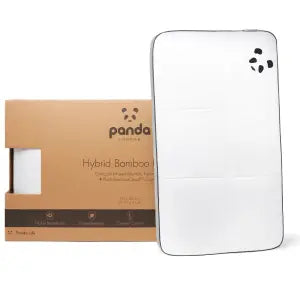
 Hybrid Bambuskissen
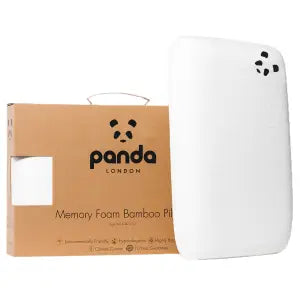 Memory Foam Bambuskissen
 Memory Foam Bambuskissen für Kinder
 Baby Memory Foam Bambuskissen
 Panda Bettdecke Cloud
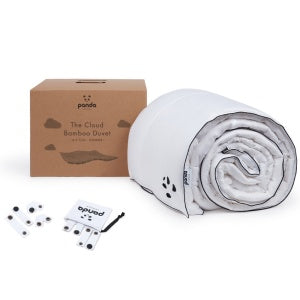 Sommerbettdecke aus Bambus
 Kinder Cloud Bettdecke
![[MattressTopper] Bamboo_Mattress_Topper_Package_Box-updated](http://pandalondon.com/cdn/shop/files/Bamboo_Mattress_Topper_Package_Box-updated.webp?crop=region&crop_height=1315&crop_left=92&crop_top=0&crop_width=1315&v=1782726992&width=1500)
![[MattressTopper] Woman laying on a Panda Bamboo Mattress Topper](http://pandalondon.com/cdn/shop/files/Bamboo_Mattress_Topper_Product_Image_01.webp?v=1782726484&width=1080)
![[MattressTopper] Guy laying on a Panda Bamboo Mattress Topper](http://pandalondon.com/cdn/shop/files/Bamboo_Mattress_Topper_Product_Image_02.webp?v=1782726484&width=1080)
![[MattressTopper] Woman setting up a Panda Bamboo Mattress Topper](http://pandalondon.com/cdn/shop/files/Bamboo_Mattress_Topper_Product_Image_03.webp?v=1782726484&width=1080)
![[MattressTopper] Panda London Memory Foam Bamboo Mattress Topper side](http://pandalondon.com/cdn/shop/files/Mattress_Topper_Isolated_-_resized.jpg?v=1773853354&width=800)
![[HybridMattressPro] Hybrid_Bamboo_Mattress_Pro_Product_Image_2026](http://pandalondon.com/cdn/shop/files/Hybrid_Bamboo_Mattress_Pro_Product_Image_2026.webp?v=1764944771&width=1000)
![[HybridMattressPro] A woman in white pajamas lies on her side on a mattress atop a gray upholstered bed frame in a softly lit bedroom. The mattress has a white top layer with a subtle geometric pattern and a black center band, with a small Panda Mattress logo patch visible on the side.](http://pandalondon.com/cdn/shop/files/Mattress_PRO-01.webp?v=1790672728&width=2049)
![[HybridMattressPro] Hybrid Bamboo Mattress Pro Cover Zip](http://pandalondon.com/cdn/shop/files/Hybrid_Bamboo_Mattress_Cover.jpg?v=1764944771&width=800)
![[HybridMattressPro] A woman in a cream-colored pajama set kneels beside a bed, holding down a mattress protector on a Panda Mattress to show its support and comfort.](http://pandalondon.com/cdn/shop/files/Mattress_PRO-03.webp?v=1790672728&width=2049)
![[HybridMattressPro] A woman in light pink pajamas sits on a Panda Bamboo mattress](http://pandalondon.com/cdn/shop/files/Mattress_PRO-04.webp?v=1790672728&width=2049)
![[CloudDuvet] Panda London The Cloud Bamboo Duvet Packaging](http://pandalondon.com/cdn/shop/products/Panda-London-The-Cloud-Bamboo-Duvet-Panda-Life-scaled_00a651ad-4ca3-4105-b520-12a94c1a4f71.jpg?v=1713363286&width=1920)
![[CloudDuvet] Panda London The Cloud Bamboo Duvet Rolled](http://pandalondon.com/cdn/shop/products/Duvet-Listing-Images03.jpg?v=1764079307&width=1000)
![[CloudDuvet] Guy making the bed with Panda Cloud Duvet 10.5 TOG](http://pandalondon.com/cdn/shop/files/Duvet_10.5_Tog-02.webp?v=1790607319&width=2049)
![[CloudDuvet] Guy reading a book on the bed covered with Panda Cloud Duvet 10.5 TOG](http://pandalondon.com/cdn/shop/files/Duvet_10.5_Tog-03.webp?v=1790607319&width=2049)
![[CloudDuvet] Guy making his bed with Panda Cloud Duvet 10.5 TOG](http://pandalondon.com/cdn/shop/files/Duvet_10.5_Tog-04.webp?v=1790607319&width=2049)
![[BBWhite] 100_Bamboo_Bedding_Set_Pure_White](http://pandalondon.com/cdn/shop/files/100_Bamboo_Bedding_Set_Pure_White_01.webp?v=1781082973&width=1080)
![[BBWhite] White 100% Bamboo Bedding Texture](http://pandalondon.com/cdn/shop/files/100_Bamboo_Bedding_-_Pure_White_-_Close_Up_02.webp?v=1773611287&width=1000)
![[BBWhite] 100_Bamboo_Bedding_Set_Pure_White couple laughing](http://pandalondon.com/cdn/shop/files/100_Bamboo_Bedding_Set_Pure_White_02.webp?v=1781082974&width=1080)
![[BBWhite] White 100% Bamboo Bedding Woman Duvet cover buttons](http://pandalondon.com/cdn/shop/files/hand_and_buttons_1.webp?v=1773611287&width=1000)
![[BBWhite] 100_Bamboo_Bedding_Set_Pure_White woman sleeping](http://pandalondon.com/cdn/shop/files/100_Bamboo_Bedding_Set_Pure_White_03.webp?v=1781082973&width=1080)
![[BBUrbanGrey] 100_Bamboo_Bedding_Set_Urban_Grey_guy laying on the bedding](http://pandalondon.com/cdn/shop/files/100_Bamboo_Bedding_Set_Urban_Grey_01.webp?v=1781083567&width=1080)
![[BBUrbanGrey] Cloud Duvet Urban Grey 100% Bamboo Bedding Set](http://pandalondon.com/cdn/shop/files/Cloud_Duvet_-_Grey_-_Close_up_2.webp?v=1773611287&width=1000)
![[BBUrbanGrey] 100_Bamboo_Bedding_Set_Urban_Grey_woman opening the bedding bag](http://pandalondon.com/cdn/shop/files/100_Bamboo_Bedding_Set_Urban_Grey_02.webp?v=1781083568&width=1080)
![[BBUrbanGrey] 100_Bamboo_Bedding_Set_Urban_Grey_woman making the bed](http://pandalondon.com/cdn/shop/files/100_Bamboo_Bedding_Set_Urban_Grey_04.webp?v=1781083567&width=1080)
![[BBUrbanGrey] 100_Bamboo_Bedding_Set_Urban_Grey_couple reading magazines](http://pandalondon.com/cdn/shop/files/100_Bamboo_Bedding_Set_Urban_Grey_03.webp?v=1781083567&width=1080)
![[BBNavyBlue] Deep Sea Navy Blue 100% Bamboo Bedding Set couple reading a magazine](http://pandalondon.com/cdn/shop/files/100_Bamboo_Bedding_Set_Deep_Sea_Navy_01.webp?v=1781083134&width=1080)
![[BBNavyBlue] Deep Sea Navy Blue 100% Bamboo Bedding Texture](http://pandalondon.com/cdn/shop/files/Cloud_Duvet_-_Navy_-_Close_up_2.webp?v=1773611287&width=1000)
![[BBNavyBlue] Deep Sea Navy Blue 100% Bamboo Bedding Set couple reading a magazine and smiling](http://pandalondon.com/cdn/shop/files/100_Bamboo_Bedding_Set_Deep_Sea_Navy_02.webp?v=1781083135&width=1080)
![[BBNavyBlue] Deep Sea Navy Blue 100% Bamboo Bedding Set woman resting](http://pandalondon.com/cdn/shop/files/100_Bamboo_Bedding_Set_Deep_Sea_Navy_04.png?v=1781083138&width=1080)
![[BBNavyBlue] Deep Sea Navy Blue 100% Bamboo Bedding Set guy laying and smiling](http://pandalondon.com/cdn/shop/files/100_Bamboo_Bedding_Set_Deep_Sea_Navy_03.webp?v=1781083134&width=1080)
![[BBPink] Vintage Pink Blue 100% Bamboo Bedding woman making the bed](http://pandalondon.com/cdn/shop/files/100_Bamboo_Bedding_Set_Pink_01.webp?v=1781083678&width=1080)
![[BBPink] Vintage Pink Texture 100% Bamboo Bedding](http://pandalondon.com/cdn/shop/files/Cloud_Duvet_-_Pink_-_Close_up_2.webp?v=1773611287&width=1000)
![[BBPink] Vintage Pink Blue 100% Bamboo Bedding woman hugging the pillow with vintage pink pillow case](http://pandalondon.com/cdn/shop/files/100_Bamboo_Bedding_Set_Pink_02.webp?v=1781083678&width=1080)
![[BBPink] Vintage Pink Blue 100% Bamboo Bedding woman hiding under duvet with pink duvet cover](http://pandalondon.com/cdn/shop/files/100_Bamboo_Bedding_Set_Pink_03.webp?v=1781083679&width=1080)
![[BBPink] Vintage Pink Blue 100% Bamboo Bedding woman laying and smiling on the panda bedding set](http://pandalondon.com/cdn/shop/files/100_Bamboo_Bedding_Set_Pink_04.webp?v=1781083679&width=1080)
![[BBGrey] 100_Bamboo_Bedding_Set_Quiet_Grey_ woman holding the bedding](http://pandalondon.com/cdn/shop/files/100_Bamboo_Bedding_Set_Quiet_Grey_01.webp?v=1781083287&width=1080)
![[BBGrey] Light Grey 100% Bamboo Bedding texture](http://pandalondon.com/cdn/shop/files/Texture17.webp?v=1773611287&width=1000)
![[BBGrey] 100_Bamboo_Bedding_Set_Quiet_Grey_0guy laying and smiling](http://pandalondon.com/cdn/shop/files/100_Bamboo_Bedding_Set_Quiet_Grey_02.webp?v=1781083287&width=1080)
![[BBGrey] 100_Bamboo_Bedding_Set_Quiet_Grey_0guy reading a magazine on the bed](http://pandalondon.com/cdn/shop/files/100_Bamboo_Bedding_Set_Quiet_Grey_03.webp?v=1781083287&width=1080)
![[BBGrey] 100_Bamboo_Bedding_Set_Quiet_Grey_0woman making the bed](http://pandalondon.com/cdn/shop/files/100_Bamboo_Bedding_Set_Quiet_Grey_04.webp?v=1781083287&width=1080)

The best sleep setup for couples includes a supportive mattress with strong motion isolation, the right pillows for each sleeper, and solutions like the two-duvet method to manage temperature and comfort differences, helping both partners sleep undisturbed and wake refreshed.
Sharing your bed with your partner can have its downsides, especially if they keep you awake, snore, or hog the covers. However, there is evidence that co-sleeping can benefit your mental health and improve your sleep. But what is the best way to sleep together? We’ll provide our advice on a practical couple's sleep setup: duvet choices, pillow strategy, temperature control, and tips to reduce night-time disruptions.
Recent studies in sleep science show that the quality of your relationship doesn’t just shape your waking life — it’s linked with how well you sleep, too. Couples who experience responsive, low‑conflict relationships tend to report better sleep quality and longer sleep overall than those who sleep alone or experience higher relationship strain. Even if you run warm while your partner runs cool, prefer different sleep positions or battle it out over the duvet, finding the right shared sleep set‑up can support deeper, more restorative rest for both of you.
Start with the bed base
Mattress priorities for couples
Motion isolation
It’s a familiar scenario – your partner gets up in the night to go to the bathroom, and you wake up, finding it difficult to drift off again. If you want to remain undisturbed, you should look for a mattress with good motion isolation.
Edge support
No one wants to end up on the floor. You should both be able to sleep on the bed without one of you rolling off. Your mattress provides edge support if you can:
- sit on the edge to put on shoes without sliding off
- sleep near the edge without feeling like you’ll roll out
- Use more of the mattress surface
Firmness compromise
In terms of how your mattress should feel, a compromise is to aim for one that keeps both your spines neutral and eases pressure points. A medium-firm mattress on the firmness scale is a good option for those who share a bed.
Topper
If one of you prefers a softer mattress, choose a mattress that feels a bit too firm for them, then add a topper. This softens a firm mattress and improves motion isolation. A soft mattress won’t become firmer with a topper; it only makes a firm mattress softer.
Fix blanket wars with the “two-duvet” method
There could be a problem if both of you like to wrap yourselves up in the duvet. In this case, you may want to consider the Scandinavian Sleep Method. This is a solution to one person having too little duvet and the other having far too much – you each have your own duvet, avoiding the need for a sleep divorce.
How to choose duvets
Size
Even if you have a king-size bed, two single duvets should be enough to cover you up sufficiently. Each duvet should measure as wide as the sleeper’s shoulder-to-shoulder with some overhang, and long enough to cover you when you pull it up. Size up from a single if you prefer more drape.
TOG
Having two duvets when you share a bed is also ideal if one of you sleeps cold the other sleeps hot. We recommend the TOG ratings below for your sleeping arrangements.
- Hot sleeper: 4.5–7.5 TOG
- Cold sleeper: 9–13.5 TOG
Our Cloud Bamboo Duvet comes in two different TOG ratings, and our 10.5 TOG has been designed for sleeping in all seasons of the year. A combination of our 50% Bamboo Microfibre and 50% Nano-Microfibre™ makes our duvet lightweight, fluffy and superlight. We also offer the Bamboo Summer Duvet in 4.5 TOG as a summer option. With natural thermoregulation and moisture-wicking properties, it’ll keep you cool in hot weather and warm in the winter.
Styling tip
We recommend the ‘hotel fold’ for styling your bed with two different duvets:
- Put each duvet in a matching cover (same colour/pattern).
- Lay them side by side, edges meeting in the middle.
- Fold the top 20–30 cm of each duvet down (like a cuff).
- Add two to four pillows and one long lumbar cushion.
Pillows that work for two people
Just as you have a duvet each, you’ll need a pillow each, and one that suits your sleeping position. You may also like to have a softer and adjustable cushion below for hugging between your knees or to help support your neck. Below, we’ve provided each sleeping type with a suggested corresponding supportive pillow:
- Side sleeper: higher loft / firmer, to fill the shoulder–neck gap
- Back sleeper: medium loft, supportive but not pushing head forward
- Stomach sleeper: low loft/soft (or no pillow) to avoid neck strain
- Combo sleeper: adjustable fill is easiest (you can change loft)
When one of you prefers to sleep on your side, while the other likes to sleep on their back, a pillow height mismatch is normal.
Layering system
The fitted sheet you choose as your base layer should be breathable, as your bodies radiate heat and conduct heat with each other. Our 100% Bamboo Fitted Sheet is highly breathable, helping with airflow throughout the night.
As we’ve already mentioned, you could have separate duvets, adopting the Scandinavian Sleep Method, or you might prefer additional throws and blankets, depending on whether you sleep hot or cold. Adding a fan creates airflow in the summer months.
Reduce disturbances
Light control
Blackout curtains or blackout roller blinds are a good way to trick your mind into sleeping. If one of you likes to read before lights out we recommend:
Directional bedside reading lights (wall-mounted or headboard-mounted) aimed down at the book.
Clip-on book light
Bedside lamp with a shade, a warm bulb, and a dimmer
Smart bulb on the awake side only – lets you set very low brightness and warm colour, and turn off without getting up.
Noise control
Heavy sleepers will have no problem sleeping through noise, while light sleepers will find even a pin dropping a distraction. If you struggle with background noise preventing you from drifting off, try one of these hacks:
- White noise - the device should be placed near you and the source of noise
- Earplugs - soft or silicone
- A closing ritual, such as a quick brain dump. This helps, as being easily distracted before sleep is a sign of a busy mind. Try the three bullet point method: done today, tomorrow, worries parked)
Movement hacks
A double bed may not be big enough for two adult sleepers, and not having enough space can also disturb your sleep, so you could consider a King or even Super King to give both of you room to feel comfortable at night. A mattress which reduces motion transfer can prevent waking up with movement.
Our Hybrid Bamboo Mattress Pro is medium-firm and features a layer of multi-zonal springs that reduce motion transfer, so you won't be woken at night by movement. Featuring our orthopaedic-grade OrthoAlign Foam™, it adapts to your sleeping position, aligning the spine and providing pressure-point perfect comfort. Hybrid mattresses in general provide very good edge support with a reinforced foam encasement.
The bedside setup that keeps you asleep
Bedside essentials
You should have the following essentials within reach, but try not to clutter your bedside table (less clutter means a calmer mind):
- jug of water with a tumbler
- lip balm and hand cream
- tissues
- charger
- book
Common couple scenarios (high engagement)
We’ve provided solutions to common couple sleep scenarios:
Different bedtimes
Couples with different bedtimes should have separate bedside table lamps, as an overhead light could keep the earlier sleeper awake. Also, a bed which reduces motion will minimise interruptions made by a sleeper who gets under the covers later in the evening.
Blanket stealing
Blanket stealing is a common issue for couples who share a bed, so you can either invest in a bigger duvet, try two separate duvets, or tuck your duvet in at the sides.
Snoring
A partner who snores will need to find ways to try to prevent it and look into this issue with their GP, especially if it’s long-term. To help you sleep with an occasional snorer, try earplugs or white noise. Changing their pillow or clearing their sinuses before bed can help, as snoring is often a sign of a blocked nose as a result of an allergy.
One hot / one cold
The solution to a hot and cold sleeper sharing a bed is separate duvets. Bedding and duvets with thermoregulation should also help to adjust your temperature to the most comfortable.
Restless sleeper
A larger bed, a mattress that minimises motion transfer, placing a pillow in the middle, or adding a topper are all ways to reduce movement caused by a restless sleeper disrupting your sleep.
Conclusion
Your partner should not get in the way of you and a good night’s sleep. Sleeping together as a couple works best when you stop trying to make one setup fit two different bodies. Start with the biggest pain point, whether it is heat, noise, covers, or motion and fix that first. Try simple, high-impact changes like breathable bedding, two duvets, or better motion isolation. Small upgrades add up: a cooler, calmer sleep environment and a bed that feels customised on both sides means fewer wake-ups, less frustration, and more mornings where you both actually feel rested.
![[all] Woman sitting on a bed with a comfortable Hybrid Mattress Topper in a cozy bedroom setting.](http://pandalondon.com/cdn/shop/files/Hybrid_Bamboo_Mattress_Topper_-_Main_image.webp?v=1767883161&width=1000)
![[all] Hybrid Mattress Topper on a bed frame, showcasing bamboo material and design for improved comfort and support.](http://pandalondon.com/cdn/shop/files/Hybrid_Bamboo_Mattress_Topper_Main_Product_Image_for_Product_Page_2025.webp?v=1767883161&width=1000)
![[all] Couple enjoying a comfortable sleep on a Hybrid Mattress Topper, showcasing the topper's plush bamboo design.](http://pandalondon.com/cdn/shop/files/Hybrid_Bamboo_Mattress_Topper_-_Couple_on_th_bed.webp?v=1767883161&width=1000)
![[all] Woman sitting on a Hybrid Mattress Topper in a cozy bedroom setting with neutral decor.](http://pandalondon.com/cdn/shop/files/Hybrid_Bamboo_Mattress_Topper.webp?v=1767883161&width=1000)
![[all] Close-up of a Hybrid Mattress Topper showcasing breathable mesh design and corner label.](http://pandalondon.com/cdn/shop/files/HybridBambooMattressTopperCorner-removablecover-produuctimage04.webp?v=1767883161&width=1000)
![[all] Hybrid Bamboo Mattress Topper rolled-produuctimage05](http://pandalondon.com/cdn/shop/files/HybridBambooMattressTopperrolled-produuctimage05.webp?v=1767883161&width=1000)
![[all] Hybrid Bamboo Mattress Topper- sideview-productimage06](http://pandalondon.com/cdn/shop/files/HybridBambooMattressTopper-sideview-productimage06.webp?v=1767883161&width=1000)
![[all] Hybrid Bamboo Mattress Topper- stripes-productimage07](http://pandalondon.com/cdn/shop/files/HybridBambooMattressTopper-stripes-productimage07.webp?v=1767883161&width=1000)
![[all] Hybrid Bamboo Mattress Topper on a Mattress-productimage02](http://pandalondon.com/cdn/shop/files/HybridBambooMattressTopperonaMattress-productimage02.webp?v=1767883161&width=1000)
![[all] Hybrid Bamboo Mattress Topper on a Mattress-sideview-produuctimage03](http://pandalondon.com/cdn/shop/files/HybridBambooMattressTopperonaMattress-sideview-produuctimage03.webp?v=1767883161&width=1000)
![[SummerDuvet] Main Image for SUmmer Cloud Duvet Packagewith SnuggleSnaps](http://pandalondon.com/cdn/shop/files/Summer_Cloud_Duvet_Main_Image.jpg?v=1748002616&width=1000)
![[SummerDuvet] Bamboo_Summer_Duvet_01_-_Woman_hugging_Cloud_Summer_Duvet](http://pandalondon.com/cdn/shop/files/Bamboo_Summer_Duvet_01_-_Woman_hugging_Cloud_Summer_Duvet.webp?v=1783516814&width=1080)
![[SummerDuvet] Bamboo_Summer_Duvet_02_-_Corner_of_the_Bamboo_Summer_Duvet](http://pandalondon.com/cdn/shop/files/Bamboo_Summer_Duvet_02_-_Corner_of_the_Bamboo_Summer_Duvet.webp?v=1783516814&width=1080)
![[SummerDuvet] Bamboo_Summer_Duvet_03_-_Snuggle_snaps_for_Cloud_Bamboo_Summer_Duvet](http://pandalondon.com/cdn/shop/files/Bamboo_Summer_Duvet_03_-_Snuggle_snaps_for_Cloud_Bamboo_Summer_Duvet.webp?v=1783516814&width=1080)
![[SummerDuvet] SnuggleSnaps](http://pandalondon.com/cdn/shop/files/Summer_Cloud_Snuggle_Snaps_Image_Webp.webp?v=1772559716&width=1500)
![[HybridPillow] Hybrid Bamboo Pillow - Mattress Campaign](http://pandalondon.com/cdn/shop/products/Hybrid-Bamboo-Pillow-Mattress-Campaign.jpg?crop=region&crop_height=1615&crop_left=152&crop_top=0&crop_width=1615&v=1771199164&width=1920)
![[HybridPillow] Hybrid_Bamboo_Pillow_-_Woman_laying_on_a_Hybrid_Bamboo_Pillow_with_an_Eye_Mask](http://pandalondon.com/cdn/shop/files/Hybrid_Bamboo_Pillow_-_Woman_laying_on_a_Hybrid_Bamboo_Pillow_with_an_Eye_Mask.webp?v=1783514966&width=1080)
![[HybridPillow] Hybrid_Bamboo_Pillow_02_-_Woman_taking_off_the_Hybrid_Bamboo_Pillow_Cover](http://pandalondon.com/cdn/shop/files/Hybrid_Bamboo_Pillow_02_-_Woman_taking_off_the_Hybrid_Bamboo_Pillow_Cover.webp?v=1783514763&width=1080)
![[HybridPillow] Hybrid Pillow with Panda brand marking](http://pandalondon.com/cdn/shop/products/Hybrid-Pillow_8.jpg?v=1771199164&width=1920)
![[HybridPillow] Hybrid_Bamboo_Pillow_03_-_Couple_pillow_fighting_with_Hybrid_Bamboo_Pillows](http://pandalondon.com/cdn/shop/files/Hybrid_Bamboo_Pillow_03_-_Couple_pillow_fighting_with_Hybrid_Bamboo_Pillows.webp?v=1783514763&width=1080)

