
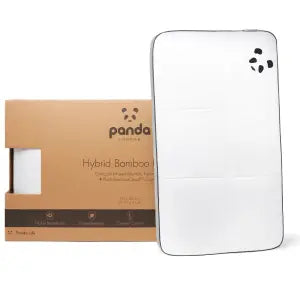
 Hybrid Bambuskissen
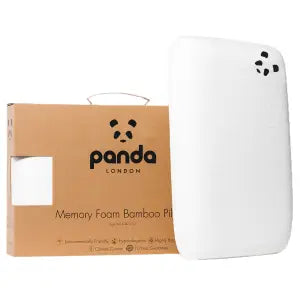 Memory Foam Bambuskissen
 Memory Foam Bambuskissen für Kinder
 Baby Memory Foam Bambuskissen
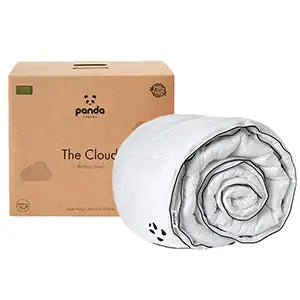 Panda Bettdecke Cloud
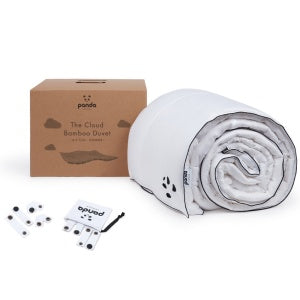 Sommerbettdecke aus Bambus
 Kinder Cloud Bettdecke
![[MattressTopper] Bamboo_Mattress_Topper_Package_Box-updated](http://pandalondon.com/cdn/shop/files/Bamboo_Mattress_Topper_Package_Box-updated.webp?crop=region&crop_height=1315&crop_left=92&crop_top=0&crop_width=1315&v=1782726992&width=1500)
![[MattressTopper] Woman laying on a Panda Bamboo Mattress Topper](http://pandalondon.com/cdn/shop/files/Bamboo_Mattress_Topper_Product_Image_01.webp?v=1782726484&width=1080)
![[MattressTopper] Guy laying on a Panda Bamboo Mattress Topper](http://pandalondon.com/cdn/shop/files/Bamboo_Mattress_Topper_Product_Image_02.webp?v=1782726484&width=1080)
![[MattressTopper] Woman setting up a Panda Bamboo Mattress Topper](http://pandalondon.com/cdn/shop/files/Bamboo_Mattress_Topper_Product_Image_03.webp?v=1782726484&width=1080)
![[MattressTopper] Panda London Memory Foam Bamboo Mattress Topper side](http://pandalondon.com/cdn/shop/files/Mattress_Topper_Isolated_-_resized.jpg?v=1773853354&width=800)
![[HybridMattressPro] Hybrid_Bamboo_Mattress_Pro_Product_Image_2026](http://pandalondon.com/cdn/shop/files/Hybrid_Bamboo_Mattress_Pro_Product_Image_2026.webp?v=1764944771&width=1000)
![[HybridMattressPro] A woman in white pajamas lies on her side on a mattress atop a gray upholstered bed frame in a softly lit bedroom. The mattress has a white top layer with a subtle geometric pattern and a black center band, with a small Panda Mattress logo patch visible on the side.](http://pandalondon.com/cdn/shop/files/Mattress_PRO-01.webp?v=1790672728&width=2049)
![[HybridMattressPro] Hybrid Bamboo Mattress Pro Cover Zip](http://pandalondon.com/cdn/shop/files/Hybrid_Bamboo_Mattress_Cover.jpg?v=1764944771&width=800)
![[HybridMattressPro] A woman in a cream-colored pajama set kneels beside a bed, holding down a mattress protector on a Panda Mattress to show its support and comfort.](http://pandalondon.com/cdn/shop/files/Mattress_PRO-03.webp?v=1790672728&width=2049)
![[HybridMattressPro] A woman in light pink pajamas sits on a Panda Bamboo mattress](http://pandalondon.com/cdn/shop/files/Mattress_PRO-04.webp?v=1790672728&width=2049)
![[CloudDuvet] Panda London The Cloud Bamboo Duvet Packaging](http://pandalondon.com/cdn/shop/products/Panda-London-The-Cloud-Bamboo-Duvet-Panda-Life-scaled_00a651ad-4ca3-4105-b520-12a94c1a4f71.jpg?v=1713363286&width=1920)
![[CloudDuvet] Panda London The Cloud Bamboo Duvet Rolled](http://pandalondon.com/cdn/shop/products/Duvet-Listing-Images03.jpg?v=1764079307&width=1000)
![[CloudDuvet] Guy making the bed with Panda Cloud Duvet 10.5 TOG](http://pandalondon.com/cdn/shop/files/Duvet_10.5_Tog-02.webp?v=1790607319&width=2049)
![[CloudDuvet] Guy reading a book on the bed covered with Panda Cloud Duvet 10.5 TOG](http://pandalondon.com/cdn/shop/files/Duvet_10.5_Tog-03.webp?v=1790607319&width=2049)
![[CloudDuvet] Guy making his bed with Panda Cloud Duvet 10.5 TOG](http://pandalondon.com/cdn/shop/files/Duvet_10.5_Tog-04.webp?v=1790607319&width=2049)
![[BBWhite] 100_Bamboo_Bedding_Set_Pure_White](http://pandalondon.com/cdn/shop/files/100_Bamboo_Bedding_Set_Pure_White_01.webp?v=1781082973&width=1080)
![[BBWhite] White 100% Bamboo Bedding Texture](http://pandalondon.com/cdn/shop/files/100_Bamboo_Bedding_-_Pure_White_-_Close_Up_02.webp?v=1773611287&width=1000)
![[BBWhite] 100_Bamboo_Bedding_Set_Pure_White couple laughing](http://pandalondon.com/cdn/shop/files/100_Bamboo_Bedding_Set_Pure_White_02.webp?v=1781082974&width=1080)
![[BBWhite] White 100% Bamboo Bedding Woman Duvet cover buttons](http://pandalondon.com/cdn/shop/files/hand_and_buttons_1.webp?v=1773611287&width=1000)
![[BBWhite] 100_Bamboo_Bedding_Set_Pure_White woman sleeping](http://pandalondon.com/cdn/shop/files/100_Bamboo_Bedding_Set_Pure_White_03.webp?v=1781082973&width=1080)
![[BBUrbanGrey] 100_Bamboo_Bedding_Set_Urban_Grey_guy laying on the bedding](http://pandalondon.com/cdn/shop/files/100_Bamboo_Bedding_Set_Urban_Grey_01.webp?v=1781083567&width=1080)
![[BBUrbanGrey] Cloud Duvet Urban Grey 100% Bamboo Bedding Set](http://pandalondon.com/cdn/shop/files/Cloud_Duvet_-_Grey_-_Close_up_2.webp?v=1773611287&width=1000)
![[BBUrbanGrey] 100_Bamboo_Bedding_Set_Urban_Grey_woman opening the bedding bag](http://pandalondon.com/cdn/shop/files/100_Bamboo_Bedding_Set_Urban_Grey_02.webp?v=1781083568&width=1080)
![[BBUrbanGrey] 100_Bamboo_Bedding_Set_Urban_Grey_woman making the bed](http://pandalondon.com/cdn/shop/files/100_Bamboo_Bedding_Set_Urban_Grey_04.webp?v=1781083567&width=1080)
![[BBUrbanGrey] 100_Bamboo_Bedding_Set_Urban_Grey_couple reading magazines](http://pandalondon.com/cdn/shop/files/100_Bamboo_Bedding_Set_Urban_Grey_03.webp?v=1781083567&width=1080)
![[BBNavyBlue] Deep Sea Navy Blue 100% Bamboo Bedding Set couple reading a magazine](http://pandalondon.com/cdn/shop/files/100_Bamboo_Bedding_Set_Deep_Sea_Navy_01.webp?v=1781083134&width=1080)
![[BBNavyBlue] Deep Sea Navy Blue 100% Bamboo Bedding Texture](http://pandalondon.com/cdn/shop/files/Cloud_Duvet_-_Navy_-_Close_up_2.webp?v=1773611287&width=1000)
![[BBNavyBlue] Deep Sea Navy Blue 100% Bamboo Bedding Set couple reading a magazine and smiling](http://pandalondon.com/cdn/shop/files/100_Bamboo_Bedding_Set_Deep_Sea_Navy_02.webp?v=1781083135&width=1080)
![[BBNavyBlue] Deep Sea Navy Blue 100% Bamboo Bedding Set woman resting](http://pandalondon.com/cdn/shop/files/100_Bamboo_Bedding_Set_Deep_Sea_Navy_04.png?v=1781083138&width=1080)
![[BBNavyBlue] Deep Sea Navy Blue 100% Bamboo Bedding Set guy laying and smiling](http://pandalondon.com/cdn/shop/files/100_Bamboo_Bedding_Set_Deep_Sea_Navy_03.webp?v=1781083134&width=1080)
![[BBPink] Vintage Pink Blue 100% Bamboo Bedding woman making the bed](http://pandalondon.com/cdn/shop/files/100_Bamboo_Bedding_Set_Pink_01.webp?v=1781083678&width=1080)
![[BBPink] Vintage Pink Texture 100% Bamboo Bedding](http://pandalondon.com/cdn/shop/files/Cloud_Duvet_-_Pink_-_Close_up_2.webp?v=1773611287&width=1000)
![[BBPink] Vintage Pink Blue 100% Bamboo Bedding woman hugging the pillow with vintage pink pillow case](http://pandalondon.com/cdn/shop/files/100_Bamboo_Bedding_Set_Pink_02.webp?v=1781083678&width=1080)
![[BBPink] Vintage Pink Blue 100% Bamboo Bedding woman hiding under duvet with pink duvet cover](http://pandalondon.com/cdn/shop/files/100_Bamboo_Bedding_Set_Pink_03.webp?v=1781083679&width=1080)
![[BBPink] Vintage Pink Blue 100% Bamboo Bedding woman laying and smiling on the panda bedding set](http://pandalondon.com/cdn/shop/files/100_Bamboo_Bedding_Set_Pink_04.webp?v=1781083679&width=1080)
![[BBGrey] 100_Bamboo_Bedding_Set_Quiet_Grey_ woman holding the bedding](http://pandalondon.com/cdn/shop/files/100_Bamboo_Bedding_Set_Quiet_Grey_01.webp?v=1781083287&width=1080)
![[BBGrey] Light Grey 100% Bamboo Bedding texture](http://pandalondon.com/cdn/shop/files/Texture17.webp?v=1773611287&width=1000)
![[BBGrey] 100_Bamboo_Bedding_Set_Quiet_Grey_0guy laying and smiling](http://pandalondon.com/cdn/shop/files/100_Bamboo_Bedding_Set_Quiet_Grey_02.webp?v=1781083287&width=1080)
![[BBGrey] 100_Bamboo_Bedding_Set_Quiet_Grey_0guy reading a magazine on the bed](http://pandalondon.com/cdn/shop/files/100_Bamboo_Bedding_Set_Quiet_Grey_03.webp?v=1781083287&width=1080)
![[BBGrey] 100_Bamboo_Bedding_Set_Quiet_Grey_0woman making the bed](http://pandalondon.com/cdn/shop/files/100_Bamboo_Bedding_Set_Quiet_Grey_04.webp?v=1781083287&width=1080)

Your bed’s hidden biome is the mix of sweat, skin cells, dust mites, bacteria and moisture that builds up over time. When unmanaged, it can affect allergies, temperature regulation and sleep quality.
How would you describe your bed? A haven, sleep sanctuary, your happy place? The word ‘ecosystem’ may not immediately come to mind, but that is exactly how you could label it. Your bed is made up of sheets, pillows and, typically, a duvet, but there are also layers that you cannot see. Your bed’s hidden biome is a collection of skin cells, dust, moisture, mites, mould and bacteria.
As we spend a third of our lives in bed, it's important to know what we’re getting under the covers with. While natural and harmless when kept in check, a bed’s biome can cause irritation for those prone to allergies or discomfort for those who find it difficult to regulate their temperature while asleep. We’ll provide actionable tips to manage this micro environment.
What is a bed biome?
A bed biome is microscopic life which occurs as a result of sleeping in our bed every night. Natural body functions mean we sweat and shed skin on our bedding while sleeping. All of this creates a buildup of body oils, dust mites, microbial communities and environmental pollutants.
Did you know? Even if you have fresh sheets on your bed, in just one night, your body sweats out half a pint of fluid, and it sheds millions of skin cells. If your pet sleeps with you at night, this also contributes to your bed’s biome, with dogs and cats both having around 400-500 different species of bacteria in their saliva alone.
The conditions that foster growth
Just like any other ecosystem, your bed’s biome needs food, water and warmth to help it to thrive. Below is the life cycle of your bed’s environs.
- The shedding of our skin cells provides food for dust mites to live on.
- Night sweats and humidity, combined with your body heat, provide the heat and water.
- If you don’t change your sheets very often, this results in a buildup of skin cells, dust and sweat, creating the perfect environment for fungi.
- Old bedsheets will retain bacteria, and even if you wash them regularly, this may not remove built-up dirt.
- Thick duvets and tightly made beds do not allow for much airflow and ventilation.

How your bed biome affects your sleep
Allergies and respiratory responses
You may not even be aware of having a dust mite allergy, but if you experience the following symptoms upon waking up, it could indicate an underlying allergic reaction:
- Blocked nose
- A post-nasal drip
- Itchy eyes
- Sneezing
Skin and irritation
A combination of products, sweat and oil can irritate skin and disrupt your sleep at night by:
- Itchy skin
- Aggravating breakouts
- Raising your temperature to wake you up
Temperature & moisture
Heat build-up and humidity disturb sleep cycles and cause night sweats. Here are reasons you might be sweating at night:
- If your room is too hot
- Your duvet TOG is too warm or too heavy
- Menopause symptoms or a reaction to a prescription
Odour and freshness
Unpleasant smells can cause subtle discomfort or distract the mind.
How to manage your bed microclimate
Microbial activity thrives on humidity and high temperatures, so to keep your bed’s biome under control, you need to make sure your environment is set to the following conditions:
- An ideal room temperature of 16-18°C. If you’re unsure of your bedroom’s temperature, it might be a good idea to invest in a thermometer.
- Leave your bed unmade for at least half an hour after waking.
- Control humidity in your bedroom by having the window open or using a dehumidifier.
- Avoid drying clothes in your bedroom.
- Ensure you change your bedding according to the time of year, choosing light fabrics such as linen for summer and a low TOG duvet. In the winter, 10.5 TOG will keep you warm unless it is extremely cold, and you’ll need more layers or a higher TOG.

The 7-day “bed biome reset” checklist
Biome is not a dirty word, but with all this discussion of sweat, bacteria and dust mites, you might be wondering if there’s a way to make your bed cleaner. We’ve set up a seven-day bed biome reset to make cleaning it much more manageable.
- Day 1: Wash all bedding (sheets, pillowcases, duvet covers) at 60°C to kill dust mites. (This is for general bedding materials. Bamboo should be washed at up to 30°C.
- Day 2: Vacuum mattress surface and bed frame; wipe down hard surfaces (headboard, nightstands).
- Day 3: Air mattress topper and pillows outdoors or in a sunny spot.
- Day 4: Wash the mattress protector and pillow covers.
- Day 5: Tidy bedroom and remove clutter that traps dust.
- Day 6: Check and adjust humidity and temperature.
- Day 7: Rotate or flip mattress (if applicable) and change bedding again if needed.
- Day 8: Relax!
Ongoing maintenance—what to do weekly, monthly and seasonally
There’s nothing like that fresh bed feeling, and according to the Sleep Foundation, you should be washing your bedsheets once a week to achieve it. Not only does your bedding need to be refreshed, but continual care of the bedroom is necessary to stop your bed from becoming unhygienic. Here’s how to keep on top of your bed’s maintenance:
- Weekly: change sheets and pillowcases; vacuum around the bed; quickly air pillows and toppers.
- Monthly: wash protectors; vacuum mattress (with an upholstery attachment); check for signs of mould or damp.
- Seasonally: deep-clean pillows/toppers (if machine-washable or spot-clean recommended); wash duvets; consider professional mattress cleaning once a year.
Materials, protectors and products that help keep your bed biome balanced
Protection helps to form the best defence against bacteria and fungi. Choose mattresses and mattress toppers with protective covers that you can easily remove and put in the washing machine.
Fabrics
The best fabrics to keep your bed’s biome in check are those that are highly breathable and antibacterial. Bamboo is naturally antimicrobial, so your bed is protected by a bacterial defence between washes. The beauty of bamboo is that it doesn't need to be cleaned at high temperatures; up to 30 degrees is ideal for keeping it hygienic, soft, and durable.
Protectors
Mattress protectors were given this name for a reason. They stop your sleep from being a hotbed of fungi and dust. It is possible to buy protectors which completely encase your pillows, mattress and topper, therefore reducing a dust mite allergen.
Go with the airflow
Even when you have the best sheets on your bed, mattress protectors, and pillows are like sponges. Breathable mattress protectors help stop sweat, skin oils and spills from soaking into the mattress while still allowing vapour to escape, so the bed doesn’t feel “sealed in.”Pillow protectors do the same for pillows (which can otherwise build up heat and moisture quickly around your face).
If you’re looking to make a simple switch, start with breathable, moisture-managing, hypoallergenic bedding to create the ideal microclimate. Our bamboo bedding is designed for that cooler, fresher feel. Pairing it with a breathable barrier layer, like our Bamboo Mattress Protector and Pillow Covers, helps keep that microclimate more stable night after night.
Conclusion
Your bed’s biome can either work for your sleep or against it. When heat, moisture, allergens and everyday buildup aren’t managed, your sleep microclimate becomes warmer, damper and less comfortable.
If your bed is bugging you, there’s good news: you don’t need a full bedroom overhaul. Start with a simple reset routine, then stick to a maintenance plan you can actually keep up with – weekly washing, regular airing, and seasonal deeper cleans. Consistency is what keeps your bed feeling fresh long-term.
And remember, the smallest upgrades often make the biggest difference. Switching to breathable bamboo bedding can help your bed feel cooler, while washable mattress and pillow protectors add an easy-clean barrier that supports a healthy sleep environment.
If you’re ready to make your bed biome work in your favour, take a look at our range of bamboo bedding, mattress protectors and pillow protectors to build a setup that’s comfortable, practical, and easier to maintain.
FAQs
1. How often should I wash my sheets and pillowcases?
Once a week, and you should wash them after you’ve been ill to rid them of germs. If you sleep hot, have asthma or sleep with pets, you should wash sheets and pillowcases every three to four days.
2. Can dust mites really affect my sleep?
Yes, for some people, dust mites can genuinely affect sleep. They don’t bite, but proteins in dust mite droppings can trigger allergy symptoms (rhinitis, asthma, eczema).
3. What temperature should my bedroom be for optimal sleep?
16-18°C (60–65°F) is the ideal sleep temperature.
4. Does a mattress protector stop dust and sweat from reaching my mattress?
Yes. A mattress protector can block a lot of sweat and dust from getting into your mattress, but its effectiveness depends on the type. We recommend a waterproof mattress protector.
5. Are natural fabrics like bamboo better than synthetic ones for reducing microbes?
Yes, natural fabrics like cotton and bamboo will help to keep your sleep environment dry, fresh and comfortable. Bamboo is breathable, moisture-wicking, odour-resistant and naturally antibacterial, fending off dirt, dust and bacteria.
6. Should I allow pets on my bed if I have allergies?
No. If you have allergies, you should not let pets sleep on your bed. That’s because the bed is where you spend seven to eight hours breathing close to fabrics that easily hold onto dander. AllergyUK and NHS hospital guidance both emphasise keeping pets out of bedrooms to reduce exposure.
About the Author:
Caroline Barnes is the Content Writer at Panda, creating content on sleep, well-being, sustainability, and home decoration. Her articles span everything from breathable bedding and sleep advice to circular initiatives that help reduce waste and support more mindful choices at home. Born and raised in West London, she studied English Literature at university before spending several years in the high-paced fashion industry, where she learned to appreciate the value of quality sleep. Outside of writing, she enjoys going to gigs and practising yoga.
![[all] Bamboo Mattress Protector Package - PandaLondon](http://pandalondon.com/cdn/shop/files/Bamboo_Mattress_Protector_-_Packaging_Image_-_White_Background.webp?v=1721139172&width=1900)
![[all] Bamboo Mattress Protector for Hybrid Bamboo Mattress](http://pandalondon.com/cdn/shop/files/Bamboo_Mattress_Protector_New.webp?v=1721138562&width=1000)
![[all] Book on a Bamboo Mattress Protector](http://pandalondon.com/cdn/shop/products/Mattress-Protector-Listing-Images02.jpg?v=1721139189&width=1500)
![[all] Bamboo Mattress Protector Corner](http://pandalondon.com/cdn/shop/products/Mattress-Protector-Listing-Images03-e1623787734812.jpg?v=1721139189&width=1300)
![[all] Bamboo Mattress Protector Corner in line Panda London](http://pandalondon.com/cdn/shop/products/Mattress-Protector-Listing-Images04.jpg?v=1721139183&width=1500)
![[all] Panda Bamboo Mattress Protector Panda London](http://pandalondon.com/cdn/shop/files/Panda-Bamboo-Mattress-Protector-Guarantee-768x768_jpg_450393f5-91a9-499f-b15a-12d636a9a8b7.webp?v=1721139183&width=768)
![[all] Woman sitting on a bed with a comfortable Hybrid Mattress Topper in a cozy bedroom setting.](http://pandalondon.com/cdn/shop/files/Hybrid_Bamboo_Mattress_Topper_-_Main_image.webp?v=1767883161&width=1000)
![[all] Hybrid Mattress Topper on a bed frame, showcasing bamboo material and design for improved comfort and support.](http://pandalondon.com/cdn/shop/files/Hybrid_Bamboo_Mattress_Topper_Main_Product_Image_for_Product_Page_2025.webp?v=1767883161&width=1000)
![[all] Couple enjoying a comfortable sleep on a Hybrid Mattress Topper, showcasing the topper's plush bamboo design.](http://pandalondon.com/cdn/shop/files/Hybrid_Bamboo_Mattress_Topper_-_Couple_on_th_bed.webp?v=1767883161&width=1000)
![[all] Woman sitting on a Hybrid Mattress Topper in a cozy bedroom setting with neutral decor.](http://pandalondon.com/cdn/shop/files/Hybrid_Bamboo_Mattress_Topper.webp?v=1767883161&width=1000)
![[all] Close-up of a Hybrid Mattress Topper showcasing breathable mesh design and corner label.](http://pandalondon.com/cdn/shop/files/HybridBambooMattressTopperCorner-removablecover-produuctimage04.webp?v=1767883161&width=1000)
![[all] Hybrid Bamboo Mattress Topper rolled-produuctimage05](http://pandalondon.com/cdn/shop/files/HybridBambooMattressTopperrolled-produuctimage05.webp?v=1767883161&width=1000)
![[all] Hybrid Bamboo Mattress Topper- sideview-productimage06](http://pandalondon.com/cdn/shop/files/HybridBambooMattressTopper-sideview-productimage06.webp?v=1767883161&width=1000)
![[all] Hybrid Bamboo Mattress Topper- stripes-productimage07](http://pandalondon.com/cdn/shop/files/HybridBambooMattressTopper-stripes-productimage07.webp?v=1767883161&width=1000)
![[all] Hybrid Bamboo Mattress Topper on a Mattress-productimage02](http://pandalondon.com/cdn/shop/files/HybridBambooMattressTopperonaMattress-productimage02.webp?v=1767883161&width=1000)
![[all] Hybrid Bamboo Mattress Topper on a Mattress-sideview-produuctimage03](http://pandalondon.com/cdn/shop/files/HybridBambooMattressTopperonaMattress-sideview-produuctimage03.webp?v=1767883161&width=1000)

