
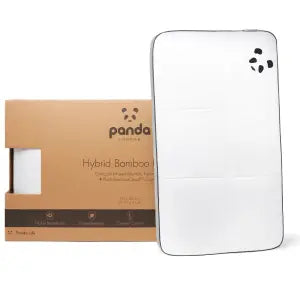
 Hybrid Bambuskissen
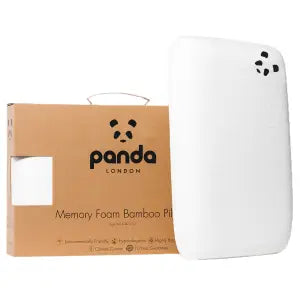 Memory Foam Bambuskissen
 Memory Foam Bambuskissen für Kinder
 Baby Memory Foam Bambuskissen
 Panda Bettdecke Cloud
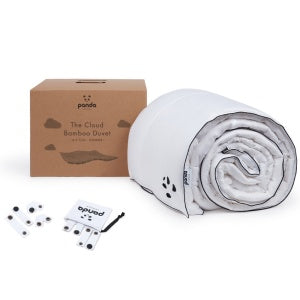 Sommerbettdecke aus Bambus
 Kinder Cloud Bettdecke
![[MattressTopper] Bamboo_Mattress_Topper_Package_Box-updated](http://pandalondon.com/cdn/shop/files/Bamboo_Mattress_Topper_Package_Box-updated.webp?crop=region&crop_height=1315&crop_left=92&crop_top=0&crop_width=1315&v=1782726992&width=1500)
![[MattressTopper] Woman laying on a Panda Bamboo Mattress Topper](http://pandalondon.com/cdn/shop/files/Bamboo_Mattress_Topper_Product_Image_01.webp?v=1782726484&width=1080)
![[MattressTopper] Guy laying on a Panda Bamboo Mattress Topper](http://pandalondon.com/cdn/shop/files/Bamboo_Mattress_Topper_Product_Image_02.webp?v=1782726484&width=1080)
![[MattressTopper] Woman setting up a Panda Bamboo Mattress Topper](http://pandalondon.com/cdn/shop/files/Bamboo_Mattress_Topper_Product_Image_03.webp?v=1782726484&width=1080)
![[MattressTopper] Panda London Memory Foam Bamboo Mattress Topper side](http://pandalondon.com/cdn/shop/files/Mattress_Topper_Isolated_-_resized.jpg?v=1773853354&width=800)
![[HybridMattressPro] Hybrid_Bamboo_Mattress_Pro_Product_Image_2026](http://pandalondon.com/cdn/shop/files/Hybrid_Bamboo_Mattress_Pro_Product_Image_2026.webp?v=1764944771&width=1000)
![[HybridMattressPro] Breathable Hybrid Bamboo Mattress](http://pandalondon.com/cdn/shop/products/Breathable-Hybrid-Bamboo-Mattress.jpg?v=1764944771&width=1920)
![[HybridMattressPro] Hybrid Bamboo Mattress Pro Cover Zip](http://pandalondon.com/cdn/shop/files/Hybrid_Bamboo_Mattress_Cover.jpg?v=1764944771&width=800)
![[HybridMattressPro] Panda Hybrid Bamboo Mattress Pro](http://pandalondon.com/cdn/shop/files/Hybrid_Bambo_Memory_Foam_Mattress_-_BioCell_Foam_x.jpg?v=1764944771&width=800)
![[HybridMattressPro] Couple on a Hybrid Bamboo Mattress Pro](http://pandalondon.com/cdn/shop/files/Hybrid_Bamboo_Mattress_Couple.jpg?v=1764944771&width=800)
![[CloudDuvet] Panda London The Cloud Bamboo Duvet Packaging](http://pandalondon.com/cdn/shop/products/Panda-London-The-Cloud-Bamboo-Duvet-Panda-Life-scaled_00a651ad-4ca3-4105-b520-12a94c1a4f71.jpg?v=1713363286&width=1920)
![[CloudDuvet] Panda London The Cloud Bamboo Duvet Rolled](http://pandalondon.com/cdn/shop/products/Duvet-Listing-Images03.jpg?v=1764079307&width=1000)
![[CloudDuvet] Panda London The Cloud Bamboo Duvet Girl Huggin a Duvet on the Bed](http://pandalondon.com/cdn/shop/files/Cloud_Bamboo_Duvet_-_Lady_Hugging_it_on_Bed_LifestyleImage.jpg?v=1764079307&width=1000)
![[CloudDuvet] Panda London The Cloud Bamboo Duvet Guy In the Air with Cloud Bamboo Duvet](http://pandalondon.com/cdn/shop/files/GuyonaHybridBambooMattresswithCloudDuvet.jpg?v=1772559689&width=2000)
![[CloudDuvet] Panda Cloud Duvet Winter on the bed lifestyle image](http://pandalondon.com/cdn/shop/files/Panda_Cloud_Duvet_Winter_on_the_Bed_Lifestyle-1_image.jpg?v=1772559689&width=1000)
![[BBWhite] 100_Bamboo_Bedding_Set_Pure_White](http://pandalondon.com/cdn/shop/files/100_Bamboo_Bedding_Set_Pure_White_01.webp?v=1781082973&width=1080)
![[BBWhite] White 100% Bamboo Bedding Texture](http://pandalondon.com/cdn/shop/files/100_Bamboo_Bedding_-_Pure_White_-_Close_Up_02.webp?v=1773611287&width=1000)
![[BBWhite] 100_Bamboo_Bedding_Set_Pure_White couple laughing](http://pandalondon.com/cdn/shop/files/100_Bamboo_Bedding_Set_Pure_White_02.webp?v=1781082974&width=1080)
![[BBWhite] White 100% Bamboo Bedding Woman Duvet cover buttons](http://pandalondon.com/cdn/shop/files/hand_and_buttons_1.webp?v=1773611287&width=1000)
![[BBWhite] 100_Bamboo_Bedding_Set_Pure_White woman sleeping](http://pandalondon.com/cdn/shop/files/100_Bamboo_Bedding_Set_Pure_White_03.webp?v=1781082973&width=1080)
![[BBUrbanGrey] 100_Bamboo_Bedding_Set_Urban_Grey_guy laying on the bedding](http://pandalondon.com/cdn/shop/files/100_Bamboo_Bedding_Set_Urban_Grey_01.webp?v=1781083567&width=1080)
![[BBUrbanGrey] Cloud Duvet Urban Grey 100% Bamboo Bedding Set](http://pandalondon.com/cdn/shop/files/Cloud_Duvet_-_Grey_-_Close_up_2.webp?v=1773611287&width=1000)
![[BBUrbanGrey] 100_Bamboo_Bedding_Set_Urban_Grey_woman opening the bedding bag](http://pandalondon.com/cdn/shop/files/100_Bamboo_Bedding_Set_Urban_Grey_02.webp?v=1781083568&width=1080)
![[BBUrbanGrey] 100_Bamboo_Bedding_Set_Urban_Grey_woman making the bed](http://pandalondon.com/cdn/shop/files/100_Bamboo_Bedding_Set_Urban_Grey_04.webp?v=1781083567&width=1080)
![[BBUrbanGrey] 100_Bamboo_Bedding_Set_Urban_Grey_couple reading magazines](http://pandalondon.com/cdn/shop/files/100_Bamboo_Bedding_Set_Urban_Grey_03.webp?v=1781083567&width=1080)
![[BBNavyBlue] Deep Sea Navy Blue 100% Bamboo Bedding Set couple reading a magazine](http://pandalondon.com/cdn/shop/files/100_Bamboo_Bedding_Set_Deep_Sea_Navy_01.webp?v=1781083134&width=1080)
![[BBNavyBlue] Deep Sea Navy Blue 100% Bamboo Bedding Texture](http://pandalondon.com/cdn/shop/files/Cloud_Duvet_-_Navy_-_Close_up_2.webp?v=1773611287&width=1000)
![[BBNavyBlue] Deep Sea Navy Blue 100% Bamboo Bedding Set couple reading a magazine and smiling](http://pandalondon.com/cdn/shop/files/100_Bamboo_Bedding_Set_Deep_Sea_Navy_02.webp?v=1781083135&width=1080)
![[BBNavyBlue] Deep Sea Navy Blue 100% Bamboo Bedding Set woman resting](http://pandalondon.com/cdn/shop/files/100_Bamboo_Bedding_Set_Deep_Sea_Navy_04.png?v=1781083138&width=1080)
![[BBNavyBlue] Deep Sea Navy Blue 100% Bamboo Bedding Set guy laying and smiling](http://pandalondon.com/cdn/shop/files/100_Bamboo_Bedding_Set_Deep_Sea_Navy_03.webp?v=1781083134&width=1080)
![[BBPink] Vintage Pink Blue 100% Bamboo Bedding woman making the bed](http://pandalondon.com/cdn/shop/files/100_Bamboo_Bedding_Set_Pink_01.webp?v=1781083678&width=1080)
![[BBPink] Vintage Pink Texture 100% Bamboo Bedding](http://pandalondon.com/cdn/shop/files/Cloud_Duvet_-_Pink_-_Close_up_2.webp?v=1773611287&width=1000)
![[BBPink] Vintage Pink Blue 100% Bamboo Bedding woman hugging the pillow with vintage pink pillow case](http://pandalondon.com/cdn/shop/files/100_Bamboo_Bedding_Set_Pink_02.webp?v=1781083678&width=1080)
![[BBPink] Vintage Pink Blue 100% Bamboo Bedding woman hiding under duvet with pink duvet cover](http://pandalondon.com/cdn/shop/files/100_Bamboo_Bedding_Set_Pink_03.webp?v=1781083679&width=1080)
![[BBPink] Vintage Pink Blue 100% Bamboo Bedding woman laying and smiling on the panda bedding set](http://pandalondon.com/cdn/shop/files/100_Bamboo_Bedding_Set_Pink_04.webp?v=1781083679&width=1080)
![[BBGrey] 100_Bamboo_Bedding_Set_Quiet_Grey_ woman holding the bedding](http://pandalondon.com/cdn/shop/files/100_Bamboo_Bedding_Set_Quiet_Grey_01.webp?v=1781083287&width=1080)
![[BBGrey] Light Grey 100% Bamboo Bedding texture](http://pandalondon.com/cdn/shop/files/Texture17.webp?v=1773611287&width=1000)
![[BBGrey] 100_Bamboo_Bedding_Set_Quiet_Grey_0guy laying and smiling](http://pandalondon.com/cdn/shop/files/100_Bamboo_Bedding_Set_Quiet_Grey_02.webp?v=1781083287&width=1080)
![[BBGrey] 100_Bamboo_Bedding_Set_Quiet_Grey_0guy reading a magazine on the bed](http://pandalondon.com/cdn/shop/files/100_Bamboo_Bedding_Set_Quiet_Grey_03.webp?v=1781083287&width=1080)
![[BBGrey] 100_Bamboo_Bedding_Set_Quiet_Grey_0woman making the bed](http://pandalondon.com/cdn/shop/files/100_Bamboo_Bedding_Set_Quiet_Grey_04.webp?v=1781083287&width=1080)

Reviewed by Dr Seeta (The Green Doctor), Medical Doctor & Nutritional Therapist
Quick Answer:
Jet lag happens when your body clock is still on home time while your destination is hours ahead or behind. The fastest ways to adjust are to manage light exposure (get bright light at the right times, and block it with an eye mask when you need to sleep), shift your schedule towards the destination before and during travel, eat and sleep at local times, stay hydrated, and recreate familiar sleep cues — like your own pillow — wherever you're staying. As a rough guide, allow about one day to adjust for each time zone you cross.
You know the feeling: it's 3 am in an unfamiliar hotel room, you're wide awake and staring at the ceiling, while your body insists it's the middle of the afternoon. Then you're fighting to keep your eyes open over dinner. Crossing time zones throws your body clock out of sync — and it can leave you too exhausted to enjoy the trip you've been looking forward to. The good news: a few evidence-based habits (and the right kit) can make a real difference. In this guide, we'll walk through how to beat jet lag so you can feel more like yourself on your next trip.
What actually causes jet lag?
Jet lag is a disruption to your sleep pattern caused by a long-haul flight. Your body clock is still running on your original time zone while your destination is on a different one — this is known as circadian misalignment. Tiredness, broken sleep, brain fog, mood changes and digestive issues are all ways jet lag shows up in the body and mind.
Direction of travel matters
Which way you're flying affects how hard jet lag hits. Travelling east is usually harder, because you're advancing your body clock — going to bed earlier than usual, which is more difficult than pushing your bedtime later. Travelling west, where you delay your clock, tends to be easier to adjust to.
Light is the single most powerful way to reset your circadian rhythm. Your eyes detect light and send signals to the brain: bright light in the morning suppresses melatonin, increases alertness and tells your body the day has begun.
How to use light to reset your body clock
Your body clock is set mainly by light — so to reset it, you plan when you expose yourself to light and when you avoid it. Light tells your brain to feel awake and can gradually shift your sleep schedule, while darkness signals that it's time to prepare for rest. As a general rule, morning light moves your body clock earlier, whereas bright evening light pushes it later.
Our medical expert, Dr Seeta Shah, says:
"Light is the single most powerful tool your body has for resetting its internal clock, yet it's often overlooked in favour of supplements. The body's circadian rhythm is influenced by exposure to natural light, and getting this timing right can accelerate adjustment to a new time zone — so you need to plan your day accordingly."
Plan your first day around the time you land, and expose yourself to light at the right times to signal to your brain that it's time to be awake.
Tips for managing light when you travel:
- Skip sunglasses in the morning so light reaches your eyes and signals that it's daytime.
- Set an alarm to build a consistent routine.
-
Sleep with an eye mask overnight so stray light doesn't disrupt your rest, giving your body clock the chance to reset.
An eye mask is one of the most versatile things you can pack. It blocks light exactly when you need to rest — so reach for it on daytime long-haul flights, when hotel curtains are thin, or when streetlights are bright. Our Bamboo Eye Masks are hypoallergenic, naturally breathable, and super soft; they feel light and comfortable to wear and pack flat. By blocking out light, they help signal to your brain that it's time to sleep. They're a brilliant aid for long-haul travel — though, of course, no eye mask can cure jet lag on its own.
![[HybridPillow] Hybrid_Bamboo_Pillow_-_Woman_laying_on_a_Hybrid_Bamboo_Pillow_with_an_Eye_Mask](https://cdn.shopify.com/s/files/1/0807/7331/6934/files/Hybrid_Bamboo_Pillow_-_Woman_laying_on_a_Hybrid_Bamboo_Pillow_with_an_Eye_Mask.webp?v=1783514966)
How to adjust your schedule before and during travel
Preparation should start a few days before you take off, to ease you into the time change. On the flight, small adjustments help you get into the new zone — and on arrival, resist the nap trap.
Before you travel
Start shifting your bedtime towards your destination's time — around 30–60 minutes closer each night in the days before you fly.
On the plane
Change your watch or phone to the destination time, and try to sleep at the intervals that match it. Keep meals to your destination's mealtimes where you can. Dr Shah explains:
"When you eat, your body releases hormones that signal it is daytime. By eating at the same times as your destination time zone, you help reset your internal clock and encourage your body to adapt to the new schedule faster, meaning you feel the effects of jet lag less."
On arrival
If you land in the morning, head outside and stay active — don't nap the moment you reach your hotel. Wait until the evening, because sleeping too early makes it harder to drift off at night. A helpful tip: eat protein at breakfast to feel more alert, and a meal with some carbohydrates at dinner to help you feel sleepy.
Even with all these tips, most people need at least a day to adjust — and that's normal. As Dr Shah puts it:
"It can be very difficult to fully negate the effects of jet lag after a long, cross-time-zone flight. Whilst you can go into it with all the best intentions, it's often not possible to fully avoid jet lag. Leaning into it can help reduce the negative emotions associated with feeling like you're not doing well enough or getting over it fast enough — which in turn helps you get better rest overall."
![[DoubleDeepSeaNavyBundle] Eye mask Grey Coulour](https://cdn.shopify.com/s/files/1/0807/7331/6934/files/UK_Double_Deep_Sea_Navy_Ultimate_Hybrid_Bundle_EyeMask-CloseUp_Panda_London_Double_Deep_Sea_Navy_1.webp?v=1721235650)
How to sleep well in an unfamiliar place
The "first night effect" is common when you sleep somewhere new — you won't sleep as deeply on the first night away as you would at home. Research suggests that the left hemisphere of the brain remains more alert and responsive to sounds, as if keeping watch for potential danger. Here's how to help your body settle wherever you are in the world.
Bring your own pillow
Bringing the pillow you use at home helps signal to your brain that these new surroundings are safe. It also means better support — a hotel pillow might not suit your sleeping position. For anyone particular about their pillow (especially neck or back pain sufferers), bringing your own removes that variable and protects spinal alignment away from home. Our Memory Foam Bamboo Pillow has a highly breathable bamboo cover that helps regulate your temperature in warm climates, and its orthopaedic-grade support holds its shape — aligning the spine and contouring to your sleeping position.
To make an unfamiliar bedroom feel more like home:
- Follow your usual wind-down routine to signal that it's time to sleep.
- Wear an eye mask to block unfamiliar light.
- Keep the room cool and comfortable.
- Use white noise or earplugs to soften unfamiliar sounds.
Other ways to sleep better in a new time zone:
- Hydrate — drink plenty of water in the morning before you reach for tea or coffee.
- Go easy on alcohol, which disrupts sleep quality.
- Keep naps short — 20–30 minutes, and not too close to bedtime.
- Melatonin may help some people, but it's prescription-only in the UK, so check with your GP or pharmacist before using it.
After a day or two, your body should settle into its new environment and sleep will come more easily.
A quick pre-flight sleep checklist
- Eye mask (for the flight and the hotel)
- Your own pillow packed (or a travel pillow)
- Watch set to destination time
- Bedtime shifted towards destination in advance
- Water bottle
- Earplugs
- Comfy layers
- A wind-down routine planned for the first night
Conclusion
Sleeping well away from home comes down to two things: controlling your exposure to light and recreating the familiar cues that tell your body it's time to rest. Pack your Bamboo Eye Mask and your favourite Panda pillow to bring your best bedtime comfort with you — wherever you're headed.
And with our Summer Sale on until 31st August, you'll find your favourite pillow at 15% off and our Bamboo Eye Mask at 10% off.
FAQ
1. How do I beat jet lag fast?
There's no way to beat jet lag instantly, but you'll recover sooner if you get out into daylight as soon as you arrive, eat and sleep at local times, and stay hydrated.
2. Does an eye mask help with jet lag?
Yes — an eye mask blocks out light, which signals to your brain that it's time to sleep. Use it when napping on the plane before you reach your destination, or when there's too much light at bedtime.
3. How long does jet lag last?
Jet lag usually improves within a few days, though the exact timing depends on how many time zones you cross and the direction of travel. As a rough guide, allow about one day to adjust for each time zone crossed. Travelling east often takes longer to recover from than travelling west, because your body clock has to move forwards.
4. Is it better to bring your own pillow when travelling?
Yes — your own pillow brings a sense of familiarity to a strange setting, which helps trigger sleep. It also guarantees you the support your sleeping position needs, which a hotel pillow may not.
5. How do I sleep on a long-haul flight?
Wearing an eye mask, dressing in comfortable loose clothing, and using earplugs to block out noise can all help you sleep on a long-haul flight.
6. Why can't I sleep the first night in a hotel?
It's common to sleep poorly on your first night somewhere new. Research suggests part of the brain stays more alert in unfamiliar surroundings, as if keeping watch — an effect that usually eases from the second night onwards.
7. Should I take melatonin for jet lag?
Melatonin may reduce jet lag symptoms and shorten recovery for some adults. However, taking it at the wrong time can further disrupt your body clock, and it can interact with medicines or cause side effects. It's also prescription-only in the UK — so speak to a doctor or pharmacist for advice before using it.
About the Author:
Caroline Barnes is the Content Writer at Panda, creating content on sleep, well-being, sustainability, and home decoration. Her articles span everything from breathable bedding and sleep advice to circular initiatives that help reduce waste and support more mindful choices at home. Born and raised in West London, she studied English Literature at university before spending several years in the high-paced fashion industry, where she learned to appreciate the value of quality sleep. Outside of writing, she enjoys going to gigs and practising yoga.
![[GreyEyeMask] Panda London Bamboo Grey Eye Mask](http://pandalondon.com/cdn/shop/files/Grey_Eye_Mask_01.jpg?v=1718269260&width=1000)
![[GreyEyeMask] Panda London Bamboo Grey Eye Mask Full](http://pandalondon.com/cdn/shop/files/Grey_Eye_Mask_02.jpg?v=1718269260&width=1000)
![[GreyEyeMask] Panda London Bamboo Grey Eye Mask Package](http://pandalondon.com/cdn/shop/files/Grey_Eye_Mask_03.jpg?v=1718269259&width=1000)
![[BlackEyeMask] Panda London Bamboo Black Eye Mask Package](http://pandalondon.com/cdn/shop/files/Black_Eye_Mask_01.jpg?v=1718269260&width=870)
![[BlackEyeMask] Panda London Bamboo Black Eye Mask Full](http://pandalondon.com/cdn/shop/files/Black_Eye_Mask_02.jpg?v=1718269259&width=1000)
![[BlackEyeMask] Panda London Bamboo Black Eye Mask Full Package](http://pandalondon.com/cdn/shop/files/Black_Eye_Mask_03.jpg?v=1718269259&width=1000)
![[VintagePink] Pink_Eye_Mask_01](http://pandalondon.com/cdn/shop/files/Pink_Eye_Mask_01.jpg?v=1718269259&width=909)
![[VintagePink] vintage-pink Panda London Bamboo Eye mask](http://pandalondon.com/cdn/shop/files/Pink_Eye_Mask_02.jpg?v=1718269260&width=1000)
![[VintagePink] vintage-pink Panda London Bamboo Eye mask Package Full](http://pandalondon.com/cdn/shop/files/Pink_Eye_Mask_03.jpg?v=1718269259&width=1000)
![[HybridPillow] Hybrid Bamboo Pillow - Mattress Campaign](http://pandalondon.com/cdn/shop/products/Hybrid-Bamboo-Pillow-Mattress-Campaign.jpg?crop=region&crop_height=1615&crop_left=152&crop_top=0&crop_width=1615&v=1771199164&width=1920)
![[HybridPillow] Hybrid_Bamboo_Pillow_-_Woman_laying_on_a_Hybrid_Bamboo_Pillow_with_an_Eye_Mask](http://pandalondon.com/cdn/shop/files/Hybrid_Bamboo_Pillow_-_Woman_laying_on_a_Hybrid_Bamboo_Pillow_with_an_Eye_Mask.webp?v=1783514966&width=1080)
![[HybridPillow] Hybrid_Bamboo_Pillow_02_-_Woman_taking_off_the_Hybrid_Bamboo_Pillow_Cover](http://pandalondon.com/cdn/shop/files/Hybrid_Bamboo_Pillow_02_-_Woman_taking_off_the_Hybrid_Bamboo_Pillow_Cover.webp?v=1783514763&width=1080)
![[HybridPillow] Hybrid Pillow with Panda brand marking](http://pandalondon.com/cdn/shop/products/Hybrid-Pillow_8.jpg?v=1771199164&width=1920)
![[HybridPillow] Hybrid_Bamboo_Pillow_03_-_Couple_pillow_fighting_with_Hybrid_Bamboo_Pillows](http://pandalondon.com/cdn/shop/files/Hybrid_Bamboo_Pillow_03_-_Couple_pillow_fighting_with_Hybrid_Bamboo_Pillows.webp?v=1783514763&width=1080)
![[MemoryFoamPillow] Panda Luxury Memory Foam Bamboo product image](http://pandalondon.com/cdn/shop/products/Panda-Memory-Foam-Bamboo-Pillow-Panda-Life-scaled-e1623788835840.jpg?v=1771199183&width=800)
![[MemoryFoamPillow] Panda London Bamboo Memory Foam Pillow Girl Holding Pillow Lifestyle](http://pandalondon.com/cdn/shop/files/01_Memory_Foam_Bamboo_Pillow__alt04.jpg?v=1771199183&width=800)
![[MemoryFoamPillow] Panda London Bamboo Memory Foam Pillow](http://pandalondon.com/cdn/shop/files/03_Memory_Foam_Bamboo_Pillow__alt01.jpg?v=1771199183&width=800)
![[MemoryFoamPillow] Panda London Bamboo Memory Foam Pillow girl hugging the pillow](http://pandalondon.com/cdn/shop/files/02_Memory_Foam_Bamboo_Pillow__alt02.jpg?v=1771199183&width=800)
![[MemoryFoamPillow] Panda London Bamboo Memory Foam Pillow on a Panda Topper](http://pandalondon.com/cdn/shop/files/Memory-Foam-Bamboo-Pillow-on-Bed-Topper-and-Adjustable-Straps-Shown-Lifestyle-Square-768x768_png.webp?v=1771199183&width=768)
![[PillowcoversHBP] Spare Pillow Cover Hybrid Bamboo Pillow](http://pandalondon.com/cdn/shop/files/Spare_Pillow_Cover_-_Hybrid_Bamboo_Pillow.webp?v=1775045389&width=1000)
![[PillowcoversMFBP] Spare Pillow Cover Memory_Foam_Bamboo_Pillow](http://pandalondon.com/cdn/shop/files/Spare_Pillow_Cover_-_Memory_Foam_Bamboo_Pillow.webp?v=1775045389&width=1000)
![[PillowcoversBBP] Spare Pillow Cover Baby_Bamboo_Pillow](http://pandalondon.com/cdn/shop/files/Spare_Pillow_Cover_-_Baby_Bamboo_Pillow.webp?crop=region&crop_height=667&crop_left=166&crop_top=0&crop_width=667&v=1775045389&width=1000)
![[PillowcoversTBP] Spare Pillow Cover Toddler_Bamboo_Pillow](http://pandalondon.com/cdn/shop/files/Spare_Pillow_Cover_-_Toddler_Bamboo_Pillow.webp?crop=region&crop_height=667&crop_left=166&crop_top=0&crop_width=667&v=1775045389&width=1000)
![[PillowcoversKBP] Spare Pillow Cover Kids_Pillow](http://pandalondon.com/cdn/shop/files/Spare_Pillow_Cover_-_Kids_Pillow.webp?crop=region&crop_height=667&crop_left=166&crop_top=0&crop_width=667&v=1775045389&width=1000)
![[A] Panda Bamboo Pillow CoversL](http://pandalondon.com/cdn/shop/products/Panda-Bamboo-Pillow-Covers.jpg?v=1775045389&width=1920)

