
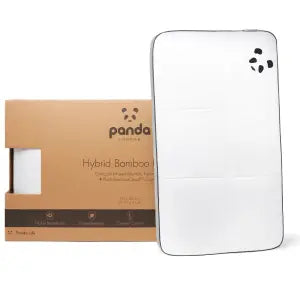
 Hybrid Bambuskissen
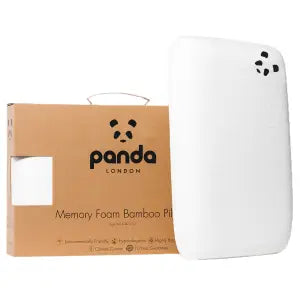 Memory Foam Bambuskissen
 Memory Foam Bambuskissen für Kinder
 Baby Memory Foam Bambuskissen
 Panda Bettdecke Cloud
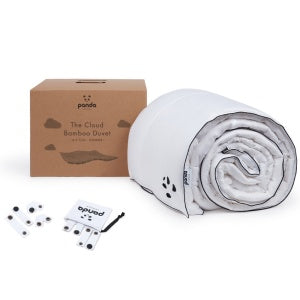 Sommerbettdecke aus Bambus
 Kinder Cloud Bettdecke
![[MattressTopper] Bamboo_Mattress_Topper_Package_Box-updated](http://pandalondon.com/cdn/shop/files/Bamboo_Mattress_Topper_Package_Box-updated.webp?crop=region&crop_height=1315&crop_left=92&crop_top=0&crop_width=1315&v=1782726992&width=1500)
![[MattressTopper] Woman laying on a Panda Bamboo Mattress Topper](http://pandalondon.com/cdn/shop/files/Bamboo_Mattress_Topper_Product_Image_01.webp?v=1782726484&width=1080)
![[MattressTopper] Guy laying on a Panda Bamboo Mattress Topper](http://pandalondon.com/cdn/shop/files/Bamboo_Mattress_Topper_Product_Image_02.webp?v=1782726484&width=1080)
![[MattressTopper] Woman setting up a Panda Bamboo Mattress Topper](http://pandalondon.com/cdn/shop/files/Bamboo_Mattress_Topper_Product_Image_03.webp?v=1782726484&width=1080)
![[MattressTopper] Panda London Memory Foam Bamboo Mattress Topper side](http://pandalondon.com/cdn/shop/files/Mattress_Topper_Isolated_-_resized.jpg?v=1773853354&width=800)
![[HybridMattressPro] Hybrid_Bamboo_Mattress_Pro_Product_Image_2026](http://pandalondon.com/cdn/shop/files/Hybrid_Bamboo_Mattress_Pro_Product_Image_2026.webp?v=1764944771&width=1000)
![[HybridMattressPro] A woman in white pajamas lies on her side on a mattress atop a gray upholstered bed frame in a softly lit bedroom. The mattress has a white top layer with a subtle geometric pattern and a black center band, with a small Panda Mattress logo patch visible on the side.](http://pandalondon.com/cdn/shop/files/Mattress_PRO-01.webp?v=1790672728&width=2049)
![[HybridMattressPro] Hybrid Bamboo Mattress Pro Cover Zip](http://pandalondon.com/cdn/shop/files/Hybrid_Bamboo_Mattress_Cover.jpg?v=1764944771&width=800)
![[HybridMattressPro] A woman in a cream-colored pajama set kneels beside a bed, holding down a mattress protector on a Panda Mattress to show its support and comfort.](http://pandalondon.com/cdn/shop/files/Mattress_PRO-03.webp?v=1790672728&width=2049)
![[HybridMattressPro] A woman in light pink pajamas sits on a Panda Bamboo mattress](http://pandalondon.com/cdn/shop/files/Mattress_PRO-04.webp?v=1790672728&width=2049)
![[CloudDuvet] Panda London The Cloud Bamboo Duvet Packaging](http://pandalondon.com/cdn/shop/products/Panda-London-The-Cloud-Bamboo-Duvet-Panda-Life-scaled_00a651ad-4ca3-4105-b520-12a94c1a4f71.jpg?v=1713363286&width=1920)
![[CloudDuvet] Panda London The Cloud Bamboo Duvet Rolled](http://pandalondon.com/cdn/shop/products/Duvet-Listing-Images03.jpg?v=1764079307&width=1000)
![[CloudDuvet] Guy making the bed with Panda Cloud Duvet 10.5 TOG](http://pandalondon.com/cdn/shop/files/Duvet_10.5_Tog-02.webp?v=1790607319&width=2049)
![[CloudDuvet] Guy reading a book on the bed covered with Panda Cloud Duvet 10.5 TOG](http://pandalondon.com/cdn/shop/files/Duvet_10.5_Tog-03.webp?v=1790607319&width=2049)
![[CloudDuvet] Guy making his bed with Panda Cloud Duvet 10.5 TOG](http://pandalondon.com/cdn/shop/files/Duvet_10.5_Tog-04.webp?v=1790607319&width=2049)
![[BBWhite] 100_Bamboo_Bedding_Set_Pure_White](http://pandalondon.com/cdn/shop/files/100_Bamboo_Bedding_Set_Pure_White_01.webp?v=1781082973&width=1080)
![[BBWhite] White 100% Bamboo Bedding Texture](http://pandalondon.com/cdn/shop/files/100_Bamboo_Bedding_-_Pure_White_-_Close_Up_02.webp?v=1773611287&width=1000)
![[BBWhite] 100_Bamboo_Bedding_Set_Pure_White couple laughing](http://pandalondon.com/cdn/shop/files/100_Bamboo_Bedding_Set_Pure_White_02.webp?v=1781082974&width=1080)
![[BBWhite] White 100% Bamboo Bedding Woman Duvet cover buttons](http://pandalondon.com/cdn/shop/files/hand_and_buttons_1.webp?v=1773611287&width=1000)
![[BBWhite] 100_Bamboo_Bedding_Set_Pure_White woman sleeping](http://pandalondon.com/cdn/shop/files/100_Bamboo_Bedding_Set_Pure_White_03.webp?v=1781082973&width=1080)
![[BBUrbanGrey] 100_Bamboo_Bedding_Set_Urban_Grey_guy laying on the bedding](http://pandalondon.com/cdn/shop/files/100_Bamboo_Bedding_Set_Urban_Grey_01.webp?v=1781083567&width=1080)
![[BBUrbanGrey] Cloud Duvet Urban Grey 100% Bamboo Bedding Set](http://pandalondon.com/cdn/shop/files/Cloud_Duvet_-_Grey_-_Close_up_2.webp?v=1773611287&width=1000)
![[BBUrbanGrey] 100_Bamboo_Bedding_Set_Urban_Grey_woman opening the bedding bag](http://pandalondon.com/cdn/shop/files/100_Bamboo_Bedding_Set_Urban_Grey_02.webp?v=1781083568&width=1080)
![[BBUrbanGrey] 100_Bamboo_Bedding_Set_Urban_Grey_woman making the bed](http://pandalondon.com/cdn/shop/files/100_Bamboo_Bedding_Set_Urban_Grey_04.webp?v=1781083567&width=1080)
![[BBUrbanGrey] 100_Bamboo_Bedding_Set_Urban_Grey_couple reading magazines](http://pandalondon.com/cdn/shop/files/100_Bamboo_Bedding_Set_Urban_Grey_03.webp?v=1781083567&width=1080)
![[BBNavyBlue] Deep Sea Navy Blue 100% Bamboo Bedding Set couple reading a magazine](http://pandalondon.com/cdn/shop/files/100_Bamboo_Bedding_Set_Deep_Sea_Navy_01.webp?v=1781083134&width=1080)
![[BBNavyBlue] Deep Sea Navy Blue 100% Bamboo Bedding Texture](http://pandalondon.com/cdn/shop/files/Cloud_Duvet_-_Navy_-_Close_up_2.webp?v=1773611287&width=1000)
![[BBNavyBlue] Deep Sea Navy Blue 100% Bamboo Bedding Set couple reading a magazine and smiling](http://pandalondon.com/cdn/shop/files/100_Bamboo_Bedding_Set_Deep_Sea_Navy_02.webp?v=1781083135&width=1080)
![[BBNavyBlue] Deep Sea Navy Blue 100% Bamboo Bedding Set woman resting](http://pandalondon.com/cdn/shop/files/100_Bamboo_Bedding_Set_Deep_Sea_Navy_04.png?v=1781083138&width=1080)
![[BBNavyBlue] Deep Sea Navy Blue 100% Bamboo Bedding Set guy laying and smiling](http://pandalondon.com/cdn/shop/files/100_Bamboo_Bedding_Set_Deep_Sea_Navy_03.webp?v=1781083134&width=1080)
![[BBPink] Vintage Pink Blue 100% Bamboo Bedding woman making the bed](http://pandalondon.com/cdn/shop/files/100_Bamboo_Bedding_Set_Pink_01.webp?v=1781083678&width=1080)
![[BBPink] Vintage Pink Texture 100% Bamboo Bedding](http://pandalondon.com/cdn/shop/files/Cloud_Duvet_-_Pink_-_Close_up_2.webp?v=1773611287&width=1000)
![[BBPink] Vintage Pink Blue 100% Bamboo Bedding woman hugging the pillow with vintage pink pillow case](http://pandalondon.com/cdn/shop/files/100_Bamboo_Bedding_Set_Pink_02.webp?v=1781083678&width=1080)
![[BBPink] Vintage Pink Blue 100% Bamboo Bedding woman hiding under duvet with pink duvet cover](http://pandalondon.com/cdn/shop/files/100_Bamboo_Bedding_Set_Pink_03.webp?v=1781083679&width=1080)
![[BBPink] Vintage Pink Blue 100% Bamboo Bedding woman laying and smiling on the panda bedding set](http://pandalondon.com/cdn/shop/files/100_Bamboo_Bedding_Set_Pink_04.webp?v=1781083679&width=1080)
![[BBGrey] 100_Bamboo_Bedding_Set_Quiet_Grey_ woman holding the bedding](http://pandalondon.com/cdn/shop/files/100_Bamboo_Bedding_Set_Quiet_Grey_01.webp?v=1781083287&width=1080)
![[BBGrey] Light Grey 100% Bamboo Bedding texture](http://pandalondon.com/cdn/shop/files/Texture17.webp?v=1773611287&width=1000)
![[BBGrey] 100_Bamboo_Bedding_Set_Quiet_Grey_0guy laying and smiling](http://pandalondon.com/cdn/shop/files/100_Bamboo_Bedding_Set_Quiet_Grey_02.webp?v=1781083287&width=1080)
![[BBGrey] 100_Bamboo_Bedding_Set_Quiet_Grey_0guy reading a magazine on the bed](http://pandalondon.com/cdn/shop/files/100_Bamboo_Bedding_Set_Quiet_Grey_03.webp?v=1781083287&width=1080)
![[BBGrey] 100_Bamboo_Bedding_Set_Quiet_Grey_0woman making the bed](http://pandalondon.com/cdn/shop/files/100_Bamboo_Bedding_Set_Quiet_Grey_04.webp?v=1781083287&width=1080)

Have you ever been accused of being a starfish and wondered what that meant? You may not realise it, but your sleeping position says a lot about you in waking life. Whether you sleep on your side, front or back, the way you position yourself can reveal aspects of your personality, stress levels and needs. Though not an exact science, research in psychology has shown that how you sleep can reflect personality traits and emotional states. We’ve delved under the covers to find out what each position says about you.
The Science Behind Sleep Positions
How Sleep Habits Form
The way you choose to sleep can be developed from childhood, such as hugging a pillow, which can be termed a neuromuscular habit, reinforced by repeating it every night. Your body will gravitate towards a sleeping position that relieves tension and evenly distributes weight. Over time, this becomes habitual, with your brain learning that this is how you feel most relaxed and comfortable.
What affects your position
Other factors include your bedding: a firm mattress encourages back sleeping, while a softer one promotes side sleeping.
The Psychology of Sleep Positions
In the 1970s, sleep researcher Samuel Dunkell described our sleeping positions as the night language of the body. He came up with names such as Flamingo, a Dutch Wife, or a Royal to describe them. Dunkell was the first to hypothesise that the fetal position corresponded with sleepers who tended to be more anxious and emotional.
Best positions for health
By helping to maintain a neutral spine and evenly distribute weight, sleeping on your back is the best way to treat backache and pain. However, this position can worsen snoring and sleep apnea, so side sleeping is recommended. Left-side sleeping helps with overall circulation and blood flow, and comes out on top for the best sleeping position for your health. Stomach sleeping, on the other hand, restricts blood flow and compresses internal organs.
What do the common sleeping positions reveal?
The Fetal Position
Given its name due to the shape mimicking that of a baby in the womb, the sleeper’s body in a fetal position is curled up into a ball, lying on their side with legs and arms bent. Studies suggest that over 60% of adult sleepers prefer to sleep this way.
Personality Traits:
- Emotional
- Empathetic
- Introverted
- Friendly
- Creative
The Log Position
As the position suggests, you sleep like a log! This is another side sleeping position, except the arms are down, not bent.
Personality Traits:
- Easy-going
- Sociable
- Trusting – even perhaps a little gullible!
- Conventional
- Groundedl
The Yearner Position
Yearners position themselves on the side with their arms stretched out like they’re reaching for something. Both arms and legs are fully stretched out.
Personality Traits:
- Open-minded
- Cautious
- Slow to make decisions
- Open yet guarded
- Sociable but not gullible
The Soldier Position
Attention! In the soldier position, the sleeper lies as straight as a soldier stands, so it's no wonder those who favour this position thrive on uniformity.
Personality Traits:
- Disciplined
- Reserved
- Calm
- Prefers structure
- Neat
The Starfish Position
The starfish position sleeper can also be accused of being a ‘bed hogger’ but their personality wouldn’t necessarily support the theory that they’re a selfish person. If you starfish, you’ll look like a star shape when sleeping. You lie on your back near the pillow with your arms outstretched.
Personality Traits:
- Generous
- Good listener
- Don’t seek the spotlight
- Help others
- Easy-going
The Freefall Position
A stomach sleeper with their head turned to one side, with their hands on or around their pillow, is in a free-fall sleeping position.
Personality Traits:
- Outgoing
- Bold
- Dislikes criticism
- Impulsive
- Compulsive
What your sleeping position means for your health
Your sleeping position may require a specific type of support because of how your body shapes itself while asleep. Below we have explained how your sleeping position affects your body long-term:
Fetal
The fetal position causes tightness of the hip muscles and lower back pain if the knees are pulled in very tightly. A pillow between the knees, as well as under the head in this position helps keep the spine in alignment.
Log
With your arm straight down by your sides is a good position for your spine, but in this position it is best to have a pillow between your knees.
Yearner
As your arms are positioned forward in yearner, this can add pressure on the shoulder over time, increasing the risk of pain. Hugging a pillow can help alleviate this pressure.
Soldier
Lying on your back in the soldier position is good for your spinal alignment, but a medium-loft pillow height is important for the right support. It is also good to have a pillow under the knees in this position.
Starfish
This position shouldn’t put pressure on any joints, except the shoulder, if the arms are raised too high.
Back pain is the most common musculoskeletal (MSK) condition, and each year, 20% of the UK population will visit their GP with the complaint. If you’re unhappy with the way you sleep and how it affects your body, find more tips for spine health from the Sleep Foundation.
Do Sleep Positions Change Over Time?
Sleeping positions do change, and this is influenced by factors such as stress, ageing and your relationship dynamics.
Stress
When you’re stressed, you feel tense, which causes your body to default to a tight fetal curl. Hugging a pillow helps to loosen the muscles, so you relax. In this position, sleeping on a thin, medium pillow will stop your head from being too high up, preventing strain over time.
Aging
As your body ages, you are more likely to develop arthritis and hip or joint pain, which forces you into a side sleeping position. Adding a pillow between the knees can help relieve pressure when sleeping on the side. Other conditions, such as snoring or acid reflux, can occur as you get older, so it’s best not to lie on your back, but adopt a left-hand side sleeping position instead. Make sure your mattress supports you if you do suffer from conditions such as arthritis. Our award-winning Hybrid Bamboo Mattress Pro has been designed for all sleeping positions with six layers of orthopaedic support, contouring to your body to help align your spine and alleviate any aches and pains.
Relationship dynamics
When you share a bed, you’ll either adopt a starfish position or curl up tight if there isn’t enough space for both of you. Your partner's snoring or tossing and turning can force you into a side sleeping position. We’ll not take sides on this one so if you feel uncomfortable the best solution is to find a mattress size which accommodates both of you in bed.
Have you ever fallen asleep in one position, only to wake up in another one? This is common, as you often change positions while sleeping. Temperature, or pressure relief, can cause you to shift from your back to your side and then onto your stomach. If you’re back sleeping and you snore or you suffer from sleep apnea, try to correct this by changing to your side. The amount of changes to your sleeping position in the course of just one night proves that no single sleeping style can define who you are as a person.
Tips for Healthier Sleep Posture
It’s not just a mattress which can assist with your posture, but the right pillow can prop you up. Stomach sleepers should have a thin pillow or none at all, and it’s best to transition from this position to your side for improved posture. You can do this by hugging a pillow or having a knee pillow at night until your body transitions.
Back sleeping is best for spinal alignment, in this position opt for a thin to medium pillow for support. If you sleep on your side, you’ll need a pillow which fills the space between your ear and shoulder. Your neck should not be tilted in this position; a medium-firm pillow is recommended. Our Hybrid Bamboo Pillow is the ideal loft height for side sleepers, made with our CharcoCell Foam™ innovation, an orthopaedic-grade foam that contours to your head and neck for optimal alignment.
A topper can help improve your posture without you having to replace a mattress which is too firm or too soft. If you wake up with stiffness, try a firm topper; if you have soreness in your shoulders or hips, try a softer topper.
Conclusion
So when it comes to the psychology around sleeping positions, whose side are you on? Even if you do identify with some of the traits described for your sleeping position, what really matters is how you sleep: a neutral neck, open airway, and even pressure so you wake up comfortable and clear-headed.
The sleeping position which best suits you is the one that fits your body tonight. Most of us shift through the night and across life stages. Tweak the setup, not just the pose—match the pillow height to your position, add a knee pillow for side sleeping, or a small bolster under your knees on your back, and soften a too-firm surface so shoulders and hips can relax. You may even find you’re a changed person.
About the Author:
Caroline Barnes is the Content Writer at Panda, creating content on sleep, well-being, sustainability, and home decoration. Her articles span everything from breathable bedding and sleep advice to circular initiatives that help reduce waste and support more mindful choices at home. Born and raised in West London, she studied English Literature at university before spending several years in the high-paced fashion industry, where she learned to appreciate the value of quality sleep. Outside of writing, she enjoys going to gigs and practising yoga.
![[HybridBambooMattressUpdated] Hybrid Bamboo Mattress Panda London Corner with awards](http://pandalondon.com/cdn/shop/files/Main_product_image_Hybrid_Bamboo_Mattress-02.webp?v=1790680112&width=2049)
![[HybridBambooMattressUpdated] Hybrid Bamboo Mattress Panda London Corner](http://pandalondon.com/cdn/shop/files/Bamboo_Mattress-03.webp?v=1790680112&width=2049)
![[HybridBambooMattressUpdated] Hybrid Bamboo Mattress Panda London Corner woman making the bed](http://pandalondon.com/cdn/shop/files/Bamboo_Mattress-04.webp?v=1790680111&width=2049)
![[HybridBambooMattressUpdated] A smiling couple on a bed, with the woman hugging a Panda London pillow Panda London](http://pandalondon.com/cdn/shop/files/Bamboo_Mattress-05.webp?v=1790680111&width=2049)
![[HybridBambooMattressUpdated] Woman with an eye mask with a guy on a Panda London Bamboo mattress](http://pandalondon.com/cdn/shop/files/Bamboo_Mattress-06.webp?v=1790680112&width=2049)
![[HybridPillow] Hybrid Bamboo Pillow - Mattress Campaign](http://pandalondon.com/cdn/shop/products/Hybrid-Bamboo-Pillow-Mattress-Campaign.jpg?crop=region&crop_height=1615&crop_left=152&crop_top=0&crop_width=1615&v=1771199164&width=1920)
![[HybridPillow] Hybrid_Bamboo_Pillow_-_Woman_laying_on_a_Hybrid_Bamboo_Pillow_with_an_Eye_Mask](http://pandalondon.com/cdn/shop/files/Hybrid_Bamboo_Pillow_-_Woman_laying_on_a_Hybrid_Bamboo_Pillow_with_an_Eye_Mask.webp?v=1783514966&width=1080)
![[HybridPillow] Hybrid_Bamboo_Pillow_02_-_Woman_taking_off_the_Hybrid_Bamboo_Pillow_Cover](http://pandalondon.com/cdn/shop/files/Hybrid_Bamboo_Pillow_02_-_Woman_taking_off_the_Hybrid_Bamboo_Pillow_Cover.webp?v=1783514763&width=1080)
![[HybridPillow] Hybrid Pillow with Panda brand marking](http://pandalondon.com/cdn/shop/products/Hybrid-Pillow_8.jpg?v=1771199164&width=1920)
![[HybridPillow] Hybrid_Bamboo_Pillow_03_-_Couple_pillow_fighting_with_Hybrid_Bamboo_Pillows](http://pandalondon.com/cdn/shop/files/Hybrid_Bamboo_Pillow_03_-_Couple_pillow_fighting_with_Hybrid_Bamboo_Pillows.webp?v=1783514763&width=1080)
![[MemoryFoamPillow] Panda Luxury Memory Foam Bamboo product image](http://pandalondon.com/cdn/shop/products/Panda-Memory-Foam-Bamboo-Pillow-Panda-Life-scaled-e1623788835840.jpg?v=1771199183&width=800)
![[MemoryFoamPillow] Panda London Bamboo Memory Foam Pillow Girl Holding Pillow Lifestyle](http://pandalondon.com/cdn/shop/files/01_Memory_Foam_Bamboo_Pillow__alt04.jpg?v=1771199183&width=800)
![[MemoryFoamPillow] Panda London Bamboo Memory Foam Pillow](http://pandalondon.com/cdn/shop/files/03_Memory_Foam_Bamboo_Pillow__alt01.jpg?v=1771199183&width=800)
![[MemoryFoamPillow] Panda London Bamboo Memory Foam Pillow girl hugging the pillow](http://pandalondon.com/cdn/shop/files/02_Memory_Foam_Bamboo_Pillow__alt02.jpg?v=1771199183&width=800)
![[MemoryFoamPillow] Panda London Bamboo Memory Foam Pillow on a Panda Topper](http://pandalondon.com/cdn/shop/files/Memory-Foam-Bamboo-Pillow-on-Bed-Topper-and-Adjustable-Straps-Shown-Lifestyle-Square-768x768_png.webp?v=1771199183&width=768)

