
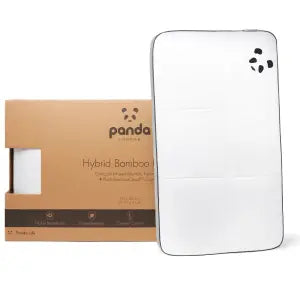
 Hybrid Bamboo Pillow
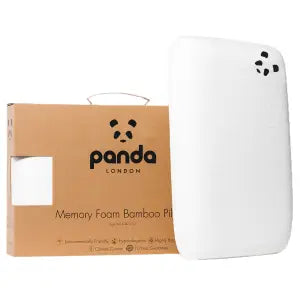 Memory Foam Bamboo Pillow
 Kids Memory Foam Bamboo Pillow
 Baby Memory Foam Bamboo Pillow
 Panda Cloud Duvet
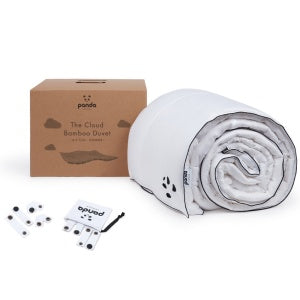 Bamboo Summer Duvet
 Kids Cloud Duvet
![[MattressTopper] Bamboo_Mattress_Topper_Package_Box-updated](http://pandalondon.com/cdn/shop/files/Bamboo_Mattress_Topper_Package_Box-updated.webp?crop=region&crop_height=1315&crop_left=92&crop_top=0&crop_width=1315&v=1782726992&width=1500)
![[MattressTopper] Woman laying on a Panda Bamboo Mattress Topper](http://pandalondon.com/cdn/shop/files/Bamboo_Mattress_Topper_Product_Image_01.webp?v=1782726484&width=1080)
![[MattressTopper] Guy laying on a Panda Bamboo Mattress Topper](http://pandalondon.com/cdn/shop/files/Bamboo_Mattress_Topper_Product_Image_02.webp?v=1782726484&width=1080)
![[MattressTopper] Woman setting up a Panda Bamboo Mattress Topper](http://pandalondon.com/cdn/shop/files/Bamboo_Mattress_Topper_Product_Image_03.webp?v=1782726484&width=1080)
![[MattressTopper] Panda London Memory Foam Bamboo Mattress Topper side](http://pandalondon.com/cdn/shop/files/Mattress_Topper_Isolated_-_resized.jpg?v=1773853354&width=800)
![[HybridMattressPro] Hybrid_Bamboo_Mattress_Pro_Product_Image_2026](http://pandalondon.com/cdn/shop/files/Hybrid_Bamboo_Mattress_Pro_Product_Image_2026.webp?v=1764944771&width=1000)
![[HybridMattressPro] A woman in white pajamas lies on her side on a mattress atop a gray upholstered bed frame in a softly lit bedroom. The mattress has a white top layer with a subtle geometric pattern and a black center band, with a small Panda Mattress logo patch visible on the side.](http://pandalondon.com/cdn/shop/files/Mattress_PRO-01.webp?v=1790672728&width=2049)
![[HybridMattressPro] Hybrid Bamboo Mattress Pro Cover Zip](http://pandalondon.com/cdn/shop/files/Hybrid_Bamboo_Mattress_Cover.jpg?v=1764944771&width=800)
![[HybridMattressPro] A woman in a cream-colored pajama set kneels beside a bed, holding down a mattress protector on a Panda Mattress to show its support and comfort.](http://pandalondon.com/cdn/shop/files/Mattress_PRO-03.webp?v=1790672728&width=2049)
![[HybridMattressPro] A woman in light pink pajamas sits on a Panda Bamboo mattress](http://pandalondon.com/cdn/shop/files/Mattress_PRO-04.webp?v=1790672728&width=2049)
![[CloudDuvet] Panda London The Cloud Bamboo Duvet Packaging](http://pandalondon.com/cdn/shop/products/Panda-London-The-Cloud-Bamboo-Duvet-Panda-Life-scaled_00a651ad-4ca3-4105-b520-12a94c1a4f71.jpg?v=1713363286&width=1920)
![[CloudDuvet] Panda London The Cloud Bamboo Duvet Rolled](http://pandalondon.com/cdn/shop/products/Duvet-Listing-Images03.jpg?v=1764079307&width=1000)
![[CloudDuvet] Guy making the bed with Panda Cloud Duvet 10.5 TOG](http://pandalondon.com/cdn/shop/files/Duvet_10.5_Tog-02.webp?v=1790607319&width=2049)
![[CloudDuvet] Guy reading a book on the bed covered with Panda Cloud Duvet 10.5 TOG](http://pandalondon.com/cdn/shop/files/Duvet_10.5_Tog-03.webp?v=1790607319&width=2049)
![[CloudDuvet] Guy making his bed with Panda Cloud Duvet 10.5 TOG](http://pandalondon.com/cdn/shop/files/Duvet_10.5_Tog-04.webp?v=1790607319&width=2049)
![[BBWhite] 100_Bamboo_Bedding_Set_Pure_White](http://pandalondon.com/cdn/shop/files/100_Bamboo_Bedding_Set_Pure_White_01.webp?v=1781082973&width=1080)
![[BBWhite] White 100% Bamboo Bedding Texture](http://pandalondon.com/cdn/shop/files/100_Bamboo_Bedding_-_Pure_White_-_Close_Up_02.webp?v=1773611287&width=1000)
![[BBWhite] 100_Bamboo_Bedding_Set_Pure_White couple laughing](http://pandalondon.com/cdn/shop/files/100_Bamboo_Bedding_Set_Pure_White_02.webp?v=1781082974&width=1080)
![[BBWhite] White 100% Bamboo Bedding Woman Duvet cover buttons](http://pandalondon.com/cdn/shop/files/hand_and_buttons_1.webp?v=1773611287&width=1000)
![[BBWhite] 100_Bamboo_Bedding_Set_Pure_White woman sleeping](http://pandalondon.com/cdn/shop/files/100_Bamboo_Bedding_Set_Pure_White_03.webp?v=1781082973&width=1080)
![[BBUrbanGrey] 100_Bamboo_Bedding_Set_Urban_Grey_guy laying on the bedding](http://pandalondon.com/cdn/shop/files/100_Bamboo_Bedding_Set_Urban_Grey_01.webp?v=1781083567&width=1080)
![[BBUrbanGrey] Cloud Duvet Urban Grey 100% Bamboo Bedding Set](http://pandalondon.com/cdn/shop/files/Cloud_Duvet_-_Grey_-_Close_up_2.webp?v=1773611287&width=1000)
![[BBUrbanGrey] 100_Bamboo_Bedding_Set_Urban_Grey_woman opening the bedding bag](http://pandalondon.com/cdn/shop/files/100_Bamboo_Bedding_Set_Urban_Grey_02.webp?v=1781083568&width=1080)
![[BBUrbanGrey] 100_Bamboo_Bedding_Set_Urban_Grey_woman making the bed](http://pandalondon.com/cdn/shop/files/100_Bamboo_Bedding_Set_Urban_Grey_04.webp?v=1781083567&width=1080)
![[BBUrbanGrey] 100_Bamboo_Bedding_Set_Urban_Grey_couple reading magazines](http://pandalondon.com/cdn/shop/files/100_Bamboo_Bedding_Set_Urban_Grey_03.webp?v=1781083567&width=1080)
![[BBNavyBlue] Deep Sea Navy Blue 100% Bamboo Bedding Set couple reading a magazine](http://pandalondon.com/cdn/shop/files/100_Bamboo_Bedding_Set_Deep_Sea_Navy_01.webp?v=1781083134&width=1080)
![[BBNavyBlue] Deep Sea Navy Blue 100% Bamboo Bedding Texture](http://pandalondon.com/cdn/shop/files/Cloud_Duvet_-_Navy_-_Close_up_2.webp?v=1773611287&width=1000)
![[BBNavyBlue] Deep Sea Navy Blue 100% Bamboo Bedding Set couple reading a magazine and smiling](http://pandalondon.com/cdn/shop/files/100_Bamboo_Bedding_Set_Deep_Sea_Navy_02.webp?v=1781083135&width=1080)
![[BBNavyBlue] Deep Sea Navy Blue 100% Bamboo Bedding Set woman resting](http://pandalondon.com/cdn/shop/files/100_Bamboo_Bedding_Set_Deep_Sea_Navy_04.png?v=1781083138&width=1080)
![[BBNavyBlue] Deep Sea Navy Blue 100% Bamboo Bedding Set guy laying and smiling](http://pandalondon.com/cdn/shop/files/100_Bamboo_Bedding_Set_Deep_Sea_Navy_03.webp?v=1781083134&width=1080)
![[BBPink] Vintage Pink Blue 100% Bamboo Bedding woman making the bed](http://pandalondon.com/cdn/shop/files/100_Bamboo_Bedding_Set_Pink_01.webp?v=1781083678&width=1080)
![[BBPink] Vintage Pink Texture 100% Bamboo Bedding](http://pandalondon.com/cdn/shop/files/Cloud_Duvet_-_Pink_-_Close_up_2.webp?v=1773611287&width=1000)
![[BBPink] Vintage Pink Blue 100% Bamboo Bedding woman hugging the pillow with vintage pink pillow case](http://pandalondon.com/cdn/shop/files/100_Bamboo_Bedding_Set_Pink_02.webp?v=1781083678&width=1080)
![[BBPink] Vintage Pink Blue 100% Bamboo Bedding woman hiding under duvet with pink duvet cover](http://pandalondon.com/cdn/shop/files/100_Bamboo_Bedding_Set_Pink_03.webp?v=1781083679&width=1080)
![[BBPink] Vintage Pink Blue 100% Bamboo Bedding woman laying and smiling on the panda bedding set](http://pandalondon.com/cdn/shop/files/100_Bamboo_Bedding_Set_Pink_04.webp?v=1781083679&width=1080)
![[BBGrey] 100_Bamboo_Bedding_Set_Quiet_Grey_ woman holding the bedding](http://pandalondon.com/cdn/shop/files/100_Bamboo_Bedding_Set_Quiet_Grey_01.webp?v=1781083287&width=1080)
![[BBGrey] Light Grey 100% Bamboo Bedding texture](http://pandalondon.com/cdn/shop/files/Texture17.webp?v=1773611287&width=1000)
![[BBGrey] 100_Bamboo_Bedding_Set_Quiet_Grey_0guy laying and smiling](http://pandalondon.com/cdn/shop/files/100_Bamboo_Bedding_Set_Quiet_Grey_02.webp?v=1781083287&width=1080)
![[BBGrey] 100_Bamboo_Bedding_Set_Quiet_Grey_0guy reading a magazine on the bed](http://pandalondon.com/cdn/shop/files/100_Bamboo_Bedding_Set_Quiet_Grey_03.webp?v=1781083287&width=1080)
![[BBGrey] 100_Bamboo_Bedding_Set_Quiet_Grey_0woman making the bed](http://pandalondon.com/cdn/shop/files/100_Bamboo_Bedding_Set_Quiet_Grey_04.webp?v=1781083287&width=1080)

The English Romantic poet, Percy Bysshe Shelley, once said: "If winter comes, can spring be far behind?" And for some, the three months of dark and cold can be very difficult, with only the thought of sunnier days to help them through it. Limited daylight, cold conditions and a bare landscape can affect us emotionally, making us feel more tired, unmotivated, and even depressed. In this blog, we’ll offer practical evidence-based advice on how to deal with a mood shift in winter. Although it cannot replace any medical advice, it should help you cope with your mood during the coldest season of the year.
What is Seasonal Affective Disorder – and How is it Different from ‘Winter Blues’?
Winter Blues
The ‘winter blues’ is a colloquial term, referring to a milder seasonal slump – feeling a bit down or sluggish as days get shorter. It doesn’t significantly impair daily life and usually improves with simple lifestyle changes such as exercise, exposure to more daylight and scheduling enjoyable activities.
Subsyndromal SAD
S-SAD is a milder, seasonal mood problem with the same pattern as Seasonal Affective Disorder. Symptoms reliably worsen in winter and lift in spring – but they don’t meet full criteria for a major depressive episode. It lies somewhere between the so-called ‘winter blues’ and full SAD.
SAD
Coined by Norman Rosenthal in the 1980s, Seasonal Affective Disorder (SAD) is a type of depression that follows a predictable seasonal pattern, starting in late autumn or winter and lifting in spring. Symptoms can last about 4 to 5 months and include low mood, lack of energy, changes in sleep, increased appetite, and loss of interest in socialising and hobbies. 1 in 3 people say they struggle with SAD, and 1 in 10 have a confirmed diagnosis of SAD.
How to do a SPAQ Screening
The Seasonal Pattern Assessment Questionnaire (SPAQ) is a short self-report screener that asks how much your sleep, social activity, mood, weight, appetite, and energy change across seasons. It’s widely used to flag possible Seasonal Affective Disorder (SAD) and subsyndromal SAD, but it’s not a diagnosis on its own.
- Ask the six seasonality indicators. Rate how much the season changes your sleep, social activity, mood, weight, appetite, and energy on a 0-4 scale (0 = no change, 4 = extremely marked).
- Record problem severity. Rate how much these seasonal changes are a problem overall (0 = none, 1 = mild, 2 = moderate, 3 = marked, 4 = severe).
- Note timing. Write down which months you feel are the worst and which ones you feel the best.
- Check pattern consistency. Has this same seasonal pattern occurred for at least two consecutive years? (Yes/No).
- Find out your Global Seasonality Score (GSS). Sum the six 0–4 items: GSS range = 0–24.
0–7 → Low seasonality
8–10 → Possible subsyndromal SAD
11+ with problem rating more than 2 with a consistent pattern of more than 2 years → Screen-positive for SAD and refer to a clinicianSomeone rates: sleep=2, social=1, mood=3, weight=2, appetite=2, energy=3 → GSS = 13; problem rating = 3; worst in Dec–Feb, best in May–Aug, same pattern for more than 2 years → screen-positive.
Who’s most at risk of SAD?
Even though anyone can be at risk of SAD, statistics show there are some groups who are more likely to be affected by seasonal change:
Women
The World Health Organisation has found that women are more likely to suffer from SAD compared with men, with depression being about 1.5 times more common among women than among men.
Young adults
The WHO also revealed that suicide is the third leading cause of death in 15–29-year-olds.
Those living far from the equator
According to the NHS, a lack of sunlight prevents the hypothalamus, part of the pituitary gland in our brain, from working properly, and those living at higher altitudes receive less direct sunlight.
People who already have depression, anxiety or bipolar disorder
Those who have an existing mental health disorder will be more susceptible to SAD as they struggle with feelings of low mood throughout the year. The Cleveland Clinic cites that lower serotonin levels make them more likely to suffer from SAD.
Workers who have limited exposure to daylight
Serotonin levels get a boost from vitamin D. Since sunlight helps produce vitamin D, less sun in the winter can lead to a deficiency. Insufficient vitamin D can affect serotonin levels and mood, especially among workers who spend limited time outdoors.
How SAD Disrupts Sleep
SAD disrupts your sleep by messing up your internal body clock, or circadian rhythm. We’ve explored this in terms of the science behind SAD.
Light, the circadian clock, and melatonin
The shorter, darker days mean you feel sleepy late at night, and you struggle to wake up in the morning. In the winter, you receive a melatonin signal at the wrong time; the hormone tells your body it’s dark due to limited daylight, which means you start to wind down earlier than in the summer. This leads to fatigue during the day and grogginess in the morning.
Serotonin, mood, and sleep architecture
Serotonin is a key regulator of mood, energy, appetite, and sleep–wake timing. In SAD, there’s evidence that the serotonin system is seasonally off. Science Direct have cited that serotonin dysfunction is a core feature for those with SAD, and there’s less serotonin available for signalling to the brain. REM sleep duration and amount can be altered, with reduced serotonin levels leading you to enter REM earlier and stay in it longer. This means you get poorer-quality sleep, which affects your mood.
Common sleep symptoms in SAD
If you’ve experienced the following symptoms for more than two to three weeks, you could have SAD-related sleep issues.
Insomnia – Difficulty falling asleep due to anxiety and racing thoughts
Hypersomnia – Sleeping more than usual, not feeling sufficiently rested after a night’s sleep and napping during the day
Non-restorative sleep – Wake up feeling groggy, little motivation for the day, not refreshed after a long night’s sleep
Early wakings – Waking up early and not being able to go back to sleep
Daytime fatigue – Feeling sleepy or drowsy, especially when it’s dark or overcast and relying on caffeine and sugar to keep awake during the day
Our Hybrid Bamboo Mattress Pro is a platform for the best rest. Designed to reach new levels of comfort, our Pro features six layers of technology and nature to reset your sleep, whatever the season. Discover an advanced combination of open-cell memory foam infused with fresh bamboo to promote airflow. Underneath is a layer of our orthopaedic-grade OrthoAlign Foam™, providing full-body support, contouring to your sleeping position, and relieving pressure points. Our fourth layer is seven zones of full-sized, individually enclosed premium springs that work in harmony to isolate movement and reduce motion transfer, so you’re undisturbed by a partner's movement once you fall asleep.
What are some strategies to improve sleep in winter?
Here are some tried and tested ways to improve your sleep during the darker months of the year.
Embrace the great outdoors
Go for a walk within 30–60 minutes of waking for at least 10-20 minutes. Dr Ritz, our Sleep Expert, spoke to the BBC Radio 2 programme on the subject of SAD. She mentioned exposure to daylight in the morning as being very important, “I’d always recommend that as soon as you wake to try and get ten minutes of daylight, and even if you can’t get yourself outside, stand next to your window for ten minutes to really try to set your circadian rhythm and let that daylight in.”
Reinvigorate your mornings
Wake up at the same time every day. Dr Ritz also advises waking up at the same time, “keep a fixed wake-up time, the brain loves predictability, even on the weekends, keep that wake-up time to a one-hour window.”
Bright-light therapy
Invest in a lightbox that emits 10,000 lux to help reset your body clock and improve your mood.
Self-care rituals
Prioritise an evening routine that supports melatonin: dim lights 2–3 hours before bed and limit bright screens. Scented candles help create a low-light ambient setting.
Exercise
Release endorphins! Exercise promotes sleep; make sure any rigorous activity is completed 2–3 hours before bed.
Room setup and good sleep hygiene
Dr Ritz says, “Have that wind-down window. We sleep when we feel safe, so clear any mental clutter by journaling, or use cognitive reframing skills, resting without sleeping is still restorative.” Create a cool, dark, quiet bedroom environment, keep a consistent bedtime, avoid caffeine too close to lights out and introduce a wind-down ritual.
Sleep diary
A journal or diary can help you understand your patterns and how they could be linked to your mood.
Bamboo bedding can help you to sleep better, and it’s so soft and inviting, you’ll look forward to your bedtime. Our Signature+™ Bamboo Lyocell Bedding Set lays the scene for a tranquil night’s rest. Rejuvenate your senses with enhanced breathability. Our fabric is thermoregulating to keep you at your ideal sleep temperature, and, as it's moisture-wicking, you’ll remain dry and comfortable all night.
What if these strategies do not help with my mood?
If SAD is having a significant impact on your health and wellbeing, and you’re unable to carry out your everyday activities, speak to your GP. They will discuss ways to help you manage the symptoms of SAD. They may advise Cognitive Behavioural Therapy (CBT) to target negative thoughts or even a course of antidepressants.
Conclusion
Seasonal Affective Disorder and sleep are closely linked. When the seasons change, and there’s less daylight, your body clock, mood, and sleep patterns can all be thrown off at once. Poor sleep can worsen SAD symptoms, and SAD symptoms can in turn make it harder to fall or stay asleep, creating a frustrating cycle of fatigue, low mood, and reduced motivation.
The brighter news is that there are many ways to break that cycle. Find joy in the everyday: light exposure, a regular sleep schedule, daytime activity, and a calming wind-down routine all support healthier sleep during the darkest days. For some people, professional treatments such as light therapy, talking therapies, or medication are also important parts of feeling better. Winter brings with it darker days and less sunlight, yet it can be a time to recharge and reset in preparation for brighter days.
Fact-checked by: Dr Ritz Birah
![[HybridBambooMattressUpdated] Hybrid Bamboo Mattress Panda London Corner with awards](http://pandalondon.com/cdn/shop/files/Main_product_image_Hybrid_Bamboo_Mattress-02.webp?v=1790680112&width=2049)
![[HybridBambooMattressUpdated] Hybrid Bamboo Mattress Panda London Corner](http://pandalondon.com/cdn/shop/files/Bamboo_Mattress-03.webp?v=1790680112&width=2049)
![[HybridBambooMattressUpdated] Hybrid Bamboo Mattress Panda London Corner woman making the bed](http://pandalondon.com/cdn/shop/files/Bamboo_Mattress-04.webp?v=1790680111&width=2049)
![[HybridBambooMattressUpdated] A smiling couple on a bed, with the woman hugging a Panda London pillow Panda London](http://pandalondon.com/cdn/shop/files/Bamboo_Mattress-05.webp?v=1790680111&width=2049)
![[HybridBambooMattressUpdated] Woman with an eye mask with a guy on a Panda London Bamboo mattress](http://pandalondon.com/cdn/shop/files/Bamboo_Mattress-06.webp?v=1790680112&width=2049)
![[ForestGreen] Girl sleeping on a SIgnature_Bedding_Set_Forest_Green](http://pandalondon.com/cdn/shop/files/SIgnature_Bedding_Set_Forest_Green.webp?v=1783076962&width=1080)
![[ForestGreen] Panda London Bamboo Lyocell Bedding Set Package](http://pandalondon.com/cdn/shop/files/Bamboo_Lyocell_Bedding_Set_Package.jpg?v=1773611139&width=768)
![[ForestGreen] Bamboo Lyocell Green Corner Panda London](http://pandalondon.com/cdn/shop/files/GreenPCCorner.jpg?v=1773611139&width=768)
![[ForestGreen] SIgnature_Bedding_Set_Forest_Green_-_woman_making_the_bed](http://pandalondon.com/cdn/shop/files/SIgnature_Bedding_Set_Forest_Green_-_woman_making_the_bed.webp?v=1783512491&width=1080)
![[ForestGreen] Panda London Bamboo Lyocell Texture](http://pandalondon.com/cdn/shop/files/Green-Texture.jpg?v=1773611139&width=768)
![[ForestGreen] SIgnature_Bedding_Set_Forest_Green_woman_hugging_the_pillow](http://pandalondon.com/cdn/shop/files/SIgnature_Bedding_Set_Forest_Green_woman_hugging_the_pillow.webp?v=1783512490&width=1080)
![[Cream] Woman making a bed with signature plus bamboo lyocell bedding set](http://pandalondon.com/cdn/shop/files/Signature_Plus_Bedding_Set_Cream_color.webp?v=1783072086&width=1080)
![[Cream] Panda London Bamboo Lyocell Full Bedding Set](http://pandalondon.com/cdn/shop/files/Bamboo_Lyocell_Bedding_Set_Package_Cream.jpg?v=1773611139&width=768)
![[Cream] Panda London Bamboo Lyocell Full Bedding Set Cream Corner](http://pandalondon.com/cdn/shop/files/PebbleCreamPCCorner.jpg?v=1773611139&width=768)
![[Cream] Signature_Plus_Bedding_Set_Cream_color_Couple_Laying_down_laughing](http://pandalondon.com/cdn/shop/files/Signature_Plus_Bedding_Set_Cream_color_Couple_Laying_down_laughing.webp?v=1783513006&width=1080)
![[Cream] Panda London Bamboo Lyocell Cream Texture](http://pandalondon.com/cdn/shop/files/PebbleCream-Texture.jpg?v=1773611139&width=768)
![[Cream] Signature_Plus_Bedding_Set_Cream_colorWoman_making_the_bed](http://pandalondon.com/cdn/shop/files/Signature_Plus_Bedding_Set_Cream_colorWoman_making_the_bed.webp?v=1783513006&width=1080)
![[HybridPillow] Hybrid Bamboo Pillow - Mattress Campaign](http://pandalondon.com/cdn/shop/products/Hybrid-Bamboo-Pillow-Mattress-Campaign.jpg?crop=region&crop_height=1615&crop_left=152&crop_top=0&crop_width=1615&v=1771199164&width=1920)
![[HybridPillow] Hybrid_Bamboo_Pillow_-_Woman_laying_on_a_Hybrid_Bamboo_Pillow_with_an_Eye_Mask](http://pandalondon.com/cdn/shop/files/Hybrid_Bamboo_Pillow_-_Woman_laying_on_a_Hybrid_Bamboo_Pillow_with_an_Eye_Mask.webp?v=1783514966&width=1080)
![[HybridPillow] Hybrid_Bamboo_Pillow_02_-_Woman_taking_off_the_Hybrid_Bamboo_Pillow_Cover](http://pandalondon.com/cdn/shop/files/Hybrid_Bamboo_Pillow_02_-_Woman_taking_off_the_Hybrid_Bamboo_Pillow_Cover.webp?v=1783514763&width=1080)
![[HybridPillow] Hybrid Pillow with Panda brand marking](http://pandalondon.com/cdn/shop/products/Hybrid-Pillow_8.jpg?v=1771199164&width=1920)
![[HybridPillow] Hybrid_Bamboo_Pillow_03_-_Couple_pillow_fighting_with_Hybrid_Bamboo_Pillows](http://pandalondon.com/cdn/shop/files/Hybrid_Bamboo_Pillow_03_-_Couple_pillow_fighting_with_Hybrid_Bamboo_Pillows.webp?v=1783514763&width=1080)

