
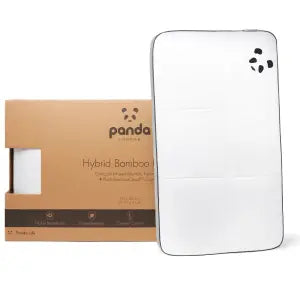
 Hybrid Bamboo Pillow
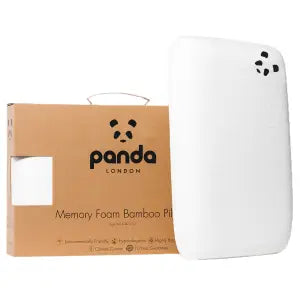 Memory Foam Bamboo Pillow
 Kids Memory Foam Bamboo Pillow
 Baby Memory Foam Bamboo Pillow
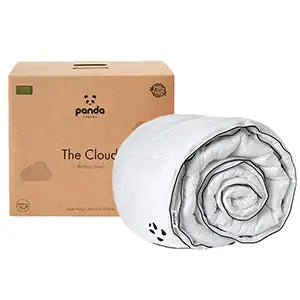 Panda Cloud Duvet
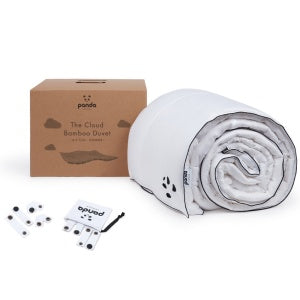 Bamboo Summer Duvet
 Kids Cloud Duvet
![[MattressTopper] Bamboo_Mattress_Topper_Package_Box-updated](http://pandalondon.com/cdn/shop/files/Bamboo_Mattress_Topper_Package_Box-updated.webp?crop=region&crop_height=1315&crop_left=92&crop_top=0&crop_width=1315&v=1782726992&width=1500)
![[MattressTopper] Woman laying on a Panda Bamboo Mattress Topper](http://pandalondon.com/cdn/shop/files/Bamboo_Mattress_Topper_Product_Image_01.webp?v=1782726484&width=1080)
![[MattressTopper] Guy laying on a Panda Bamboo Mattress Topper](http://pandalondon.com/cdn/shop/files/Bamboo_Mattress_Topper_Product_Image_02.webp?v=1782726484&width=1080)
![[MattressTopper] Woman setting up a Panda Bamboo Mattress Topper](http://pandalondon.com/cdn/shop/files/Bamboo_Mattress_Topper_Product_Image_03.webp?v=1782726484&width=1080)
![[MattressTopper] Panda London Memory Foam Bamboo Mattress Topper side](http://pandalondon.com/cdn/shop/files/Mattress_Topper_Isolated_-_resized.jpg?v=1773853354&width=800)
![[HybridMattressPro] Hybrid_Bamboo_Mattress_Pro_Product_Image_2026](http://pandalondon.com/cdn/shop/files/Hybrid_Bamboo_Mattress_Pro_Product_Image_2026.webp?v=1764944771&width=1000)
![[HybridMattressPro] A woman in white pajamas lies on her side on a mattress atop a gray upholstered bed frame in a softly lit bedroom. The mattress has a white top layer with a subtle geometric pattern and a black center band, with a small Panda Mattress logo patch visible on the side.](http://pandalondon.com/cdn/shop/files/Mattress_PRO-01.webp?v=1790672728&width=2049)
![[HybridMattressPro] Hybrid Bamboo Mattress Pro Cover Zip](http://pandalondon.com/cdn/shop/files/Hybrid_Bamboo_Mattress_Cover.jpg?v=1764944771&width=800)
![[HybridMattressPro] A woman in a cream-colored pajama set kneels beside a bed, holding down a mattress protector on a Panda Mattress to show its support and comfort.](http://pandalondon.com/cdn/shop/files/Mattress_PRO-03.webp?v=1790672728&width=2049)
![[HybridMattressPro] A woman in light pink pajamas sits on a Panda Bamboo mattress](http://pandalondon.com/cdn/shop/files/Mattress_PRO-04.webp?v=1790672728&width=2049)
![[CloudDuvet] Panda London The Cloud Bamboo Duvet Packaging](http://pandalondon.com/cdn/shop/products/Panda-London-The-Cloud-Bamboo-Duvet-Panda-Life-scaled_00a651ad-4ca3-4105-b520-12a94c1a4f71.jpg?v=1713363286&width=1920)
![[CloudDuvet] Panda London The Cloud Bamboo Duvet Rolled](http://pandalondon.com/cdn/shop/products/Duvet-Listing-Images03.jpg?v=1764079307&width=1000)
![[CloudDuvet] Guy making the bed with Panda Cloud Duvet 10.5 TOG](http://pandalondon.com/cdn/shop/files/Duvet_10.5_Tog-02.webp?v=1790607319&width=2049)
![[CloudDuvet] Guy reading a book on the bed covered with Panda Cloud Duvet 10.5 TOG](http://pandalondon.com/cdn/shop/files/Duvet_10.5_Tog-03.webp?v=1790607319&width=2049)
![[CloudDuvet] Guy making his bed with Panda Cloud Duvet 10.5 TOG](http://pandalondon.com/cdn/shop/files/Duvet_10.5_Tog-04.webp?v=1790607319&width=2049)
![[BBWhite] 100_Bamboo_Bedding_Set_Pure_White](http://pandalondon.com/cdn/shop/files/100_Bamboo_Bedding_Set_Pure_White_01.webp?v=1781082973&width=1080)
![[BBWhite] White 100% Bamboo Bedding Texture](http://pandalondon.com/cdn/shop/files/100_Bamboo_Bedding_-_Pure_White_-_Close_Up_02.webp?v=1773611287&width=1000)
![[BBWhite] 100_Bamboo_Bedding_Set_Pure_White couple laughing](http://pandalondon.com/cdn/shop/files/100_Bamboo_Bedding_Set_Pure_White_02.webp?v=1781082974&width=1080)
![[BBWhite] White 100% Bamboo Bedding Woman Duvet cover buttons](http://pandalondon.com/cdn/shop/files/hand_and_buttons_1.webp?v=1773611287&width=1000)
![[BBWhite] 100_Bamboo_Bedding_Set_Pure_White woman sleeping](http://pandalondon.com/cdn/shop/files/100_Bamboo_Bedding_Set_Pure_White_03.webp?v=1781082973&width=1080)
![[BBUrbanGrey] 100_Bamboo_Bedding_Set_Urban_Grey_guy laying on the bedding](http://pandalondon.com/cdn/shop/files/100_Bamboo_Bedding_Set_Urban_Grey_01.webp?v=1781083567&width=1080)
![[BBUrbanGrey] Cloud Duvet Urban Grey 100% Bamboo Bedding Set](http://pandalondon.com/cdn/shop/files/Cloud_Duvet_-_Grey_-_Close_up_2.webp?v=1773611287&width=1000)
![[BBUrbanGrey] 100_Bamboo_Bedding_Set_Urban_Grey_woman opening the bedding bag](http://pandalondon.com/cdn/shop/files/100_Bamboo_Bedding_Set_Urban_Grey_02.webp?v=1781083568&width=1080)
![[BBUrbanGrey] 100_Bamboo_Bedding_Set_Urban_Grey_woman making the bed](http://pandalondon.com/cdn/shop/files/100_Bamboo_Bedding_Set_Urban_Grey_04.webp?v=1781083567&width=1080)
![[BBUrbanGrey] 100_Bamboo_Bedding_Set_Urban_Grey_couple reading magazines](http://pandalondon.com/cdn/shop/files/100_Bamboo_Bedding_Set_Urban_Grey_03.webp?v=1781083567&width=1080)
![[BBNavyBlue] Deep Sea Navy Blue 100% Bamboo Bedding Set couple reading a magazine](http://pandalondon.com/cdn/shop/files/100_Bamboo_Bedding_Set_Deep_Sea_Navy_01.webp?v=1781083134&width=1080)
![[BBNavyBlue] Deep Sea Navy Blue 100% Bamboo Bedding Texture](http://pandalondon.com/cdn/shop/files/Cloud_Duvet_-_Navy_-_Close_up_2.webp?v=1773611287&width=1000)
![[BBNavyBlue] Deep Sea Navy Blue 100% Bamboo Bedding Set couple reading a magazine and smiling](http://pandalondon.com/cdn/shop/files/100_Bamboo_Bedding_Set_Deep_Sea_Navy_02.webp?v=1781083135&width=1080)
![[BBNavyBlue] Deep Sea Navy Blue 100% Bamboo Bedding Set woman resting](http://pandalondon.com/cdn/shop/files/100_Bamboo_Bedding_Set_Deep_Sea_Navy_04.png?v=1781083138&width=1080)
![[BBNavyBlue] Deep Sea Navy Blue 100% Bamboo Bedding Set guy laying and smiling](http://pandalondon.com/cdn/shop/files/100_Bamboo_Bedding_Set_Deep_Sea_Navy_03.webp?v=1781083134&width=1080)
![[BBPink] Vintage Pink Blue 100% Bamboo Bedding woman making the bed](http://pandalondon.com/cdn/shop/files/100_Bamboo_Bedding_Set_Pink_01.webp?v=1781083678&width=1080)
![[BBPink] Vintage Pink Texture 100% Bamboo Bedding](http://pandalondon.com/cdn/shop/files/Cloud_Duvet_-_Pink_-_Close_up_2.webp?v=1773611287&width=1000)
![[BBPink] Vintage Pink Blue 100% Bamboo Bedding woman hugging the pillow with vintage pink pillow case](http://pandalondon.com/cdn/shop/files/100_Bamboo_Bedding_Set_Pink_02.webp?v=1781083678&width=1080)
![[BBPink] Vintage Pink Blue 100% Bamboo Bedding woman hiding under duvet with pink duvet cover](http://pandalondon.com/cdn/shop/files/100_Bamboo_Bedding_Set_Pink_03.webp?v=1781083679&width=1080)
![[BBPink] Vintage Pink Blue 100% Bamboo Bedding woman laying and smiling on the panda bedding set](http://pandalondon.com/cdn/shop/files/100_Bamboo_Bedding_Set_Pink_04.webp?v=1781083679&width=1080)
![[BBGrey] 100_Bamboo_Bedding_Set_Quiet_Grey_ woman holding the bedding](http://pandalondon.com/cdn/shop/files/100_Bamboo_Bedding_Set_Quiet_Grey_01.webp?v=1781083287&width=1080)
![[BBGrey] Light Grey 100% Bamboo Bedding texture](http://pandalondon.com/cdn/shop/files/Texture17.webp?v=1773611287&width=1000)
![[BBGrey] 100_Bamboo_Bedding_Set_Quiet_Grey_0guy laying and smiling](http://pandalondon.com/cdn/shop/files/100_Bamboo_Bedding_Set_Quiet_Grey_02.webp?v=1781083287&width=1080)
![[BBGrey] 100_Bamboo_Bedding_Set_Quiet_Grey_0guy reading a magazine on the bed](http://pandalondon.com/cdn/shop/files/100_Bamboo_Bedding_Set_Quiet_Grey_03.webp?v=1781083287&width=1080)
![[BBGrey] 100_Bamboo_Bedding_Set_Quiet_Grey_0woman making the bed](http://pandalondon.com/cdn/shop/files/100_Bamboo_Bedding_Set_Quiet_Grey_04.webp?v=1781083287&width=1080)

Reviewed by Bethany Lawrence, Osteopath, Osteobeth
Over 60% of adults are side sleepers (Sleep Foundation), making it by far the most common sleep position. But here's the catch: without the right support, side sleeping is also one of the most common causes of hip and shoulder pain overnight.
The good news is that you don't always need a brand-new mattress to fix it. A well-chosen mattress topper can transform a too-firm or worn-out mattress into one that properly cushions your pressure points and keeps your spine aligned — and that's exactly what side sleepers need. Our Bamboo Mattress Topper holds 4.8/5 from over 7,200 ratings on Expert Reviews, with many reviewers citing hip and joint pain relief specifically.
In this guide, we'll cover what makes a good topper for side sleepers, the specific pain points that side sleepers deal with, and how to choose the right thickness for your body. Plus, a quick guide to the four main types of topper — so you know which is best for you.
What does a side sleeper need from a mattress topper?
A side sleeper needs a topper that does two things at once: cushion the hip and shoulder pressure points, and keep the spine level from neck to lower back. Get those two things right and side sleeping becomes one of the most restorative positions there is. Get them wrong and your body spends the night working against itself.
A side sleeper is someone who rests on one side of their body for most of the night. The position has real benefits — it can help with heartburn, reduce snoring, and is often recommended for back pain — but it concentrates body weight onto a small surface area at the hips and shoulders. That's where the right topper earns its keep.
Hip and shoulder pain in side sleepers
Side sleepers carry the most pressure on their hips and shoulders, and a too-firm sleep surface is one of the most common causes of overnight hip and shoulder pain. The fix isn't always a new mattress — often a well-chosen topper does the work.
Hip pain
When you sleep on your side, your bodyweight concentrates on the greater trochanter — the bony point at the outer hip. On a too-firm mattress, all of that weight presses against a single point night after night. Over time, this can aggravate the bursa (the fluid-filled cushioning sac that sits over the joint) and contribute to a condition called trochanteric bursitis, also known as hip bursitis. It's one of the most common causes of chronic hip pain in side sleepers.
A good mattress topper softens the immediate contact surface so your hip can settle into the mattress rather than pressing against it — which is why a topper can be a more effective fix than people expect.
A note on body weight here: lighter sleepers (under 65kg) generally do best on a softer topper, because their bodyweight isn't enough to compress a firmer one and they end up with the same pressure as before. Heavier sleepers (over 90kg) need a denser foam to avoid "bottoming out" — sinking right through the topper to the firm mattress below. We'll come back to thickness and density in the table further down.
Shoulder pain
The shoulder is a different challenge — narrower than the hip, and more concentrated. The shoulder zone of a quality hybrid mattress should be slightly softer than the hip zone, because the shoulder needs more give to avoid pressure build-up. A good hybrid topper helps create that zoned differentiation, even on a single-firmness mattress underneath.
If you wake with shoulder ache and find yourself sleeping with an arm tucked under your head, that's usually a sign the surface isn't giving way enough at the shoulder — a topper with proper contouring (memory foam or hybrid) is what you're looking for.
Sciatica in side sleepers
Sciatica is irritation or compression of the sciatic nerve, which runs from the lower back through the buttock and down the back of the leg. For side sleepers, a too-firm mattress can rotate the pelvis and increase pressure on the lumbar nerve root — making sciatica pain worse.
A medium-soft topper can help by allowing the hip to sink slightly into the surface, which keeps the pelvis level and reduces nerve root pressure.
Bethany's top tip: if sciatica only affects one side, sleep on the non-affected side with a pillow between your knees. This combination keeps the pelvis aligned and takes pressure off the sciatic nerve at the same time.
An important caveat: a topper is a supportive tool, not a treatment. If your sciatica is severe, persistent, or accompanied by numbness or weakness in the leg, please speak to a GP or physiotherapist. The right sleep setup helps; it doesn't replace clinical care.
Topper thickness guide for side sleepers
The right topper thickness depends on your body weight. Lighter sleepers need softness for pressure relief; heavier sleepers need depth and density to prevent bottoming out. Here's a quick reference:
|
Body weight |
Recommended topper type |
Recommended thickness |
|---|---|---|
|
Under 65kg |
Soft memory foam |
5cm |
|
65–90kg |
Medium-firm memory foam or hybrid |
5cm |
|
Over 90kg |
Hybrid topper |
7.5cm |
The logic behind it:
- Under 65kg — lighter sleepers don't compress a topper as much, so they need a softer surface to feel any meaningful pressure relief. 5cm of soft memory foam is usually plenty
- 65–90kg — the sweet spot. A medium-firm topper at 5cm gives enough cushion for the hips and shoulders without losing support
-
Over 90kg — heavier sleepers need more material between body and mattress, otherwise the topper compresses fully and offers no real cushioning. A 7.5cm hybrid topper (foam plus micro-springs) provides the depth and structure needed
For more on getting the depth right, our guide on how thick a mattress topper should be goes deeper.
What Bethany, our orthopaedic expert, recommends
Our orthopaedic expert, Bethany Lawrence, gives this guidance for side sleepers:
Typically, side sleepers place most of their body weight onto their hips and shoulders, creating pressure points which can predispose them to discomfort. Therefore, side sleepers can benefit from a mattress topper that provides additional support and cushioning, thus providing pressure relief and optimising alignment and weight distribution.
— Bethany Lawrence, Osteopath, Osteobeth
In other words, if your current mattress feels too firm at the hip and shoulder but is otherwise fine, a topper is exactly the intervention you need.
Mattress topper types compared
Different topper materials behave differently. Here's how the four main types stack up for side sleepers:
|
Topper type |
Pressure relief |
Spinal support |
Best for side sleepers with pain? |
|---|---|---|---|
|
Memory foam |
High — contours closely around hips and shoulders |
Moderate to high — depends on firmness and density |
✅ Often very good if pain is from pressure on the outer hip. Choose medium-firm, not overly soft |
|
Hybrid |
High — foam and spring layers cushion pressure points |
High — micro-springs add structure and edge stability |
✅ Often the best all-rounder — combines the cushion of foam with the support of springs |
|
Innerspring |
Low to moderate — thinner comfort layers can leave pressure on hips and shoulders |
Moderate to high — supportive but can feel firm or bouncy |
❌ Usually less ideal alone, unless paired with a plush pillow-top |
|
Latex |
Moderate to high — buoyant, with less "sinking-in" than memory foam |
High — responsive and supportive |
✅ Good for those who want pressure relief without the stuck-in feel of foam. Can feel too firm for very sensitive hip pain |
A bit more on each type:
Memory foam toppers
Memory foam is a popular choice for side sleepers because it contours to the body so well. It distributes weight evenly, cushions pressure points, and offers that plush, cradling feel that side sleepers tend to love. The drawback is heat — traditional memory foam can retain warmth, which is uncomfortable for hot sleepers. The fix is to look for memory foam blended with breathable materials like bamboo or with cooling gel infusions. Our guide to cooling bamboo mattress toppers goes into more detail on this.
Hybrid toppers
A hybrid topper combines memory foam with micro-springs, giving you the best of both worlds: foam contouring around hips and shoulders, springs adding structure and bounce. For side sleepers with pain, this is often the best all-around option — the combination delivers both cushion and support, which is exactly what the body needs.
Latex toppers
Natural latex toppers come from tree sap and offer responsive, breathable support. They're more "buoyant" than memory foam — less of a sinking feeling, more of a gentle push-back. Good for side sleepers who want pressure relief without feeling stuck in foam. The downsides: they're typically more expensive than other options, heavier to manoeuvre, and not suitable for anyone with a latex allergy.
Feather and down toppers
If you prefer a soft, luxurious feel, feather and down toppers offer it in abundance. They contour gently around the body and create a plush environment. But they offer less structural support than foam or hybrid, can run hot, and need regular shaking and reshaping to maintain their loft. For side sleepers with pain — particularly hip or shoulder issues — a feather topper alone often isn't supportive enough.
How to choose the right topper for you
A few practical things to consider beyond type and thickness:
- Temperature — if you sleep hot, look for breathable materials (bamboo, cooling gel, or open-cell foam). A pure memory foam topper without cooling tech will trap heat
- Allergies — bamboo and natural latex are both naturally hypoallergenic. Synthetic foam can sometimes off-gas for the first few weeks
- Trial period — toppers can take a couple of weeks to feel "right." Look for brands that offer a meaningful trial, so you can return it if it doesn't work for your body. Our 30-night trial means you can test ours risk-free
- Mattress condition — a topper improves a tired mattress, but it can't save one that's truly past it. If your mattress is sagging visibly or over 8–10 years old, consider replacing it rather than topping it

Final thoughts
If you're a side sleeper waking with hip or shoulder pain, a good mattress topper is one of the most effective and affordable fixes available. Get the type right (memory foam or hybrid), the thickness right (matched to your body weight), and the firmness right (medium for most, medium-soft for lighter sleepers, denser for heavier ones), and you'll feel the difference from the first night.
For most side sleepers, a bamboo memory foam or hybrid topper is the best all-round choice — combining the contouring of foam with the breathability of bamboo, and (in the hybrid version) the added structure of micro-springs.
Whichever you choose, look for a brand that lets you try before you commit. Side sleepers and toppers are like pillows and pillowcases — the right one really does feel like it was made for you.
FAQs
1. What is the primary benefit of using a mattress topper for side sleepers?
The main benefit is improved comfort and support. A good mattress topper can alleviate pressure points and align the spine for side sleepers, resulting in a more restful night's sleep.
2. How do I choose the right thickness for a mattress topper?
The thickness of the mattress topper largely depends on your body weight and personal preference. Side sleepers may find a medium to medium-firm topper (2-4 inches) most comfortable, providing the right balance of support and cushioning.
3. What materials are best for side sleepers in a mattress topper?
Memory foam and latex are often recommended for side sleepers. Memory foam conforms to the body's shape, while latex provides support and comfort. However, it ultimately depends on individual preferences.
4. Do I need a special mattress topper for shoulder or hip pain as a side sleeper?
If you have specific shoulder or hip pain, looking for a topper designed for pain relief is a good idea. Some toppers are created with additional cushioning in these areas to alleviate discomfort.
About the Author:
Katy Gilroy is the Partnerships and Community Lead at Panda London, specialising in sleep wellbeing, sustainable living and thoughtful home comforts. She studied journalism and creative writing, and now writes across topics such as bedding, mattresses, sleep hygiene, bamboo materials and lifestyle-led sustainability. Her goal is to turn expert-backed ideas and product knowledge into practical content that helps the Panda community sleep better and live a little more consciously.
![[all] Topper Cover Listed Panda London](http://pandalondon.com/cdn/shop/products/Topper-Cover-Listing_isolated-01.png?v=1711732989&width=2520)

