
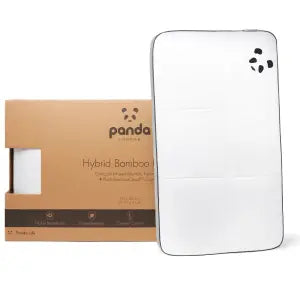
 Hybrid Bambuskissen
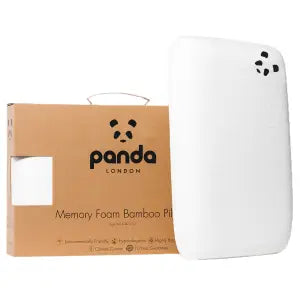 Memory Foam Bambuskissen
 Memory Foam Bambuskissen für Kinder
 Baby Memory Foam Bambuskissen
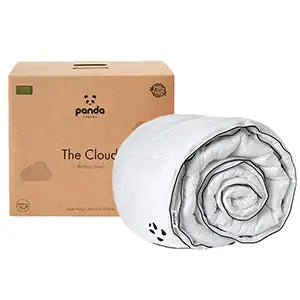 Panda Bettdecke Cloud
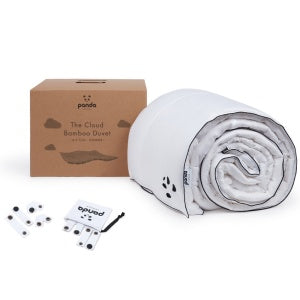 Sommerbettdecke aus Bambus
 Kinder Cloud Bettdecke
![[MattressTopper] Bamboo_Mattress_Topper_Package_Box-updated](http://pandalondon.com/cdn/shop/files/Bamboo_Mattress_Topper_Package_Box-updated.webp?crop=region&crop_height=1315&crop_left=92&crop_top=0&crop_width=1315&v=1782726992&width=1500)
![[MattressTopper] Woman laying on a Panda Bamboo Mattress Topper](http://pandalondon.com/cdn/shop/files/Bamboo_Mattress_Topper_Product_Image_01.webp?v=1782726484&width=1080)
![[MattressTopper] Guy laying on a Panda Bamboo Mattress Topper](http://pandalondon.com/cdn/shop/files/Bamboo_Mattress_Topper_Product_Image_02.webp?v=1782726484&width=1080)
![[MattressTopper] Woman setting up a Panda Bamboo Mattress Topper](http://pandalondon.com/cdn/shop/files/Bamboo_Mattress_Topper_Product_Image_03.webp?v=1782726484&width=1080)
![[MattressTopper] Panda London Memory Foam Bamboo Mattress Topper side](http://pandalondon.com/cdn/shop/files/Mattress_Topper_Isolated_-_resized.jpg?v=1773853354&width=800)
![[HybridMattressPro] Hybrid_Bamboo_Mattress_Pro_Product_Image_2026](http://pandalondon.com/cdn/shop/files/Hybrid_Bamboo_Mattress_Pro_Product_Image_2026.webp?v=1764944771&width=1000)
![[HybridMattressPro] A woman in white pajamas lies on her side on a mattress atop a gray upholstered bed frame in a softly lit bedroom. The mattress has a white top layer with a subtle geometric pattern and a black center band, with a small Panda Mattress logo patch visible on the side.](http://pandalondon.com/cdn/shop/files/Mattress_PRO-01.webp?v=1790672728&width=2049)
![[HybridMattressPro] Hybrid Bamboo Mattress Pro Cover Zip](http://pandalondon.com/cdn/shop/files/Hybrid_Bamboo_Mattress_Cover.jpg?v=1764944771&width=800)
![[HybridMattressPro] A woman in a cream-colored pajama set kneels beside a bed, holding down a mattress protector on a Panda Mattress to show its support and comfort.](http://pandalondon.com/cdn/shop/files/Mattress_PRO-03.webp?v=1790672728&width=2049)
![[HybridMattressPro] A woman in light pink pajamas sits on a Panda Bamboo mattress](http://pandalondon.com/cdn/shop/files/Mattress_PRO-04.webp?v=1790672728&width=2049)
![[CloudDuvet] Panda London The Cloud Bamboo Duvet Packaging](http://pandalondon.com/cdn/shop/products/Panda-London-The-Cloud-Bamboo-Duvet-Panda-Life-scaled_00a651ad-4ca3-4105-b520-12a94c1a4f71.jpg?v=1713363286&width=1920)
![[CloudDuvet] Panda London The Cloud Bamboo Duvet Rolled](http://pandalondon.com/cdn/shop/products/Duvet-Listing-Images03.jpg?v=1764079307&width=1000)
![[CloudDuvet] Guy making the bed with Panda Cloud Duvet 10.5 TOG](http://pandalondon.com/cdn/shop/files/Duvet_10.5_Tog-02.webp?v=1790607319&width=2049)
![[CloudDuvet] Guy reading a book on the bed covered with Panda Cloud Duvet 10.5 TOG](http://pandalondon.com/cdn/shop/files/Duvet_10.5_Tog-03.webp?v=1790607319&width=2049)
![[CloudDuvet] Guy making his bed with Panda Cloud Duvet 10.5 TOG](http://pandalondon.com/cdn/shop/files/Duvet_10.5_Tog-04.webp?v=1790607319&width=2049)
![[BBWhite] 100_Bamboo_Bedding_Set_Pure_White](http://pandalondon.com/cdn/shop/files/100_Bamboo_Bedding_Set_Pure_White_01.webp?v=1781082973&width=1080)
![[BBWhite] White 100% Bamboo Bedding Texture](http://pandalondon.com/cdn/shop/files/100_Bamboo_Bedding_-_Pure_White_-_Close_Up_02.webp?v=1773611287&width=1000)
![[BBWhite] 100_Bamboo_Bedding_Set_Pure_White couple laughing](http://pandalondon.com/cdn/shop/files/100_Bamboo_Bedding_Set_Pure_White_02.webp?v=1781082974&width=1080)
![[BBWhite] White 100% Bamboo Bedding Woman Duvet cover buttons](http://pandalondon.com/cdn/shop/files/hand_and_buttons_1.webp?v=1773611287&width=1000)
![[BBWhite] 100_Bamboo_Bedding_Set_Pure_White woman sleeping](http://pandalondon.com/cdn/shop/files/100_Bamboo_Bedding_Set_Pure_White_03.webp?v=1781082973&width=1080)
![[BBUrbanGrey] 100_Bamboo_Bedding_Set_Urban_Grey_guy laying on the bedding](http://pandalondon.com/cdn/shop/files/100_Bamboo_Bedding_Set_Urban_Grey_01.webp?v=1781083567&width=1080)
![[BBUrbanGrey] Cloud Duvet Urban Grey 100% Bamboo Bedding Set](http://pandalondon.com/cdn/shop/files/Cloud_Duvet_-_Grey_-_Close_up_2.webp?v=1773611287&width=1000)
![[BBUrbanGrey] 100_Bamboo_Bedding_Set_Urban_Grey_woman opening the bedding bag](http://pandalondon.com/cdn/shop/files/100_Bamboo_Bedding_Set_Urban_Grey_02.webp?v=1781083568&width=1080)
![[BBUrbanGrey] 100_Bamboo_Bedding_Set_Urban_Grey_woman making the bed](http://pandalondon.com/cdn/shop/files/100_Bamboo_Bedding_Set_Urban_Grey_04.webp?v=1781083567&width=1080)
![[BBUrbanGrey] 100_Bamboo_Bedding_Set_Urban_Grey_couple reading magazines](http://pandalondon.com/cdn/shop/files/100_Bamboo_Bedding_Set_Urban_Grey_03.webp?v=1781083567&width=1080)
![[BBNavyBlue] Deep Sea Navy Blue 100% Bamboo Bedding Set couple reading a magazine](http://pandalondon.com/cdn/shop/files/100_Bamboo_Bedding_Set_Deep_Sea_Navy_01.webp?v=1781083134&width=1080)
![[BBNavyBlue] Deep Sea Navy Blue 100% Bamboo Bedding Texture](http://pandalondon.com/cdn/shop/files/Cloud_Duvet_-_Navy_-_Close_up_2.webp?v=1773611287&width=1000)
![[BBNavyBlue] Deep Sea Navy Blue 100% Bamboo Bedding Set couple reading a magazine and smiling](http://pandalondon.com/cdn/shop/files/100_Bamboo_Bedding_Set_Deep_Sea_Navy_02.webp?v=1781083135&width=1080)
![[BBNavyBlue] Deep Sea Navy Blue 100% Bamboo Bedding Set woman resting](http://pandalondon.com/cdn/shop/files/100_Bamboo_Bedding_Set_Deep_Sea_Navy_04.png?v=1781083138&width=1080)
![[BBNavyBlue] Deep Sea Navy Blue 100% Bamboo Bedding Set guy laying and smiling](http://pandalondon.com/cdn/shop/files/100_Bamboo_Bedding_Set_Deep_Sea_Navy_03.webp?v=1781083134&width=1080)
![[BBPink] Vintage Pink Blue 100% Bamboo Bedding woman making the bed](http://pandalondon.com/cdn/shop/files/100_Bamboo_Bedding_Set_Pink_01.webp?v=1781083678&width=1080)
![[BBPink] Vintage Pink Texture 100% Bamboo Bedding](http://pandalondon.com/cdn/shop/files/Cloud_Duvet_-_Pink_-_Close_up_2.webp?v=1773611287&width=1000)
![[BBPink] Vintage Pink Blue 100% Bamboo Bedding woman hugging the pillow with vintage pink pillow case](http://pandalondon.com/cdn/shop/files/100_Bamboo_Bedding_Set_Pink_02.webp?v=1781083678&width=1080)
![[BBPink] Vintage Pink Blue 100% Bamboo Bedding woman hiding under duvet with pink duvet cover](http://pandalondon.com/cdn/shop/files/100_Bamboo_Bedding_Set_Pink_03.webp?v=1781083679&width=1080)
![[BBPink] Vintage Pink Blue 100% Bamboo Bedding woman laying and smiling on the panda bedding set](http://pandalondon.com/cdn/shop/files/100_Bamboo_Bedding_Set_Pink_04.webp?v=1781083679&width=1080)
![[BBGrey] 100_Bamboo_Bedding_Set_Quiet_Grey_ woman holding the bedding](http://pandalondon.com/cdn/shop/files/100_Bamboo_Bedding_Set_Quiet_Grey_01.webp?v=1781083287&width=1080)
![[BBGrey] Light Grey 100% Bamboo Bedding texture](http://pandalondon.com/cdn/shop/files/Texture17.webp?v=1773611287&width=1000)
![[BBGrey] 100_Bamboo_Bedding_Set_Quiet_Grey_0guy laying and smiling](http://pandalondon.com/cdn/shop/files/100_Bamboo_Bedding_Set_Quiet_Grey_02.webp?v=1781083287&width=1080)
![[BBGrey] 100_Bamboo_Bedding_Set_Quiet_Grey_0guy reading a magazine on the bed](http://pandalondon.com/cdn/shop/files/100_Bamboo_Bedding_Set_Quiet_Grey_03.webp?v=1781083287&width=1080)
![[BBGrey] 100_Bamboo_Bedding_Set_Quiet_Grey_0woman making the bed](http://pandalondon.com/cdn/shop/files/100_Bamboo_Bedding_Set_Quiet_Grey_04.webp?v=1781083287&width=1080)

Quick Answer:
A “one‑size‑fits‑all” firm mattress isn’t ideal for back pain. Back sleepers typically do well on a medium‑firm bed that supports the lumbar region, side sleepers need a medium to medium‑firm feel with pressure‑relieving support and the right pillows, while stomach sleepers require firm to extra‑firm surfaces to keep their hips lifted. Combination sleepers should choose a responsive medium‑firm hybrid or latex mattress. Adjust the firmness slightly softer if you weigh under 60 kg, and firmer if you weigh over 90 kg.
Different people find different degrees of firmness more or less comfortable.
— Jonathan S. Kirschner, MD, RMSK, HSS physiatrist.
The best mattress for back pain is one that supports your spine, aligns your posture, and relieves pressure points — with a firmness level matched to your sleeping position for long-term stability. By the end of this guide, you'll know exactly which firmness range and materials to look for to help alleviate your pain.
Back pain is one of the UK's most widespread conditions, affecting 9.5 million people each year, with 5.8 million experiencing severe symptoms. If you're among them, your mattress could be a contributing factor — and the right one can make a significant difference.
What “firmness” actually means
Mattress firmness vs support (they’re not the same)
Mattress firmness and mattress support are happy bedfellows, but they're not the same thing.
Firmness is:
- A hard or soft feeling when you lie on it
- How much the surface layer compresses under your body
- Amount of push back when pressure is applied
Support is:
- Spinal alignment
- Prevents sagging
- Hips and shoulders are held up properly
You can wake up sore on a too-firm mattress because it doesn't let the body sink where it needs to, so pressure and alignment get worse instead of better.
Firmness scale (1–10)
There’s currently no universal mattress firmness standard; there is a scale from 1-10 to rate soft, medium and firm mattresses. This gives you an understanding of how the mattress will feel.
| Firmness scale | Label | Feel / key traits |
|---|---|---|
| 1–3 | Soft | Deep sink, hugging feel, plush top, can feel unstable |
| 4–6 | Medium | Light contouring, balanced cushioning and pushback suits most sleepers |
| 7–8 | Firm | Minimal sink, sleep more “on top” of the mattress |
| 9–10 | Extra firm | Almost no sink, very firm/rigid feel |
For context, as you read on: both Panda Hybrid Bamboo Mattresses sit in the medium-firm zone — the original at 6.5 and the Pro at 7 — which is the range most back pain guidance points to.

How to choose firmness based on sleep style
Your sleeping position is fundamental in choosing the right firmness level of your mattress. Below, we’ve provided each type of sleeper with a goal, symptoms, and our suggested mattress firmness:
Back sleepers
- Goal: lumbar support, hips not sinking too far
- Typical range: medium-firm
Too soft - you'll feel lower back soreness or tightness, usually on waking, easing as you move around — plus a hammock-like feeling, with your hips dipping lower than your ribs and shoulders.
Too firm - it'll feel like sleeping on a board, and you'll wake with lower back stiffness and upper back and hip soreness.
The medium-firm range here is exactly where the Panda Hybrid Bamboo Mattress (6.5) sits — supporting the lumbar region without forcing the spine flat.
Side sleepers
-
Goal: pressure relief and spinal alignment
-
Typical range: medium to medium-firm
Pillows matter enormously for side sleepers — they're the missing support that keeps your spine aligned and takes pressure off your joints. On your side, gravity creates gaps (neck, waist, between knees), and the right pillows fill them so you're not tossing and turning.
Side sleepers tend to need a high-loft pillow for support.
— Sarah Silverman, Psy.D., licensed psychologist and holistic sleep wellness consultant.
A medium-firm hybrid paired with a supportive pillow is the combination side sleepers need — our guide to the best mattress for side sleepers goes deeper, but the Panda Hybrid Bamboo Mattress (6.5) is a strong starting point.
Stomach sleepers
- Goal: keep hips lifted to avoid poor posture developing
- Typical range: firm to extra-firm
Switch it up: Consider switching to a side or back position if possible. If not, switch to a firmer and thinner pillow.
Combination sleepers
- Goal: best compromise and responsiveness
- Typical range: medium-firm, with responsive comfort layer
Combination sleepers need a mattress that keeps the spine supported through position changes without feeling "stuck." This is exactly what a hybrid is built for — and why the Panda Hybrid Bamboo Mattress, with its pocket-spring zones and responsive bamboo foam, suits combination sleepers particularly well.

How to adjust firmness according to body weight
Body weight plays a key role in determining the ideal mattress.
— Lulu Guo, MD, Sleep Medicine Physician, Sleep Foundation.
If you're heavier, your mattress feels more force and sinks more. If you're lighter, the same mattress feels firmer, so a slightly softer surface helps you feel the benefit of pressure relief.
Practical weight bands
- Under 60kg: slightly softer within your sleep-style range
- 60–90kg: medium-firm
-
Over 90kg: firmer and stronger edge support with durable filling
If you're over 90kg and want a touch more support, the Hybrid Bamboo Mattress Pro (7) is the firmer of our two, slightly more supportive than the 6.5 original.
Choose firmness by type of back pain
Back pain has many causes — muscle strain, a slipped disc, and more — so we've matched sleep-support recommendations to the different types. This advice doesn't replace medical guidance; always consult your doctor if your back pain is severe.
Lower back pain (lumbar soreness on waking)
- Often, it's an alignment issue or a sagging mattress.
Look for: a medium-firm hybrid providing lumbar support, zoned support, and a stable core — the configuration of the Panda Hybrid Bamboo Mattress Pro.
Sciatica-like pain (radiating hip/leg discomfort)
- Usually a pressure and alignment issue.
Look for: a hybrid or latex mattress with pressure relief at the hips that isn't too firm at the surface, with a stable midsection. A medium-firm hybrid like the Panda 6.5 fits this well.
Upper back or shoulder tension
- Often, poor pillow choice and side-sleep pressure.
Look for: a memory foam or bamboo-foam comfort layer that conforms and cradles pressure points like the shoulders and hips — as in both Panda hybrids — alternatively, a responsive latex comfort layer.
Arthritis or stiffness
- Benefits from pressure relief and gentle contouring
Look for: a mattress that reduces pressure points while staying responsive, so you don't feel stuck when changing position. The bamboo-foam-and-pocket-spring combination in Panda's hybrids is designed for exactly this balance.
Ankylosing spondylitis or inflammatory back pain
- An inflammatory spinal condition in which morning stiffness and pain are common, and in which keeping the spine in neutral alignment overnight is especially important.
Look for: a medium-firm hybrid that supports the spine without pressing into inflamed joints — too soft worsens morning stiffness; too firm aggravates pressure points. See our full guide to the best mattress for ankylosing spondylitis for the details.

Best mattress materials for back pain
Materials matter for back pain. Here are the most common types with their pros and cons.
| Mattress material | Pros | Cons |
|---|---|---|
| Memory foam |
|
|
| Hybrid (foam + pocket springs) |
|
|
| Pocket spring (with comfort layer) |
|
|
Where Panda sits: our mattresses are hybrids — combining breathable bamboo-infused foam with pocket-spring zoning. That's the configuration this guide recommends for most back pain: the foam contours and relieves pressure, while the zoned springs keep the spine aligned and add the edge support and airflow that pure foam lacks.
Key features to look for
If you suffer from back pain (and even if you don’t), the key benefits to look for in a mattress are:
- Zoned support (lumbar/hip zoning)
- Edge support (helps stability, easier getting in/out)
- Motion isolation (for couples)
- Temperature regulation (hot sleepers wake more often → feel pain more)
-
Mattress height + base (old slats/soft base can mimic “too soft”)
A mattress with the above qualities can alleviate your back pain or help prevent any issues with your back during sleep.
Which Panda mattress is right for your back pain?
Both our mattresses are medium-firm hybrids built around the principles in this guide — the difference is mostly in firmness and support level.
|
Hybrid Bamboo Mattress |
Hybrid Bamboo Mattress Pro |
|
|---|---|---|
|
Firmness |
Medium-firm (6.5) |
Medium-firm (7) |
|
Depth |
25cm |
27cm |
|
Best for |
Most sleepers, side and combination sleepers, under-90kg |
Back sleepers, heavier sleepers (90kg+), and anyone wanting extra support for lower back pain |
|
Price from |
£649 |
£950 |
Both feature zoned pocket springs, breathable bamboo foam, a removable washable cover, free UK delivery, a 10-year guarantee, and a 100-night trial. Our Hybrid Bamboo Mattress is a Which? Best Buy — independently tested and recommended on the pressure relief and support that matter most for back pain.
What to look for in a sustainable mattress
Supportive materials in mattresses can also be sustainable; for example, both our Hybrid Bamboo Mattress and Hybrid Bamboo Mattress Pro are made with organically sourced bamboo.
If being an eco-friendly product is important to your decision-making process, look for a mattress with the Standard 100 by OEKO-TEX® and CertiPUR® certification. We have both of these safety certificates, meaning our products have been tested to a universal standard, and no harsh chemicals have been found. Our mattresses are delivered in Kraft packaging boxes, which are fully recyclable, so there’s no extra waste being put back into the planet.
Our Circle of Life Programme means that when you order a new mattress with us, we collect your old one at no extra cost so we can give it a second life by recycling or repurposing it.
Why a trial period matters for back pain
Our advice doesn’t replace your own experience – everyone is different. If you're ordering from a brand that offers a trial period to test out the mattress, this will help you discover which mattress is best for you. We offer a free 100-night trial on both our Hybrid Bamboo Mattresses, so you have time to adjust and discover how our mattress can help with your back pain.
Conclusion
The best mattress firmness for back pain is one that suits your sleeping style. It isn’t always the firmest mattress that provides the best support, rather a combination of spinal alignment, pressure relief, your weight and how you prefer to sleep. You need to take into consideration the location of pain, and how your chosen mattress will help to relieve your aches and pains, so you wake up less stiff.
At Panda, our approach is to make that sweet spot easier to shop for. Our Hybrid Bamboo Mattress and Hybrid Bamboo Mattress Pro are medium-firm with zones of pocket springs and breathable foam layers, designed to support different sleeping positions, with a removable washable cover, free UK delivery, and a 10-year guarantee.
Shop pain-relieving mattresses
FAQ
1. Is a firm mattress always best for back pain?
No, a firm mattress isn’t always the best choice for back pain; you need to consider your sleeping position, weight and type of back pain to determine the best firmness.
2. Is medium-firm best for most back sleepers?
A medium-firm mattress is considered to be the best choice for most back pain sufferers due to its mix of sleep comfort, support and spinal alignment.
3. What firmness is best for sciatica?
For those with sciatica, the ideal mattress firmness is medium or medium-firm. This firmness provides a balance of cushioning around the hips and lower back to keep the spine neutral.
4. What if my partner needs a different firmness?
A hybrid mattress should suit both your support needs, if one of you has back pain, as it provides pressure relief, stable support and ease of movement.
5. Can a mattress topper fix a too-firm/too-soft mattress?
Yes but a topper cannot repair a sagging or structurally unsound mattress. A mattress topper can add more support if your mattress is too soft, and if your mattress is too firm, it can provide more cushioning.
6. How long does it take to adjust to a new mattress?
Most people need about two to six weeks to feel properly settled on a new mattress, and it can take up to 60 nights for the mattress materials and your body to fully adapt.
7. How often should you replace a mattress if you have back pain?
If you have back pain, you should replace your mattress every six to eight years - sooner if it shows any signs of dips or sagging.
8. Is memory foam or a hybrid better for back pain?
Both memory foam and hybrid mattresses have benefits for back pain sufferers; hybrid mattresses provide better airflow, spinal alignment, pressure relief and stable support with cushioning.
About the Author:
Caroline Barnes is the Content Writer at Panda, creating content on sleep, well-being, sustainability, and home decoration. Her articles span everything from breathable bedding and sleep advice, to circular initiatives that help reduce waste and support more mindful choices at home. Born and raised in West London, she studied English Literature at university before spending several years in the high-paced fashion industry, where she learned to appreciate the value of quality sleep. Outside of writing, she enjoys going to gigs and practising yoga.
![[HybridBambooMattressUpdated] Hybrid Bamboo Mattress Panda London Corner with awards](http://pandalondon.com/cdn/shop/files/Main_product_image_Hybrid_Bamboo_Mattress-02.webp?v=1790680112&width=2049)
![[HybridBambooMattressUpdated] Hybrid Bamboo Mattress Panda London Corner](http://pandalondon.com/cdn/shop/files/Bamboo_Mattress-03.webp?v=1790680112&width=2049)
![[HybridBambooMattressUpdated] Hybrid Bamboo Mattress Panda London Corner woman making the bed](http://pandalondon.com/cdn/shop/files/Bamboo_Mattress-04.webp?v=1790680111&width=2049)
![[HybridBambooMattressUpdated] A smiling couple on a bed, with the woman hugging a Panda London pillow Panda London](http://pandalondon.com/cdn/shop/files/Bamboo_Mattress-05.webp?v=1790680111&width=2049)
![[HybridBambooMattressUpdated] Woman with an eye mask with a guy on a Panda London Bamboo mattress](http://pandalondon.com/cdn/shop/files/Bamboo_Mattress-06.webp?v=1790680112&width=2049)
![[all] Woman sitting on a bed with a comfortable Hybrid Mattress Topper in a cozy bedroom setting.](http://pandalondon.com/cdn/shop/files/Hybrid_Bamboo_Mattress_Topper_-_Main_image.webp?v=1767883161&width=1000)
![[all] Hybrid Mattress Topper on a bed frame, showcasing bamboo material and design for improved comfort and support.](http://pandalondon.com/cdn/shop/files/Hybrid_Bamboo_Mattress_Topper_Main_Product_Image_for_Product_Page_2025.webp?v=1767883161&width=1000)
![[all] Couple enjoying a comfortable sleep on a Hybrid Mattress Topper, showcasing the topper's plush bamboo design.](http://pandalondon.com/cdn/shop/files/Hybrid_Bamboo_Mattress_Topper_-_Couple_on_th_bed.webp?v=1767883161&width=1000)
![[all] Woman sitting on a Hybrid Mattress Topper in a cozy bedroom setting with neutral decor.](http://pandalondon.com/cdn/shop/files/Hybrid_Bamboo_Mattress_Topper.webp?v=1767883161&width=1000)
![[all] Close-up of a Hybrid Mattress Topper showcasing breathable mesh design and corner label.](http://pandalondon.com/cdn/shop/files/HybridBambooMattressTopperCorner-removablecover-produuctimage04.webp?v=1767883161&width=1000)
![[all] Hybrid Bamboo Mattress Topper rolled-produuctimage05](http://pandalondon.com/cdn/shop/files/HybridBambooMattressTopperrolled-produuctimage05.webp?v=1767883161&width=1000)
![[all] Hybrid Bamboo Mattress Topper- sideview-productimage06](http://pandalondon.com/cdn/shop/files/HybridBambooMattressTopper-sideview-productimage06.webp?v=1767883161&width=1000)
![[all] Hybrid Bamboo Mattress Topper- stripes-productimage07](http://pandalondon.com/cdn/shop/files/HybridBambooMattressTopper-stripes-productimage07.webp?v=1767883161&width=1000)
![[all] Hybrid Bamboo Mattress Topper on a Mattress-productimage02](http://pandalondon.com/cdn/shop/files/HybridBambooMattressTopperonaMattress-productimage02.webp?v=1767883161&width=1000)
![[all] Hybrid Bamboo Mattress Topper on a Mattress-sideview-produuctimage03](http://pandalondon.com/cdn/shop/files/HybridBambooMattressTopperonaMattress-sideview-produuctimage03.webp?v=1767883161&width=1000)

