
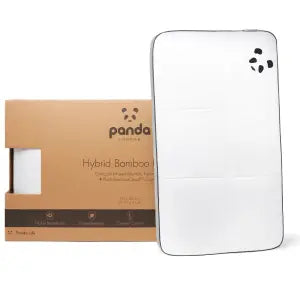
 Hybrid Bambuskissen
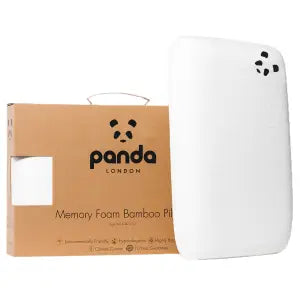 Memory Foam Bambuskissen
 Memory Foam Bambuskissen für Kinder
 Baby Memory Foam Bambuskissen
 Panda Bettdecke Cloud
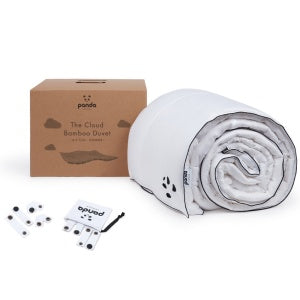 Sommerbettdecke aus Bambus
 Kinder Cloud Bettdecke
![[MattressTopper] Bamboo_Mattress_Topper_Package_Box-updated](http://pandalondon.com/cdn/shop/files/Bamboo_Mattress_Topper_Package_Box-updated.webp?crop=region&crop_height=1315&crop_left=92&crop_top=0&crop_width=1315&v=1782726992&width=1500)
![[MattressTopper] Woman laying on a Panda Bamboo Mattress Topper](http://pandalondon.com/cdn/shop/files/Bamboo_Mattress_Topper_Product_Image_01.webp?v=1782726484&width=1080)
![[MattressTopper] Guy laying on a Panda Bamboo Mattress Topper](http://pandalondon.com/cdn/shop/files/Bamboo_Mattress_Topper_Product_Image_02.webp?v=1782726484&width=1080)
![[MattressTopper] Woman setting up a Panda Bamboo Mattress Topper](http://pandalondon.com/cdn/shop/files/Bamboo_Mattress_Topper_Product_Image_03.webp?v=1782726484&width=1080)
![[MattressTopper] Panda London Memory Foam Bamboo Mattress Topper side](http://pandalondon.com/cdn/shop/files/Mattress_Topper_Isolated_-_resized.jpg?v=1773853354&width=800)
![[HybridMattressPro] Hybrid_Bamboo_Mattress_Pro_Product_Image_2026](http://pandalondon.com/cdn/shop/files/Hybrid_Bamboo_Mattress_Pro_Product_Image_2026.webp?v=1764944771&width=1000)
![[HybridMattressPro] Breathable Hybrid Bamboo Mattress](http://pandalondon.com/cdn/shop/products/Breathable-Hybrid-Bamboo-Mattress.jpg?v=1764944771&width=1920)
![[HybridMattressPro] Hybrid Bamboo Mattress Pro Cover Zip](http://pandalondon.com/cdn/shop/files/Hybrid_Bamboo_Mattress_Cover.jpg?v=1764944771&width=800)
![[HybridMattressPro] Panda Hybrid Bamboo Mattress Pro](http://pandalondon.com/cdn/shop/files/Hybrid_Bambo_Memory_Foam_Mattress_-_BioCell_Foam_x.jpg?v=1764944771&width=800)
![[HybridMattressPro] Couple on a Hybrid Bamboo Mattress Pro](http://pandalondon.com/cdn/shop/files/Hybrid_Bamboo_Mattress_Couple.jpg?v=1764944771&width=800)
![[CloudDuvet] Panda London The Cloud Bamboo Duvet Packaging](http://pandalondon.com/cdn/shop/products/Panda-London-The-Cloud-Bamboo-Duvet-Panda-Life-scaled_00a651ad-4ca3-4105-b520-12a94c1a4f71.jpg?v=1713363286&width=1920)
![[CloudDuvet] Panda London The Cloud Bamboo Duvet Rolled](http://pandalondon.com/cdn/shop/products/Duvet-Listing-Images03.jpg?v=1764079307&width=1000)
![[CloudDuvet] Panda London The Cloud Bamboo Duvet Girl Huggin a Duvet on the Bed](http://pandalondon.com/cdn/shop/files/Cloud_Bamboo_Duvet_-_Lady_Hugging_it_on_Bed_LifestyleImage.jpg?v=1764079307&width=1000)
![[CloudDuvet] Panda London The Cloud Bamboo Duvet Guy In the Air with Cloud Bamboo Duvet](http://pandalondon.com/cdn/shop/files/GuyonaHybridBambooMattresswithCloudDuvet.jpg?v=1772559689&width=2000)
![[CloudDuvet] Panda Cloud Duvet Winter on the bed lifestyle image](http://pandalondon.com/cdn/shop/files/Panda_Cloud_Duvet_Winter_on_the_Bed_Lifestyle-1_image.jpg?v=1772559689&width=1000)
![[BBWhite] 100_Bamboo_Bedding_Set_Pure_White](http://pandalondon.com/cdn/shop/files/100_Bamboo_Bedding_Set_Pure_White_01.webp?v=1781082973&width=1080)
![[BBWhite] White 100% Bamboo Bedding Texture](http://pandalondon.com/cdn/shop/files/100_Bamboo_Bedding_-_Pure_White_-_Close_Up_02.webp?v=1773611287&width=1000)
![[BBWhite] 100_Bamboo_Bedding_Set_Pure_White couple laughing](http://pandalondon.com/cdn/shop/files/100_Bamboo_Bedding_Set_Pure_White_02.webp?v=1781082974&width=1080)
![[BBWhite] White 100% Bamboo Bedding Woman Duvet cover buttons](http://pandalondon.com/cdn/shop/files/hand_and_buttons_1.webp?v=1773611287&width=1000)
![[BBWhite] 100_Bamboo_Bedding_Set_Pure_White woman sleeping](http://pandalondon.com/cdn/shop/files/100_Bamboo_Bedding_Set_Pure_White_03.webp?v=1781082973&width=1080)
![[BBUrbanGrey] 100_Bamboo_Bedding_Set_Urban_Grey_guy laying on the bedding](http://pandalondon.com/cdn/shop/files/100_Bamboo_Bedding_Set_Urban_Grey_01.webp?v=1781083567&width=1080)
![[BBUrbanGrey] Cloud Duvet Urban Grey 100% Bamboo Bedding Set](http://pandalondon.com/cdn/shop/files/Cloud_Duvet_-_Grey_-_Close_up_2.webp?v=1773611287&width=1000)
![[BBUrbanGrey] 100_Bamboo_Bedding_Set_Urban_Grey_woman opening the bedding bag](http://pandalondon.com/cdn/shop/files/100_Bamboo_Bedding_Set_Urban_Grey_02.webp?v=1781083568&width=1080)
![[BBUrbanGrey] 100_Bamboo_Bedding_Set_Urban_Grey_woman making the bed](http://pandalondon.com/cdn/shop/files/100_Bamboo_Bedding_Set_Urban_Grey_04.webp?v=1781083567&width=1080)
![[BBUrbanGrey] 100_Bamboo_Bedding_Set_Urban_Grey_couple reading magazines](http://pandalondon.com/cdn/shop/files/100_Bamboo_Bedding_Set_Urban_Grey_03.webp?v=1781083567&width=1080)
![[BBNavyBlue] Deep Sea Navy Blue 100% Bamboo Bedding Set couple reading a magazine](http://pandalondon.com/cdn/shop/files/100_Bamboo_Bedding_Set_Deep_Sea_Navy_01.webp?v=1781083134&width=1080)
![[BBNavyBlue] Deep Sea Navy Blue 100% Bamboo Bedding Texture](http://pandalondon.com/cdn/shop/files/Cloud_Duvet_-_Navy_-_Close_up_2.webp?v=1773611287&width=1000)
![[BBNavyBlue] Deep Sea Navy Blue 100% Bamboo Bedding Set couple reading a magazine and smiling](http://pandalondon.com/cdn/shop/files/100_Bamboo_Bedding_Set_Deep_Sea_Navy_02.webp?v=1781083135&width=1080)
![[BBNavyBlue] Deep Sea Navy Blue 100% Bamboo Bedding Set woman resting](http://pandalondon.com/cdn/shop/files/100_Bamboo_Bedding_Set_Deep_Sea_Navy_04.png?v=1781083138&width=1080)
![[BBNavyBlue] Deep Sea Navy Blue 100% Bamboo Bedding Set guy laying and smiling](http://pandalondon.com/cdn/shop/files/100_Bamboo_Bedding_Set_Deep_Sea_Navy_03.webp?v=1781083134&width=1080)
![[BBPink] Vintage Pink Blue 100% Bamboo Bedding woman making the bed](http://pandalondon.com/cdn/shop/files/100_Bamboo_Bedding_Set_Pink_01.webp?v=1781083678&width=1080)
![[BBPink] Vintage Pink Texture 100% Bamboo Bedding](http://pandalondon.com/cdn/shop/files/Cloud_Duvet_-_Pink_-_Close_up_2.webp?v=1773611287&width=1000)
![[BBPink] Vintage Pink Blue 100% Bamboo Bedding woman hugging the pillow with vintage pink pillow case](http://pandalondon.com/cdn/shop/files/100_Bamboo_Bedding_Set_Pink_02.webp?v=1781083678&width=1080)
![[BBPink] Vintage Pink Blue 100% Bamboo Bedding woman hiding under duvet with pink duvet cover](http://pandalondon.com/cdn/shop/files/100_Bamboo_Bedding_Set_Pink_03.webp?v=1781083679&width=1080)
![[BBPink] Vintage Pink Blue 100% Bamboo Bedding woman laying and smiling on the panda bedding set](http://pandalondon.com/cdn/shop/files/100_Bamboo_Bedding_Set_Pink_04.webp?v=1781083679&width=1080)
![[BBGrey] 100_Bamboo_Bedding_Set_Quiet_Grey_ woman holding the bedding](http://pandalondon.com/cdn/shop/files/100_Bamboo_Bedding_Set_Quiet_Grey_01.webp?v=1781083287&width=1080)
![[BBGrey] Light Grey 100% Bamboo Bedding texture](http://pandalondon.com/cdn/shop/files/Texture17.webp?v=1773611287&width=1000)
![[BBGrey] 100_Bamboo_Bedding_Set_Quiet_Grey_0guy laying and smiling](http://pandalondon.com/cdn/shop/files/100_Bamboo_Bedding_Set_Quiet_Grey_02.webp?v=1781083287&width=1080)
![[BBGrey] 100_Bamboo_Bedding_Set_Quiet_Grey_0guy reading a magazine on the bed](http://pandalondon.com/cdn/shop/files/100_Bamboo_Bedding_Set_Quiet_Grey_03.webp?v=1781083287&width=1080)
![[BBGrey] 100_Bamboo_Bedding_Set_Quiet_Grey_0woman making the bed](http://pandalondon.com/cdn/shop/files/100_Bamboo_Bedding_Set_Quiet_Grey_04.webp?v=1781083287&width=1080)

This post is done in collaboration with Sleep Charity
Sleep isn’t static – it shifts and evolves alongside us. For women in particular, sleep is connected to the body's natural rhythms, changing across different stages of life in ways that can feel surprising, frustrating, and sometimes overwhelming. From monthly cycles to major life transitions like pregnancy and menopause, understanding these changes (and creating the right sleep environment) can make all the difference.
At Panda London, where comfort meets sustainability through beautifully soft bamboo bedding, they believe that better sleep should support you at every stage of life.
Sleep and your menstrual cycle
Many women notice that their sleep changes throughout their cycle, even if they don’t always connect the two. In the days leading up to a period, rising progesterone levels can make you feel sleepier, yet sleep itself can become more disrupted. You might find yourself waking more often, feeling warmer than usual, or struggling with discomfort such as cramps or headaches.
This is where your sleep environment really matters. Breathable, temperature-regulating fabrics like bamboo can help keep you cool when hormones make you feel overheated and are gentle on sensitive skin. Creating a calming bedtime routine during this phase, with softer lighting, reduced screen time, and a slightly earlier night, can help counterbalance those hormonal shifts.
Pregnancy and the challenge of rest
Pregnancy is often painted as a time of glowing serenity, but sleep can tell a very different story. As the body changes, so does the ability to get comfortable. Hormonal fluctuations, frequent trips to the bathroom, and physical discomfort can all interrupt rest, particularly in the second and third trimesters. Research shows that over half of pregnant women suffer from poor sleep quality.
During this time, sleep becomes less about perfection and more about support. Soft, breathable bedding can help regulate body temperature, which tends to run higher during pregnancy, while also offering comfort against sensitive skin. Many women find that layering lightweight, natural fabrics works better than heavier duvets, allowing them to adjust throughout the night.
Equally important is letting go of rigid expectations. Daytime rest, gentle wind-down routines, and prioritising comfort over routine can help you navigate this phase with more ease.
Life with young children
For many women, the early years of parenting bring some of the most fragmented sleep they’ll ever experience. Night feeds, unsettled children, and the mental load of caring for a young family can make uninterrupted sleep feel like a distant memory.
While you can’t always control how often you’re woken, you can still influence the quality of the sleep you do get. A comfortable, inviting bed becomes an essential – not a luxury. Slipping into soft, breathable sheets at the end of a long day can help your body relax more quickly, making it easier to fall back asleep after disruptions.
It’s also a time to be kind to yourself. Sleep may not look the way it once did, and that’s okay. Small changes, like keeping your bedroom calm, clutter-free, and comfortable, can help create moments of rest, even in a busy household.
Menopause and night-time disruption
Menopause is one of the most significant transitions for women’s sleep. Hot flushes, night sweats, anxiety, and changes in mood can all contribute to difficulty falling and staying asleep. For many, this stage brings a renewed awareness of just how important the sleep environment is.
Temperature regulation becomes key. Bamboo bedding, known for its breathability and moisture-wicking properties, can help manage night sweats and keep you feeling comfortable throughout the night. Choosing natural fibres over synthetic materials can make a noticeable difference in how your body responds to these changes.
Beyond the physical, menopause can also bring a shift in how we approach rest. It’s an opportunity to rebuild a relationship with sleep – one that prioritises comfort, consistency, and self-care over pressure and perfection.
Ageing and changing sleep patterns
As we get older, sleep often becomes lighter and more fragmented; research suggests that 51.6% of postmenopausal women experience sleep disorders. You may find yourself waking earlier, struggling to stay asleep, or needing less sleep overall. As we age, so does our suprachiasmatic nucleus – the internal clock that controls our circadian rhythm. While these changes are a normal part of ageing, they don’t mean you have to settle for poor-quality rest.
Comfort becomes even more important. A supportive mattress, soft bedding, and a calm sleep environment can help you make the most of the sleep you do get. Natural materials, like bamboo, are particularly beneficial as they’re gentle, breathable, and help maintain a consistent temperature – all key factors for restful sleep.
There’s also a shift in mindset that can be helpful. Rather than chasing the sleep patterns of earlier years, it can be more beneficial to work with your body’s current rhythms, building routines that suit your lifestyle now.
Supporting sleep at every stage
While each stage of life brings its own challenges, there’s a common thread: the importance of creating a sleep environment that works with your body, not against it. Small, thoughtful choices – from the fabrics you sleep in to the atmosphere of your bedroom – can have a powerful impact.
At Panda London, the focus on natural, sustainable bamboo bedding isn’t just about comfort; it’s about supporting better sleep in a way that adapts to you. Soft, breathable, and designed with wellbeing in mind, it’s an investment in rest that evolves alongside your life.
Because wherever you are in your journey, you deserve sleep that restores, supports, and helps you wake feeling like yourself again.
For more information on sleep, visit thesleepcharity.org.uk.
FAQs
1. How do hormonal changes affect women’s sleep throughout life?
Changes in progesterone and oestrogen levels may lead to night sweats, insomnia, or disrupted sleep patterns, making it important to adapt your sleep environment and routine accordingly.
2. What are the best ways to improve sleep during menopause?
Focus on staying cool at night, using breathable bedding, and maintaining a consistent bedtime routine. Natural, thermoregulating fabrics like bamboo can help manage night sweats, while relaxation techniques may ease anxiety and improve sleep quality.
3. Why is sleep more difficult during pregnancy?
Sleep can become more challenging during pregnancy due to physical discomfort, hormonal changes, and increased nighttime awakenings. Factors like back pain, frequent urination, and a rising body temperature can all contribute to disrupted rest.
4. How can new mothers cope with sleep deprivation?
Creating a comfortable sleep environment, resting when possible, and sharing nighttime responsibilities can help new mothers manage sleep deprivation more effectively.
5. What type of bedding is best for temperature regulation and better sleep?
Breathable, moisture-wicking materials like bamboo are ideal for regulating body temperature and improving sleep comfort. These fabrics help keep you cool in warmer phases (like menopause or pregnancy) and provide a soft, gentle surface for sensitive skin.
About the Author:
Lisa Artis is the deputy CEO of The Sleep Charity with over 15+ years’ experience in the sleep industry. With a PR background, she champions the essential part sleep plays in health, public policy and workplace wellbeing. She holds roles with the British Sleep Society while supporting mental health and community causes.

