
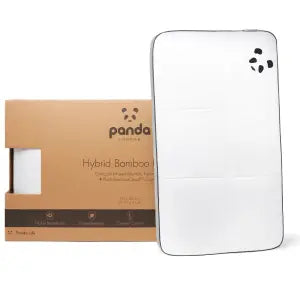
 Hybrid Bamboo Pillow
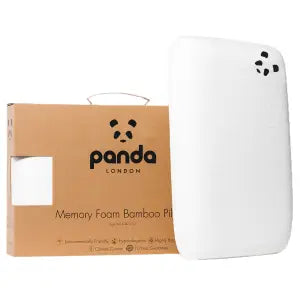 Memory Foam Bamboo Pillow
 Kids Memory Foam Bamboo Pillow
 Baby Memory Foam Bamboo Pillow
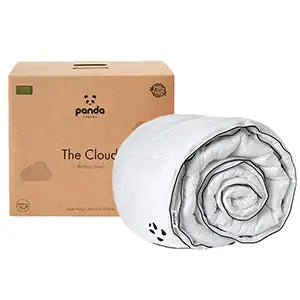 Panda Cloud Duvet
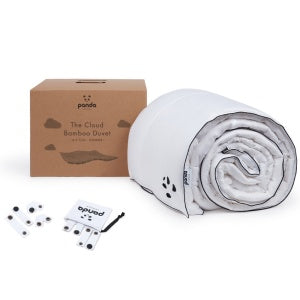 Bamboo Summer Duvet
 Kids Cloud Duvet
![[MattressTopper] Bamboo_Mattress_Topper_Package_Box-updated](http://pandalondon.com/cdn/shop/files/Bamboo_Mattress_Topper_Package_Box-updated.webp?crop=region&crop_height=1315&crop_left=92&crop_top=0&crop_width=1315&v=1782726992&width=1500)
![[MattressTopper] Woman laying on a Panda Bamboo Mattress Topper](http://pandalondon.com/cdn/shop/files/Bamboo_Mattress_Topper_Product_Image_01.webp?v=1782726484&width=1080)
![[MattressTopper] Guy laying on a Panda Bamboo Mattress Topper](http://pandalondon.com/cdn/shop/files/Bamboo_Mattress_Topper_Product_Image_02.webp?v=1782726484&width=1080)
![[MattressTopper] Woman setting up a Panda Bamboo Mattress Topper](http://pandalondon.com/cdn/shop/files/Bamboo_Mattress_Topper_Product_Image_03.webp?v=1782726484&width=1080)
![[MattressTopper] Panda London Memory Foam Bamboo Mattress Topper side](http://pandalondon.com/cdn/shop/files/Mattress_Topper_Isolated_-_resized.jpg?v=1773853354&width=800)
![[HybridMattressPro] Hybrid_Bamboo_Mattress_Pro_Product_Image_2026](http://pandalondon.com/cdn/shop/files/Hybrid_Bamboo_Mattress_Pro_Product_Image_2026.webp?v=1764944771&width=1000)
![[HybridMattressPro] Breathable Hybrid Bamboo Mattress](http://pandalondon.com/cdn/shop/products/Breathable-Hybrid-Bamboo-Mattress.jpg?v=1764944771&width=1920)
![[HybridMattressPro] Hybrid Bamboo Mattress Pro Cover Zip](http://pandalondon.com/cdn/shop/files/Hybrid_Bamboo_Mattress_Cover.jpg?v=1764944771&width=800)
![[HybridMattressPro] Panda Hybrid Bamboo Mattress Pro](http://pandalondon.com/cdn/shop/files/Hybrid_Bambo_Memory_Foam_Mattress_-_BioCell_Foam_x.jpg?v=1764944771&width=800)
![[HybridMattressPro] Couple on a Hybrid Bamboo Mattress Pro](http://pandalondon.com/cdn/shop/files/Hybrid_Bamboo_Mattress_Couple.jpg?v=1764944771&width=800)
![[CloudDuvet] Panda London The Cloud Bamboo Duvet Packaging](http://pandalondon.com/cdn/shop/products/Panda-London-The-Cloud-Bamboo-Duvet-Panda-Life-scaled_00a651ad-4ca3-4105-b520-12a94c1a4f71.jpg?v=1713363286&width=1920)
![[CloudDuvet] Panda London The Cloud Bamboo Duvet Rolled](http://pandalondon.com/cdn/shop/products/Duvet-Listing-Images03.jpg?v=1764079307&width=1000)
![[CloudDuvet] Panda London The Cloud Bamboo Duvet Girl Huggin a Duvet on the Bed](http://pandalondon.com/cdn/shop/files/Cloud_Bamboo_Duvet_-_Lady_Hugging_it_on_Bed_LifestyleImage.jpg?v=1764079307&width=1000)
![[CloudDuvet] Panda London The Cloud Bamboo Duvet Guy In the Air with Cloud Bamboo Duvet](http://pandalondon.com/cdn/shop/files/GuyonaHybridBambooMattresswithCloudDuvet.jpg?v=1772559689&width=2000)
![[CloudDuvet] Panda Cloud Duvet Winter on the bed lifestyle image](http://pandalondon.com/cdn/shop/files/Panda_Cloud_Duvet_Winter_on_the_Bed_Lifestyle-1_image.jpg?v=1772559689&width=1000)
![[BBWhite] 100_Bamboo_Bedding_Set_Pure_White](http://pandalondon.com/cdn/shop/files/100_Bamboo_Bedding_Set_Pure_White_01.webp?v=1781082973&width=1080)
![[BBWhite] White 100% Bamboo Bedding Texture](http://pandalondon.com/cdn/shop/files/100_Bamboo_Bedding_-_Pure_White_-_Close_Up_02.webp?v=1773611287&width=1000)
![[BBWhite] 100_Bamboo_Bedding_Set_Pure_White couple laughing](http://pandalondon.com/cdn/shop/files/100_Bamboo_Bedding_Set_Pure_White_02.webp?v=1781082974&width=1080)
![[BBWhite] White 100% Bamboo Bedding Woman Duvet cover buttons](http://pandalondon.com/cdn/shop/files/hand_and_buttons_1.webp?v=1773611287&width=1000)
![[BBWhite] 100_Bamboo_Bedding_Set_Pure_White woman sleeping](http://pandalondon.com/cdn/shop/files/100_Bamboo_Bedding_Set_Pure_White_03.webp?v=1781082973&width=1080)
![[BBUrbanGrey] 100_Bamboo_Bedding_Set_Urban_Grey_guy laying on the bedding](http://pandalondon.com/cdn/shop/files/100_Bamboo_Bedding_Set_Urban_Grey_01.webp?v=1781083567&width=1080)
![[BBUrbanGrey] Cloud Duvet Urban Grey 100% Bamboo Bedding Set](http://pandalondon.com/cdn/shop/files/Cloud_Duvet_-_Grey_-_Close_up_2.webp?v=1773611287&width=1000)
![[BBUrbanGrey] 100_Bamboo_Bedding_Set_Urban_Grey_woman opening the bedding bag](http://pandalondon.com/cdn/shop/files/100_Bamboo_Bedding_Set_Urban_Grey_02.webp?v=1781083568&width=1080)
![[BBUrbanGrey] 100_Bamboo_Bedding_Set_Urban_Grey_woman making the bed](http://pandalondon.com/cdn/shop/files/100_Bamboo_Bedding_Set_Urban_Grey_04.webp?v=1781083567&width=1080)
![[BBUrbanGrey] 100_Bamboo_Bedding_Set_Urban_Grey_couple reading magazines](http://pandalondon.com/cdn/shop/files/100_Bamboo_Bedding_Set_Urban_Grey_03.webp?v=1781083567&width=1080)
![[BBNavyBlue] Deep Sea Navy Blue 100% Bamboo Bedding Set couple reading a magazine](http://pandalondon.com/cdn/shop/files/100_Bamboo_Bedding_Set_Deep_Sea_Navy_01.webp?v=1781083134&width=1080)
![[BBNavyBlue] Deep Sea Navy Blue 100% Bamboo Bedding Texture](http://pandalondon.com/cdn/shop/files/Cloud_Duvet_-_Navy_-_Close_up_2.webp?v=1773611287&width=1000)
![[BBNavyBlue] Deep Sea Navy Blue 100% Bamboo Bedding Set couple reading a magazine and smiling](http://pandalondon.com/cdn/shop/files/100_Bamboo_Bedding_Set_Deep_Sea_Navy_02.webp?v=1781083135&width=1080)
![[BBNavyBlue] Deep Sea Navy Blue 100% Bamboo Bedding Set woman resting](http://pandalondon.com/cdn/shop/files/100_Bamboo_Bedding_Set_Deep_Sea_Navy_04.png?v=1781083138&width=1080)
![[BBNavyBlue] Deep Sea Navy Blue 100% Bamboo Bedding Set guy laying and smiling](http://pandalondon.com/cdn/shop/files/100_Bamboo_Bedding_Set_Deep_Sea_Navy_03.webp?v=1781083134&width=1080)
![[BBPink] Vintage Pink Blue 100% Bamboo Bedding woman making the bed](http://pandalondon.com/cdn/shop/files/100_Bamboo_Bedding_Set_Pink_01.webp?v=1781083678&width=1080)
![[BBPink] Vintage Pink Texture 100% Bamboo Bedding](http://pandalondon.com/cdn/shop/files/Cloud_Duvet_-_Pink_-_Close_up_2.webp?v=1773611287&width=1000)
![[BBPink] Vintage Pink Blue 100% Bamboo Bedding woman hugging the pillow with vintage pink pillow case](http://pandalondon.com/cdn/shop/files/100_Bamboo_Bedding_Set_Pink_02.webp?v=1781083678&width=1080)
![[BBPink] Vintage Pink Blue 100% Bamboo Bedding woman hiding under duvet with pink duvet cover](http://pandalondon.com/cdn/shop/files/100_Bamboo_Bedding_Set_Pink_03.webp?v=1781083679&width=1080)
![[BBPink] Vintage Pink Blue 100% Bamboo Bedding woman laying and smiling on the panda bedding set](http://pandalondon.com/cdn/shop/files/100_Bamboo_Bedding_Set_Pink_04.webp?v=1781083679&width=1080)
![[BBGrey] 100_Bamboo_Bedding_Set_Quiet_Grey_ woman holding the bedding](http://pandalondon.com/cdn/shop/files/100_Bamboo_Bedding_Set_Quiet_Grey_01.webp?v=1781083287&width=1080)
![[BBGrey] Light Grey 100% Bamboo Bedding texture](http://pandalondon.com/cdn/shop/files/Texture17.webp?v=1773611287&width=1000)
![[BBGrey] 100_Bamboo_Bedding_Set_Quiet_Grey_0guy laying and smiling](http://pandalondon.com/cdn/shop/files/100_Bamboo_Bedding_Set_Quiet_Grey_02.webp?v=1781083287&width=1080)
![[BBGrey] 100_Bamboo_Bedding_Set_Quiet_Grey_0guy reading a magazine on the bed](http://pandalondon.com/cdn/shop/files/100_Bamboo_Bedding_Set_Quiet_Grey_03.webp?v=1781083287&width=1080)
![[BBGrey] 100_Bamboo_Bedding_Set_Quiet_Grey_0woman making the bed](http://pandalondon.com/cdn/shop/files/100_Bamboo_Bedding_Set_Quiet_Grey_04.webp?v=1781083287&width=1080)

Global Recycling Day on Wednesday, 18th March 2026, is a reminder that we all need to do our bit to reduce waste, conserve resources, and lower environmental harm. We came up with our Circle of Life Initiative to find a practical solution to waste management which extends material life, and supports a more circular future.
Why Global Recycling Day Matters
We are not recycling enough. The World Bank says at least 33% of solid waste is still mismanaged through open dumping or burning, and the Organisation for Economic Co-operation and Development (OECD) reports that only 9% of plastic waste is successfully recycled. Global Recycling Day shines a light on how waste can be a renewable resource, and not dumped to cause pollution or harm to the planet. It’s important that businesses and communities work together to encourage recycling.
To ask people across the planet to think resource, not waste.
— Global Recycling Day mission statement
What Is the Circle of Life Initiative?
Most of our products are 100% recyclable, but for those containing memory foam and springs which are harder to recycle, we set up our Circle of Life, a reuse and recycling programme. Making it easy for our customers to recycle their end-of-life Panda mattresses, pillows and toppers, we organise for them to be collected for free. Depending on their condition, we repurpose, recycle or donate them.
According to The National Bed Federation, 4.75 million mattresses a year end up in landfill in the UK. Our recycling initiative supports a more circular economy, so that 100% of collected products are kept out of landfill. In turn, this sustainable waste management protects resources, cuts emissions, and reduces environmental harm by keeping materials in use for longer.

How Our Circle of Life Initiative Helps Reduce Waste
Designing for Longer Product Life
Bamboo was a natural choice for our products, as it’s one of the most environmentally-friendly plants you can use to create fabric, using a third less water to grow than cotton. Here’s how bamboo generates less waste and promotes longer life for our products:
- Sourced from sustainably managed forests
- Created using a closed-loop production process - all of the bamboo plant is used - nothing is wasted
- Bamboo doesn’t need pesticides for cultivation
- Bamboo's rapid growth cycle can reduce energy usage over time
- Bamboo absorbs toxic greenhouse gases and releases 30% more oxygen than hardwood trees
- Highly durable - our bamboo fabric is soft yet strong and lasts a long time
- All our packaging has been made from recycled material and is 100% recyclable
Supporting Reuse and Recovery
Repair
All of our products are covered by a guarantee, under which, if your product develops a fault, we can offer to repair it. If we are unable to fix your product, we’ll replace it.
Rejuvenate
Any faulty product which is returned to us is inspected to assess if it can be rejuvenated. If the product is not in a condition to be resold or donated to charity, we will recycle it.
Recycle
It is not only Panda end of life mattresses we recycle, when you order a mattress from us, we also offer to collect your old mattress with your delivery, without a charge. This doesn’t necessarily have to be one of our own mattresses; it can be any previously used mattress.
Mattress Recycling Service
If you haven’t placed an order with us and want to recycle your old Panda mattress but aren’t sure how, we offer a Mattress Recycling Service. This means you can sleep well knowing your old mattress has been recycled sustainably and given a second life.
Improving Recycling Outcomes
A reuse and recycling initiative is effective within a brand or business if it follows the criteria below:
- They choose a material which is easy to recycle
- Give clear recycling guidance
- Streamline their collection systems
Our Circle of Life Initiative makes the process of recycling hassle-free, actively encouraging our customers to use the service without any extra cost.
Cutting Unnecessary Materials
We make the promise that we’re sustainable from forest to front door, because at every stage we consider the planet. Our packaging is made from recyclable Kraft paper, and the ink we use for printing is non-toxic, further reducing our impact on the environment. Any plastic used to protect your new Panda purchase is both recyclable and recycled, containing 40% recycled material from post-consumer waste. Upon delivery of your product, our couriers will remove any excess packaging as part of our service.

Why Circular Economy Solutions Are the Future
Global recycling should not only be considered one day a year, but 365 days. Our throwaway culture is damaging the environment, and this will only worsen if we do not consider a waste reduction strategy within all textile industries, which creates a circular economy. As the old proverb goes, ‘waste not, want not.’
This means designing for durability, reuse, remanufacturing, and recycling to keep products, components, and materials circulating in the economy.
— Ellen MacArthur Foundation
How Everyone Can Reduce Waste Beyond Global Recycling Day
We can all do our bit to reduce waste and recycle more effectively. The responsibility is not just on governments and businesses.
Recycle More Effectively
There are a few ways you can change your recycling habits for the better:
Check the label
WRAP, the Waste and Resources Action Programme behind a lot of the UK’s guidance and research on recycling, waste reduction, circular design, and resource efficiency, advises to check labels. WRAP’s research shows labels only change behaviour when people notice them, understand them, and act on them.
Consistent collections and clear labelling will make it much easier for people to do the right thing.
— WRAP
Better sorting
In the UK, recycling rules still depend on local council guidelines, and Recycle Now’s Recycling Locator lets you enter a postcode to see what can be recycled at home or nearby.
Awareness
If you don’t know which items are recyclable, there is a wealth of resources. Implementing a system at home where you have different bins for food, waste and recyclable items helps to make it organised and part of your daily routine.
Choose Reusable Options
Avoiding single-use products is a good way to become more eco-conscious, for example, re-using a tote bag made from recycled materials for your shopping instead of getting a plastic bag at the supermarket.
Here are some more ways to become more environmentally friendly in your day-to-day life:
- Carry a reusable water bottle and coffee cup
- Choose refillable toiletries and cleaning products
- Avoid individually wrapped items where possible
- Bring your own lunchbox
- switch from paper towels to washable cloths
- Buy in larger sizes or bulk to reduce packaging
- Choose durable products over disposable ones
- Reuse jars, containers, and packaging before replacing them
Support Circular Products and Programmes
Brands which offer all the rs of recycling: reuse systems such as refills, resale, refurbishment and rentals (and not only recycle), are the ones to support to show a commitment to the circular economy. It should also be easy to find out a brand’s impact on the environment, so that they have credible accountability. That means public targets, named memberships, annual progress updates, and transparency about where returned products actually go.
Our Commitment to Reducing Waste
As our Circle of Life Initiative proves, sustainability remains at the heart of our journey, shaping how we design our products, reduce waste, and take greater responsibility for what happens at the end of a product’s life.
As an evolving brand with a planet-first mindset, we will keep exploring new ways to improve collection, recovery, reuse, and recycling, so that more materials stay in circulation and less goes to waste. This Global Recycling Day, you can help do your bit in creating a circular future through thoughtful action today.
|
Explore our Circle of Life Initiative |
About the Author:
Caroline Barnes is the Content Writer at Panda, creating content on sleep, well-being, sustainability, and home decoration. Her articles span everything from breathable bedding and sleep advice to circular initiatives that help reduce waste and support more mindful choices at home. Born and raised in West London, she studied English Literature at university before spending several years in the high-paced fashion industry, where she learned to appreciate the value of quality sleep. Outside of writing, she enjoys going to gigs and practising yoga.

