
 Hybrid Bamboo Pillow
 Memory Foam Bamboo Pillow
 Kids Memory Foam Bamboo Pillow
 Baby Memory Foam Bamboo Pillow
 Panda Cloud Duvet
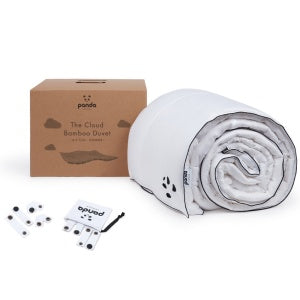 Bamboo Summer Duvet
 Kids Cloud Duvet
![[MattressTopper] Bamboo_Mattress_Topper_Package_Box-updated](http://pandalondon.com/cdn/shop/files/Bamboo_Mattress_Topper_Package_Box-updated.webp?crop=region&crop_height=1315&crop_left=92&crop_top=0&crop_width=1315&v=1782726992&width=1500)
![[MattressTopper] Woman laying on a Panda Bamboo Mattress Topper](http://pandalondon.com/cdn/shop/files/Bamboo_Mattress_Topper_Product_Image_01.webp?v=1782726484&width=1080)
![[MattressTopper] Guy laying on a Panda Bamboo Mattress Topper](http://pandalondon.com/cdn/shop/files/Bamboo_Mattress_Topper_Product_Image_02.webp?v=1782726484&width=1080)
![[MattressTopper] Woman setting up a Panda Bamboo Mattress Topper](http://pandalondon.com/cdn/shop/files/Bamboo_Mattress_Topper_Product_Image_03.webp?v=1782726484&width=1080)
![[MattressTopper] Panda London Memory Foam Bamboo Mattress Topper side](http://pandalondon.com/cdn/shop/files/Mattress_Topper_Isolated_-_resized.jpg?v=1773853354&width=800)
![[HybridMattressPro] Hybrid_Bamboo_Mattress_Pro_Product_Image_2026](http://pandalondon.com/cdn/shop/files/Hybrid_Bamboo_Mattress_Pro_Product_Image_2026.webp?v=1764944771&width=1000)
![[HybridMattressPro] A woman in white pajamas lies on her side on a mattress atop a gray upholstered bed frame in a softly lit bedroom. The mattress has a white top layer with a subtle geometric pattern and a black center band, with a small Panda Mattress logo patch visible on the side.](http://pandalondon.com/cdn/shop/files/Mattress_PRO-01.webp?v=1790672728&width=2049)
![[HybridMattressPro] Hybrid Bamboo Mattress Pro Cover Zip](http://pandalondon.com/cdn/shop/files/Hybrid_Bamboo_Mattress_Cover.jpg?v=1764944771&width=800)
![[HybridMattressPro] A woman in a cream-colored pajama set kneels beside a bed, holding down a mattress protector on a Panda Mattress to show its support and comfort.](http://pandalondon.com/cdn/shop/files/Mattress_PRO-03.webp?v=1790672728&width=2049)
![[HybridMattressPro] A woman in light pink pajamas sits on a Panda Bamboo mattress](http://pandalondon.com/cdn/shop/files/Mattress_PRO-04.webp?v=1790672728&width=2049)
![[CloudDuvet] Panda London The Cloud Bamboo Duvet Packaging](http://pandalondon.com/cdn/shop/products/Panda-London-The-Cloud-Bamboo-Duvet-Panda-Life-scaled_00a651ad-4ca3-4105-b520-12a94c1a4f71.jpg?v=1713363286&width=1920)
![[CloudDuvet] Panda London The Cloud Bamboo Duvet Rolled](http://pandalondon.com/cdn/shop/products/Duvet-Listing-Images03.jpg?v=1764079307&width=1000)
![[CloudDuvet] Guy making the bed with Panda Cloud Duvet 10.5 TOG](http://pandalondon.com/cdn/shop/files/Duvet_10.5_Tog-02.webp?v=1790607319&width=2049)
![[CloudDuvet] Guy reading a book on the bed covered with Panda Cloud Duvet 10.5 TOG](http://pandalondon.com/cdn/shop/files/Duvet_10.5_Tog-03.webp?v=1790607319&width=2049)
![[CloudDuvet] Guy making his bed with Panda Cloud Duvet 10.5 TOG](http://pandalondon.com/cdn/shop/files/Duvet_10.5_Tog-04.webp?v=1790607319&width=2049)
![[BBWhite] 100_Bamboo_Bedding_Set_Pure_White](http://pandalondon.com/cdn/shop/files/100_Bamboo_Bedding_Set_Pure_White_01.webp?v=1781082973&width=1080)
![[BBWhite] White 100% Bamboo Bedding Texture](http://pandalondon.com/cdn/shop/files/100_Bamboo_Bedding_-_Pure_White_-_Close_Up_02.webp?v=1773611287&width=1000)
![[BBWhite] 100_Bamboo_Bedding_Set_Pure_White couple laughing](http://pandalondon.com/cdn/shop/files/100_Bamboo_Bedding_Set_Pure_White_02.webp?v=1781082974&width=1080)
![[BBWhite] White 100% Bamboo Bedding Woman Duvet cover buttons](http://pandalondon.com/cdn/shop/files/hand_and_buttons_1.webp?v=1773611287&width=1000)
![[BBWhite] 100_Bamboo_Bedding_Set_Pure_White woman sleeping](http://pandalondon.com/cdn/shop/files/100_Bamboo_Bedding_Set_Pure_White_03.webp?v=1781082973&width=1080)
![[BBUrbanGrey] 100_Bamboo_Bedding_Set_Urban_Grey_guy laying on the bedding](http://pandalondon.com/cdn/shop/files/100_Bamboo_Bedding_Set_Urban_Grey_01.webp?v=1781083567&width=1080)
![[BBUrbanGrey] Cloud Duvet Urban Grey 100% Bamboo Bedding Set](http://pandalondon.com/cdn/shop/files/Cloud_Duvet_-_Grey_-_Close_up_2.webp?v=1773611287&width=1000)
![[BBUrbanGrey] 100_Bamboo_Bedding_Set_Urban_Grey_woman opening the bedding bag](http://pandalondon.com/cdn/shop/files/100_Bamboo_Bedding_Set_Urban_Grey_02.webp?v=1781083568&width=1080)
![[BBUrbanGrey] 100_Bamboo_Bedding_Set_Urban_Grey_woman making the bed](http://pandalondon.com/cdn/shop/files/100_Bamboo_Bedding_Set_Urban_Grey_04.webp?v=1781083567&width=1080)
![[BBUrbanGrey] 100_Bamboo_Bedding_Set_Urban_Grey_couple reading magazines](http://pandalondon.com/cdn/shop/files/100_Bamboo_Bedding_Set_Urban_Grey_03.webp?v=1781083567&width=1080)
![[BBNavyBlue] Deep Sea Navy Blue 100% Bamboo Bedding Set couple reading a magazine](http://pandalondon.com/cdn/shop/files/100_Bamboo_Bedding_Set_Deep_Sea_Navy_01.webp?v=1781083134&width=1080)
![[BBNavyBlue] Deep Sea Navy Blue 100% Bamboo Bedding Texture](http://pandalondon.com/cdn/shop/files/Cloud_Duvet_-_Navy_-_Close_up_2.webp?v=1773611287&width=1000)
![[BBNavyBlue] Deep Sea Navy Blue 100% Bamboo Bedding Set couple reading a magazine and smiling](http://pandalondon.com/cdn/shop/files/100_Bamboo_Bedding_Set_Deep_Sea_Navy_02.webp?v=1781083135&width=1080)
![[BBNavyBlue] Deep Sea Navy Blue 100% Bamboo Bedding Set woman resting](http://pandalondon.com/cdn/shop/files/100_Bamboo_Bedding_Set_Deep_Sea_Navy_04.png?v=1781083138&width=1080)
![[BBNavyBlue] Deep Sea Navy Blue 100% Bamboo Bedding Set guy laying and smiling](http://pandalondon.com/cdn/shop/files/100_Bamboo_Bedding_Set_Deep_Sea_Navy_03.webp?v=1781083134&width=1080)
![[BBPink] Vintage Pink Blue 100% Bamboo Bedding woman making the bed](http://pandalondon.com/cdn/shop/files/100_Bamboo_Bedding_Set_Pink_01.webp?v=1781083678&width=1080)
![[BBPink] Vintage Pink Texture 100% Bamboo Bedding](http://pandalondon.com/cdn/shop/files/Cloud_Duvet_-_Pink_-_Close_up_2.webp?v=1773611287&width=1000)
![[BBPink] Vintage Pink Blue 100% Bamboo Bedding woman hugging the pillow with vintage pink pillow case](http://pandalondon.com/cdn/shop/files/100_Bamboo_Bedding_Set_Pink_02.webp?v=1781083678&width=1080)
![[BBPink] Vintage Pink Blue 100% Bamboo Bedding woman hiding under duvet with pink duvet cover](http://pandalondon.com/cdn/shop/files/100_Bamboo_Bedding_Set_Pink_03.webp?v=1781083679&width=1080)
![[BBPink] Vintage Pink Blue 100% Bamboo Bedding woman laying and smiling on the panda bedding set](http://pandalondon.com/cdn/shop/files/100_Bamboo_Bedding_Set_Pink_04.webp?v=1781083679&width=1080)
![[BBGrey] 100_Bamboo_Bedding_Set_Quiet_Grey_ woman holding the bedding](http://pandalondon.com/cdn/shop/files/100_Bamboo_Bedding_Set_Quiet_Grey_01.webp?v=1781083287&width=1080)
![[BBGrey] Light Grey 100% Bamboo Bedding texture](http://pandalondon.com/cdn/shop/files/Texture17.webp?v=1773611287&width=1000)
![[BBGrey] 100_Bamboo_Bedding_Set_Quiet_Grey_0guy laying and smiling](http://pandalondon.com/cdn/shop/files/100_Bamboo_Bedding_Set_Quiet_Grey_02.webp?v=1781083287&width=1080)
![[BBGrey] 100_Bamboo_Bedding_Set_Quiet_Grey_0guy reading a magazine on the bed](http://pandalondon.com/cdn/shop/files/100_Bamboo_Bedding_Set_Quiet_Grey_03.webp?v=1781083287&width=1080)
![[BBGrey] 100_Bamboo_Bedding_Set_Quiet_Grey_0woman making the bed](http://pandalondon.com/cdn/shop/files/100_Bamboo_Bedding_Set_Quiet_Grey_04.webp?v=1781083287&width=1080)

Quick Answer:
You can't fully reset your body clock in one day, but you can shift it in about a week. Set your uni wake-up time and stick to it, get daylight within 30 minutes of waking, move your bedtime 15–30 minutes earlier each night, keep naps under 30 minutes, and cut caffeine earlier in the day.
You can’t fix your sleep schedule in one day, but you can shift it meaningfully over a few days.
A summer of late nights and lie-ins can make a return to early morning lectures feel like a slog, but there’s hope. All it takes is a week of healthy habits to start resetting your body clock in time for term time.
Here we’ll share a 7-day reset plan to get your sleep schedule back on track, plus handy tips for creating the perfect sleep environment at uni.
Why your sleep schedule drifts over summer
Summer holidays are the perfect time to relax between studies. Without daytime commitments, it’s common to wake up and stay up later. Throw in late-night scrolling, nights out and lie-ins, and bedtimes gradually move further away from when they need to be.
The habits we form in summer can lead to something known as circadian drift. The gradual shift of your internal biological clock affects when we feel most awake and is governed by our exposure to light. That’s why making sure you see daylight at the right time helps to fix your sleep schedule fast.
Can you fix your sleep schedule in one day?
Not completely, and anyone promising an instant reset is probably promising more than they can deliver. But one day can be a useful start.
Waking up earlier, getting plenty of morning daylight, avoiding long naps, and going to bed earlier can all help move your schedule in the right direction. Just don’t expect to undo weeks of late nights overnight.
Think of your first day as a rest point, and give yourself between one and two weeks to settle into a new routine, especially if your summer schedule has drifted far from a term-time one.
![[MattressTopper] Bamboo_Mattress_Topper_Package_Box-updated](https://cdn.shopify.com/s/files/1/0807/7331/6934/files/Bamboo_Mattress_Topper_Package_Box-updated_480x480.webp?v=1782726992)
The 7-day reset plan
The easiest way to get your sleep schedule back on track is to make small, repeatable changes. Don't worry about hitting a perfect bedtime straight away, and stagger changes to your routine.
Day 1
Choose a wake-up time that allows you to get to lectures and seminars on time and stick to it. Even if you don’t sleep the whole night, get up at the time you set.
Get some daylight within 30 minutes of waking up. Morning light gives your body clock a useful signal that the day has started.
Day 2
Repeat your wake-up time and morning daylight ritual. Consistency is more useful than making dramatic changes from one day to the next. If you're tired during the day, try to stay awake until your usual bedtime rather than catching up with a long afternoon nap.
Day 3
Start moving your bedtime earlier by 15 to 30 minutes. You don't need to go from a 2 am bedtime to 10 pm in one leap. A smaller shift is much easier to stick with. Give yourself some time to wind down before bed and keep screen time to a minimum as bedtime approaches.
Day 4
Stick with the healthy habits from earlier in the plan and try to avoid napping. If you need a nap, make sure it doesn’t last more than 30 minutes. Long or late naps can make it harder to feel sleepy at your new bedtime.
Day 5
If you’re a keen coffee drinker, try to avoid caffeine later in the day. If your sleep schedule has drifted, a late-night latte can make it harder to sleep when you want to. Keep your morning wake time the same, even if your evening didn't go exactly to plan.
Day 6
Start a repeatable wind-down routine. Put screens away and give yourself time to transition from daytime to bedtime. The aim is to establish a routine before you head back to uni. Continue to go to bed earlier, but in small steps rather than trying to make up for lost time with bigger changes.
Day 7
By now, your routine should feel more familiar. Keep the same wake time and continue with morning daylight, sensible naps, an earlier caffeine cut-off and a consistent wind-down. Most importantly, don't undo the week's progress with a weekend lie-in. Your body clock doesn't know it's Saturday.
Getting sleep schedule back on track fast
There is no way to fix your sleep schedule in one day, but if a new term is around the corner, focus on these things to fix your sleep schedule fast:
- Set your uni wake-up time and stick to it.
- Get daylight within 30 minutes of waking.
- Move bedtime earlier by 15–30 minutes at a time.
- Avoid naps longer than 30 minutes.
- Keep caffeine to earlier in the day.
- Reduce screen time and stimulation before bed.
- Keep your wake time consistent at weekends too.
Your sleep environment at uni
Student accommodation can be a ‘hotbed’ for poor sleep hygiene. Here are a few of the conditions you might face and how to overcome them:
- Unfamiliar room – If you can visit your room before moving in day, do it. Familiarise yourself with the layout and imagine sleeping there. Is there anything you can do to personalise the space? Choosing bedding in a colour that works for you can help you feel at home.
- Noisy halls – Unexpected and loud noises are often part of the student accommodation package. Investing in a pair of earplugs can help to block out the sound and give yourself the best chance of nodding off.
- Thin curtains – Not all bedrooms are blessed with blackout curtains. If you want to minimise light disturbing your sleep, an eye mask is a convenient solution. Look for options with an adjustable strap for a comfortable fit.
- Overheating – The perfect bedroom temperature is around 16–19°C. Breathable bamboo bedding can keep you ventilated and stop stuffy rooms from preventing you from sleeping. If you’re looking for the whole package, pillow case, fitted sheet and duvet cover, our 100% Bamboo Bedding Set is a natural choice.
What to do the week before term
If you have just a week to go before starting a new term, try prioritising these simple steps to avoid a shock to the system.
1. Practise waking at an earlier time
Set a wake-up time that allows you to get to your earliest lectures and stick to it, even if you didn’t have a great night’s sleep. Stay consistent, and you shouldn’t dread the alarm as much by the 8th day.
2. Prep your room
If you’ve got access to your accommodation, it’s time to get your room ready for rest. You’ll need bedding that’s suitable for year-round use and easy to care for (hello bamboo fabric), pillows and toppers that offer the right level of comfort and support, and a mattress protector to avoid dents or deposits at the end of the year.
3. Reset gradually
Don’t try to get your sleep schedule back on track right away. Call it a night 15 to 30 minutes earlier than the previous day to help make bedtimes more manageable.
Conclusion
Going back to uni well rested can make all the difference. In fact, a healthy sleep schedule supports the skills that could improve your exam results.
Getting your sleep schedule back on track doesn't need to mean sacrificing the last few weeks of summer or pulling an all-nighter before your first lecture. Start with your wake-up time, get some morning daylight and make small changes to your evenings. Give your body a little time to catch up, and your routine should start to feel much more natural.
Once you've got your sleep schedule sorted, it's worth thinking about how you'll sleep in your new uni room too. From making your room darker to choosing comfortable bedding, a few simple changes can help you settle in.
FAQs
1. Can you fix your sleep schedule in one day?
No. If someone claims you can fix your sleep schedule in one day, take it with a pinch of salt. You can set habits that make your sleep schedule healthier, but a full reset won’t happen overnight.
2. How long does it take to reset?
You’ll need one to two weeks to get a sleep schedule back on track. Small, consistent changes are the most effective way to make a meaningful difference.
3. Should I pull an all-nighter to reset?
No. Staying awake all night isn't a good shortcut to a more reliable routine. You're better off setting a consistent wake-up time, getting morning daylight, and gradually moving your bedtime earlier.
4. Do naps ruin a reset?
Naps can ruin a sleep schedule reset but don’t have to. Irregular naps under 30 minutes and earlier in the day shouldn’t throw your circadian rhythm out.
5. Does melatonin help?
If you're considering melatonin or another sleep aid, speak to a pharmacist or GP for advice that's appropriate for you. This article doesn't recommend medication or supplements to reset your routine.
6. Why do I wake up tired even after 8 hours?
Eight hours of sleep doesn't guarantee that you'll wake up feeling refreshed. Your sleep timing, consistency, environment and quality will affect how you feel in the morning. If you regularly wake up tired despite getting enough sleep, consider speaking to a GP or pharmacist.
About the Author:
Caroline Barnes is the Content Writer at Panda, creating content on sleep, well-being, sustainability, and home decoration. Her articles span everything from breathable bedding and sleep advice to circular initiatives that help reduce waste and support more mindful choices at home. Born and raised in West London, she studied English Literature at university before spending several years in the high-paced fashion industry, where she learned to appreciate the value of quality sleep. Outside of writing, she enjoys going to gigs and practising yoga.

