
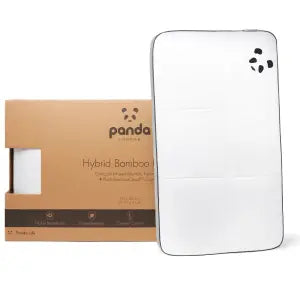
 Hybrid Bamboo Pillow
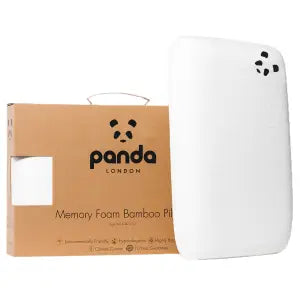 Memory Foam Bamboo Pillow
 Kids Memory Foam Bamboo Pillow
 Baby Memory Foam Bamboo Pillow
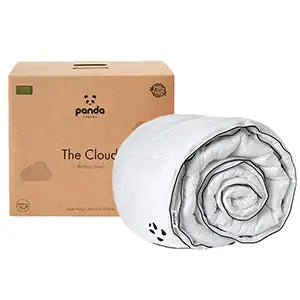 Panda Cloud Duvet
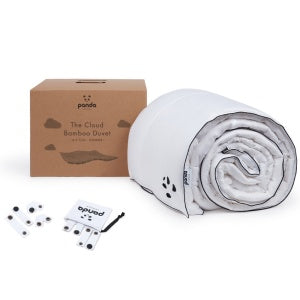 Bamboo Summer Duvet
 Kids Cloud Duvet
![[MattressTopper] Bamboo_Mattress_Topper_Package_Box-updated](http://pandalondon.com/cdn/shop/files/Bamboo_Mattress_Topper_Package_Box-updated.webp?crop=region&crop_height=1315&crop_left=92&crop_top=0&crop_width=1315&v=1782726992&width=1500)
![[MattressTopper] Woman laying on a Panda Bamboo Mattress Topper](http://pandalondon.com/cdn/shop/files/Bamboo_Mattress_Topper_Product_Image_01.webp?v=1782726484&width=1080)
![[MattressTopper] Guy laying on a Panda Bamboo Mattress Topper](http://pandalondon.com/cdn/shop/files/Bamboo_Mattress_Topper_Product_Image_02.webp?v=1782726484&width=1080)
![[MattressTopper] Woman setting up a Panda Bamboo Mattress Topper](http://pandalondon.com/cdn/shop/files/Bamboo_Mattress_Topper_Product_Image_03.webp?v=1782726484&width=1080)
![[MattressTopper] Panda London Memory Foam Bamboo Mattress Topper side](http://pandalondon.com/cdn/shop/files/Mattress_Topper_Isolated_-_resized.jpg?v=1773853354&width=800)
![[HybridMattressPro] Hybrid_Bamboo_Mattress_Pro_Product_Image_2026](http://pandalondon.com/cdn/shop/files/Hybrid_Bamboo_Mattress_Pro_Product_Image_2026.webp?v=1764944771&width=1000)
![[HybridMattressPro] A woman in white pajamas lies on her side on a mattress atop a gray upholstered bed frame in a softly lit bedroom. The mattress has a white top layer with a subtle geometric pattern and a black center band, with a small Panda Mattress logo patch visible on the side.](http://pandalondon.com/cdn/shop/files/Mattress_PRO-01.webp?v=1790672728&width=2049)
![[HybridMattressPro] Hybrid Bamboo Mattress Pro Cover Zip](http://pandalondon.com/cdn/shop/files/Hybrid_Bamboo_Mattress_Cover.jpg?v=1764944771&width=800)
![[HybridMattressPro] A woman in a cream-colored pajama set kneels beside a bed, holding down a mattress protector on a Panda Mattress to show its support and comfort.](http://pandalondon.com/cdn/shop/files/Mattress_PRO-03.webp?v=1790672728&width=2049)
![[HybridMattressPro] A woman in light pink pajamas sits on a Panda Bamboo mattress](http://pandalondon.com/cdn/shop/files/Mattress_PRO-04.webp?v=1790672728&width=2049)
![[CloudDuvet] Panda London The Cloud Bamboo Duvet Packaging](http://pandalondon.com/cdn/shop/products/Panda-London-The-Cloud-Bamboo-Duvet-Panda-Life-scaled_00a651ad-4ca3-4105-b520-12a94c1a4f71.jpg?v=1713363286&width=1920)
![[CloudDuvet] Panda London The Cloud Bamboo Duvet Rolled](http://pandalondon.com/cdn/shop/products/Duvet-Listing-Images03.jpg?v=1764079307&width=1000)
![[CloudDuvet] Guy making the bed with Panda Cloud Duvet 10.5 TOG](http://pandalondon.com/cdn/shop/files/Duvet_10.5_Tog-02.webp?v=1790607319&width=2049)
![[CloudDuvet] Guy reading a book on the bed covered with Panda Cloud Duvet 10.5 TOG](http://pandalondon.com/cdn/shop/files/Duvet_10.5_Tog-03.webp?v=1790607319&width=2049)
![[CloudDuvet] Guy making his bed with Panda Cloud Duvet 10.5 TOG](http://pandalondon.com/cdn/shop/files/Duvet_10.5_Tog-04.webp?v=1790607319&width=2049)
![[BBWhite] 100_Bamboo_Bedding_Set_Pure_White](http://pandalondon.com/cdn/shop/files/100_Bamboo_Bedding_Set_Pure_White_01.webp?v=1781082973&width=1080)
![[BBWhite] White 100% Bamboo Bedding Texture](http://pandalondon.com/cdn/shop/files/100_Bamboo_Bedding_-_Pure_White_-_Close_Up_02.webp?v=1773611287&width=1000)
![[BBWhite] 100_Bamboo_Bedding_Set_Pure_White couple laughing](http://pandalondon.com/cdn/shop/files/100_Bamboo_Bedding_Set_Pure_White_02.webp?v=1781082974&width=1080)
![[BBWhite] White 100% Bamboo Bedding Woman Duvet cover buttons](http://pandalondon.com/cdn/shop/files/hand_and_buttons_1.webp?v=1773611287&width=1000)
![[BBWhite] 100_Bamboo_Bedding_Set_Pure_White woman sleeping](http://pandalondon.com/cdn/shop/files/100_Bamboo_Bedding_Set_Pure_White_03.webp?v=1781082973&width=1080)
![[BBUrbanGrey] 100_Bamboo_Bedding_Set_Urban_Grey_guy laying on the bedding](http://pandalondon.com/cdn/shop/files/100_Bamboo_Bedding_Set_Urban_Grey_01.webp?v=1781083567&width=1080)
![[BBUrbanGrey] Cloud Duvet Urban Grey 100% Bamboo Bedding Set](http://pandalondon.com/cdn/shop/files/Cloud_Duvet_-_Grey_-_Close_up_2.webp?v=1773611287&width=1000)
![[BBUrbanGrey] 100_Bamboo_Bedding_Set_Urban_Grey_woman opening the bedding bag](http://pandalondon.com/cdn/shop/files/100_Bamboo_Bedding_Set_Urban_Grey_02.webp?v=1781083568&width=1080)
![[BBUrbanGrey] 100_Bamboo_Bedding_Set_Urban_Grey_woman making the bed](http://pandalondon.com/cdn/shop/files/100_Bamboo_Bedding_Set_Urban_Grey_04.webp?v=1781083567&width=1080)
![[BBUrbanGrey] 100_Bamboo_Bedding_Set_Urban_Grey_couple reading magazines](http://pandalondon.com/cdn/shop/files/100_Bamboo_Bedding_Set_Urban_Grey_03.webp?v=1781083567&width=1080)
![[BBNavyBlue] Deep Sea Navy Blue 100% Bamboo Bedding Set couple reading a magazine](http://pandalondon.com/cdn/shop/files/100_Bamboo_Bedding_Set_Deep_Sea_Navy_01.webp?v=1781083134&width=1080)
![[BBNavyBlue] Deep Sea Navy Blue 100% Bamboo Bedding Texture](http://pandalondon.com/cdn/shop/files/Cloud_Duvet_-_Navy_-_Close_up_2.webp?v=1773611287&width=1000)
![[BBNavyBlue] Deep Sea Navy Blue 100% Bamboo Bedding Set couple reading a magazine and smiling](http://pandalondon.com/cdn/shop/files/100_Bamboo_Bedding_Set_Deep_Sea_Navy_02.webp?v=1781083135&width=1080)
![[BBNavyBlue] Deep Sea Navy Blue 100% Bamboo Bedding Set woman resting](http://pandalondon.com/cdn/shop/files/100_Bamboo_Bedding_Set_Deep_Sea_Navy_04.png?v=1781083138&width=1080)
![[BBNavyBlue] Deep Sea Navy Blue 100% Bamboo Bedding Set guy laying and smiling](http://pandalondon.com/cdn/shop/files/100_Bamboo_Bedding_Set_Deep_Sea_Navy_03.webp?v=1781083134&width=1080)
![[BBPink] Vintage Pink Blue 100% Bamboo Bedding woman making the bed](http://pandalondon.com/cdn/shop/files/100_Bamboo_Bedding_Set_Pink_01.webp?v=1781083678&width=1080)
![[BBPink] Vintage Pink Texture 100% Bamboo Bedding](http://pandalondon.com/cdn/shop/files/Cloud_Duvet_-_Pink_-_Close_up_2.webp?v=1773611287&width=1000)
![[BBPink] Vintage Pink Blue 100% Bamboo Bedding woman hugging the pillow with vintage pink pillow case](http://pandalondon.com/cdn/shop/files/100_Bamboo_Bedding_Set_Pink_02.webp?v=1781083678&width=1080)
![[BBPink] Vintage Pink Blue 100% Bamboo Bedding woman hiding under duvet with pink duvet cover](http://pandalondon.com/cdn/shop/files/100_Bamboo_Bedding_Set_Pink_03.webp?v=1781083679&width=1080)
![[BBPink] Vintage Pink Blue 100% Bamboo Bedding woman laying and smiling on the panda bedding set](http://pandalondon.com/cdn/shop/files/100_Bamboo_Bedding_Set_Pink_04.webp?v=1781083679&width=1080)
![[BBGrey] 100_Bamboo_Bedding_Set_Quiet_Grey_ woman holding the bedding](http://pandalondon.com/cdn/shop/files/100_Bamboo_Bedding_Set_Quiet_Grey_01.webp?v=1781083287&width=1080)
![[BBGrey] Light Grey 100% Bamboo Bedding texture](http://pandalondon.com/cdn/shop/files/Texture17.webp?v=1773611287&width=1000)
![[BBGrey] 100_Bamboo_Bedding_Set_Quiet_Grey_0guy laying and smiling](http://pandalondon.com/cdn/shop/files/100_Bamboo_Bedding_Set_Quiet_Grey_02.webp?v=1781083287&width=1080)
![[BBGrey] 100_Bamboo_Bedding_Set_Quiet_Grey_0guy reading a magazine on the bed](http://pandalondon.com/cdn/shop/files/100_Bamboo_Bedding_Set_Quiet_Grey_03.webp?v=1781083287&width=1080)
![[BBGrey] 100_Bamboo_Bedding_Set_Quiet_Grey_0woman making the bed](http://pandalondon.com/cdn/shop/files/100_Bamboo_Bedding_Set_Quiet_Grey_04.webp?v=1781083287&width=1080)

Quick Answer:
To sleep better with allergies, reduce the allergens in your bedroom: wash bedding weekly, keep pets and outdoor clothes off the bed, shower before sleep, and keep windows shut when pollen is high. Anti-allergy bamboo bedding helps too — it's naturally hypoallergenic, breathable and moisture-wicking, making your bed a harder place for dust mites to thrive.
If you’re an allergy sufferer, you probably feel that your allergies get worse at night. And that’s not in your imagination. You can feel relatively comfortable during the day and then start sneezing the minute you get into bed. If you’re struggling with itchy eyes through the night, waking up with a blocked nose or simply feeling that you haven’t had enough sleep each night, it’s likely that your bedroom is exacerbating the issue. Allergy UK says that a significant amount of exposure to house dust mite allergens occurs in bed, with the bed being a perfect environment for mites and dust. But it’s not just your bed that can cause issues – pollen can get transferred in from outdoors and pet dander clings to surfaces, to give just a couple of examples.
In this guide, I’ll explore common symptoms, what they can do to your sleep and the steps you can take to help you sleep through the night without any discomfort.
Why are allergies often worse at night?
Life would be so much simpler if allergies at night were triggered by one simple thing! Unfortunately, there are a number of triggers – here are some of the most common:
- House dust mites: Probably the most common culprit is the dust mite. These little critters love warm and humid conditions, so your bedding, mattress and pillows are the perfect environment. Dust mites eat dead skin cells and can multiply extremely quickly in the right conditions, meaning that after a night of lying on your bed, you’ll have been in close contact, triggering a reaction.
- Pet dander: Much as we love our furry friends, their dander can be a major allergen for many allergy sufferers. And if they sleep on our beds, that dander gets up close and personal. However, even if you don’t allow pets in your bedroom, dander is light and can easily spread into your bedroom.
- Pollen: You might think of pollen as just being an outside irritant but, of course, its lightweight nature means it’s easy for it to spread indoors. During summer months, for instance, it’s easy for pollen to get on your clothes and shoes, or on your bedding if it’s been dried outside.
- Mould: No one wants mould in their home, but it can thrive in damp places such as bathrooms and even overly humid bedrooms. If you do have mould in your home, the spores can become airborne and trigger allergic reactions if you breathe them in during the night.
- Lying down: For some allergy sufferers, simply lying down in bed at night can trigger allergies as fluid in the nose and nasal passage starts to drip down the throat. This can exacerbate allergies and lead to coughing, wheezing and even difficulty breathing.
How bedroom allergies can affect sleep
According to multiple studies and The Sleep Charity in the UK, allergies can easily affect a person’s sleep. These can start out mildly, with symptoms such as taking longer to fall asleep or increased snoring, but conditions can escalate. Potential effects and sleep issues include:
- Trouble getting to sleep or staying asleep
- Increased snoring
- Mouth breathing
- Congestion in the morning
- Daytime tiredness
- Insomnia
- Shorter sleep
- An increased risk for sleep apnoea
We all know that repeated poor sleep is bad for our health, so it’s vitally important to look at taking steps to reduce the allergens in your bedroom.
Practical ways to reduce allergens in the bedroom
Most of us don’t have hours to spare each day to ensure an allergen-free bedroom (not that it would even be possible to remove every allergen in existence!). So, the key is to try and establish a routine through the days and weeks to help reduce allergens to a level where they won’t affect you as much.
Take a warm shower before bed
Showering is a simple way to wash off any pollen you’ve picked up outside, but the warmer water will also help to steam and clear out your sinuses and eyes. A warm shower also helps your body to start winding down and get ready for sleep.
Put outdoor clothing straight into the wash basket or washing machine
And don’t make the mistake of putting it on your bed when you’re getting changed into pyjamas. Outdoor clothing is likely to have picked up pollen and spores, so make sure you put it into the wash basket or washing machine straight away so these are contained.
Keep windows shut
Lovely as it is to have fresh air flowing through the bedroom, allergy sufferers should keep them shut when pollen levels are high. Otherwise you’re just inviting pollen to drift in and settle on surfaces.
Cover your bed during the day
Put a throw or sheet over your bed during the day. This can then catch any dust or pollen that builds up in the day, while your bedding underneath remains allergen-free.
Wash bedding frequently
Dust, dead skin, pollen and sweat all build up on our bedding as we sleep, creating ideal conditions for dust mites to thrive in which will, in turn, exacerbate allergies. Wash your bedding regularly and try to dry it inside as well to prevent any pollen particles settling on it outside.
Dust with a damp cloth and don’t forget hidden spots
Using a damp rather than dry cloth when dusting makes it easier for dust particles to stick to the cloth, rather than just being blown around into the air. Make sure that you clean in hidden spots, such as beneath the bed, behind curtains and blinds, as well as around and on any upholstered headboards.
Vacuum regularly
Vacuuming is one of the simplest ways to remove dust, pollen and pet hair, but you do really need to make sure that your vacuum cleaner has a decent HEPA filter to trap said allergens.
Keep pets out of the bedroom
Unfortunately, having pets in the bedroom can make allergies worse, as they’ll shed hair and dander over your bedding. This will also obviously be worse when they’re moulting. Ideally, you’ll want to keep pets out of the bedroom, but if that’s impossible (no one wants to be kept awake by a cat singing the song of its people at 3 am), try to keep a light cover on the bed overnight so that you keep pet hair away from your actual bedding.
Consider investing in an air purifier
Air purifiers also contain HEPA filters and are designed to catch dust mites, pet dander, mould and pollen in a room, significantly improving the air quality and helping to reduce allergic reactions.
Can changing your bedding help with allergies? How to build an allergy-conscious bed
Whatever some clever marketing tries to persuade you, bedding cannot cure an allergy. However, some materials are naturally less likely to cause an allergic reaction, and you’ll usually see them labelled as hypoallergenic or anti-allergy. Let’s look at the different types of bedding a little more closely:
| Bedding item | Why it matters for allergies | What to look for |
|---|---|---|
| Sheets & duvet covers | In direct contact with your skin all night, so the biggest irritation risk | Soft, breathable, hypoallergenic fabric (bamboo or French linen); hardwearing enough to wash weekly |
| Duvets | Trap heat and moisture, creating the warm, humid conditions dust mites love | Breathable, hypoallergenic fill; the right seasonal tog (e.g. 4.5 or 10.5) so you don't overheat |
| Mattress protectors | Shield the hard-to-clean mattress from sweat, skin cells and dust that feed mites | Washable, breathable and moisture-wicking (bamboo); easy to remove and launder regularly |
| Mattress toppers | Add comfort but can harbour allergens if neglected | A removable, washable cover; wash regularly to stop allergen build-up |
| Mattresses | The largest, least-washable item, so material and certification matter most | Hypoallergenic, moisture-wicking materials; OEKO-TEX Standard 100 and GOTS certification |
Sheets and duvet covers
These are the most important items to get right, as they come into direct contact with your skin. You’ll want to choose items made from soft, skin-friendly fabrics that won’t irritate the skin and are breathable to prevent sweat and moisture buildup, as this can aggravate the skin and trigger allergies. Finally, it’s important to wash sheets and duvet covers regularly, meaning a bedding set should be hardwearing. Panda London bedding sets are all made with hardwearing, breathable and hypoallergenic bamboo or French linen so are an ideal choice for allergy sufferers.
Duvets
As with bedding sets, duvets should be breathable and made of materials that won’t irritate or upset the skin. But it’s also important to choose the right seasonal warmth for your duvet, so that you don’t end up too hot or too cold. Panda’s Cloud Bamboo duvets come in a choice of 10.5 and 4.5 togs and are made with cotton covers and a fill combining breathable bamboo and the brand’s own nano-microfibre for a soft, fluffy finish.
Mattress protectors
Mattresses are difficult to clean, even with a removable cover, and they’re an expensive purchase as well. Mattress protectors are easily washed and collect sweat, stains, dust, and skin cells, helping keep them away from you as you sleep. Panda’s protector is also made with bamboo, which helps to keep it breathable and moisture-wicking.
Mattress toppers
Mattress toppers are a great option while you’re breaking in a new mattress or to extend the lifespan of a slightly older mattress. Pandas’ two mattress toppers offer sleepers a comfortable and supportive night’s sleep, and their removable covers mean it’s easy to keep them clean = these are items that should also be washed regularly to ensure that allergens don’t build up.
Mattresses
The ideal mattress for allergy sufferers will again be made from hypoallergenic materials and it’s also worth looking for certifications such as OEKO-TEX 100 Standard certification and GOTS (Global Organic Textile Standard), which both ensure that no harmful chemicals were used in the fabric. Panda’s mattresses also use eco-friendly and sustainable bamboo, along with orthopaedic and moisture-wicking foams to give sleepers a highly supportive, comfortable and breathable night.
Is bamboo bedding good for allergy sufferers?
Bamboo bedding is a good choice for allergies thanks to its naturally antibacterial, hypoallergenic and breathable properties. Moisture-wicking properties also help to prevent humidity building up in the bed, reducing the ability for dust mites to thrive in the environment. However, it is worth noting that, as previously mentioned, hypoallergenic doesn’t mean allergy-proof and individual allergies and sensitivities can vary. So, whilst bamboo bedding can be very helpful to allergy sufferers, it can’t cure them.
When should someone seek medical advice?
It’s important to remember that while I can offer advice on simple steps to reduce the risk of exacerbation of allergies at night, I am not a medical doctor. You should speak to a pharmacist or GP if:
- You are unsure what’s causing your symptoms
- Your symptoms are becoming worse
- Your sleep and / or your everyday life is being affected
- You have asthma that’s getting worse
- Pharmacy treatments aren’t helping with your allergy symptoms
In conclusion: A better night starts with the whole sleep environment
The reason that I’ve covered a number of different aspects is that for most night-time allergy sufferers, matters are rarely solved by just buying one product or undertaking one cleaning job. Instead, you need to understand what personally triggers your own allergies before following the steps that will help eliminate that particular pathogen from your environment as much as possible. Panda products are designed to help support you in creating an allergy-conscious bedroom and should be used as part of a wider picture.
About the Author:
Jo Plumridge has been a freelance writer (and photographer) for almost 25 years, covering a wide range of topics. These days, she specialises in writing about interior design, sleep and photography, as well as reviewing a huge range of home products. Jo lives in South Bucks but has also lived in New Zealand and Botswana, where she worked as a photographer on a nature reserve. Having travelled extensively around the world and slept on some rickety old beds, Jo is passionate about the importance of a good mattress and decent bedroom setup, contributing to some of the UK's major publications such as Tech Radar and Homes and Gardens. When she’s not working, Jo spends her time looking after a variety of foster cats with her husband, catching up with friends, travelling or simply reading a good book.

