
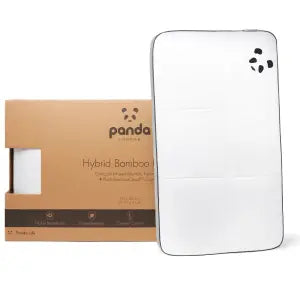
 Hybrid Bamboo Pillow
 Memory Foam Bamboo Pillow
 Kids Memory Foam Bamboo Pillow
 Baby Memory Foam Bamboo Pillow
 Panda Cloud Duvet
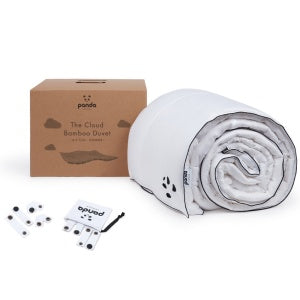 Bamboo Summer Duvet
 Kids Cloud Duvet
![[MattressTopper] Bamboo_Mattress_Topper_Package_Box-updated](http://pandalondon.com/cdn/shop/files/Bamboo_Mattress_Topper_Package_Box-updated.webp?crop=region&crop_height=1315&crop_left=92&crop_top=0&crop_width=1315&v=1782726992&width=1500)
![[MattressTopper] Woman laying on a Panda Bamboo Mattress Topper](http://pandalondon.com/cdn/shop/files/Bamboo_Mattress_Topper_Product_Image_01.webp?v=1782726484&width=1080)
![[MattressTopper] Guy laying on a Panda Bamboo Mattress Topper](http://pandalondon.com/cdn/shop/files/Bamboo_Mattress_Topper_Product_Image_02.webp?v=1782726484&width=1080)
![[MattressTopper] Woman setting up a Panda Bamboo Mattress Topper](http://pandalondon.com/cdn/shop/files/Bamboo_Mattress_Topper_Product_Image_03.webp?v=1782726484&width=1080)
![[MattressTopper] Panda London Memory Foam Bamboo Mattress Topper side](http://pandalondon.com/cdn/shop/files/Mattress_Topper_Isolated_-_resized.jpg?v=1773853354&width=800)
![[HybridMattressPro] Hybrid_Bamboo_Mattress_Pro_Product_Image_2026](http://pandalondon.com/cdn/shop/files/Hybrid_Bamboo_Mattress_Pro_Product_Image_2026.webp?v=1764944771&width=1000)
![[HybridMattressPro] A woman in white pajamas lies on her side on a mattress atop a gray upholstered bed frame in a softly lit bedroom. The mattress has a white top layer with a subtle geometric pattern and a black center band, with a small Panda Mattress logo patch visible on the side.](http://pandalondon.com/cdn/shop/files/Mattress_PRO-01.webp?v=1790672728&width=2049)
![[HybridMattressPro] Hybrid Bamboo Mattress Pro Cover Zip](http://pandalondon.com/cdn/shop/files/Hybrid_Bamboo_Mattress_Cover.jpg?v=1764944771&width=800)
![[HybridMattressPro] A woman in a cream-colored pajama set kneels beside a bed, holding down a mattress protector on a Panda Mattress to show its support and comfort.](http://pandalondon.com/cdn/shop/files/Mattress_PRO-03.webp?v=1790672728&width=2049)
![[HybridMattressPro] A woman in light pink pajamas sits on a Panda Bamboo mattress](http://pandalondon.com/cdn/shop/files/Mattress_PRO-04.webp?v=1790672728&width=2049)
![[CloudDuvet] Panda London The Cloud Bamboo Duvet Packaging](http://pandalondon.com/cdn/shop/products/Panda-London-The-Cloud-Bamboo-Duvet-Panda-Life-scaled_00a651ad-4ca3-4105-b520-12a94c1a4f71.jpg?v=1713363286&width=1920)
![[CloudDuvet] Panda London The Cloud Bamboo Duvet Rolled](http://pandalondon.com/cdn/shop/products/Duvet-Listing-Images03.jpg?v=1764079307&width=1000)
![[CloudDuvet] Guy making the bed with Panda Cloud Duvet 10.5 TOG](http://pandalondon.com/cdn/shop/files/Duvet_10.5_Tog-02.webp?v=1790607319&width=2049)
![[CloudDuvet] Guy reading a book on the bed covered with Panda Cloud Duvet 10.5 TOG](http://pandalondon.com/cdn/shop/files/Duvet_10.5_Tog-03.webp?v=1790607319&width=2049)
![[CloudDuvet] Guy making his bed with Panda Cloud Duvet 10.5 TOG](http://pandalondon.com/cdn/shop/files/Duvet_10.5_Tog-04.webp?v=1790607319&width=2049)
![[BBWhite] 100_Bamboo_Bedding_Set_Pure_White](http://pandalondon.com/cdn/shop/files/100_Bamboo_Bedding_Set_Pure_White_01.webp?v=1781082973&width=1080)
![[BBWhite] White 100% Bamboo Bedding Texture](http://pandalondon.com/cdn/shop/files/100_Bamboo_Bedding_-_Pure_White_-_Close_Up_02.webp?v=1773611287&width=1000)
![[BBWhite] 100_Bamboo_Bedding_Set_Pure_White couple laughing](http://pandalondon.com/cdn/shop/files/100_Bamboo_Bedding_Set_Pure_White_02.webp?v=1781082974&width=1080)
![[BBWhite] White 100% Bamboo Bedding Woman Duvet cover buttons](http://pandalondon.com/cdn/shop/files/hand_and_buttons_1.webp?v=1773611287&width=1000)
![[BBWhite] 100_Bamboo_Bedding_Set_Pure_White woman sleeping](http://pandalondon.com/cdn/shop/files/100_Bamboo_Bedding_Set_Pure_White_03.webp?v=1781082973&width=1080)
![[BBUrbanGrey] 100_Bamboo_Bedding_Set_Urban_Grey_guy laying on the bedding](http://pandalondon.com/cdn/shop/files/100_Bamboo_Bedding_Set_Urban_Grey_01.webp?v=1781083567&width=1080)
![[BBUrbanGrey] Cloud Duvet Urban Grey 100% Bamboo Bedding Set](http://pandalondon.com/cdn/shop/files/Cloud_Duvet_-_Grey_-_Close_up_2.webp?v=1773611287&width=1000)
![[BBUrbanGrey] 100_Bamboo_Bedding_Set_Urban_Grey_woman opening the bedding bag](http://pandalondon.com/cdn/shop/files/100_Bamboo_Bedding_Set_Urban_Grey_02.webp?v=1781083568&width=1080)
![[BBUrbanGrey] 100_Bamboo_Bedding_Set_Urban_Grey_woman making the bed](http://pandalondon.com/cdn/shop/files/100_Bamboo_Bedding_Set_Urban_Grey_04.webp?v=1781083567&width=1080)
![[BBUrbanGrey] 100_Bamboo_Bedding_Set_Urban_Grey_couple reading magazines](http://pandalondon.com/cdn/shop/files/100_Bamboo_Bedding_Set_Urban_Grey_03.webp?v=1781083567&width=1080)
![[BBNavyBlue] Deep Sea Navy Blue 100% Bamboo Bedding Set couple reading a magazine](http://pandalondon.com/cdn/shop/files/100_Bamboo_Bedding_Set_Deep_Sea_Navy_01.webp?v=1781083134&width=1080)
![[BBNavyBlue] Deep Sea Navy Blue 100% Bamboo Bedding Texture](http://pandalondon.com/cdn/shop/files/Cloud_Duvet_-_Navy_-_Close_up_2.webp?v=1773611287&width=1000)
![[BBNavyBlue] Deep Sea Navy Blue 100% Bamboo Bedding Set couple reading a magazine and smiling](http://pandalondon.com/cdn/shop/files/100_Bamboo_Bedding_Set_Deep_Sea_Navy_02.webp?v=1781083135&width=1080)
![[BBNavyBlue] Deep Sea Navy Blue 100% Bamboo Bedding Set woman resting](http://pandalondon.com/cdn/shop/files/100_Bamboo_Bedding_Set_Deep_Sea_Navy_04.png?v=1781083138&width=1080)
![[BBNavyBlue] Deep Sea Navy Blue 100% Bamboo Bedding Set guy laying and smiling](http://pandalondon.com/cdn/shop/files/100_Bamboo_Bedding_Set_Deep_Sea_Navy_03.webp?v=1781083134&width=1080)
![[BBPink] Vintage Pink Blue 100% Bamboo Bedding woman making the bed](http://pandalondon.com/cdn/shop/files/100_Bamboo_Bedding_Set_Pink_01.webp?v=1781083678&width=1080)
![[BBPink] Vintage Pink Texture 100% Bamboo Bedding](http://pandalondon.com/cdn/shop/files/Cloud_Duvet_-_Pink_-_Close_up_2.webp?v=1773611287&width=1000)
![[BBPink] Vintage Pink Blue 100% Bamboo Bedding woman hugging the pillow with vintage pink pillow case](http://pandalondon.com/cdn/shop/files/100_Bamboo_Bedding_Set_Pink_02.webp?v=1781083678&width=1080)
![[BBPink] Vintage Pink Blue 100% Bamboo Bedding woman hiding under duvet with pink duvet cover](http://pandalondon.com/cdn/shop/files/100_Bamboo_Bedding_Set_Pink_03.webp?v=1781083679&width=1080)
![[BBPink] Vintage Pink Blue 100% Bamboo Bedding woman laying and smiling on the panda bedding set](http://pandalondon.com/cdn/shop/files/100_Bamboo_Bedding_Set_Pink_04.webp?v=1781083679&width=1080)
![[BBGrey] 100_Bamboo_Bedding_Set_Quiet_Grey_ woman holding the bedding](http://pandalondon.com/cdn/shop/files/100_Bamboo_Bedding_Set_Quiet_Grey_01.webp?v=1781083287&width=1080)
![[BBGrey] Light Grey 100% Bamboo Bedding texture](http://pandalondon.com/cdn/shop/files/Texture17.webp?v=1773611287&width=1000)
![[BBGrey] 100_Bamboo_Bedding_Set_Quiet_Grey_0guy laying and smiling](http://pandalondon.com/cdn/shop/files/100_Bamboo_Bedding_Set_Quiet_Grey_02.webp?v=1781083287&width=1080)
![[BBGrey] 100_Bamboo_Bedding_Set_Quiet_Grey_0guy reading a magazine on the bed](http://pandalondon.com/cdn/shop/files/100_Bamboo_Bedding_Set_Quiet_Grey_03.webp?v=1781083287&width=1080)
![[BBGrey] 100_Bamboo_Bedding_Set_Quiet_Grey_0woman making the bed](http://pandalondon.com/cdn/shop/files/100_Bamboo_Bedding_Set_Quiet_Grey_04.webp?v=1781083287&width=1080)

Quick Answer:
Better sleep starts with the basics: choose a pillow that matches your sleep position, keep your spine supported, and create a cool, dark, quiet bedroom. Back and front sleepers usually need a thinner pillow, side sleepers need a thicker one, and breathable bedding can help keep you comfortable through the night.
Quality sleep is a cornerstone of good health — it influences our physical, mental, and emotional state. Achieving restful, rejuvenating sleep involves more than just the right mattress or the right pillow. It involves the body and the mind, both working together to feel safe enough to rest.
Severe aches can interfere with sleep, with 67–88% of people experiencing sleep disruption due to chronic pain. In the UK alone, back pain affects over 10 million adults annually. But pain isn't the only obstacle to good sleep — anxiety about sleep itself can be just as disruptive, and often more difficult to address.
In this guide, we'll cover the physical foundations of better sleep — posture, pillows, mattresses, bedroom environment — alongside the psychological side that often gets overlooked. With expert commentary from sleep coach Edward Gorst and our counselling psychologist Dr Ritz Birah, we'll show you how to build a sleep set-up that supports both your body and your mind.
Understanding sleep
Sleep is a complex, restorative cycle of REM and non-REM stages that runs roughly every 80–100 minutes through the night, keeping your mind sharp and your body healthy. Most of us underestimate how much is happening while we drift off — which is why understanding the basics matters before you start optimising.
The science of sleep
We move through cycles of REM (rapid eye movement) and non-REM sleep. These cycles repeat roughly every 80–100 minutes as we progress through the different stages of rest. REM sleep makes up around 25% of your total sleep time. You'll typically have three non-REM stages followed by one REM stage, then the cycle restarts — with each REM stage lasting a little longer.
- Non-REM stage 1 typically lasts 5–10 minutes; your eyes are closed, you're dozing, but it would be very easy to wake you up
- Non-REM stage 2 lasts 10–25 minutes; light sleep, body preparing for deeper rest
- Non-REM stage 3 is deep sleep — it would be difficult to wake you up at this stage
- REM sleep is the final stage before the cycle restarts; brain activity rises, dreams intensify, and heart rate and breathing quicken
Sleep is also governed by your circadian rhythm — the natural wake/sleep wave that aligns with daylight and darkness.
What are the benefits of quality sleep?
Good sleep heals physical wounds, supports immune function, lowers stress levels, and protects mental health. Without enough sleep, you're more vulnerable to illness, find it harder to concentrate, and become more emotionally reactive.
What are some common sleep disorders and challenges?
Several conditions can interfere with sleep, including insomnia (difficulty falling or staying asleep), sleep apnoea (when breathing stops briefly during sleep), and restless leg syndrome (involuntary limb movements that prevent rest). These issues can affect your sleep posture, your sleep environment needs, and how restorative your sleep feels.

The pain-sleep cycle
Chronic pain and poor sleep create a self-reinforcing cycle: pain disrupts sleep, poor sleep lowers your pain threshold, and the pain feels worse the next day. Of those with chronic pain, around 50% also experience insomnia.
The 4-stage cycle works like this:
- Chronic pain prevents you from falling asleep
- Poor sleep makes your nervous system more sensitive
- Pain feels more intense the next day
- Heightened pain disrupts the next night's sleep
Breaking this cycle starts with the sleep environment — because that's the most controllable variable. Adjusting pillow loft, mattress firmness, and bedroom temperature can interrupt the cycle even before pain itself is fully addressed.
Sleeping position guidance
Your sleeping position significantly affects spinal alignment, pressure points, and breathing — and the right pillow and mattress combination for you depends on which position you favour. Back and side sleeping are generally associated with the fewest pain issues; front sleeping more often causes neck and lower back strain.
For more detailed position-specific advice, see our guide to the best sleeping positions.
| Sleep position | Pain risks | Recommended support |
|---|---|---|
| Back | Lower back discomfort if hips sink too far; neck strain if head is pushed too far forward | Medium‑firm mattress that keeps the spine neutral while lightly cushioning the lower back; medium‑loft pillow that supports the natural curve of the neck without lifting the head too high |
| Side | Shoulder pressure, hip pressure, neck misalignment, possible lower back strain if the waist is unsupported | Pressure‑relieving mattress with cushioning for shoulders and hips (medium to medium‑soft); higher‑loft pillow that fills the space between shoulder and neck; a pillow between the knees can help |
| Stomach | Neck rotation strain, lower back compression, pressure through ribs/hips | Firmer mattress to stop hips from sinking and over‑arching the lower back; very low‑loft or thin pillow (or no pillow) to reduce neck extension |
| Combination | Pain can come from poor alignment during position changes; pressure points may vary | Responsive medium‑firm mattress that supports movement and alignment; adjustable‑loft pillow or medium‑loft pillow that works across back and side sleeping |
| Curled/Fetal | Hip tightness, shoulder pressure, rounded spine, neck strain if pillow is too low | Balanced cushioning and support to reduce shoulder/hip pressure while keeping the spine from collapsing inward; supportive side‑sleeper pillow plus an optional knee pillow to reduce hip and lower back strain |
Adjusting your sleep posture for better health
Sleep coach Edward Gorst explains that "sleeping on your front has been associated with exacerbating some health problems for some individuals. In contrast, sleeping on your back or side, e.g. in the foetal position, tends to have the least health problems associated with them, such as neck or back pain, providing your neck is suitably supported by a good pillow."
Maintaining good posture during sleep can help prevent discomfort, reduce strain on the neck and back, and minimise the risk of developing various musculoskeletal issues.
On snoring and sleep apnoea specifically, Gorst notes: "Snoring and sleep apnea nearly always worsen when individuals sleep on their back and nearly always improve when they sleep on their sides. Therefore, this can often be unhelpful for these individuals sleeping on their backs. However, sleeping on your back has been associated with improving neck and back pain."
Techniques to improve sleep posture
There are several practical techniques that can help. "The classic tip to help stop someone from sleeping on their back, if they snore, for example, is to lie on a tennis ball," says Gorst. "Sleeping with a pillow between your legs has also been said to help with any pressure or tension on the hips when sleeping on your side. Those with lower back pain can use a thin pillow to go under their lower back (if they sleep on their back)."
You might also try to strengthen your muscles with yoga, pilates, gentle stretching and so on.
Pillow guidance
The right pillow keeps your spine in neutral alignment by filling the space between your head and the mattress — so loft depends on your sleeping position. Back and front sleepers need a thinner pillow; side sleepers need a thicker one.
Choosing the right pillow is essential for supporting healthy sleep posture and minimising discomfort. A lot of it is trial and error, which is why our 30-day trial is the best way to test whether a bamboo memory foam pillow works for you.
On the loft, sleep coach Edward Gorst is direct: "Bear in mind that if you sleep on your back or front, you should aim to have a thinner pillow, so as not to strain your neck. Equally, if you sleep on your side, you should have a thicker pillow to support your neck and help to keep your spine aligned."
The pain you experience can also guide pillow choice:
- Neck pain and tension headaches — look for a pillow that contours or provides cervical alignment
- Shoulder pain — a higher-loft pillow for side sleepers
- Upper back pain — a medium-loft pillow with support
- Lower back and hip pain — a body pillow and a knee pillow
Our Pillow Buying Guide covers loft, firmness, and material composition in more depth.

Mattress guidance
Your mattress should match your weight, build, and sleeping position — generally medium-firm for back sleepers, medium-soft for side sleepers, and firmer for front sleepers. A mattress that's too soft causes the hips to sink and the spine to bend; one that's too firm puts pressure on the shoulders and hips.
For more detailed guidance, see our blog on the best mattress firmness for back pain.
How a mattress topper can help
A mattress topper provides additional support and comfort without the cost of replacing your mattress — ideal if your current mattress is too firm, has flattened in places, or no longer offers adequate pressure relief.
Our Bamboo Mattress Topper adds 5cm of orthopaedic-grade support, designed to cushion a too-firm mattress so you feel the difference from the first night. Our Hybrid Bamboo Mattress Topper adds 7.5cm of loft, combining memory foam and micro-springs to give a soft mattress more structure.
For more on how toppers can support pain relief, read our guide to the best mattress for pain relief.
How to create a sleep-conducive bedroom
A cool, dark, quiet bedroom helps your body and mind transition into rest. Aim for 16–18°C, dim or no light, and a level of quiet that suits you. But you don't need perfect conditions — your sleep doesn't have to be flawless to be restorative.
Sleep coach Edward Gorst explains that "noise, light and temperature are the three main factors affecting sleep quality. It's always helpful to sleep in a cool, dark, quiet room when possible, as these are the conditions that can be conducive to better sleep. However, these factors are often over-hyped, and no one needs to sleep in a completely dark, noise-proof, eighteen-degree room."
Counselling psychologist Dr Ritz Birah adds an important psychological dimension: "Noise, light and temperature can make a real difference to sleep because the nervous system is constantly taking in cues from the environment. A room that feels too bright, too noisy, too hot or too uncomfortable can make it harder for the body to settle. But psychologically, there is an important distinction between creating a supportive sleep environment and becoming dependent on perfect conditions."
She continues: "Some people become so focused on protecting their sleep that they start to believe they cannot cope unless everything is exactly right. Then any small disruption — a noise outside, a slightly warmer room, a partner moving — can trigger anxiety before the night has even really begun. My advice would be to optimise what you can, but build flexibility too. A dark, cool, comfortable bedroom can help, but your sleep does not have to be perfect to be restorative. The more pressure we put on sleep, the more alert the mind can become."
The takeaway: optimise where it's easy, but don't make perfect conditions a requirement.
The impact of bedding on sleep quality
Opt for a mattress, sheets, duvet, and bedding that complement your sleep posture and pillow choice. Breathable materials like bamboo or linen help prevent overheating and keep you comfortable through the night. Your mattress should be similar to your pillow: supporting you in the right way for your posture, not too firm and not too soft.
Lifestyle adjustments for better sleep
Several lifestyle factors meaningfully affect sleep quality:
- Balanced diet, avoiding heavy meals close to bedtime
- Reduced caffeine (particularly after midday)
- Reduced alcohol close to bedtime
- A consistent bedtime routine — the content matters less than the consistency
- Screen-free time in the 30 minutes before bed
Your bedtime routine doesn't need to be elaborate. Repetition is what signals to your brain that sleep is coming.

The psychology of sleep — why how you think about sleep matters
Sleep is shaped by your physical setup, but also by your psychological relationship with it. The more pressure you put on yourself to "do sleep correctly," the harder it becomes — turning bedtime into a performance task rather than a moment of rest. This section often gets missed in sleep guides, but the psychology of sleep is just as important as the mechanics.
When sleep becomes a performance task
Counselling psychologist Dr Ritz Birah sees this pattern often in her clinical work: "When someone is uncomfortable at night, or repeatedly waking and trying to reposition themselves, the bed can start to feel like a place of frustration rather than rest. Over time, this can create a cycle where people become hyper-aware of their body, their pillow, their position and whether they are 'doing sleep correctly.'"
This is the trap of treating sleep as a project to optimise. The harder you try to fall asleep, the more alert your nervous system becomes — because trying involves effort, and effort is the opposite of the relaxed state your body needs to sleep.
Dr Ritz Birah continues: "From a psychological perspective, the aim is to help the body and mind feel supported enough to settle, without turning bedtime into another performance task. If someone is waking in pain or with ongoing physical discomfort, I would always suggest they seek advice from an appropriate physical health professional."
Why "the perfect pillow" can be the wrong question
A good pillow matters. But constantly hunting for the perfect one can itself become part of the problem.
"Your pillow can affect your relationship with sleep," Dr Ritz Birah explains. "If you are uncomfortable, repeatedly adjusting your pillow or waking frustrated, your brain can start to associate bedtime with effort and irritation rather than rest. When choosing a pillow, I would encourage people to think about whether it helps them feel settled and supported. A good sleep environment should support rest, but psychologically, it should not become another source of pressure. The question I would ask is: does this help me relax, or is it making me more preoccupied with sleep?"
The practical translation: invest in a pillow that suits your sleep position and feels comfortable, then let yourself stop monitoring. The body needs a sense of safety to move into rest.
The hidden emotional weight of snoring and sleep apnoea
Snoring and sleep apnoea aren't only medical issues. They carry an emotional and relational weight that often goes unspoken.
"What often gets missed is the emotional impact of snoring or suspected sleep apnoea," says Dr Ritz Birah. "It can affect relationships, intimacy and mood. One partner may feel exhausted or resentful, while the other may feel embarrassed, guilty or anxious about disturbing them. There can also be a psychological cycle where someone becomes anxious about going to sleep because they are worried about snoring, waking their partner or having another bad night. That anxiety can make sleep feel less safe and less restful."
If snoring is a regular issue, Dr Ritz Birah is clear about the medical priority: "I would always advise someone to seek medical advice if they are regularly snoring loudly, waking gasping, feeling excessively tired during the day, or if a partner notices pauses in their breathing at night." But addressing the emotional impact alongside the medical investigation matters too.
The case for "good enough" sleep set-ups
There's a quiet trap in modern sleep advice: the more we read about optimising sleep, the more anxious we can become that ours isn't optimal enough.
Dr Ritz Birah takes a different view: "I would be cautious about advising people to 'correct' their sleep posture from a psychological perspective, because for some people, that can create more pressure around sleep. What I would focus on instead is comfort, consistency and reducing bedtime anxiety. If a pillow, cushion or supportive prop helps someone feel more physically settled, that can be useful. But the aim should be to make sleep feel easier, not to create a rigid checklist that has to be followed perfectly every night."
She continues: "Some people can become very preoccupied with getting their sleep set-up exactly right. They may start adjusting pillows repeatedly, monitoring their body position or worrying that one wrong movement will ruin their sleep. That kind of hypervigilance can keep the nervous system more alert. So my advice would be to keep it simple: make the sleep environment feel comfortable and supportive, then give yourself permission to stop monitoring. The body needs a sense of safety and ease to move into rest."
The principle is simple: optimise where you can, then trust your body to do the rest.
Troubleshooting common sleep issues
Most common sleep issues — insomnia, sleep apnoea, restless leg syndrome, snoring — have specific solutions that combine environmental adjustments, lifestyle changes, and, where needed, professional support. Understanding the cause helps you target the fix.
For ongoing snoring, our guide to reducing snoring with a bamboo pillow is a useful starting point.
When to consult a professional
If sleep problems are seriously affecting your day-to-day life, consider seeking medical attention or consulting a sleep specialist.
On the clinical side, Dr Ritz Birah points to a particularly strong evidence-based approach: "From a psychological perspective, one of the most established approaches for chronic insomnia is CBT-I, which is cognitive behavioural therapy for insomnia. It is different from general sleep hygiene because it looks at the patterns that keep insomnia going, including sleep anxiety, unhelpful routines, time spent awake in bed and beliefs about what will happen if someone does not sleep."
CBT-I is widely recommended by the NHS and is now considered the first-line treatment for chronic insomnia — often more effective long-term than sleep medication.
Dr Ritz Birah adds an important caution about sleep tech: "There is also growing interest in digital CBT-I, sleep apps and wearable sleep trackers. These can be helpful for some people, but they need to be used carefully. For some, tracking sleep becomes another source of anxiety, where they wake up and immediately check whether they have had a 'good' or 'bad' night according to a device."
Sleep coach Edward Gorst also points to emerging therapies: "For those who struggle with sleep, there are lots of exciting therapies out there that are proving to be really effective at helping, such as Acceptance & Commitment Therapy."
The most promising approach, Dr Ritz suggests, combines evidence-based clinical support with a deeper psychological reset: "The most promising direction, in my view, is evidence-based sleep support that also helps people rebuild trust in their body. Sleep is not just a behaviour to optimise; it is also something we need to feel safe enough to surrender to."
Addressing sleep disruptions
For everyday disruptions, the fixes are often simple:
- Too hot? Cooling pillows, breathable bamboo bedding, and a lower thermostat
- Too noisy? Earplugs, white noise, and a fan
- Too much light? Blackout blinds, an eye mask
- Restless mind? Wind-down routine, screens off 30 minutes before bed, journaling
Complete sleep set-up checklist
All of these factors will ensure a good night’s sleep:
- Mattress at the correct firmness for your weight and sleep position
- Pillow at correct loft for your sleep position (thinner for back/front, thicker for side)
- Topper added if needed for extra pressure relief
- Bedroom at 16–18°C
- Bedroom dark and quiet (within reason — perfect isn't required)
- Screen-free 30 minutes before bed
- Consistent bedtime routine
- Permission to stop monitoring your sleep
- If pain persists for 4+ weeks — book a GP appointment
Conclusion
Good sleep is the product of your physical setup and your psychological relationship with rest.
Get the pillow loft right for your sleep position. Find a mattress firmness that suits your body. Create a comfortable bedroom environment — without insisting it be perfect. And, perhaps most importantly, give yourself permission to stop trying so hard.
As Dr Ritz puts it: "Sleep is not just a behaviour to optimise; it is also something we need to feel safe enough to surrender into."
Invest in quality rest where it matters — a supportive pillow, a comfortable mattress, breathable bedding — and let the rest happen naturally. Your body knows how to sleep. Your job is to give it the conditions to remember.
About the Author:
Katy Gilroy is the Partnerships and Community Lead at Panda London, specialising in sleep wellbeing, sustainable living and thoughtful home comforts. She studied journalism and creative writing, and now writes across topics such as bedding, mattresses, sleep hygiene, bamboo materials and lifestyle-led sustainability. Her goal is to turn expert-backed ideas and product knowledge into practical content that helps the Panda community sleep better and live a little more consciously.
![[HybridPillow] Hybrid Bamboo Pillow - Mattress Campaign](http://pandalondon.com/cdn/shop/products/Hybrid-Bamboo-Pillow-Mattress-Campaign.jpg?crop=region&crop_height=1615&crop_left=152&crop_top=0&crop_width=1615&v=1771199164&width=1920)
![[HybridPillow] Hybrid_Bamboo_Pillow_-_Woman_laying_on_a_Hybrid_Bamboo_Pillow_with_an_Eye_Mask](http://pandalondon.com/cdn/shop/files/Hybrid_Bamboo_Pillow_-_Woman_laying_on_a_Hybrid_Bamboo_Pillow_with_an_Eye_Mask.webp?v=1783514966&width=1080)
![[HybridPillow] Hybrid_Bamboo_Pillow_02_-_Woman_taking_off_the_Hybrid_Bamboo_Pillow_Cover](http://pandalondon.com/cdn/shop/files/Hybrid_Bamboo_Pillow_02_-_Woman_taking_off_the_Hybrid_Bamboo_Pillow_Cover.webp?v=1783514763&width=1080)
![[HybridPillow] Hybrid Pillow with Panda brand marking](http://pandalondon.com/cdn/shop/products/Hybrid-Pillow_8.jpg?v=1771199164&width=1920)
![[HybridPillow] Hybrid_Bamboo_Pillow_03_-_Couple_pillow_fighting_with_Hybrid_Bamboo_Pillows](http://pandalondon.com/cdn/shop/files/Hybrid_Bamboo_Pillow_03_-_Couple_pillow_fighting_with_Hybrid_Bamboo_Pillows.webp?v=1783514763&width=1080)
![[PebblePillowcasesSignaturePlus] Bamboo Lyocell Pillowcases Cream Signature Plus Panda London](http://pandalondon.com/cdn/shop/files/Bamboo-Lyocell-Pillowcases-Cream-Package.jpg?v=1715256398&width=768)
![[PebblePillowcasesSignaturePlus] Pebble Cream Bedding Pillows Lifestyle Image Panda London](http://pandalondon.com/cdn/shop/files/Pebble-Cream-Bedding-Pillows.jpg?v=1715256506&width=768)
![[PebblePillowcasesSignaturePlus] Texture](http://pandalondon.com/cdn/shop/files/Pebble-Cream-Texture.jpg?v=1715253572&width=768)
![[PebblePillowcasesSignaturePlus] Texture Corner](http://pandalondon.com/cdn/shop/files/Pebble-Cream-PC-Corner.jpg?v=1715253572&width=768)
![[PebblePillowcasesSignaturePlus] Texture Button Panda](http://pandalondon.com/cdn/shop/files/Pebble-Cream-Button.jpg?v=1715253572&width=768)
![[PebblePillowcasesSignaturePlus] Full Bedding Set](http://pandalondon.com/cdn/shop/files/Pebble-Cream-Bedding-Full-Set.jpg?v=1715253572&width=768)
![[ForestGreenPillowcasesSignaturePlus] Package Listing](http://pandalondon.com/cdn/shop/files/Bamboo-Lyocell-Pillowcases-Green-Package.jpg?v=1715258206&width=768)
![[ForestGreenPillowcasesSignaturePlus] Lifestyle Image](http://pandalondon.com/cdn/shop/files/Green-Bedding-Pillows.jpg?v=1715258206&width=768)
![[ForestGreenPillowcasesSignaturePlus] Texture Image Panda London](http://pandalondon.com/cdn/shop/files/Green-Texture_a3822675-18cd-4a67-9707-bda67458231f.jpg?v=1715253572&width=768)
![[ForestGreenPillowcasesSignaturePlus] Corner Texture](http://pandalondon.com/cdn/shop/files/Green-PC-Corner.jpg?v=1715253572&width=768)
![[ForestGreenPillowcasesSignaturePlus] Button PandaLondon](http://pandalondon.com/cdn/shop/files/Bamboo-Lyocell-Buttons-Green.jpg?v=1715253572&width=768)
![[ForestGreenPillowcasesSignaturePlus] Lifestyle Image](http://pandalondon.com/cdn/shop/files/Green-Bedding-Full-Set.jpg?v=1715253572&width=768)

