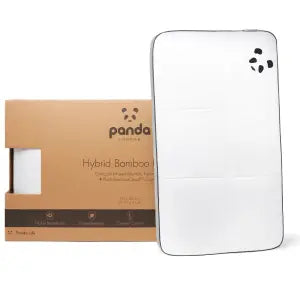
 Hybrid Bamboo Pillow
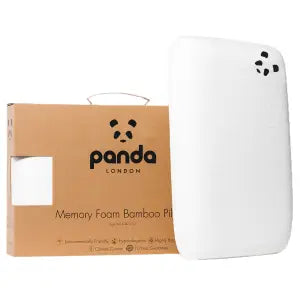 Memory Foam Bamboo Pillow
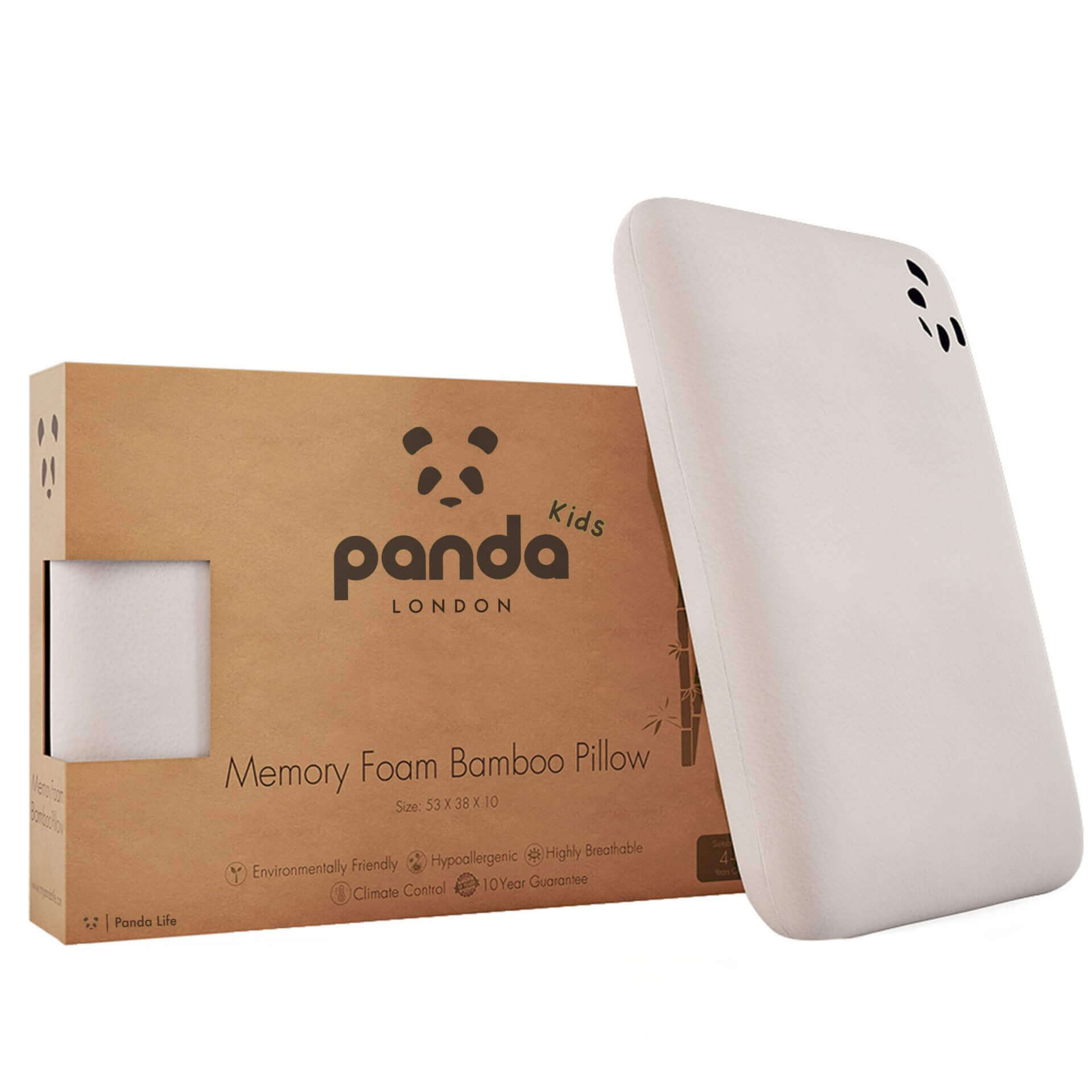
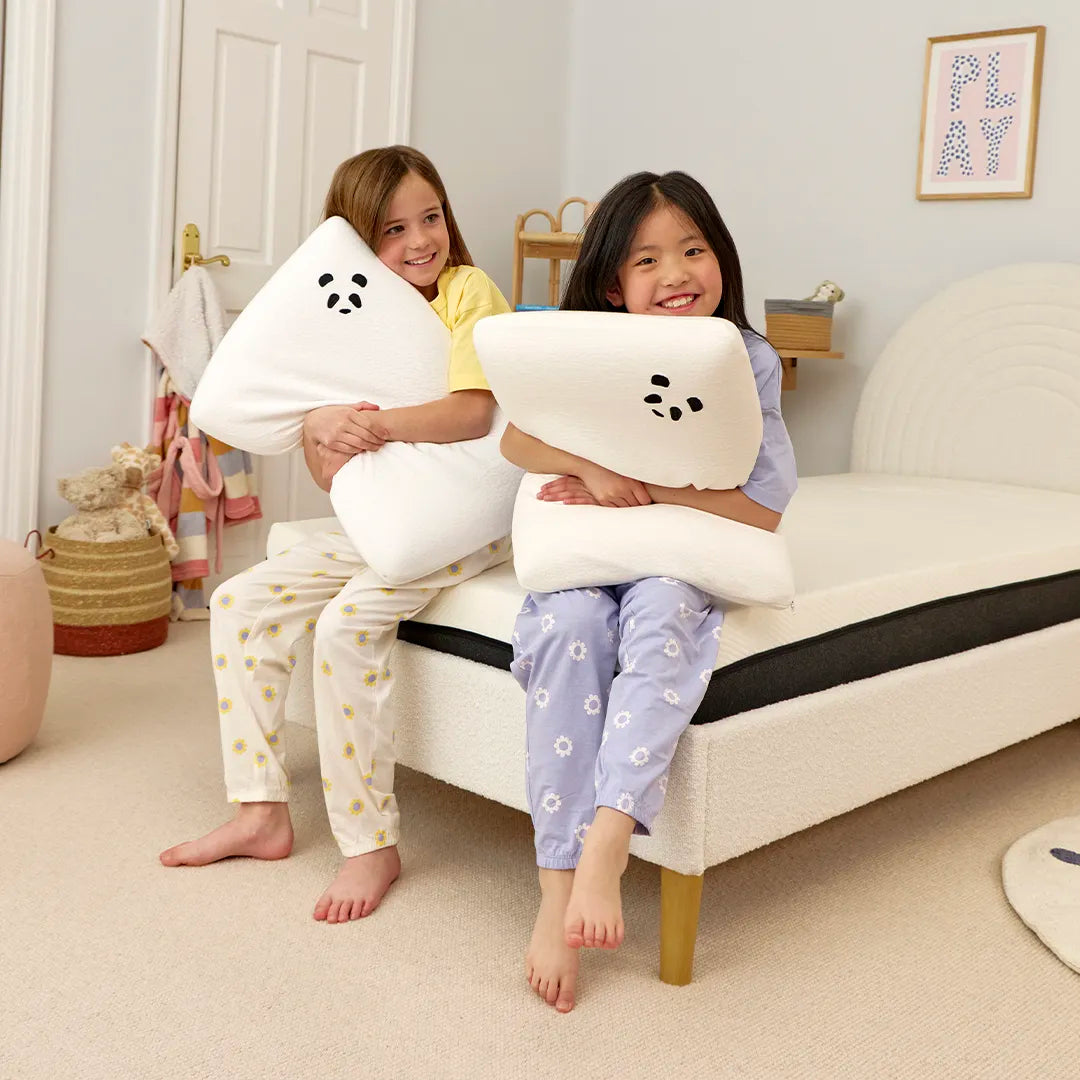
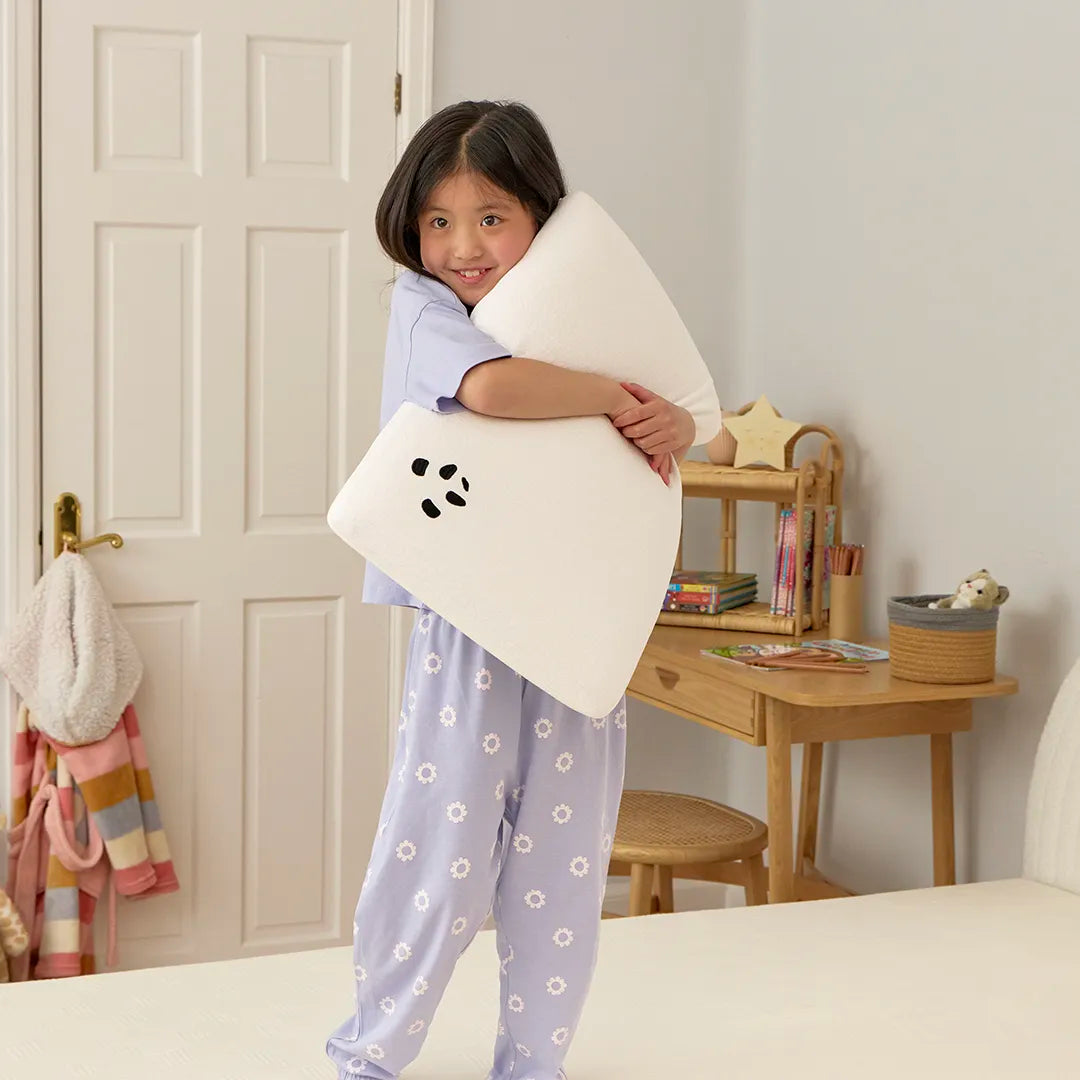
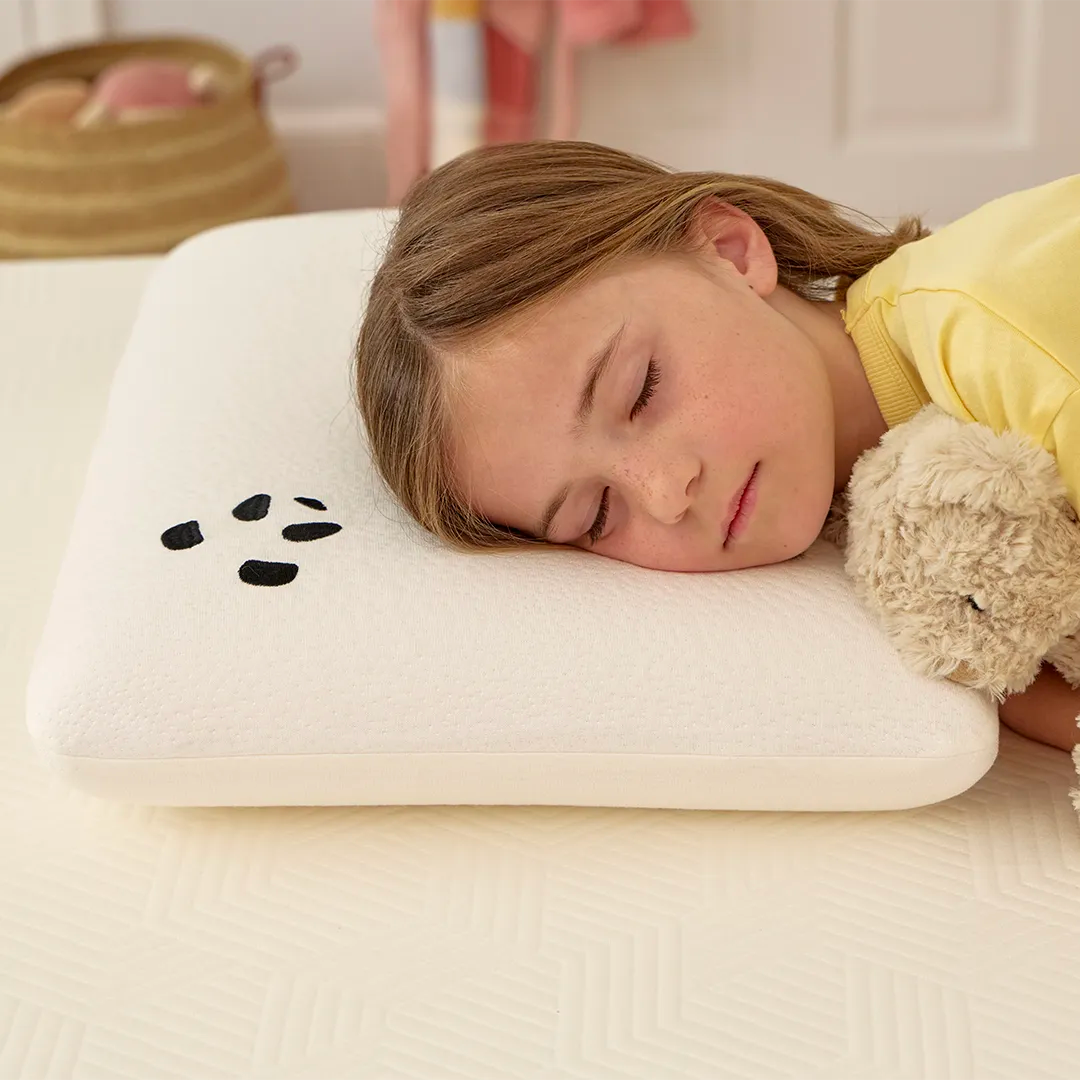
 Kids Memory Foam Bamboo Pillow
 Baby Memory Foam Bamboo Pillow
 Panda Cloud Duvet
 Bamboo Summer Duvet
 Kids Cloud Duvet
![[MattressTopper] Bamboo_Mattress_Topper_Package_Box-updated](http://pandalondon.com/cdn/shop/files/Bamboo_Mattress_Topper_Package_Box-updated.webp?crop=region&crop_height=1315&crop_left=92&crop_top=0&crop_width=1315&v=1782726992&width=1500)
![[MattressTopper] Woman laying on a Panda Bamboo Mattress Topper](http://pandalondon.com/cdn/shop/files/Bamboo_Mattress_Topper_Product_Image_01.webp?v=1782726484&width=1080)
![[MattressTopper] Guy laying on a Panda Bamboo Mattress Topper](http://pandalondon.com/cdn/shop/files/Bamboo_Mattress_Topper_Product_Image_02.webp?v=1782726484&width=1080)
![[MattressTopper] Woman setting up a Panda Bamboo Mattress Topper](http://pandalondon.com/cdn/shop/files/Bamboo_Mattress_Topper_Product_Image_03.webp?v=1782726484&width=1080)
![[MattressTopper] Panda London Memory Foam Bamboo Mattress Topper side](http://pandalondon.com/cdn/shop/files/Mattress_Topper_Isolated_-_resized.jpg?v=1773853354&width=800)
![[HybridMattressPro] Hybrid_Bamboo_Mattress_Pro_Product_Image_2026](http://pandalondon.com/cdn/shop/files/Hybrid_Bamboo_Mattress_Pro_Product_Image_2026.webp?v=1764944771&width=1000)
![[HybridMattressPro] A woman in white pajamas lies on her side on a mattress atop a gray upholstered bed frame in a softly lit bedroom. The mattress has a white top layer with a subtle geometric pattern and a black center band, with a small Panda Mattress logo patch visible on the side.](http://pandalondon.com/cdn/shop/files/Mattress_PRO-01.webp?v=1790672728&width=2049)
![[HybridMattressPro] Hybrid Bamboo Mattress Pro Cover Zip](http://pandalondon.com/cdn/shop/files/Hybrid_Bamboo_Mattress_Cover.jpg?v=1764944771&width=800)
![[HybridMattressPro] A woman in a cream-colored pajama set kneels beside a bed, holding down a mattress protector on a Panda Mattress to show its support and comfort.](http://pandalondon.com/cdn/shop/files/Mattress_PRO-03.webp?v=1790672728&width=2049)
![[HybridMattressPro] A woman in light pink pajamas sits on a Panda Bamboo mattress](http://pandalondon.com/cdn/shop/files/Mattress_PRO-04.webp?v=1790672728&width=2049)
![[CloudDuvet] Panda London The Cloud Bamboo Duvet Packaging](http://pandalondon.com/cdn/shop/products/Panda-London-The-Cloud-Bamboo-Duvet-Panda-Life-scaled_00a651ad-4ca3-4105-b520-12a94c1a4f71.jpg?v=1713363286&width=1920)
![[CloudDuvet] Panda London The Cloud Bamboo Duvet Rolled](http://pandalondon.com/cdn/shop/products/Duvet-Listing-Images03.jpg?v=1764079307&width=1000)
![[CloudDuvet] Guy making the bed with Panda Cloud Duvet 10.5 TOG](http://pandalondon.com/cdn/shop/files/Duvet_10.5_Tog-02.webp?v=1790607319&width=2049)
![[CloudDuvet] Guy reading a book on the bed covered with Panda Cloud Duvet 10.5 TOG](http://pandalondon.com/cdn/shop/files/Duvet_10.5_Tog-03.webp?v=1790607319&width=2049)
![[CloudDuvet] Guy making his bed with Panda Cloud Duvet 10.5 TOG](http://pandalondon.com/cdn/shop/files/Duvet_10.5_Tog-04.webp?v=1790607319&width=2049)
![[BBWhite] 100_Bamboo_Bedding_Set_Pure_White](http://pandalondon.com/cdn/shop/files/100_Bamboo_Bedding_Set_Pure_White_01.webp?v=1781082973&width=1080)
![[BBWhite] White 100% Bamboo Bedding Texture](http://pandalondon.com/cdn/shop/files/100_Bamboo_Bedding_-_Pure_White_-_Close_Up_02.webp?v=1773611287&width=1000)
![[BBWhite] 100_Bamboo_Bedding_Set_Pure_White couple laughing](http://pandalondon.com/cdn/shop/files/100_Bamboo_Bedding_Set_Pure_White_02.webp?v=1781082974&width=1080)
![[BBWhite] White 100% Bamboo Bedding Woman Duvet cover buttons](http://pandalondon.com/cdn/shop/files/hand_and_buttons_1.webp?v=1773611287&width=1000)
![[BBWhite] 100_Bamboo_Bedding_Set_Pure_White woman sleeping](http://pandalondon.com/cdn/shop/files/100_Bamboo_Bedding_Set_Pure_White_03.webp?v=1781082973&width=1080)
![[BBUrbanGrey] 100_Bamboo_Bedding_Set_Urban_Grey_guy laying on the bedding](http://pandalondon.com/cdn/shop/files/100_Bamboo_Bedding_Set_Urban_Grey_01.webp?v=1781083567&width=1080)
![[BBUrbanGrey] Cloud Duvet Urban Grey 100% Bamboo Bedding Set](http://pandalondon.com/cdn/shop/files/Cloud_Duvet_-_Grey_-_Close_up_2.webp?v=1773611287&width=1000)
![[BBUrbanGrey] 100_Bamboo_Bedding_Set_Urban_Grey_woman opening the bedding bag](http://pandalondon.com/cdn/shop/files/100_Bamboo_Bedding_Set_Urban_Grey_02.webp?v=1781083568&width=1080)
![[BBUrbanGrey] 100_Bamboo_Bedding_Set_Urban_Grey_woman making the bed](http://pandalondon.com/cdn/shop/files/100_Bamboo_Bedding_Set_Urban_Grey_04.webp?v=1781083567&width=1080)
![[BBUrbanGrey] 100_Bamboo_Bedding_Set_Urban_Grey_couple reading magazines](http://pandalondon.com/cdn/shop/files/100_Bamboo_Bedding_Set_Urban_Grey_03.webp?v=1781083567&width=1080)
![[BBNavyBlue] Deep Sea Navy Blue 100% Bamboo Bedding Set couple reading a magazine](http://pandalondon.com/cdn/shop/files/100_Bamboo_Bedding_Set_Deep_Sea_Navy_01.webp?v=1781083134&width=1080)
![[BBNavyBlue] Deep Sea Navy Blue 100% Bamboo Bedding Texture](http://pandalondon.com/cdn/shop/files/Cloud_Duvet_-_Navy_-_Close_up_2.webp?v=1773611287&width=1000)
![[BBNavyBlue] Deep Sea Navy Blue 100% Bamboo Bedding Set couple reading a magazine and smiling](http://pandalondon.com/cdn/shop/files/100_Bamboo_Bedding_Set_Deep_Sea_Navy_02.webp?v=1781083135&width=1080)
![[BBNavyBlue] Deep Sea Navy Blue 100% Bamboo Bedding Set woman resting](http://pandalondon.com/cdn/shop/files/100_Bamboo_Bedding_Set_Deep_Sea_Navy_04.png?v=1781083138&width=1080)
![[BBNavyBlue] Deep Sea Navy Blue 100% Bamboo Bedding Set guy laying and smiling](http://pandalondon.com/cdn/shop/files/100_Bamboo_Bedding_Set_Deep_Sea_Navy_03.webp?v=1781083134&width=1080)
![[BBPink] Vintage Pink Blue 100% Bamboo Bedding woman making the bed](http://pandalondon.com/cdn/shop/files/100_Bamboo_Bedding_Set_Pink_01.webp?v=1781083678&width=1080)
![[BBPink] Vintage Pink Texture 100% Bamboo Bedding](http://pandalondon.com/cdn/shop/files/Cloud_Duvet_-_Pink_-_Close_up_2.webp?v=1773611287&width=1000)
![[BBPink] Vintage Pink Blue 100% Bamboo Bedding woman hugging the pillow with vintage pink pillow case](http://pandalondon.com/cdn/shop/files/100_Bamboo_Bedding_Set_Pink_02.webp?v=1781083678&width=1080)
![[BBPink] Vintage Pink Blue 100% Bamboo Bedding woman hiding under duvet with pink duvet cover](http://pandalondon.com/cdn/shop/files/100_Bamboo_Bedding_Set_Pink_03.webp?v=1781083679&width=1080)
![[BBPink] Vintage Pink Blue 100% Bamboo Bedding woman laying and smiling on the panda bedding set](http://pandalondon.com/cdn/shop/files/100_Bamboo_Bedding_Set_Pink_04.webp?v=1781083679&width=1080)
![[BBGrey] 100_Bamboo_Bedding_Set_Quiet_Grey_ woman holding the bedding](http://pandalondon.com/cdn/shop/files/100_Bamboo_Bedding_Set_Quiet_Grey_01.webp?v=1781083287&width=1080)
![[BBGrey] Light Grey 100% Bamboo Bedding texture](http://pandalondon.com/cdn/shop/files/Texture17.webp?v=1773611287&width=1000)
![[BBGrey] 100_Bamboo_Bedding_Set_Quiet_Grey_0guy laying and smiling](http://pandalondon.com/cdn/shop/files/100_Bamboo_Bedding_Set_Quiet_Grey_02.webp?v=1781083287&width=1080)
![[BBGrey] 100_Bamboo_Bedding_Set_Quiet_Grey_0guy reading a magazine on the bed](http://pandalondon.com/cdn/shop/files/100_Bamboo_Bedding_Set_Quiet_Grey_03.webp?v=1781083287&width=1080)
![[BBGrey] 100_Bamboo_Bedding_Set_Quiet_Grey_0woman making the bed](http://pandalondon.com/cdn/shop/files/100_Bamboo_Bedding_Set_Quiet_Grey_04.webp?v=1781083287&width=1080)

Reviewed by Bethany Lawrence, Osteopath, Osteobeth
Quick Answer:
For neck and shoulder pain, a bamboo memory foam pillow is the best all-round choice — it contours to your head and neck to keep the spine aligned, relieves pressure points, and stays cool thanks to bamboo's natural breathability. Latex offers good support but a firmer, less contouring feel (better for back sleepers). Down and polyester are the softest and cheapest, but lack the structured support that pain sufferers need.
With so many different pillow options to choose from, it can be difficult to decide on the one that's right for you. In this article, we'll help you decide by comparing a bamboo pillow with other fabrics on the market — exploring the material benefits, firmness, and how each one supports your head and neck.
Neck pain is very common: approximately half of all people will experience a clinically significant neck episode over the course of their lifetime. If neck or shoulder pain is driving your pillow search, material choice matters more than you might think.

What are Bamboo Pillows?
Bamboo pillows are comfortable, luxurious, and really good for you – naturally hypoallergenic and antimicrobial, as well as thermoregulating and moisture wicking, they are the perfect choice for getting a fresh night’s sleep.
There are plenty of bamboo pillow benefits; they offer all the support you need and help with temperature regulation, meaning you can stay cool on hot summer nights. They are particularly good for those with allergies and skin sensitivities, repelling dust mites and bed bugs, and bamboo is easy to clean too. It gets softer with every wash!
There are a few different types of bamboo pillow fillings. These include hollow fibre fillings, shredded bamboo fabric, and memory foam. Each has its own unique properties, but memory foam is one of the best fillings for a supportive pillow.
Bamboo pillows are durable and long-lasting – bamboo is a durable material that can easily provide comfort for years. This means they are less likely to end up in a landfill and work out better value for money as you don’t need to replace your pillows so often!
How do other pillow materials compare to bamboo?
It is worth looking at how different materials hold their own against bamboo, so you have an idea of the benefits and drawbacks of each pillow type!

Memory foam pillows
For comfort and alignment, memory foam is a fantastic material. Contouring to your body when pressure is applied, memory foam pillows provide excellent support and help keep your neck and back in the right position. Generally, this material is very temperature sensitive, meaning it takes on the temperature of its surroundings - hot in hot weather and cold when it’s cold. However, this issue is easily avoided when encased in a thermoregulating bamboo cover.
When compared to a bamboo pillow, standard memory foam pillows often come in a bit cheaper. However, with many bamboo pillows containing memory foam, they are a perfect combination!
Down pillows
Containing quill-less feathers, down pillows are cosy and warm pillows with great insulating properties. This means they’re perfect for the winter, but less so for those hot summer nights – you usually won’t wake up feeling as refreshed using a down pillow as you would with a bamboo pillow. In comparison, down pillows are much less breathable and also don’t offer as much support, nor do they have the hypoallergenic properties or softness of bamboo.
Latex pillows
Not as firm as memory foam, latex pillows are soft and durable with antifungal properties. They are mildew-resistant and hypoallergenic, meaning they compare well to bamboo pillows. However, they don’t offer as much support as other pillows, like bamboo and memory foam, meaning your body isn’t as well aligned as you sleep.
What the experts and reviewers say
Bamboo's claims aren't just marketing — they're backed by independent testing. A few third-party verdicts worth knowing as you compare materials:
- Ideal Home and Sleep Hero both tested Panda's bamboo products and confirmed the temperature-regulation and comfort claims in real-world use.
- On Trustpilot, Panda holds 5 stars across more than 6,365 reviews, with neck and shoulder comfort among the most commonly cited benefits.
These are independent confirmations of the same properties — breathability, support, pressure relief — that make bamboo a strong choice for pain sufferers specifically.
Panda London’s Pillows For Summer
In the warmer months, you relish that cool side of the pillow on both sides. Does that mean you should invest in Summer pillows? Not necessarily, as both our bamboo pillows are designed for all-year-round use. With thermoregulating properties in bamboo, they keep your head warm or cool depending on the temperature. In this section, we’ll compare them so you can find the best pillows for Summer.
Hybrid Bamboo Pillow
Take the heat out of pillow-buying with our Hybrid Bamboo Pillow. The charcoal-infused memory foam fill has been made explicitly with Active O₂ Micro-pods™, which enhance airflow and maximise breathability. The cloud-like cover is not only soft, but also moisture-wicking and temperature-regulating. If you’re feeling hot, it’ll cool you down so you can sleep in comfort. Odour-resistant, our Hybrid Bamboo Pillow cleans up well for hygiene, naturally antibacterial, it fends off bacteria.
Memory Foam Bamboo Pillow
Perspiring on your pillows? Our Memory Foam Pillow could be the best pillow that stays cool. Highly breathable, our signature bamboo cover ventilates your sleep and also regulates your temperature. For hot heads, it’s cooling, preparing for you to wake up refreshed in the morning. Moulding to your sleeping position, our 3rd generation orthopaedic-grade memory foam fill keeps your head and neck in alignment, offering comfort on hot Summer nights. Designed for flexibility means it reverts back to its shape without losing density over time – an elevated investment in your sleep.

What factors should you consider when choosing a pillow?
When buying a new pillow, there are a few things to weigh up:
- Your sleeping position — do you lie on your back, side, or stomach? Different pillows suit different positions. Side sleepers generally need a higher loft; front sleepers a thinner one.
- How much support you need — especially if you're prone to waking with a sore back, neck, or shoulders.
- Allergies and sensitivities — if you have sensitive skin, a down pillow may feel too itchy. Bamboo is soft and hypoallergenic, making it ideal for those with skin conditions.
- Temperature — if you get too hot at night (as many people do), choose a pillow where temperature regulation is a priority, with good breathability.
- Maintenance and care — life's busy, so a pillow that's long-lasting and easy to clean, like bamboo, makes life a little simpler.
Material comparison table for pain
Below, we've compared the main pillow materials based on support for pain, cooling, durability, and price range:
|
Material |
Support for Pain |
Cooling |
Durability |
Price Range |
|---|---|---|---|---|
|
Bamboo memory foam |
Exceptional contouring for neck and shoulder pain; relieves pressure points (may feel too firm for some) |
Very good — bamboo aids breathability and the bamboo-infused fill counteracts the heat of memory foam |
Good; may flatten slowly over time |
£10–60 |
|
Latex |
Good support and responsiveness; good for neck alignment and pressure relief |
Good — naturally breathable |
Excellent; one of the longest-lasting options |
£35–130 |
|
Polyester |
Low to moderate support; best for mild discomfort, and may flatten quickly |
Usually breathable but not especially cooling |
Fair; tends to lose loft sooner |
£3–80 |
|
Down/feather |
Soft and easy to mould, but no structured support; doesn't suit chronic neck pain |
Good; breathable and airy |
Moderate; needs regular fluffing and maintenance |
£15–250 |
Which pillow material is best for neck and shoulder pain?
For neck and shoulder pain, a bamboo memory foam pillow is the best all-round choice. It's designed to contour to your sleeping position, aligning your spine, while the foam fill relieves pressure points — which is exactly what neck and shoulder pain sufferers need.
Latex is also a good option for neck and shoulder pain, but it can feel firmer — making it more suitable for back sleepers who want resilience and support rather than deep contouring.
Polyester loses its shape easily, so it's one of the least suitable materials for anyone with aches and pains.
Down and feather pillows are very soft, which means they lack the structural support needed to hold the neck in alignment through the night — so they're not recommended for chronic neck or shoulder pain.
As our osteopath reviewer Bethany Lawrence notes, the right pillow is one that supports the natural curve of the neck without forcing the head too high or too low. A bamboo memory foam pillow's contouring is what makes it so well-suited to this — but remember that loft height and material work together. For more advice, read our Pillow Buying Guide, which includes a loft-height guide.
Choosing your new pillow
There are a few different pillow materials you can choose from when making a purchase – a lot of it comes down to personal preference, but there are some clear positives and negatives when looking at each one. Bamboo pillows come out on top thanks to their fantastic range of properties, like being hypoallergenic and highly breathable, making for a good night’s sleep every night. Considering your individual needs is a really important point, too; finding a pillow that supports you and your body is so important! Using these comparisons to make an informed decision, you’ll find it easier to drift off and stay asleep night after night, waking up refreshed and ready to take on the day.
FAQ
1. What is a bamboo pillow, and how is it different from traditional pillows?
Unlike traditional pillows made from synthetic materials, a bamboo pillow is made from natural bamboo fibres, providing enhanced breathability and moisture-wicking properties.
2. Are bamboo pillows hypoallergenic and suitable for sensitive skin?
Bamboo pillows are hypoallergenic, making them an excellent choice for allergy sufferers and individuals with sensitive skin.
3. What are the benefits of using a bamboo pillow compared to other materials?
Bamboo pillows offer superior breathability, temperature regulation, and moisture control, promoting a cooler and more comfortable sleep experience than other pillow materials.
4. How does a bamboo pillow support spinal alignment and alleviate neck pain?
The adaptive nature of bamboo fibres allows the pillow to contour to your head and neck, providing optimal support and reducing strain on the neck and spine.
5. Do bamboo pillows retain their shape over time?
Bamboo pillows have excellent resilience and maintain their shape even with prolonged use, ensuring lasting comfort and support.
About the Author:
Katy Gilroy is the Partnerships and Community Lead at Panda London, specialising in sleep wellbeing, sustainable living and thoughtful home comforts. She studied journalism and creative writing, and now writes across topics such as bedding, mattresses, sleep hygiene, bamboo materials and lifestyle-led sustainability. Her goal is to turn expert-backed ideas and product knowledge into practical content that helps the Panda community sleep better and live a little more consciously.
![[HybridPillow] Hybrid Bamboo Pillow - Mattress Campaign](http://pandalondon.com/cdn/shop/products/Hybrid-Bamboo-Pillow-Mattress-Campaign.jpg?crop=region&crop_height=1615&crop_left=152&crop_top=0&crop_width=1615&v=1771199164&width=1920)
![[HybridPillow] Hybrid_Bamboo_Pillow_-_Woman_laying_on_a_Hybrid_Bamboo_Pillow_with_an_Eye_Mask](http://pandalondon.com/cdn/shop/files/Hybrid_Bamboo_Pillow_-_Woman_laying_on_a_Hybrid_Bamboo_Pillow_with_an_Eye_Mask.webp?v=1783514966&width=1080)
![[HybridPillow] Hybrid_Bamboo_Pillow_02_-_Woman_taking_off_the_Hybrid_Bamboo_Pillow_Cover](http://pandalondon.com/cdn/shop/files/Hybrid_Bamboo_Pillow_02_-_Woman_taking_off_the_Hybrid_Bamboo_Pillow_Cover.webp?v=1783514763&width=1080)
![[HybridPillow] Hybrid Pillow with Panda brand marking](http://pandalondon.com/cdn/shop/products/Hybrid-Pillow_8.jpg?v=1771199164&width=1920)
![[HybridPillow] Hybrid_Bamboo_Pillow_03_-_Couple_pillow_fighting_with_Hybrid_Bamboo_Pillows](http://pandalondon.com/cdn/shop/files/Hybrid_Bamboo_Pillow_03_-_Couple_pillow_fighting_with_Hybrid_Bamboo_Pillows.webp?v=1783514763&width=1080)
![[MemoryFoamPillow] Panda Luxury Memory Foam Bamboo product image](http://pandalondon.com/cdn/shop/products/Panda-Memory-Foam-Bamboo-Pillow-Panda-Life-scaled-e1623788835840.jpg?v=1771199183&width=800)
![[MemoryFoamPillow] Panda London Bamboo Memory Foam Pillow Girl Holding Pillow Lifestyle](http://pandalondon.com/cdn/shop/files/01_Memory_Foam_Bamboo_Pillow__alt04.jpg?v=1771199183&width=800)
![[MemoryFoamPillow] Panda London Bamboo Memory Foam Pillow](http://pandalondon.com/cdn/shop/files/03_Memory_Foam_Bamboo_Pillow__alt01.jpg?v=1771199183&width=800)
![[MemoryFoamPillow] Panda London Bamboo Memory Foam Pillow girl hugging the pillow](http://pandalondon.com/cdn/shop/files/02_Memory_Foam_Bamboo_Pillow__alt02.jpg?v=1771199183&width=800)
![[MemoryFoamPillow] Panda London Bamboo Memory Foam Pillow on a Panda Topper](http://pandalondon.com/cdn/shop/files/Memory-Foam-Bamboo-Pillow-on-Bed-Topper-and-Adjustable-Straps-Shown-Lifestyle-Square-768x768_png.webp?v=1771199183&width=768)
![[Pillowcovers] Pillowcase-Kids-Pillow-White-Background-](http://pandalondon.com/cdn/shop/files/Kids-Pillow-White-Background-Square_jpg.webp?v=1771199206&width=745)