
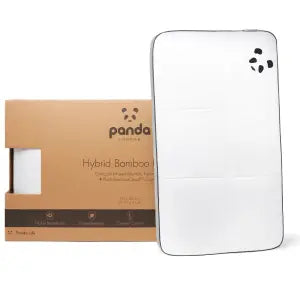
 Hybrid Bamboo Pillow
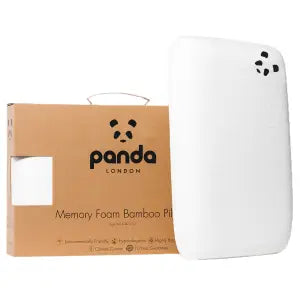 Memory Foam Bamboo Pillow
 Kids Memory Foam Bamboo Pillow
 Baby Memory Foam Bamboo Pillow
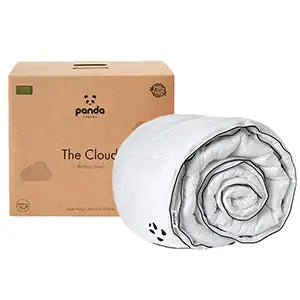 Panda Cloud Duvet
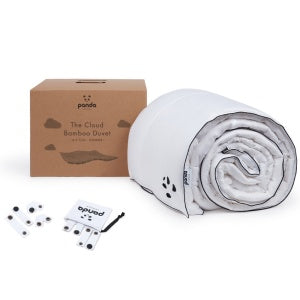 Bamboo Summer Duvet
 Kids Cloud Duvet
![[MattressTopper] Bamboo_Mattress_Topper_Package_Box-updated](http://pandalondon.com/cdn/shop/files/Bamboo_Mattress_Topper_Package_Box-updated.webp?crop=region&crop_height=1315&crop_left=92&crop_top=0&crop_width=1315&v=1782726992&width=1500)
![[MattressTopper] Woman laying on a Panda Bamboo Mattress Topper](http://pandalondon.com/cdn/shop/files/Bamboo_Mattress_Topper_Product_Image_01.webp?v=1782726484&width=1080)
![[MattressTopper] Guy laying on a Panda Bamboo Mattress Topper](http://pandalondon.com/cdn/shop/files/Bamboo_Mattress_Topper_Product_Image_02.webp?v=1782726484&width=1080)
![[MattressTopper] Woman setting up a Panda Bamboo Mattress Topper](http://pandalondon.com/cdn/shop/files/Bamboo_Mattress_Topper_Product_Image_03.webp?v=1782726484&width=1080)
![[MattressTopper] Panda London Memory Foam Bamboo Mattress Topper side](http://pandalondon.com/cdn/shop/files/Mattress_Topper_Isolated_-_resized.jpg?v=1773853354&width=800)
![[HybridMattressPro] Hybrid_Bamboo_Mattress_Pro_Product_Image_2026](http://pandalondon.com/cdn/shop/files/Hybrid_Bamboo_Mattress_Pro_Product_Image_2026.webp?v=1764944771&width=1000)
![[HybridMattressPro] Breathable Hybrid Bamboo Mattress](http://pandalondon.com/cdn/shop/products/Breathable-Hybrid-Bamboo-Mattress.jpg?v=1764944771&width=1920)
![[HybridMattressPro] Hybrid Bamboo Mattress Pro Cover Zip](http://pandalondon.com/cdn/shop/files/Hybrid_Bamboo_Mattress_Cover.jpg?v=1764944771&width=800)
![[HybridMattressPro] Panda Hybrid Bamboo Mattress Pro](http://pandalondon.com/cdn/shop/files/Hybrid_Bambo_Memory_Foam_Mattress_-_BioCell_Foam_x.jpg?v=1764944771&width=800)
![[HybridMattressPro] Couple on a Hybrid Bamboo Mattress Pro](http://pandalondon.com/cdn/shop/files/Hybrid_Bamboo_Mattress_Couple.jpg?v=1764944771&width=800)
![[CloudDuvet] Panda London The Cloud Bamboo Duvet Packaging](http://pandalondon.com/cdn/shop/products/Panda-London-The-Cloud-Bamboo-Duvet-Panda-Life-scaled_00a651ad-4ca3-4105-b520-12a94c1a4f71.jpg?v=1713363286&width=1920)
![[CloudDuvet] Panda London The Cloud Bamboo Duvet Rolled](http://pandalondon.com/cdn/shop/products/Duvet-Listing-Images03.jpg?v=1764079307&width=1000)
![[CloudDuvet] Panda London The Cloud Bamboo Duvet Girl Huggin a Duvet on the Bed](http://pandalondon.com/cdn/shop/files/Cloud_Bamboo_Duvet_-_Lady_Hugging_it_on_Bed_LifestyleImage.jpg?v=1764079307&width=1000)
![[CloudDuvet] Panda London The Cloud Bamboo Duvet Guy In the Air with Cloud Bamboo Duvet](http://pandalondon.com/cdn/shop/files/GuyonaHybridBambooMattresswithCloudDuvet.jpg?v=1772559689&width=2000)
![[CloudDuvet] Panda Cloud Duvet Winter on the bed lifestyle image](http://pandalondon.com/cdn/shop/files/Panda_Cloud_Duvet_Winter_on_the_Bed_Lifestyle-1_image.jpg?v=1772559689&width=1000)
![[BBWhite] 100_Bamboo_Bedding_Set_Pure_White](http://pandalondon.com/cdn/shop/files/100_Bamboo_Bedding_Set_Pure_White_01.webp?v=1781082973&width=1080)
![[BBWhite] White 100% Bamboo Bedding Texture](http://pandalondon.com/cdn/shop/files/100_Bamboo_Bedding_-_Pure_White_-_Close_Up_02.webp?v=1773611287&width=1000)
![[BBWhite] 100_Bamboo_Bedding_Set_Pure_White couple laughing](http://pandalondon.com/cdn/shop/files/100_Bamboo_Bedding_Set_Pure_White_02.webp?v=1781082974&width=1080)
![[BBWhite] White 100% Bamboo Bedding Woman Duvet cover buttons](http://pandalondon.com/cdn/shop/files/hand_and_buttons_1.webp?v=1773611287&width=1000)
![[BBWhite] 100_Bamboo_Bedding_Set_Pure_White woman sleeping](http://pandalondon.com/cdn/shop/files/100_Bamboo_Bedding_Set_Pure_White_03.webp?v=1781082973&width=1080)
![[BBUrbanGrey] 100_Bamboo_Bedding_Set_Urban_Grey_guy laying on the bedding](http://pandalondon.com/cdn/shop/files/100_Bamboo_Bedding_Set_Urban_Grey_01.webp?v=1781083567&width=1080)
![[BBUrbanGrey] Cloud Duvet Urban Grey 100% Bamboo Bedding Set](http://pandalondon.com/cdn/shop/files/Cloud_Duvet_-_Grey_-_Close_up_2.webp?v=1773611287&width=1000)
![[BBUrbanGrey] 100_Bamboo_Bedding_Set_Urban_Grey_woman opening the bedding bag](http://pandalondon.com/cdn/shop/files/100_Bamboo_Bedding_Set_Urban_Grey_02.webp?v=1781083568&width=1080)
![[BBUrbanGrey] 100_Bamboo_Bedding_Set_Urban_Grey_woman making the bed](http://pandalondon.com/cdn/shop/files/100_Bamboo_Bedding_Set_Urban_Grey_04.webp?v=1781083567&width=1080)
![[BBUrbanGrey] 100_Bamboo_Bedding_Set_Urban_Grey_couple reading magazines](http://pandalondon.com/cdn/shop/files/100_Bamboo_Bedding_Set_Urban_Grey_03.webp?v=1781083567&width=1080)
![[BBNavyBlue] Deep Sea Navy Blue 100% Bamboo Bedding Set couple reading a magazine](http://pandalondon.com/cdn/shop/files/100_Bamboo_Bedding_Set_Deep_Sea_Navy_01.webp?v=1781083134&width=1080)
![[BBNavyBlue] Deep Sea Navy Blue 100% Bamboo Bedding Texture](http://pandalondon.com/cdn/shop/files/Cloud_Duvet_-_Navy_-_Close_up_2.webp?v=1773611287&width=1000)
![[BBNavyBlue] Deep Sea Navy Blue 100% Bamboo Bedding Set couple reading a magazine and smiling](http://pandalondon.com/cdn/shop/files/100_Bamboo_Bedding_Set_Deep_Sea_Navy_02.webp?v=1781083135&width=1080)
![[BBNavyBlue] Deep Sea Navy Blue 100% Bamboo Bedding Set woman resting](http://pandalondon.com/cdn/shop/files/100_Bamboo_Bedding_Set_Deep_Sea_Navy_04.png?v=1781083138&width=1080)
![[BBNavyBlue] Deep Sea Navy Blue 100% Bamboo Bedding Set guy laying and smiling](http://pandalondon.com/cdn/shop/files/100_Bamboo_Bedding_Set_Deep_Sea_Navy_03.webp?v=1781083134&width=1080)
![[BBPink] Vintage Pink Blue 100% Bamboo Bedding woman making the bed](http://pandalondon.com/cdn/shop/files/100_Bamboo_Bedding_Set_Pink_01.webp?v=1781083678&width=1080)
![[BBPink] Vintage Pink Texture 100% Bamboo Bedding](http://pandalondon.com/cdn/shop/files/Cloud_Duvet_-_Pink_-_Close_up_2.webp?v=1773611287&width=1000)
![[BBPink] Vintage Pink Blue 100% Bamboo Bedding woman hugging the pillow with vintage pink pillow case](http://pandalondon.com/cdn/shop/files/100_Bamboo_Bedding_Set_Pink_02.webp?v=1781083678&width=1080)
![[BBPink] Vintage Pink Blue 100% Bamboo Bedding woman hiding under duvet with pink duvet cover](http://pandalondon.com/cdn/shop/files/100_Bamboo_Bedding_Set_Pink_03.webp?v=1781083679&width=1080)
![[BBPink] Vintage Pink Blue 100% Bamboo Bedding woman laying and smiling on the panda bedding set](http://pandalondon.com/cdn/shop/files/100_Bamboo_Bedding_Set_Pink_04.webp?v=1781083679&width=1080)
![[BBGrey] 100_Bamboo_Bedding_Set_Quiet_Grey_ woman holding the bedding](http://pandalondon.com/cdn/shop/files/100_Bamboo_Bedding_Set_Quiet_Grey_01.webp?v=1781083287&width=1080)
![[BBGrey] Light Grey 100% Bamboo Bedding texture](http://pandalondon.com/cdn/shop/files/Texture17.webp?v=1773611287&width=1000)
![[BBGrey] 100_Bamboo_Bedding_Set_Quiet_Grey_0guy laying and smiling](http://pandalondon.com/cdn/shop/files/100_Bamboo_Bedding_Set_Quiet_Grey_02.webp?v=1781083287&width=1080)
![[BBGrey] 100_Bamboo_Bedding_Set_Quiet_Grey_0guy reading a magazine on the bed](http://pandalondon.com/cdn/shop/files/100_Bamboo_Bedding_Set_Quiet_Grey_03.webp?v=1781083287&width=1080)
![[BBGrey] 100_Bamboo_Bedding_Set_Quiet_Grey_0woman making the bed](http://pandalondon.com/cdn/shop/files/100_Bamboo_Bedding_Set_Quiet_Grey_04.webp?v=1781083287&width=1080)

Reviewed by Dr Seeta Shah (The Green Doctor), Medical Doctor & Naturopath
Quick Answer:
To choose the best memory foam topper, start with three things: your sleep position, your body weight, and your mattress condition. For pain relief, density matters most — medium (4–5 lb/ft³) suits most people, while higher density (5+ lb/ft³) is better for heavier sleepers and chronic pain. For thickness, 5cm gives meaningful pain relief for most, and 7.5cm is best for chronic pain or a very firm mattress.
Mattress toppers are a simple way to enhance the comfort and support of your mattress. Among the various types available, memory foam mattress toppers are hugely popular for their ability to contour the body, relieve pressure points, and provide restful sleep.
Our Hybrid Bamboo Mattress Topper has a 4.8/5 rating from over 7,200 ratings, with customers specifically mentioning relief for joint and back pain. Let's explore the key factors to consider when choosing the best memory foam mattress topper — the benefits, types, density, thickness, and more — so you can make an informed decision about what suits you best.
What to consider before you buy
Before looking at any product specs, three things determine which topper is right for you:
- Your sleep position — side sleepers need more cushioning for the hips and shoulders; back and front sleepers need firmer support.
- Your body weight — heavier sleepers need higher-density foam to avoid sinking through; lighter sleepers need softer foam to feel any pressure relief.
- Your mattress condition — a topper can transform a too-firm or slightly worn mattress, but it can't rescue one that's genuinely sagging (more on that below).
Get these three clear first, and every other decision — density, thickness, firmness — follows naturally.
Benefits of memory foam toppers
Memory foam toppers offer several benefits, including pressure relief, motion isolation and customised support. They contour to the body's shape, alleviating pressure points and promoting proper spinal alignment. Memory foam also reduces motion transfer, making it an excellent choice for couples or anyone who shares a bed — you'll drift off in comfort, stay asleep, and wake with fewer aches.
Toppers also protect your mattress, helping it last longer and reducing the chance of it ending up in landfill. And compared to latex, memory foam is lighter and easier to transport — handy if you want to take it camping or are moving house.

What are the different types of memory foam toppers?
Memory foam toppers come in various types: traditional, gel-infused, open-cell and plant-based.
- Traditional memory foam provides superior pressure relief and support, but can retain heat.
- Gel-infused memory foam improves on this by dissipating heat and providing a cooling surface.
- Open-cell memory foam allows air to flow through the foam much better — great for breathability.
- Plant-based memory foam is eco-friendly and breathable, but more responsive, so you'll sink in further than with typical memory foam.

Density and thickness: the guide for pain relief
This is the part that matters most if you're choosing a topper for pain — and it's where most buying guides fall short.
Density (how much the foam weighs per unit of volume) determines support and durability:
- Low (3–4 lb/ft³ / ~48–64 kg/m³) — softer, not recommended for pain
- Medium (4–5 lb/ft³ / ~64–80 kg/m³) — a good balance for most people; this is where our Memory Foam Bamboo Topper sits
-
High (5+ lb/ft³ / 80+ kg/m³) — firmer, better for heavier sleepers and chronic pain
Thickness works alongside density:
- 2–3cm — minimal; a light comfort boost only
- 4–5cm — meaningful pain relief; the sweet spot for most people
-
7.5cm — maximum support; the thickness of our Hybrid Bamboo Mattress Topper is ideal for chronic pain or a very firm mattress
A quick note on units: foam density is measured in pounds per cubic foot (lb/ft³) in the US and kilograms per cubic metre (kg/m³) in the UK and EU. We've given both below so the numbers are useful whichever you're familiar with. As a rough guide, 4 lb/ft³ ≈ 64 kg/m³.
Recommended density and thickness by pain type
|
Pain type |
Recommended density |
Recommended thickness |
|---|---|---|
|
Lower back pain |
Medium-firm, 4–5 lb/ft³ (64–80 kg/m³) |
5cm (mild) to 7.5cm (chronic) |
|
Hip pain / pressure points |
Contouring, 3–4 lb/ft³ (48–64 kg/m³) |
5cm; up to 7.5cm if a side sleeper or very firm mattress |
|
Shoulder pain |
Softer-contouring, 3–4 lb/ft³ (48–64 kg/m³) |
5cm |
|
Neck / upper back stiffness |
Medium, 3–4 lb/ft³ (48–64 kg/m³) |
5cm; pillow alignment matters more than topper here |
|
Arthritis / joint pain |
Pressure-relieving, 3–4 lb/ft³ rising to 5+ for chronic |
5cm; 7.5cm for side sleepers or chronic cases |
|
Sciatica / radiating leg pain |
Medium-firm, ~4 lb/ft³ (64 kg/m³) |
5cm; avoid overly soft, deep-sink toppers |
|
Stomach-sleeper back strain |
Firmer, 4–5 lb/ft³ (64–80 kg/m³) |
2–3cm max — too much sink worsens the arch |
|
General discomfort |
Medium, 50–70 kg/m³ |
3–5cm |
|
Pain from a sagging mattress |
A topper is not a true fix — the support base is the issue |
Temporary relief only; the mattress likely needs replacing |
The single most important row there is the last one: if your pain comes from a sagging mattress, a topper is a sticking plaster, not a solution. It can buy you some comfort short-term, but a mattress that's lost its structural support needs replacing.

What is an ILD rating?
You may see toppers described by their ILD rating (Indentation Load Deflection). It's a measure of firmness — specifically, how much weight it takes to compress the foam by 25%. A lower ILD means a softer, more contouring topper; a higher ILD means a firmer, more supportive one.
For pain relief, ILD works hand in hand with density: you generally want a topper firm enough to support the spine (higher ILD) but with enough surface give to cushion pressure points. For most people with pain, a medium ILD paired with medium-to-high density hits the right balance.
Does firmness level matter?
Yes. Memory foam toppers range from soft to firm, and the right choice depends on your sleeping position and preference. Side sleepers often prefer a softer topper, since their full body weight rests on one side, concentrating pressure on the hip and shoulder. Back and front sleepers usually do better with a firmer topper for support and alignment. You don't want anything too firm, though — the ideal is firm enough to support, soft enough to cushion.
Cooling features
Memory foam is known for retaining heat, so cooling features are worth looking for. Toppers that use gel technology or open-cell foam help dissipate heat and keep you at a comfortable temperature. Overheating is one of the most common causes of disrupted sleep, so a cooling memory foam topper — particularly one with a breathable bamboo cover — can genuinely change how well you sleep. Read reviews to see how well the cooling actually performs in practice.
How to assess if a topper is right for you
The best way to judge a topper is real-world testing — both your own (via a trial period) and independent reviewers'. Panda's toppers are among the most independently tested in the UK:
- Expert Reviews had "no hesitation" recommending the Hybrid Topper for back pain.
- Ideal Home tested it for comfort and support and confirmed the real-world pressure relief.
- A Panda topper is a Which? Best Buy in 2024 and 2025 — one of the most rigorous independent product tests in the UK.
- On Trustpilot, Panda holds 5 stars across more than 6,365 reviews, with joint and back pain relief frequently cited.
These independent verdicts test exactly the things you're assessing — comfort, support, and whether the pressure relief holds up over time.
Cover Material
Cover material matters too. Even with a fitted sheet over the top, a soft cover improves the feel. Memory foam toppers come with cotton, bamboo and other covers — bamboo is hypoallergenic, breathable and more eco-friendly than cotton, while cotton is sometimes easier to source. If your cover is removable, consider buying a spare so you can swap them and keep things hygienic.
Size and fit
Pick the same size as your mattress — if you're not sure, measure it and check which size (double, king, super king, etc.) it corresponds to. Look for toppers with adjustable straps for a snug fit, so the topper doesn't slide around during the night.
Mattress Topper Size Chart
| Mattress Size | Dimensions (cm) | Dimensions (inch) |
|---|---|---|
| UK Single | 190 x 90 cm | 74.8” x 35.4” |
| UK Small Double | 190 x 120 cm | 74.8” x 47.2” |
| UK Double | 190 x 135 cm | 74.8” x 53.1” |
| UK King | 200 x 150 cm | 78.7” x 59” |
| UK Super | 200 x 180 cm | 78.7” x 70.9” |
| EU Single | 200 x 90 cm | 78.7” x 35.4” |
| EU Double | 200 x 140 cm | 78.7” x 55.1” |
| EU King | 200 x 160 cm | 78.7” x 63” |
| Emperor | 200 x 200 cm | 78.7” x 78.7” |
Budget considerations
Don't leave yourself short for the sake of a good topper, but know that the cheapest options are generally less supportive, less durable, and more likely to end up in a landfill within a year. Look for quality, use sale periods and discount codes, and consider 'buy now, pay later' options. If you're on a tight budget, a thinner quality topper beats a thick, cheap one.
Warranty and return policies of a mattress topper
Warranties, return policies and trial periods matter. A long warranty usually signals better quality and longer life, so a pricier topper can be more economical over time. A good return policy is essential, too, since comfort is so personal; being able to return a topper that doesn't suit you is what lets you buy with confidence. Check individual product pages for warranty length and what's promised.

Choosing the best memory foam mattress topper
Choosing a memory foam topper doesn't need to be complicated. Start with your sleep position, body weight and mattress condition. Then match the density and thickness to your pain type using the guide above. Look for cooling technology to counteract memory foam's natural heat retention, a breathable cover, and a brand with a solid warranty and trial period. Make an informed decision rather than buying on a whim, and you're far more likely to pick a topper that genuinely suits you.
FAQ
1. What memory foam density is best for back pain?
For back pain, a medium-firm to high-density works best — around 4–5 lb/ft³ (64–80 kg/m³) for mild back pain, and 5+ lb/ft³ (80+ kg/m³) for chronic back pain. Higher density gives a supportive, stable base that keeps the spine aligned, while still cushioning pressure points.
2. Is a 5cm or 7.5cm memory foam topper better for pain?
5cm gives meaningful pain relief and suits most people. Step up to 7.5cm if you have chronic pain, you're a heavier sleeper, or your mattress is very firm, and you need more cushioning between your body and the surface. For mild discomfort, 5cm is usually plenty.
3. What's the best memory foam topper for chronic pain?
For chronic pain, look for high density (5+ lb/ft³ / 80+ kg/m³) and a thickness of 7.5cm — like a hybrid bamboo topper. The higher density provides lasting support, while the greater thickness ensures you don't "bottom out" onto a firm mattress underneath.
4. What is an ILD rating on a mattress topper?
ILD (Indentation Load Deflection) measures firmness — how much weight it takes to compress the foam by 25%. Lower ILD means softer and more contouring; higher ILD means firmer and more supportive. For pain relief, a medium ILD with medium-to-high density usually gives the best balance of cushion and support.
5. Can a memory foam topper fix a sagging mattress?
Not really. A topper can improve a too-firm or slightly worn mattress, but if your mattress is genuinely sagging, the support base is the problem — a topper only masks it temporarily. A sagging mattress usually needs replacing.
6. Does a thicker topper always mean better pain relief?
Not really. A topper can improve a too-firm or slightly worn mattress, but if your mattress is genuinely sagging, the support base is the problem — a topper only masks it temporarily. A sagging mattress usually needs replacing.
About the Author:
Katy Gilroy is the Partnerships and Community Lead at Panda London, specialising in sleep wellbeing, sustainable living and thoughtful home comforts. She studied journalism and creative writing, and now writes across topics such as bedding, mattresses, sleep hygiene, bamboo materials and lifestyle-led sustainability. Her goal is to turn expert-backed ideas and product knowledge into practical content that helps the Panda community sleep better and live a little more consciously.
![[MemoryFoamPillow] Panda Luxury Memory Foam Bamboo product image](http://pandalondon.com/cdn/shop/products/Panda-Memory-Foam-Bamboo-Pillow-Panda-Life-scaled-e1623788835840.jpg?v=1771199183&width=800)
![[MemoryFoamPillow] Panda London Bamboo Memory Foam Pillow Girl Holding Pillow Lifestyle](http://pandalondon.com/cdn/shop/files/01_Memory_Foam_Bamboo_Pillow__alt04.jpg?v=1771199183&width=800)
![[MemoryFoamPillow] Panda London Bamboo Memory Foam Pillow](http://pandalondon.com/cdn/shop/files/03_Memory_Foam_Bamboo_Pillow__alt01.jpg?v=1771199183&width=800)
![[MemoryFoamPillow] Panda London Bamboo Memory Foam Pillow girl hugging the pillow](http://pandalondon.com/cdn/shop/files/02_Memory_Foam_Bamboo_Pillow__alt02.jpg?v=1771199183&width=800)
![[MemoryFoamPillow] Panda London Bamboo Memory Foam Pillow on a Panda Topper](http://pandalondon.com/cdn/shop/files/Memory-Foam-Bamboo-Pillow-on-Bed-Topper-and-Adjustable-Straps-Shown-Lifestyle-Square-768x768_png.webp?v=1771199183&width=768)
![[all] Bamboo Mattress Protector Package - PandaLondon](http://pandalondon.com/cdn/shop/files/Bamboo_Mattress_Protector_-_Packaging_Image_-_White_Background.webp?v=1721139172&width=1900)
![[all] Bamboo Mattress Protector for Hybrid Bamboo Mattress](http://pandalondon.com/cdn/shop/files/Bamboo_Mattress_Protector_New.webp?v=1721138562&width=1000)
![[all] Book on a Bamboo Mattress Protector](http://pandalondon.com/cdn/shop/products/Mattress-Protector-Listing-Images02.jpg?v=1721139189&width=1500)
![[all] Bamboo Mattress Protector Corner](http://pandalondon.com/cdn/shop/products/Mattress-Protector-Listing-Images03-e1623787734812.jpg?v=1721139189&width=1300)
![[all] Bamboo Mattress Protector Corner in line Panda London](http://pandalondon.com/cdn/shop/products/Mattress-Protector-Listing-Images04.jpg?v=1721139183&width=1500)
![[all] Panda Bamboo Mattress Protector Panda London](http://pandalondon.com/cdn/shop/files/Panda-Bamboo-Mattress-Protector-Guarantee-768x768_jpg_450393f5-91a9-499f-b15a-12d636a9a8b7.webp?v=1721139183&width=768)

