
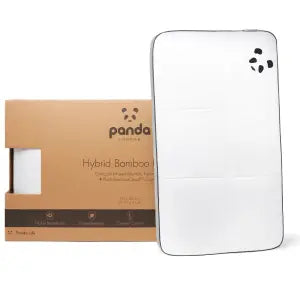
 Hybrid Bamboo Pillow
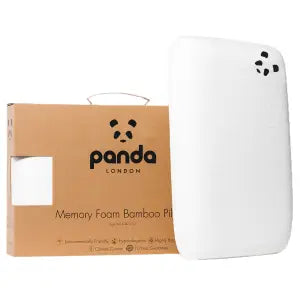 Memory Foam Bamboo Pillow
 Kids Memory Foam Bamboo Pillow
 Baby Memory Foam Bamboo Pillow
 Panda Cloud Duvet
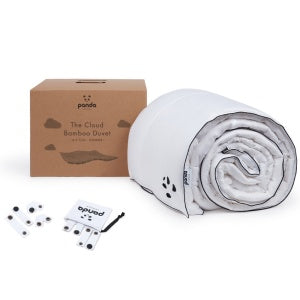 Bamboo Summer Duvet
 Kids Cloud Duvet
![[MattressTopper] Bamboo_Mattress_Topper_Package_Box-updated](http://pandalondon.com/cdn/shop/files/Bamboo_Mattress_Topper_Package_Box-updated.webp?crop=region&crop_height=1315&crop_left=92&crop_top=0&crop_width=1315&v=1782726992&width=1500)
![[MattressTopper] Woman laying on a Panda Bamboo Mattress Topper](http://pandalondon.com/cdn/shop/files/Bamboo_Mattress_Topper_Product_Image_01.webp?v=1782726484&width=1080)
![[MattressTopper] Guy laying on a Panda Bamboo Mattress Topper](http://pandalondon.com/cdn/shop/files/Bamboo_Mattress_Topper_Product_Image_02.webp?v=1782726484&width=1080)
![[MattressTopper] Woman setting up a Panda Bamboo Mattress Topper](http://pandalondon.com/cdn/shop/files/Bamboo_Mattress_Topper_Product_Image_03.webp?v=1782726484&width=1080)
![[MattressTopper] Panda London Memory Foam Bamboo Mattress Topper side](http://pandalondon.com/cdn/shop/files/Mattress_Topper_Isolated_-_resized.jpg?v=1773853354&width=800)
![[HybridMattressPro] Hybrid_Bamboo_Mattress_Pro_Product_Image_2026](http://pandalondon.com/cdn/shop/files/Hybrid_Bamboo_Mattress_Pro_Product_Image_2026.webp?v=1764944771&width=1000)
![[HybridMattressPro] A woman in white pajamas lies on her side on a mattress atop a gray upholstered bed frame in a softly lit bedroom. The mattress has a white top layer with a subtle geometric pattern and a black center band, with a small Panda Mattress logo patch visible on the side.](http://pandalondon.com/cdn/shop/files/Mattress_PRO-01.webp?v=1790672728&width=2049)
![[HybridMattressPro] Hybrid Bamboo Mattress Pro Cover Zip](http://pandalondon.com/cdn/shop/files/Hybrid_Bamboo_Mattress_Cover.jpg?v=1764944771&width=800)
![[HybridMattressPro] A woman in a cream-colored pajama set kneels beside a bed, holding down a mattress protector on a Panda Mattress to show its support and comfort.](http://pandalondon.com/cdn/shop/files/Mattress_PRO-03.webp?v=1790672728&width=2049)
![[HybridMattressPro] A woman in light pink pajamas sits on a Panda Bamboo mattress](http://pandalondon.com/cdn/shop/files/Mattress_PRO-04.webp?v=1790672728&width=2049)
![[CloudDuvet] Panda London The Cloud Bamboo Duvet Packaging](http://pandalondon.com/cdn/shop/products/Panda-London-The-Cloud-Bamboo-Duvet-Panda-Life-scaled_00a651ad-4ca3-4105-b520-12a94c1a4f71.jpg?v=1713363286&width=1920)
![[CloudDuvet] Panda London The Cloud Bamboo Duvet Rolled](http://pandalondon.com/cdn/shop/products/Duvet-Listing-Images03.jpg?v=1764079307&width=1000)
![[CloudDuvet] Guy making the bed with Panda Cloud Duvet 10.5 TOG](http://pandalondon.com/cdn/shop/files/Duvet_10.5_Tog-02.webp?v=1790607319&width=2049)
![[CloudDuvet] Guy reading a book on the bed covered with Panda Cloud Duvet 10.5 TOG](http://pandalondon.com/cdn/shop/files/Duvet_10.5_Tog-03.webp?v=1790607319&width=2049)
![[CloudDuvet] Guy making his bed with Panda Cloud Duvet 10.5 TOG](http://pandalondon.com/cdn/shop/files/Duvet_10.5_Tog-04.webp?v=1790607319&width=2049)
![[BBWhite] 100_Bamboo_Bedding_Set_Pure_White](http://pandalondon.com/cdn/shop/files/100_Bamboo_Bedding_Set_Pure_White_01.webp?v=1781082973&width=1080)
![[BBWhite] White 100% Bamboo Bedding Texture](http://pandalondon.com/cdn/shop/files/100_Bamboo_Bedding_-_Pure_White_-_Close_Up_02.webp?v=1773611287&width=1000)
![[BBWhite] 100_Bamboo_Bedding_Set_Pure_White couple laughing](http://pandalondon.com/cdn/shop/files/100_Bamboo_Bedding_Set_Pure_White_02.webp?v=1781082974&width=1080)
![[BBWhite] White 100% Bamboo Bedding Woman Duvet cover buttons](http://pandalondon.com/cdn/shop/files/hand_and_buttons_1.webp?v=1773611287&width=1000)
![[BBWhite] 100_Bamboo_Bedding_Set_Pure_White woman sleeping](http://pandalondon.com/cdn/shop/files/100_Bamboo_Bedding_Set_Pure_White_03.webp?v=1781082973&width=1080)
![[BBUrbanGrey] 100_Bamboo_Bedding_Set_Urban_Grey_guy laying on the bedding](http://pandalondon.com/cdn/shop/files/100_Bamboo_Bedding_Set_Urban_Grey_01.webp?v=1781083567&width=1080)
![[BBUrbanGrey] Cloud Duvet Urban Grey 100% Bamboo Bedding Set](http://pandalondon.com/cdn/shop/files/Cloud_Duvet_-_Grey_-_Close_up_2.webp?v=1773611287&width=1000)
![[BBUrbanGrey] 100_Bamboo_Bedding_Set_Urban_Grey_woman opening the bedding bag](http://pandalondon.com/cdn/shop/files/100_Bamboo_Bedding_Set_Urban_Grey_02.webp?v=1781083568&width=1080)
![[BBUrbanGrey] 100_Bamboo_Bedding_Set_Urban_Grey_woman making the bed](http://pandalondon.com/cdn/shop/files/100_Bamboo_Bedding_Set_Urban_Grey_04.webp?v=1781083567&width=1080)
![[BBUrbanGrey] 100_Bamboo_Bedding_Set_Urban_Grey_couple reading magazines](http://pandalondon.com/cdn/shop/files/100_Bamboo_Bedding_Set_Urban_Grey_03.webp?v=1781083567&width=1080)
![[BBNavyBlue] Deep Sea Navy Blue 100% Bamboo Bedding Set couple reading a magazine](http://pandalondon.com/cdn/shop/files/100_Bamboo_Bedding_Set_Deep_Sea_Navy_01.webp?v=1781083134&width=1080)
![[BBNavyBlue] Deep Sea Navy Blue 100% Bamboo Bedding Texture](http://pandalondon.com/cdn/shop/files/Cloud_Duvet_-_Navy_-_Close_up_2.webp?v=1773611287&width=1000)
![[BBNavyBlue] Deep Sea Navy Blue 100% Bamboo Bedding Set couple reading a magazine and smiling](http://pandalondon.com/cdn/shop/files/100_Bamboo_Bedding_Set_Deep_Sea_Navy_02.webp?v=1781083135&width=1080)
![[BBNavyBlue] Deep Sea Navy Blue 100% Bamboo Bedding Set woman resting](http://pandalondon.com/cdn/shop/files/100_Bamboo_Bedding_Set_Deep_Sea_Navy_04.png?v=1781083138&width=1080)
![[BBNavyBlue] Deep Sea Navy Blue 100% Bamboo Bedding Set guy laying and smiling](http://pandalondon.com/cdn/shop/files/100_Bamboo_Bedding_Set_Deep_Sea_Navy_03.webp?v=1781083134&width=1080)
![[BBPink] Vintage Pink Blue 100% Bamboo Bedding woman making the bed](http://pandalondon.com/cdn/shop/files/100_Bamboo_Bedding_Set_Pink_01.webp?v=1781083678&width=1080)
![[BBPink] Vintage Pink Texture 100% Bamboo Bedding](http://pandalondon.com/cdn/shop/files/Cloud_Duvet_-_Pink_-_Close_up_2.webp?v=1773611287&width=1000)
![[BBPink] Vintage Pink Blue 100% Bamboo Bedding woman hugging the pillow with vintage pink pillow case](http://pandalondon.com/cdn/shop/files/100_Bamboo_Bedding_Set_Pink_02.webp?v=1781083678&width=1080)
![[BBPink] Vintage Pink Blue 100% Bamboo Bedding woman hiding under duvet with pink duvet cover](http://pandalondon.com/cdn/shop/files/100_Bamboo_Bedding_Set_Pink_03.webp?v=1781083679&width=1080)
![[BBPink] Vintage Pink Blue 100% Bamboo Bedding woman laying and smiling on the panda bedding set](http://pandalondon.com/cdn/shop/files/100_Bamboo_Bedding_Set_Pink_04.webp?v=1781083679&width=1080)
![[BBGrey] 100_Bamboo_Bedding_Set_Quiet_Grey_ woman holding the bedding](http://pandalondon.com/cdn/shop/files/100_Bamboo_Bedding_Set_Quiet_Grey_01.webp?v=1781083287&width=1080)
![[BBGrey] Light Grey 100% Bamboo Bedding texture](http://pandalondon.com/cdn/shop/files/Texture17.webp?v=1773611287&width=1000)
![[BBGrey] 100_Bamboo_Bedding_Set_Quiet_Grey_0guy laying and smiling](http://pandalondon.com/cdn/shop/files/100_Bamboo_Bedding_Set_Quiet_Grey_02.webp?v=1781083287&width=1080)
![[BBGrey] 100_Bamboo_Bedding_Set_Quiet_Grey_0guy reading a magazine on the bed](http://pandalondon.com/cdn/shop/files/100_Bamboo_Bedding_Set_Quiet_Grey_03.webp?v=1781083287&width=1080)
![[BBGrey] 100_Bamboo_Bedding_Set_Quiet_Grey_0woman making the bed](http://pandalondon.com/cdn/shop/files/100_Bamboo_Bedding_Set_Quiet_Grey_04.webp?v=1781083287&width=1080)

Reviewed by Bethany Lawrence, Osteopath, Osteobeth
Quick Answer:
Your spine wants neutral alignment while you sleep. That usually means choosing a pillow loft that matches your sleeping position, using a supportive mattress, and avoiding positions that twist or overextend the neck. Side sleepers often need a higher-loft pillow, back sleepers a medium loft, and stomach sleepers the thinnest pillow possible to reduce strain.
With our busy modern lives, taking care of your back may not be at the forefront of your mind, although you should start showing your spine some attention. In the UK, low back pain is one of the most common musculoskeletal disorders, and it is estimated that up to 80% of people will experience LBP at some point in their lives.
At night, your spine is in recovery mode, as lying down reduces the load of your posture. When you’re asleep, the discs rehydrate and expand slightly. To keep your spine aligned, it is best to choose a sleeping position which keeps it neutral; otherwise, over time, you’ll develop aches and pains. The good news is that it’s easy to start. You will be well on your way to a supple, happy spine by starting with your bedding.
1. Why does your mattress matter more than you think for spinal health?
Back pain costs the NHS nearly £5 billion annually. If you’re experiencing lower back pain which eases off half an hour after getting up, then it’s likely your mattress is the cause. With the right mattress, its support can help alleviate your aches or even prevent you from developing back pain.
There are so many mattresses to choose from that it can be hard to know what to look for, especially when it comes to supporting your spine. The important thing is to choose a mattress that keeps you comfortable, supported, and perfectly aligned from head to toe.
Both spring and foam mattresses have benefits for the spine, and a hybrid mattress combines them for a sense of balance. A hybrid mattress has foam for cushioning and pressure relief, and coils for bounce, airflow, and support.
2. What does your spine actually do while you sleep?
While you’re asleep, your spine is also recovering, spending the night decompressing, rehydrating, and resting. Your spine recovers in a few ways:
- Less compression: When you lie down, gravity stops pressing straight down through your spine the way it does when you’re upright.
-
Discs rehydrate a bit: The discs between your vertebrae can absorb fluid again overnight, which is why people are often slightly taller in the morning.
-
Muscles relax: The muscles that support posture get a break, though they do not switch off completely.
-
Joints and ligaments rest: The small joints and soft tissues around the spine are under less strain than during the day.
-
You still move: You naturally shift positions during sleep, which helps avoid keeping one part of the spine under pressure for too long.
-
Practical tip: You should aim to sleep for seven to nine hours a night, so your spine can perform decompression fully. Even one night of shortened sleep can reduce disc rehydration.
A mattress which keeps you in a neutral position helps the spine to decompress, as when your spine is properly aligned, it allows for the vertebrae to relax, reducing pressure on nerves and spinal discs.
3. Which sleeping position is best for your spine?
Back and side sleeping positions are the best for your spine, with sleeping on your stomach being the worst for your spine. Below are the most common sleeping positions and how you should support your spine with a pillow:
-
Side sleeping: keep knees slightly bent and a pillow between your knees to align your spine, pelvis, and hips to take pressure off your spine.
-
Back sleeping: put a pillow under your knees. This can help relax your back muscles and maintain the natural curve of your lower back.
-
Stomach sleeping: You should start to transition to a side or back sleeping position, but while you’re making this change, add a pillow under the pelvis to reduce lower back compression.
Sleeping on your stomach can be hard on your back.
— Mayo Clinic Staff
4. How does your pillow affect spinal alignment?
As your spine starts at the cervical spine in the neck, your pillow can affect your backbone’s alignment. If the curve or position of the neck changes, the rest of the spine often adjusts to keep your head level. Cervical misalignment can affect your back by changing your spine’s balance and increasing your joint load. This can result in aches, pain or numbness in your back.
To find out if your pillow is properly supporting your spine, it’s easy to do a self-test check on its height. Follow these steps to carry out a test tonight:
- Lie in your normal sleep position
- Have someone look from the side, or take a photo
- If your head is tipped up, the pillow is probably too high
- If your head drops down toward the mattress, it is probably too low
- If your neck looks fairly straight and relaxed, the height is good
To find the best pillow for your sleep set-up, read our Pillow Buying Guide.
5. What warning signs mean your spine needs better support tonight?
Your spine will tell you if it’s not feeling right, so if you’re experiencing any of these warning signs, you’ll need better support.
Symptoms and how to solve with support
- Lower back pain is worst in the morning – this indicates a problem with your mattress
- Neck stiffness or headaches at the base of your skull – means it’s your pillow not providing the correct support
- Hip or shoulder pain with side sleeping – a pressure point issue
- Pins and needles upon waking – reveals misalignment of the spine
If the above symptoms are ongoing, you should consult with a physiotherapist.
A supportive pillow designed to cradle the neck could be helpful.
— Rachel Salas, M.D., Johns Hopkins Medicine
You can make simple changes to your sleep setup by switching to a supportive pillow initially. Try a new pillow for two weeks, and then if you’re still experiencing symptoms, it’s likely you’ll need to update your mattress.
How can you take care of your spine both in and out of sleep
Our orthopaedic expert, Bethany Lawrence, believes taking steps to care for your spine is directly linked to your health and wellbeing: "A stable and healthy spine can aid overall function and quality of life." Here are her four key points to optimise your spinal health:
- Regular spinal movement to improve strength, flexibility and balance
- Invest in a supportive pillow and mattress to optimise support at night time
- Have regular treatment, improving the overall health and function of your musculoskeletal system
- Increase postural awareness
Final Thoughts
Your spine works hard for you every single day, so it deserves a little more attention. This article breaks down five key things your spine wants you to know — from why alignment matters to how your mattress, pillow, and sleeping position can all affect how you feel. With a few simple checks and changes, you can understand how to support your spine for comfort, mobility, and overall well-being.
Both our pillows will keep your spine in optimal alignment, with our advanced orthopaedic-grade memory foam keeping your neck and neck supported. Choose from our highly breathable Memory Foam Bamboo Pillow or our charcoal-infused Hybrid Bamboo Pillow. Our orthopaedic-grade memory foam in our Hybrid Bamboo Mattresses is intuitive, adapting to your sleeping position to align your spine, while a layer of enclosed pocket springs relieves pressure on joints.
About the Author:
Katy Gilroy is the Partnerships and Community Lead at Panda London, specialising in sleep wellbeing, sustainable living and thoughtful home comforts. She studied journalism and creative writing, and now writes across topics such as bedding, mattresses, sleep hygiene, bamboo materials and lifestyle-led sustainability. Her goal is to turn expert-backed ideas and product knowledge into practical content that helps the Panda community sleep better and live a little more consciously.
![[WhiteDCFrench] Bamboo_and_French_Linen_Duvet_Cover_-_Coconut_White](http://pandalondon.com/cdn/shop/files/Bamboo_and_French_Linen_Duvet_Cover_-_Coconut_White.webp?v=1791542915&width=2048)
![[WhiteDCFrench] CoconutWhite_-_BambooFrenchLinen-_Duvet_Cover_002](http://pandalondon.com/cdn/shop/files/CoconutWhite_-_BambooFrenchLinen-_Duvet_Cover_002.webp?v=1779193974&width=1000)
![[WhiteDCFrench] BambooandFrenchLinen-Coconut_White-DuvetCoverPackaging](http://pandalondon.com/cdn/shop/files/BambooandFrenchLinen-Coconut_White-DuvetCoverPackaging.webp?v=1779193975&width=1110)
![[WhiteDCFrench] CoconutWhite_-_BambooFrenchLinen-_Duvet_Cover_003](http://pandalondon.com/cdn/shop/files/CoconutWhite_-_BambooFrenchLinen-_Duvet_Cover_003.webp?v=1779193974&width=1000)
![[WhiteDCFrench] CoconutWhite_-_BambooFrenchLinen-_Duvet_Cover_004](http://pandalondon.com/cdn/shop/files/CoconutWhite_-_BambooFrenchLinen-_Duvet_Cover_004.webp?v=1779193859&width=1080)
![[NavyDCFrench] Bamboo_and_French_Linen_Duvet_Cover_-_Midnight_Navy Woman reading a magazine](http://pandalondon.com/cdn/shop/files/Bamboo_and_French_Linen_Duvet_Cover_-_Midnight_Navy.webp?v=1791542915&width=2048)
![[NavyDCFrench] Duvet Cover Midnight Navy French Linen Pillow](http://pandalondon.com/cdn/shop/files/Bamboo_and_French_Linen_-_Navy_-_Duvet_Cover_Pillow.webp?v=1722000803&width=1000)
![[NavyDCFrench] Duvet Cover Midnight Navy French Linen](http://pandalondon.com/cdn/shop/files/BambooandFrenchLinen-MidnightNavy-DuvetCoverPackaging.webp?v=1722000040&width=1818)
![[NavyDCFrench] Duvet Cover Midnight Navy French Linen Corner of](http://pandalondon.com/cdn/shop/files/Bamboo_and_French_Linen_-_Navy_-_Duvet_Cover_Corner.webp?v=1722000805&width=1000)
![[NavyDCFrench] Duvet Cover Midnight Navy French Linen Texture](http://pandalondon.com/cdn/shop/files/Bamboo_and_French_Linen_-_Navy_-_Duvet_Cover_Texture.webp?v=1722000803&width=1500)
![[GreyDCFrench] Bamboo_and_French_Linen_Duvet_Cover_-_Silver_Lining_Grey](http://pandalondon.com/cdn/shop/files/Bamboo_and_French_Linen_Duvet_Cover_-_Silver_Lining_Grey.webp?v=1791542916&width=1500)
![[GreyDCFrench] Duvet Cover Grey French Linen Pillow](http://pandalondon.com/cdn/shop/files/Bamboo_and_French_Linen_-_Silver_Lining_Grey_-_Duvet_Cover_Pillows.webp?v=1722000595&width=1000)
![[GreyDCFrench] Duvet Cover Midnight Grey French Linen](http://pandalondon.com/cdn/shop/files/BambooandFrenchLinen-SilverLiningGrey-DuvetCoverPackaging.webp?v=1722000040&width=1818)
![[GreyDCFrench] Duvet Cover Grey French Linen Corner of](http://pandalondon.com/cdn/shop/files/Bamboo_and_French_Linen_-_Silver_Lining_Grey_-_Duvet_Cover_Corner.webp?v=1773158851&width=1000)
![[GreyDCFrench] Duvet Cover Grey French Linen Texture](http://pandalondon.com/cdn/shop/files/Bamboo_and_French_Linen_-_Silver_Lining_Grey_-_Duvet_Cover_Texture.webp?v=1773158851&width=1500)
![[NaturalDCFrench] Guy sleeping with Bamboo Eye Mask covered with French Linen Duvet Cover](http://pandalondon.com/cdn/shop/files/Bamboo_and_French_Linen_Duvet_Cover_-_Natural.webp?v=1791542915&width=2048)
![[NaturalDCFrench] Duvet Cover Midnight Natural French Linen Pillow](http://pandalondon.com/cdn/shop/files/Bamboo_and_French_Linen_-_Natural_-_Duvet_Cover_Pillow.webp?v=1722000917&width=1000)
![[NaturalDCFrench] Duvet Cover Midnight Natural French Linen](http://pandalondon.com/cdn/shop/files/BambooandFrenchLinen-Natural-DuvetCoverPackaging.webp?v=1722000040&width=1818)
![[NaturalDCFrench] Duvet Cover Midnight Natural French Linen Corner of texture](http://pandalondon.com/cdn/shop/files/Bamboo_and_French_Linen_-_Natural_-_Duvet_Cover_Corner_if_texture.webp?v=1722000917&width=1000)
![[NaturalDCFrench] Duvet Cover Midnight Natural French Linen Texture](http://pandalondon.com/cdn/shop/files/Bamboo_and_French_Linen_-_Natural_-_Duvet_Cover_Texture.webp?v=1722000917&width=1500)
![[PinkDCFrench] Bamboo_and_French_Linen_Duvet_Cover_-_Himalayan_Pink](http://pandalondon.com/cdn/shop/files/Bamboo_and_French_Linen_Duvet_Cover_-_Himalayan_Pink.webp?v=1791542915&width=2048)
![[PinkDCFrench] HimalayanPink_-_BambooFrenchLinen-_Bedding_Set_01_Duvet_Cover](http://pandalondon.com/cdn/shop/files/HimalayanPink_-_BambooFrenchLinen-_Bedding_Set_01_Duvet_Cover.webp?v=1779189614&width=1000)
![[PinkDCFrench] BambooandFrenchLinen-Himalayan_Pink-DuvetCoverPackaging-1](http://pandalondon.com/cdn/shop/files/BambooandFrenchLinen-Himalayan_Pink-DuvetCoverPackaging-1.webp?v=1779189614&width=1110)
![[PinkDCFrench] HimalayanPink_-_BambooFrenchLinen-_Bedding_Set_Texture_Duvet_Cover](http://pandalondon.com/cdn/shop/files/HimalayanPink_-_BambooFrenchLinen-_Bedding_Set_Texture_Duvet_Cover.webp?v=1779189614&width=1000)
![[PinkDCFrench] Bamboo_French_Linen_-_Himalayan_Pink_-_Texture_Close_Up_02_Duvet_Cover](http://pandalondon.com/cdn/shop/files/Bamboo_French_Linen_-_Himalayan_Pink_-_Texture_Close_Up_02_Duvet_Cover.webp?v=1779189615&width=1100)
![[SlateGreyDCFrench] Bamboo_and_French_Linen_Duvet_Cover_-_Slate_Grey](http://pandalondon.com/cdn/shop/files/Bamboo_and_French_Linen_Duvet_Cover_-_Slate_Grey.webp?v=1791542915&width=2048)
![[SlateGreyDCFrench] SlateGrey_-_BambooFrenchLinen-_Bedding_Set_01_Duvet_Cover](http://pandalondon.com/cdn/shop/files/SlateGrey_-_BambooFrenchLinen-_Bedding_Set_01_Duvet_Cover.webp?v=1779189995&width=1000)
![[SlateGreyDCFrench] BambooandFrenchLinen-Slate_Grey-DuvetCoverPackaging-1](http://pandalondon.com/cdn/shop/files/BambooandFrenchLinen-Slate_Grey-DuvetCoverPackaging-1.webp?v=1779189994&width=1110)
![[SlateGreyDCFrench] SlateGrey_-_BambooFrenchLinen-_Bedding_Set_Texture_Duvet_Cover](http://pandalondon.com/cdn/shop/files/SlateGrey_-_BambooFrenchLinen-_Bedding_Set_Texture_Duvet_Cover.webp?v=1779189995&width=1000)
![[SlateGreyDCFrench] Bamboo_French_Linen_-_Slate_Grey_-_Texture_Close_Up_Texture_Duvet_Cover](http://pandalondon.com/cdn/shop/files/Bamboo_French_Linen_-_Slate_Grey_-_Texture_Close_Up_Texture_Duvet_Cover.webp?v=1779189996&width=1100)
![[BSUrbanGrey] Bath Sheet Bath Range Panda London Urban Grey](http://pandalondon.com/cdn/shop/files/01BathSheetBathRangePandaLondonUrbanGrey.webp?v=1750022805&width=1080)
![[BSUrbanGrey] Bath Sheet Bath Range Panda London Urban Grey Full Open Sheet](http://pandalondon.com/cdn/shop/files/02BathSheetBathRangePandaLondonFullSheetUrbanGrey.webp?v=1750022805&width=1080)
![[BSUrbanGrey] Bath Sheet Bath Range Panda London Urban Grey Full Stacked in Group](http://pandalondon.com/cdn/shop/files/03BathSheetBathRangePandaLondonStackedTowelsUrbanGreySideView.webp?v=1750022805&width=768)
![[BSUrbanGrey] Bath Sheet Bath Range Panda London Urban Grey Side View Grouped Towels on The Chair Lifestyle Image](http://pandalondon.com/cdn/shop/files/06BathSheetBathRangePandaLondonStackedTowelsUrbanGreyGrouped.webp?v=1772547999&width=1000)
![[BSUrbanGrey] Bath Sheet Bath Range Panda London Urban Grey Side View Grouped Towels](http://pandalondon.com/cdn/shop/files/04BathSheetBathRangePandaLondonStackedTowelsUrbanGrey.webp?v=1772547999&width=1000)
![[BSUrbanGrey] Bath Sheet Bath Range Panda London Urban Grey Side View Grouped Towels and Rolled](http://pandalondon.com/cdn/shop/files/05BathSheetBathRangePandaLondonStackedTowelsUrbanGreyRolled.webp?v=1772547999&width=1039)
![[BTUrbanGrey] Bath Towel Bath Range Panda London Urban Grey](http://pandalondon.com/cdn/shop/files/01_Bath_Towel_Bath_Range_Panda_London_Urban_Grey.webp?v=1772547999&width=1080)
![[BTUrbanGrey] Bath Towel Bath Range Panda London Urban Grey Full Opened](http://pandalondon.com/cdn/shop/files/02_Bath_Towel_Bath_Range_Panda_London_Urban_Grey_Full_Towel.webp?v=1772547999&width=1080)
![[BTUrbanGrey] Bath Towel Bath Range Panda London Urban Grey Stacked in Group](http://pandalondon.com/cdn/shop/files/03_Bath_Towel_Bath_Range_Panda_London_Stacked_Towels_Urban_Grey_Side_View.webp?v=1772547999&width=768)
![[BTUrbanGrey] Bath Towel Bath Range Panda London Urban Grey Stacked on the Chair Lifestyle image](http://pandalondon.com/cdn/shop/files/06_Bath_Towel_Bath_Range_Panda_London_Stacked_Towels_Urban_Grey_Grouped.webp?v=1772547999&width=1000)
![[BTUrbanGrey] Bath Towel Bath Range Panda London Urban Grey Stacked Side View Group](http://pandalondon.com/cdn/shop/files/04_Bath_Towel_Bath_Range_Panda_London_Stacked_Towels_Urban_Grey.webp?v=1772547999&width=1000)
![[BTUrbanGrey] Bath Towel Bath Range Panda London Urban Grey Rolled Stacked](http://pandalondon.com/cdn/shop/files/05_Bath_Towel_Bath_Range_Panda_London_Stacked_Towels_Urban_Grey_Rolled.webp?v=1772547999&width=1039)
![[HTUrbanGrey] Hand Towel Bath Range Panda London Urban Grey 1](http://pandalondon.com/cdn/shop/files/01_Hand_Towel_Bath_Range_Panda_London_Urban_Grey.webp?v=1772547999&width=1080)
![[HTUrbanGrey] Hand Towel Bath Range Panda London Urban Grey Full Opened 1](http://pandalondon.com/cdn/shop/files/02_Hand_Towel_Bath_Range_Panda_London_Urban_Grey_Full_Opened.webp?v=1772547999&width=1080)
![[HTUrbanGrey] Hand Towel Bath Range Panda London Urban Grey Stacked in Group all four 1](http://pandalondon.com/cdn/shop/files/03_Hand_Towel_Bath_Range_Panda_London_Stacked_Towels_Urban_Grey_Side_View.webp?v=1772547999&width=768)
![[HTUrbanGrey] Hand Towel Bath Range Panda London Urban Grey On the Chair Lifestyle image 1](http://pandalondon.com/cdn/shop/files/06_Hand_Towel_Bath_Range_Panda_London_Stacked_Towels_Urban_Grey_Grouped.webp?v=1772547999&width=1000)
![[HTUrbanGrey] Hand Towel Bath Range Panda London Urban Grey Stacked Grouped Side View 1](http://pandalondon.com/cdn/shop/files/04_Hand_Towel_Bath_Range_Panda_London_Stacked_Towels_Urban_Grey.webp?v=1772547999&width=1000)
![[HTUrbanGrey] Hand Towel Bath Range Panda London Urban Grey Rolled in Group 1](http://pandalondon.com/cdn/shop/files/05_Hand_Towel_Bath_Range_Panda_London_Stacked_Towels_Urban_Grey_Rolled.webp?v=1772547999&width=1039)
![[BSInkColour] Bath Sheet Bath Range Panda London Ink Colour](http://pandalondon.com/cdn/shop/files/01_Bath_Sheet_Bath_Range_Panda_London_Ink_Colour.webp?v=1772547999&width=1080)
![[BSInkColour] Bath Sheet Bath Range Panda London Ink Colour Full Sheet Opened](http://pandalondon.com/cdn/shop/files/02_Bath_Sheet_Bath_Range_Panda_London_Ink_Colour_Full_Sheet_Opened.webp?v=1772547999&width=1080)
![[BSInkColour] Bath Sheet Bath Range Panda London Ink Colour Stacked in Group](http://pandalondon.com/cdn/shop/files/03_Bath_Sheet_Bath_Range_Panda_London_Ink_Colour_Full_Towels_Grouped.webp?v=1772547999&width=1225)
![[BSInkColour] Bath Sheet Bath Range Panda London Ink Colour Stacked on the Chair Lifestyle Image](http://pandalondon.com/cdn/shop/files/06_Bath_Sheet_Bath_Range_Panda_London_Stacked_Towels_Ink_Colour_Grouped_on_the_Chair.webp?v=1772547999&width=768)
![[BSInkColour] Bath Sheet Bath Range Panda London Ink Colour Side View](http://pandalondon.com/cdn/shop/files/04_Bath_Sheet_Bath_Range_Panda_London_Ink_Colour_Side_View_All_Towels.webp?v=1772547999&width=1000)
![[BSInkColour] Bath Sheet Bath Range Panda London Ink Colour Rolled in Group](http://pandalondon.com/cdn/shop/files/05_Bath_Sheet_Bath_Range_Panda_London_Ink_Colour_FoldedStacked.webp?v=1772547999&width=768)
![[BTInkColour] Bath Towel Bath Range Panda London Ink Colour](http://pandalondon.com/cdn/shop/files/01_Bath_Towel_Bath_Range_Panda_London_Ink_Colour.webp?v=1772547999&width=1080)
![[BTInkColour] Bath Towel Bath Range Panda London Ink Colour Full Opene Bath Towel](http://pandalondon.com/cdn/shop/files/02_Bath_Towel_Bath_Range_Panda_London_Ink_Colour_Full_Towel.webp?v=1772547999&width=1080)
![[BTInkColour] Bath Towel Bath Range Panda London Ink Colour STacked in a Group](http://pandalondon.com/cdn/shop/files/03_Bath_Towel_Bath_Range_Panda_London_Ink_Colour_Full_Towels_Grouped.webp?v=1772547999&width=1225)
![[BTInkColour] Bath Towel Bath Range Panda London Ink Colour Stacked on the Chair](http://pandalondon.com/cdn/shop/files/06_Bath_Towel_Bath_Range_Panda_London_Stacked_Towels_Ink_Colour_Grouped_on_the_Chair.webp?v=1772547999&width=768)
![[BTInkColour] Bath Towel Bath Range Panda London Ink Colour Side View](http://pandalondon.com/cdn/shop/files/04_Bath_Towel_Bath_Range_Panda_London_Ink_Colour_Side_View_All_Towels.webp?v=1772547999&width=1000)
![[BTInkColour] Bath Towel Bath Range Panda London Ink Colour Rolled Towels](http://pandalondon.com/cdn/shop/files/05_Bath_Towel_Bath_Range_Panda_London_Ink_Colour_FoldedStacked.webp?v=1772547999&width=768)
![[HTInkColour] Hand Towel Bath Range Panda London Ink Colour](http://pandalondon.com/cdn/shop/files/01_Hand_Towel_Bath_Range_Panda_London_Ink_Colour.webp?v=1772547999&width=1080)
![[HTInkColour] Hand Towel Bath Range Panda London Ink Colour Full Opened](http://pandalondon.com/cdn/shop/files/02_Hand_Towel_Bath_Range_Panda_London_Ink_Colour_Full_Towel.webp?v=1772547999&width=1080)
![[HTInkColour] Hand Towel Bath Range Panda London Ink Colour Stacked grouped Face View](http://pandalondon.com/cdn/shop/files/03_Hand_Towel_Bath_Range_Panda_London_Ink_Colour_Full_Towels_Grouped.webp?v=1772547999&width=1225)
![[HTInkColour] Hand Towel Bath Range Panda London Ink Colour Lifestyle Image](http://pandalondon.com/cdn/shop/files/06_Hand_Towel_Bath_Range_Panda_London_Stacked_Towels_Ink_Colour_Grouped_on_the_Chair.webp?v=1772547999&width=768)
![[HTInkColour] Hand Towel Bath Range Panda London Ink Colour Stacked side View](http://pandalondon.com/cdn/shop/files/04_Hand_Towel_Bath_Range_Panda_London_Ink_Colour_Side_View_All_Towels.webp?v=1772547999&width=1000)
![[HTInkColour] Hand Towel Bath Range Panda London Ink Colour Rolled Towels](http://pandalondon.com/cdn/shop/files/05_Hand_Towel_Bath_Range_Panda_London_Ink_Colour_FoldedStacked.webp?v=1772547999&width=768)
![[BSWhite] Bath Sheet Bath Range Panda London Urban Grey](http://pandalondon.com/cdn/shop/files/01_Bath_Sheet_Bath_Range_Panda_London_Pure_White.webp?v=1750022805&width=1080)
![[BSWhite] Bath Sheet Bath Range Panda London Urban Grey Full Opened](http://pandalondon.com/cdn/shop/files/02_Bath_Sheet_Bath_Range_Panda_London_Full_Sheet_Pure_White.webp?v=1750022805&width=1080)
![[BSWhite] Bath Sheet Bath Range Panda London Urban Grey Full Stacked Grouped](http://pandalondon.com/cdn/shop/files/03_Bath_Sheet_Bath_Range_Panda_London_Stacked_Towels_Pure_White_Side_View.webp?v=1750022805&width=1225)
![[BSWhite] Bath Sheet Bath Range Panda London Urban Grey Side View](http://pandalondon.com/cdn/shop/files/04_Bath_Sheet_Bath_Range_Panda_London_Stacked_Towels_Pure_White.webp?v=1750022805&width=1225)
![[BSWhite] Bath Sheet Bath Range Panda London Urban Grey Rolled Stacked](http://pandalondon.com/cdn/shop/files/05_Bath_Sheet_Bath_Range_Panda_London_Stacked_Towels_Pure_White.webp?v=1750022805&width=1039)
![[BSWhite] Bath Sheet Bath Range Panda London Urban Grey Lifestyle Image](http://pandalondon.com/cdn/shop/files/06_Bath_Sheet_Bath_Range_Panda_London_Stacked_Towels_Pure_White_Grouped.webp?v=1750022805&width=1225)
![[BTWhite] Bath Towel Bath Range Panda London Pure White](http://pandalondon.com/cdn/shop/files/01_Bath_Towel_Bath_Range_Panda_London_Pure_White.webp?v=1750022805&width=1080)
![[BTWhite] Bath Towel Bath Range Panda London Pure White Full Open Sheet](http://pandalondon.com/cdn/shop/files/02_Bath_Towel_Bath_Range_Panda_London_Pure_White_Full_Open.webp?v=1750022805&width=1080)
![[BTWhite] Bath Towel Bath Range Panda London Pure White Stacked Gourped](http://pandalondon.com/cdn/shop/files/03_Bath_Towel_Bath_Range_Panda_London_Stacked_Towels_Pure_White_Side_View.webp?v=1750022805&width=1225)
![[BTWhite] Bath Towel Bath Range Panda London Pure White Side View](http://pandalondon.com/cdn/shop/files/04_Bath_Towel_Bath_Range_Panda_London_Stacked_Towels_Pure_White.webp?v=1750022805&width=1225)
![[BTWhite] Bath Towel Bath Range Panda London Pure White Rolled Stacked](http://pandalondon.com/cdn/shop/files/05_Bath_Towel_Bath_Range_Panda_London_Stacked_Towels_Pure_White.webp?v=1750022805&width=1039)
![[BTWhite] Bath Towel Bath Range Panda London Pure White Lifestyle Stacked on the Chair](http://pandalondon.com/cdn/shop/files/06_Bath_Towel_Bath_Range_Panda_London_Stacked_Towels_Pure_White_Grouped.webp?v=1750022805&width=1225)
![[HTWhite] Hand Towel Bath Range Panda London Pure White](http://pandalondon.com/cdn/shop/files/01_Hand_Towel_Bath_Range_Panda_London_Pure_White.webp?v=1750022805&width=1080)
![[HTWhite] Hand Towel Bath Range Panda London Pure White Full Sheet](http://pandalondon.com/cdn/shop/files/02_Hand_Towel_Bath_Range_Panda_London_Pure_White_Open_Towel.webp?v=1750022805&width=1080)
![[HTWhite] Hand Towel Bath Range Panda London Pure White Grouped in the stack](http://pandalondon.com/cdn/shop/files/03_Hand_Towel_Bath_Range_Panda_London_Stacked_Towels_Pure_White_Side_View.webp?v=1750022805&width=1225)
![[HTWhite] Hand Towel Bath Range Panda London Pure White Side View](http://pandalondon.com/cdn/shop/files/04_Hand_Towel_Bath_Range_Panda_London_Stacked_Towels_Pure_White.webp?v=1750022805&width=1225)
![[HTWhite] Hand Towel Bath Range Panda London Pure White Rolled Stacked](http://pandalondon.com/cdn/shop/files/05_Hand_Towel_Bath_Range_Panda_London_Stacked_Towels_Pure_White.webp?v=1750022805&width=1039)
![[HTWhite] Hand Towel Bath Range Panda London Pure White Stacked on the Chair lifestyle](http://pandalondon.com/cdn/shop/files/06_Hand_Towel_Bath_Range_Panda_London_Stacked_Towels_Pure_White_Grouped.webp?v=1750022805&width=1225)
![[all] Bamboo Mattress Protector Package - PandaLondon](http://pandalondon.com/cdn/shop/files/Bamboo_Mattress_Protector_-_Packaging_Image_-_White_Background.webp?v=1721139172&width=1900)
![[all] Bamboo Mattress Protector for Hybrid Bamboo Mattress](http://pandalondon.com/cdn/shop/files/Bamboo_Mattress_Protector_New.webp?v=1721138562&width=1000)
![[all] Book on a Bamboo Mattress Protector](http://pandalondon.com/cdn/shop/products/Mattress-Protector-Listing-Images02.jpg?v=1721139189&width=1500)
![[all] Bamboo Mattress Protector Corner](http://pandalondon.com/cdn/shop/products/Mattress-Protector-Listing-Images03-e1623787734812.jpg?v=1721139189&width=1300)
![[all] Bamboo Mattress Protector Corner in line Panda London](http://pandalondon.com/cdn/shop/products/Mattress-Protector-Listing-Images04.jpg?v=1721139183&width=1500)
![[all] Panda Bamboo Mattress Protector Panda London](http://pandalondon.com/cdn/shop/files/Panda-Bamboo-Mattress-Protector-Guarantee-768x768_jpg_450393f5-91a9-499f-b15a-12d636a9a8b7.webp?v=1721139183&width=768)

