
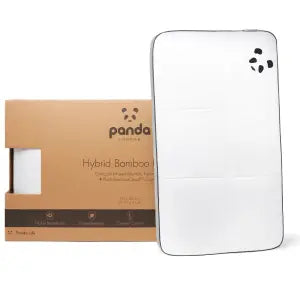
 Hybrid Bamboo Pillow
 Memory Foam Bamboo Pillow
 Kids Memory Foam Bamboo Pillow
 Baby Memory Foam Bamboo Pillow
 Panda Cloud Duvet
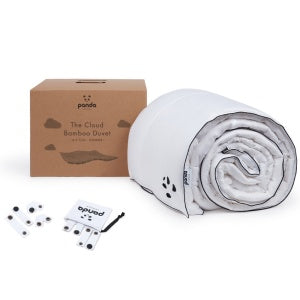 Bamboo Summer Duvet
 Kids Cloud Duvet
![[MattressTopper] Bamboo_Mattress_Topper_Package_Box-updated](http://pandalondon.com/cdn/shop/files/Bamboo_Mattress_Topper_Package_Box-updated.webp?crop=region&crop_height=1315&crop_left=92&crop_top=0&crop_width=1315&v=1782726992&width=1500)
![[MattressTopper] Woman laying on a Panda Bamboo Mattress Topper](http://pandalondon.com/cdn/shop/files/Bamboo_Mattress_Topper_Product_Image_01.webp?v=1782726484&width=1080)
![[MattressTopper] Guy laying on a Panda Bamboo Mattress Topper](http://pandalondon.com/cdn/shop/files/Bamboo_Mattress_Topper_Product_Image_02.webp?v=1782726484&width=1080)
![[MattressTopper] Woman setting up a Panda Bamboo Mattress Topper](http://pandalondon.com/cdn/shop/files/Bamboo_Mattress_Topper_Product_Image_03.webp?v=1782726484&width=1080)
![[MattressTopper] Panda London Memory Foam Bamboo Mattress Topper side](http://pandalondon.com/cdn/shop/files/Mattress_Topper_Isolated_-_resized.jpg?v=1773853354&width=800)
![[HybridMattressPro] Hybrid_Bamboo_Mattress_Pro_Product_Image_2026](http://pandalondon.com/cdn/shop/files/Hybrid_Bamboo_Mattress_Pro_Product_Image_2026.webp?v=1764944771&width=1000)
![[HybridMattressPro] A woman in white pajamas lies on her side on a mattress atop a gray upholstered bed frame in a softly lit bedroom. The mattress has a white top layer with a subtle geometric pattern and a black center band, with a small Panda Mattress logo patch visible on the side.](http://pandalondon.com/cdn/shop/files/Mattress_PRO-01.webp?v=1790672728&width=2049)
![[HybridMattressPro] Hybrid Bamboo Mattress Pro Cover Zip](http://pandalondon.com/cdn/shop/files/Hybrid_Bamboo_Mattress_Cover.jpg?v=1764944771&width=800)
![[HybridMattressPro] A woman in a cream-colored pajama set kneels beside a bed, holding down a mattress protector on a Panda Mattress to show its support and comfort.](http://pandalondon.com/cdn/shop/files/Mattress_PRO-03.webp?v=1790672728&width=2049)
![[HybridMattressPro] A woman in light pink pajamas sits on a Panda Bamboo mattress](http://pandalondon.com/cdn/shop/files/Mattress_PRO-04.webp?v=1790672728&width=2049)
![[CloudDuvet] Panda London The Cloud Bamboo Duvet Packaging](http://pandalondon.com/cdn/shop/products/Panda-London-The-Cloud-Bamboo-Duvet-Panda-Life-scaled_00a651ad-4ca3-4105-b520-12a94c1a4f71.jpg?v=1713363286&width=1920)
![[CloudDuvet] Panda London The Cloud Bamboo Duvet Rolled](http://pandalondon.com/cdn/shop/products/Duvet-Listing-Images03.jpg?v=1764079307&width=1000)
![[CloudDuvet] Guy making the bed with Panda Cloud Duvet 10.5 TOG](http://pandalondon.com/cdn/shop/files/Duvet_10.5_Tog-02.webp?v=1790607319&width=2049)
![[CloudDuvet] Guy reading a book on the bed covered with Panda Cloud Duvet 10.5 TOG](http://pandalondon.com/cdn/shop/files/Duvet_10.5_Tog-03.webp?v=1790607319&width=2049)
![[CloudDuvet] Guy making his bed with Panda Cloud Duvet 10.5 TOG](http://pandalondon.com/cdn/shop/files/Duvet_10.5_Tog-04.webp?v=1790607319&width=2049)
![[BBWhite] 100_Bamboo_Bedding_Set_Pure_White](http://pandalondon.com/cdn/shop/files/100_Bamboo_Bedding_Set_Pure_White_01.webp?v=1781082973&width=1080)
![[BBWhite] White 100% Bamboo Bedding Texture](http://pandalondon.com/cdn/shop/files/100_Bamboo_Bedding_-_Pure_White_-_Close_Up_02.webp?v=1773611287&width=1000)
![[BBWhite] 100_Bamboo_Bedding_Set_Pure_White couple laughing](http://pandalondon.com/cdn/shop/files/100_Bamboo_Bedding_Set_Pure_White_02.webp?v=1781082974&width=1080)
![[BBWhite] White 100% Bamboo Bedding Woman Duvet cover buttons](http://pandalondon.com/cdn/shop/files/hand_and_buttons_1.webp?v=1773611287&width=1000)
![[BBWhite] 100_Bamboo_Bedding_Set_Pure_White woman sleeping](http://pandalondon.com/cdn/shop/files/100_Bamboo_Bedding_Set_Pure_White_03.webp?v=1781082973&width=1080)
![[BBUrbanGrey] 100_Bamboo_Bedding_Set_Urban_Grey_guy laying on the bedding](http://pandalondon.com/cdn/shop/files/100_Bamboo_Bedding_Set_Urban_Grey_01.webp?v=1781083567&width=1080)
![[BBUrbanGrey] Cloud Duvet Urban Grey 100% Bamboo Bedding Set](http://pandalondon.com/cdn/shop/files/Cloud_Duvet_-_Grey_-_Close_up_2.webp?v=1773611287&width=1000)
![[BBUrbanGrey] 100_Bamboo_Bedding_Set_Urban_Grey_woman opening the bedding bag](http://pandalondon.com/cdn/shop/files/100_Bamboo_Bedding_Set_Urban_Grey_02.webp?v=1781083568&width=1080)
![[BBUrbanGrey] 100_Bamboo_Bedding_Set_Urban_Grey_woman making the bed](http://pandalondon.com/cdn/shop/files/100_Bamboo_Bedding_Set_Urban_Grey_04.webp?v=1781083567&width=1080)
![[BBUrbanGrey] 100_Bamboo_Bedding_Set_Urban_Grey_couple reading magazines](http://pandalondon.com/cdn/shop/files/100_Bamboo_Bedding_Set_Urban_Grey_03.webp?v=1781083567&width=1080)
![[BBNavyBlue] Deep Sea Navy Blue 100% Bamboo Bedding Set couple reading a magazine](http://pandalondon.com/cdn/shop/files/100_Bamboo_Bedding_Set_Deep_Sea_Navy_01.webp?v=1781083134&width=1080)
![[BBNavyBlue] Deep Sea Navy Blue 100% Bamboo Bedding Texture](http://pandalondon.com/cdn/shop/files/Cloud_Duvet_-_Navy_-_Close_up_2.webp?v=1773611287&width=1000)
![[BBNavyBlue] Deep Sea Navy Blue 100% Bamboo Bedding Set couple reading a magazine and smiling](http://pandalondon.com/cdn/shop/files/100_Bamboo_Bedding_Set_Deep_Sea_Navy_02.webp?v=1781083135&width=1080)
![[BBNavyBlue] Deep Sea Navy Blue 100% Bamboo Bedding Set woman resting](http://pandalondon.com/cdn/shop/files/100_Bamboo_Bedding_Set_Deep_Sea_Navy_04.png?v=1781083138&width=1080)
![[BBNavyBlue] Deep Sea Navy Blue 100% Bamboo Bedding Set guy laying and smiling](http://pandalondon.com/cdn/shop/files/100_Bamboo_Bedding_Set_Deep_Sea_Navy_03.webp?v=1781083134&width=1080)
![[BBPink] Vintage Pink Blue 100% Bamboo Bedding woman making the bed](http://pandalondon.com/cdn/shop/files/100_Bamboo_Bedding_Set_Pink_01.webp?v=1781083678&width=1080)
![[BBPink] Vintage Pink Texture 100% Bamboo Bedding](http://pandalondon.com/cdn/shop/files/Cloud_Duvet_-_Pink_-_Close_up_2.webp?v=1773611287&width=1000)
![[BBPink] Vintage Pink Blue 100% Bamboo Bedding woman hugging the pillow with vintage pink pillow case](http://pandalondon.com/cdn/shop/files/100_Bamboo_Bedding_Set_Pink_02.webp?v=1781083678&width=1080)
![[BBPink] Vintage Pink Blue 100% Bamboo Bedding woman hiding under duvet with pink duvet cover](http://pandalondon.com/cdn/shop/files/100_Bamboo_Bedding_Set_Pink_03.webp?v=1781083679&width=1080)
![[BBPink] Vintage Pink Blue 100% Bamboo Bedding woman laying and smiling on the panda bedding set](http://pandalondon.com/cdn/shop/files/100_Bamboo_Bedding_Set_Pink_04.webp?v=1781083679&width=1080)
![[BBGrey] 100_Bamboo_Bedding_Set_Quiet_Grey_ woman holding the bedding](http://pandalondon.com/cdn/shop/files/100_Bamboo_Bedding_Set_Quiet_Grey_01.webp?v=1781083287&width=1080)
![[BBGrey] Light Grey 100% Bamboo Bedding texture](http://pandalondon.com/cdn/shop/files/Texture17.webp?v=1773611287&width=1000)
![[BBGrey] 100_Bamboo_Bedding_Set_Quiet_Grey_0guy laying and smiling](http://pandalondon.com/cdn/shop/files/100_Bamboo_Bedding_Set_Quiet_Grey_02.webp?v=1781083287&width=1080)
![[BBGrey] 100_Bamboo_Bedding_Set_Quiet_Grey_0guy reading a magazine on the bed](http://pandalondon.com/cdn/shop/files/100_Bamboo_Bedding_Set_Quiet_Grey_03.webp?v=1781083287&width=1080)
![[BBGrey] 100_Bamboo_Bedding_Set_Quiet_Grey_0woman making the bed](http://pandalondon.com/cdn/shop/files/100_Bamboo_Bedding_Set_Quiet_Grey_04.webp?v=1781083287&width=1080)

Quick Answer:
Shorter days mean less light reaching your body clock, so your brain starts producing melatonin — the sleep hormone — earlier in the evening, while levels of mood-boosting serotonin drop. Feeling sleepier is a normal seasonal shift rather than a sleep problem, though darker mornings and cosier evenings can make it more noticeable.
How do you know when it’s autumn? Is it your first pumpkin latte, or when your commute suddenly descends into darkness? People disagree on when autumn officially starts: meteorologically, it begins on the 1st of September; however, it can also be defined by the equinox on the 22nd or 23rd of September. The equinox is one of the two times in a year when the sun crosses the plane of the Earth's equator, and day and night are of equal length.
Apart from bringing in a trail of leaves every time you’re back from a walk, you might start to notice that you feel much more tired in autumn. So why do we feel sleepier during these months of the year? Less light exposure, the temperature and your hormones all contribute to feeling more tired.
How does less daylight affect circadian rhythm?
Reduced daylight disrupts your internal clock — your circadian rhythm — and your body responds with a cascade of hormonal changes that shape your sleep-wake cycle.
Your master clock: the SCN
Your master clock lives in the suprachiasmatic nucleus (SCN). It syncs to the 24-hour day using daylight as its time cue, detected by cells in your eyes. Short, dark autumn days deliver less light intensity and fewer light minutes, so the SCN receives a fainter signal — and its rhythm can delay, drift, or simply become less robust.
Melatonin
Melatonin is a hormone produced by the pineal gland that regulates your sleep-wake cycle. Put simply, darkness tells your body to produce more of it, which is your cue that bedtime is approaching. In autumn the evenings arrive earlier, so that signal arrives earlier too — and you start feeling sleepy while it's still, technically, teatime.
Cortisol
A steroid hormone produced by the adrenal gland, cortisol plays a role in the stress response. Helping with your sleep-wake cycle, cortisol peaks just after waking and then tapers at night. Less daylight plus bright evenings disrupts this curve—less morning get-up-and-go, more midday slump, and a ‘wired but tired’ evening.
Serotonin
A neurotransmitter produced in your gut and brain, serotonin helps regulate mood, digestion and sleep. It's reduced when there's less sunlight — and since serotonin is also used to make melatonin, the two are closely linked. Less light, less serotonin, more melatonin: a recipe for feeling flat and sleepy.
Is autumn actually bad for your sleep?
Here's the part most articles miss. Feeling sleepier isn't the same as sleeping worse — and in several ways, autumn is kinder to your sleep than summer was.
Cooler nights make it easier for your body to shed heat, which is exactly what it needs to do to fall asleep. Longer hours of darkness mean more opportunity for rest. And you're no longer being woken at 5 am by light streaming around the curtains.
What causes the friction isn't the season itself — it's the mismatch. Your body wants to wind down at seven in the evening, while your calendar has other ideas. Your alarm goes off in pitch darkness, when every instinct says stay put. Understanding that the tiredness is a timing issue, rather than a sign something's wrong, takes a good deal of the worry out of it.
What is the Hibernation instinct?
The ‘hibernation instinct’ is an animal's built-in drive to hide away when conditions are harsh (usually winter). Still, as human beings, we can also feel inclined to a low-energy state as it starts to get colder. Guided by our internal clocks and hormones that respond to cues like shortening day length, falling temperatures, and less daylight, we feel a draw to stay cosy and warm indoors.
And it's a widely shared feeling. Most of us would quite happily hibernate through the colder months given the chance — and there's something to it, because feeling cosy genuinely helps you wind down. Warmth, soft textures and low light all signal to your body that the day is over and it's safe to rest.
If you're going to lean into it — and you should — do it properly. Wrap yourself up in the Panda Cloud Bamboo Duvet. Fluffy, snug and made from super-soft bamboo, its 10.5 tog rating and 300 thread count make it genuinely difficult to emerge from on a dark morning. Browse the full range of bamboo duvets to find your tog.
Does being warm make you sleepy?
Warmth and good sleep aren't quite the same thing, and it's worth separating the two.
Being warm absolutely makes you feel drowsy — which is why the sofa and a heated blanket are so dangerously effective at 8 pm. But feeling drowsy isn't the same as sleeping well. To actually fall asleep and stay asleep, your core temperature needs to drop, which means a cool bedroom works far better than a warm one. Around 16–18°C is the sweet spot for most adults.
Too warm and you'll find yourself restless, sweaty and surfacing through the night, with less deep sleep to show for it. Bamboo is naturally temperature-controlling and highly breathable, so if you tend to overheat in bed, it helps move heat and moisture away and keeps you comfortable — warm enough to stay cosy, cool enough to sleep deeply.
Is your mood affected by lower serotonin?
Since serotonin helps regulate mood, sleep, appetite and impulse control, reduced serotonin activity can show up as low mood, irritability, anxiety, poorer sleep, flagging energy and more impulsive decisions. The most pronounced form of this seasonal shift is SAD.
Seasonal Affective Disorder
Seasonal Affective Disorder, or winter depression, is a form of depression that follows a seasonal pattern, most often starting in the autumn and easing in spring when daylight increases. Recognised as recently as the 1980s, according to the NHS, SAD affects approximately 2 million people in the UK and 12 million across northern Europe. People who live closer to the poles are more affected by reduced sunlight exposure in these regions.
If your tiredness comes with persistent low mood, oversleeping, cravings, or loss of interest, it could be SAD. It’s treatable — talk to your GP about light therapy, CBT, or antidepressants if needed.
Physical tiredness or emotional fatigue?
Not all tiredness is the same, and telling them apart helps you treat the right one. If you're trying to work out whether it's your hormones, your workload or something else entirely, this is a useful place to start.
|
Physical tiredness |
Emotional fatigue |
|---|---|
|
Heavy limbs and general sleepiness |
Feeling overwhelmed |
|
Slow reactions |
Easily irritated |
|
Lacking physical rather than mental motivation |
Lacking mental motivation to do things |
|
Muscle soreness |
Insomnia from racing thoughts |
|
You feel better after rest |
Poor focus and headaches |
Physical tiredness responds to rest. Emotional fatigue often doesn't — and if a good night's sleep isn't touching it, that's worth paying attention to.
Do lifestyle changes make autumn tiredness worse?
The Danes gave us hygge — that particular happiness that comes from being cosy indoors while the weather does its worst outside. A newer generation calls it cozymaxxing, but the instinct is identical: candles lit, blanket on, nowhere to be.
There's nothing wrong with any of that, and we'd never tell you otherwise. The trouble only starts when cosy becomes the whole routine. Less time outdoors means less daylight reaching your body clock. Comfort food and fewer workouts leave you feeling sluggish. Before long, the slower pace stops feeling restorative and starts feeling heavy. Lean into the cosiness — just don't let it crowd out the daylight and movement entirely.
What about the clocks changing?
The clocks go back on the last Sunday in October — 25 October this year — and gaining an hour sounds like a gift. In practice, it still shifts your body clock, and it can take several days to settle. Evenings turn dark alarmingly early, which can make the whole season feel like it's arrived overnight.
The simplest way through it is to keep your wake-up time consistent across the change rather than drifting, and to get outside in the morning light as soon as you reasonably can. Your body clock adjusts far more readily to a steady routine than a shifting one.
How can I feel more energetic in autumn?
Lower light and cooler temperatures will make you sleepier — that part isn't negotiable. But there's plenty you can do to keep your energy up.
Here are some tips to add a spring to your step in the autumn.
- Get daylight early. Aim to be outside within an hour or two of waking. Even an overcast autumn morning is dramatically brighter than indoor lighting, and it's the strongest signal you can give your body clock.
- Keep your sleep schedule consistent. Same bedtime, same wake time — including at weekends. Consistency matters more in autumn than at any other time of year.
- Stay active, even on grey days. Movement lifts mood and energy, and outdoor movement does both at once.
- Eat for slow-release energy. Lighter meals built around grains, eggs, avocado, chicken, oats and brown rice will serve you better than heavy comfort food every night.
- Use warm, low lighting in the evening. Bright overhead light and screens late on work against the melatonin your body is trying to produce.
- Consider vitamin D. Between October and March, UK sunlight isn't strong enough for your skin to make vitamin D, whatever the weather does. NHS guidance is to consider a daily supplement through the autumn and winter months — worth a conversation with your GP or pharmacist.
And since you'll be spending considerably more time in bed, it's worth making sure it's somewhere you actually want to be. Our Bamboo Mattress Topper refreshes a tired mattress with gel-infused HydroFoam™ for adaptive support and spinal alignment. Thermoregulating, antibacterial and hypoallergenic, it's a small change that you'll notice on the first night.
Conclusion
With shorter days and the sun making fewer appearances, feeling sleepier in the colder months is entirely normal. As light levels drop, your brain produces more melatonin and less serotonin — and a few more cosy nights in does the rest.
But autumn isn't the enemy of good sleep. Cooler nights and longer darkness are genuinely helpful; it's the mismatch between your body clock and your calendar that causes the friction. Work with the season rather than against it: get outside for daylight, keep your schedule steady, eat well and keep moving. Do that, and you can stay energised while still enjoying the slower, more restorative pace autumn naturally invites.
FAQ
1. Why am I so tired in autumn?
Shorter days mean less light reaching your body clock, so your brain produces melatonin earlier in the evening and less serotonin overall. The result is feeling sleepy sooner and flatter during the day. It's a normal seasonal response rather than a sign anything is wrong.
2. Is it normal to need more sleep in autumn?
Yes. Longer nights and earlier melatonin production mean many people naturally sleep a little longer in autumn and winter. Within reason, following that instinct is perfectly healthy.
3. Does autumn make you sleep worse?
Not necessarily. Cooler temperatures actually help you fall asleep, because your body needs to lose heat to drift off. The difficulty is usually the mismatch between when your body wants to sleep and when your schedule allows it.
4. How do I stop feeling so sleepy in the autumn?
Get daylight early in the day, keep your wake time consistent, stay active, and avoid bright light and screens late in the evening. If you're still exhausted despite all of that, it's worth speaking to your GP.
5. Does the clock change affect your sleep?
Yes. Even gaining an hour shifts your body clock, and it can take several days to adjust. Keeping a consistent wake time and getting morning daylight will help you settle more quickly.
6. When should I see a GP about autumn tiredness?
If your tiredness is persistent, comes with low mood, oversleeping or loss of interest in things you usually enjoy, or doesn't improve with rest and daylight, speak to your GP. It could be SAD or another underlying cause, and both are worth ruling out.
About the Author:
Caroline Barnes is the Content Writer at Panda, creating content on sleep, well-being, sustainability, and home decoration. Her articles span everything from breathable bedding and sleep advice to circular initiatives that help reduce waste and support more mindful choices at home. Born and raised in West London, she studied English Literature at university before spending several years in the high-paced fashion industry, where she learned to appreciate the value of quality sleep. Outside of writing, she enjoys going to gigs and practising yoga.
![[ForestGreen] Girl sleeping on a SIgnature_Bedding_Set_Forest_Green](http://pandalondon.com/cdn/shop/files/SIgnature_Bedding_Set_Forest_Green.webp?v=1783076962&width=1080)
![[ForestGreen] Panda London Bamboo Lyocell Bedding Set Package](http://pandalondon.com/cdn/shop/files/Bamboo_Lyocell_Bedding_Set_Package.jpg?v=1773611139&width=768)
![[ForestGreen] Bamboo Lyocell Green Corner Panda London](http://pandalondon.com/cdn/shop/files/GreenPCCorner.jpg?v=1773611139&width=768)
![[ForestGreen] SIgnature_Bedding_Set_Forest_Green_-_woman_making_the_bed](http://pandalondon.com/cdn/shop/files/SIgnature_Bedding_Set_Forest_Green_-_woman_making_the_bed.webp?v=1783512491&width=1080)
![[ForestGreen] Panda London Bamboo Lyocell Texture](http://pandalondon.com/cdn/shop/files/Green-Texture.jpg?v=1773611139&width=768)
![[ForestGreen] SIgnature_Bedding_Set_Forest_Green_woman_hugging_the_pillow](http://pandalondon.com/cdn/shop/files/SIgnature_Bedding_Set_Forest_Green_woman_hugging_the_pillow.webp?v=1783512490&width=1080)
![[Cream] Woman making a bed with signature plus bamboo lyocell bedding set](http://pandalondon.com/cdn/shop/files/Signature_Plus_Bedding_Set_Cream_color.webp?v=1783072086&width=1080)
![[Cream] Panda London Bamboo Lyocell Full Bedding Set](http://pandalondon.com/cdn/shop/files/Bamboo_Lyocell_Bedding_Set_Package_Cream.jpg?v=1773611139&width=768)
![[Cream] Panda London Bamboo Lyocell Full Bedding Set Cream Corner](http://pandalondon.com/cdn/shop/files/PebbleCreamPCCorner.jpg?v=1773611139&width=768)
![[Cream] Signature_Plus_Bedding_Set_Cream_color_Couple_Laying_down_laughing](http://pandalondon.com/cdn/shop/files/Signature_Plus_Bedding_Set_Cream_color_Couple_Laying_down_laughing.webp?v=1783513006&width=1080)
![[Cream] Panda London Bamboo Lyocell Cream Texture](http://pandalondon.com/cdn/shop/files/PebbleCream-Texture.jpg?v=1773611139&width=768)
![[Cream] Signature_Plus_Bedding_Set_Cream_colorWoman_making_the_bed](http://pandalondon.com/cdn/shop/files/Signature_Plus_Bedding_Set_Cream_colorWoman_making_the_bed.webp?v=1783513006&width=1080)
![[CoconutWhite] Couples are making the bed with Bamboo and French linen bedding set](http://pandalondon.com/cdn/shop/files/Coconut_White_Bamboo_French_Linen_Bedding_Set.webp?v=1783068276&width=1080)
![[CoconutWhite] Bamboo and French linen Bedding Full Set Package](http://pandalondon.com/cdn/shop/files/Bamboo_and_French_Linen_Coconut_White_Bedding_set_-_webp.webp?v=1773611226&width=800)
![[CoconutWhite] Bamboo and French linen Bedding Set Pillows](http://pandalondon.com/cdn/shop/files/CoconutWhite_-_BambooFrenchLinen-_Bedding_Set_01.webp?v=1773611226&width=1000)
![[CoconutWhite] Bamboo and French linen Bedding Texture](http://pandalondon.com/cdn/shop/files/CoconutWhite_-_BambooFrenchLinen-_Bedding_Set_Texture.webp?v=1773611226&width=1000)
![[CoconutWhite] Bamboo and French linen Bedding Set Two Pillows](http://pandalondon.com/cdn/shop/files/CoconutWhite_-_BambooFrenchLinen-_Pillows.webp?v=1773611226&width=1000)
![[HimalayanPink] Woman smiling under bamboo and french linen duvet cover and looking](http://pandalondon.com/cdn/shop/files/Himalayan_ink_Bedding_Set_Bamboo_and_French_Linen.webp?v=1783068470&width=1080)
![[HimalayanPink] HimalayanPink Bamboo and French linen Bedding Set Package](http://pandalondon.com/cdn/shop/files/HimalayanPink_-_BambooFrenchLinen-_Bedding_Set_Package_03.webp?crop=region&crop_height=1090&crop_left=205&crop_top=0&crop_width=1090&v=1773611226&width=1500)
![[HimalayanPink] HimalayanPink Bamboo and French linen Bedding Set Pillows with flowers](http://pandalondon.com/cdn/shop/files/HimalayanPink_-_BambooFrenchLinen-_Bedding_Set_01.webp?v=1773611226&width=1000)
![[HimalayanPink] HimalayanPink Bamboo and French linen Bedding Set Package Texture](http://pandalondon.com/cdn/shop/files/HimalayanPink_-_BambooFrenchLinen-_Bedding_Set_Texture.webp?v=1773611226&width=1000)
![[HimalayanPink] HimalayanPink Bamboo and French linen Bedding Set Package Two Pillowscases](http://pandalondon.com/cdn/shop/files/HimalayanPink_-_BambooFrenchLinen-_Pillows.jpg?v=1773611226&width=1000)
![[MidnightNavy] Woman reading a book on a Bamboo and French linen bedding set](http://pandalondon.com/cdn/shop/files/Midnight_Navy_Main.webp?v=1783070500&width=1080)
![[MidnightNavy] MidnightNavy Bamboo and French linen Bedding Set Package](http://pandalondon.com/cdn/shop/files/MidnightNavy_-_BambooFrenchLinen-_Bedding_Set_03_Package.webp?crop=region&crop_height=1090&crop_left=205&crop_top=0&crop_width=1090&v=1773611226&width=1500)
![[MidnightNavy] MidnightNavy Bamboo and French linen Bedding Set Pillows with flowers](http://pandalondon.com/cdn/shop/files/MidnightNavy_-_BambooFrenchLinen-_Bedding_Set_01.webp?v=1773611226&width=1000)
![[MidnightNavy] MidnightNavy Bamboo and French linen Bedding Set Package Texture](http://pandalondon.com/cdn/shop/files/MidnightNavy_-_BambooFrenchLinen-_Bedding_Set_Texture.webp?v=1773611226&width=1000)
![[MidnightNavy] MidnightNavy Bamboo and French linen Bedding Set Package Two Pillows](http://pandalondon.com/cdn/shop/files/MidnightNavy_-_BambooFrenchLinen-_Bedding_Set_Pillows.jpg?v=1773611226&width=1000)
![[Natural] couple smiling and laying on a bamboo and french linen bedding set](http://pandalondon.com/cdn/shop/files/Natural_Bamboo_and_French_Linen_Bedding_Set.webp?v=1783068738&width=1080)
![[Natural] Natural Bamboo and French linen Bedding Set Package](http://pandalondon.com/cdn/shop/files/Natural_-_BambooFrenchLinen-_Bedding_Set_Package.webp?crop=region&crop_height=1090&crop_left=205&crop_top=0&crop_width=1090&v=1773611226&width=1500)
![[Natural] Natural Bamboo and French linen Bedding Set Full Panda London](http://pandalondon.com/cdn/shop/files/Natural_-_BambooFrenchLinen-_Bedding_Set_01.webp?v=1773611226&width=1000)
![[Natural] Natural Bamboo and French linen Bedding Set Texture](http://pandalondon.com/cdn/shop/files/Natural_-_BambooFrenchLinen-_Bedding_Set_Texture.webp?v=1773611226&width=1000)
![[Natural] Natural Bamboo and French linen Bedding Set Pillows and Pillowcases](http://pandalondon.com/cdn/shop/files/Natural_-_BambooFrenchLinen-_Bedding_Set_Pillows.jpg?v=1773611226&width=1000)
![[SlateGrey] Woman smiling while sitting on a Bamboo and French Linen Bedding Set](http://pandalondon.com/cdn/shop/files/Slate_Grey_Bamboo_and_French_Linen_Bedding_Set.webp?v=1783068772&width=1080)
![[SlateGrey] SlateGrey Bamboo and French linen Bedding Set Package](http://pandalondon.com/cdn/shop/files/SlateGrey_-_BambooFrenchLinen-_Bedding_Set_Package.webp?crop=region&crop_height=1090&crop_left=205&crop_top=0&crop_width=1090&v=1773611226&width=1500)
![[SlateGrey] SlateGrey Bamboo and French linen Bedding Set Full](http://pandalondon.com/cdn/shop/files/SlateGrey_-_BambooFrenchLinen-_Bedding_Set_01.webp?v=1773611226&width=1000)
![[SlateGrey] SlateGrey Bamboo and French linen Bedding Set Texture](http://pandalondon.com/cdn/shop/files/SlateGrey_-_BambooFrenchLinen-_Bedding_Set_Texture.webp?v=1773611226&width=1000)
![[SlateGrey] SlateGrey Bamboo and French linen Bedding Set Pillows Two](http://pandalondon.com/cdn/shop/files/SlateGrey_-_BambooFrenchLinen-_Bedding_Set_Pillows_and_pillowcases.jpg?v=1773611226&width=1000)
![[SilverLightGrey] Woman sleeping on a bamboo and french linen bedding set](http://pandalondon.com/cdn/shop/files/Silver_Lining_Grey_bamboo_and_french_linen_bedding_set.webp?v=1783068806&width=1080)
![[SilverLightGrey] SilverLightGrey Bamboo and French linen Bedding Set Package](http://pandalondon.com/cdn/shop/files/SlateGrey_-_BambooFrenchLinen-_Bedding_Set_Package_1abba039-dafb-440b-8faf-5690962c6922.webp?crop=region&crop_height=1090&crop_left=205&crop_top=0&crop_width=1090&v=1773611226&width=1500)
![[SilverLightGrey] SilverLightGrey Bamboo and French linen Bedding Set Pillow](http://pandalondon.com/cdn/shop/files/SlateGrey_-_BambooFrenchLinen-_Bedding_Set_01_b1f7b31a-7706-47e9-951a-9baeb34d589a.webp?v=1773611226&width=1000)
![[SilverLightGrey] SilverLightGrey Bamboo and French linen Bedding Set Texture](http://pandalondon.com/cdn/shop/files/SlateGrey_-_BambooFrenchLinen-_Bedding_Set_Texture_03.webp?v=1773611226&width=1000)
![[SilverLightGrey] SilverLightGrey Bamboo and French linen Bedding Set Two pillows](http://pandalondon.com/cdn/shop/files/SlateGrey_-_BambooFrenchLinen-_Bedding_Set_Pillows_both.jpg?v=1773611226&width=1000)

