
 Hybrid Bamboo Pillow
 Memory Foam Bamboo Pillow
 Kids Memory Foam Bamboo Pillow
 Baby Memory Foam Bamboo Pillow
 Panda Cloud Duvet
 Bamboo Summer Duvet
 Kids Cloud Duvet
![[MattressTopper] Bamboo_Mattress_Topper_Package_Box-updated](http://pandalondon.com/cdn/shop/files/Bamboo_Mattress_Topper_Package_Box-updated.webp?crop=region&crop_height=1315&crop_left=92&crop_top=0&crop_width=1315&v=1782726992&width=1500)
![[MattressTopper] Woman laying on a Panda Bamboo Mattress Topper](http://pandalondon.com/cdn/shop/files/Bamboo_Mattress_Topper_Product_Image_01.webp?v=1782726484&width=1080)
![[MattressTopper] Guy laying on a Panda Bamboo Mattress Topper](http://pandalondon.com/cdn/shop/files/Bamboo_Mattress_Topper_Product_Image_02.webp?v=1782726484&width=1080)
![[MattressTopper] Woman setting up a Panda Bamboo Mattress Topper](http://pandalondon.com/cdn/shop/files/Bamboo_Mattress_Topper_Product_Image_03.webp?v=1782726484&width=1080)
![[MattressTopper] Panda London Memory Foam Bamboo Mattress Topper side](http://pandalondon.com/cdn/shop/files/Mattress_Topper_Isolated_-_resized.jpg?v=1773853354&width=800)
![[HybridMattressPro] Hybrid_Bamboo_Mattress_Pro_Product_Image_2026](http://pandalondon.com/cdn/shop/files/Hybrid_Bamboo_Mattress_Pro_Product_Image_2026.webp?v=1764944771&width=1000)
![[HybridMattressPro] A woman in white pajamas lies on her side on a mattress atop a gray upholstered bed frame in a softly lit bedroom. The mattress has a white top layer with a subtle geometric pattern and a black center band, with a small Panda Mattress logo patch visible on the side.](http://pandalondon.com/cdn/shop/files/Mattress_PRO-01.webp?v=1790672728&width=2049)
![[HybridMattressPro] Hybrid Bamboo Mattress Pro Cover Zip](http://pandalondon.com/cdn/shop/files/Hybrid_Bamboo_Mattress_Cover.jpg?v=1764944771&width=800)
![[HybridMattressPro] A woman in a cream-colored pajama set kneels beside a bed, holding down a mattress protector on a Panda Mattress to show its support and comfort.](http://pandalondon.com/cdn/shop/files/Mattress_PRO-03.webp?v=1790672728&width=2049)
![[HybridMattressPro] A woman in light pink pajamas sits on a Panda Bamboo mattress](http://pandalondon.com/cdn/shop/files/Mattress_PRO-04.webp?v=1790672728&width=2049)
![[CloudDuvet] Panda London The Cloud Bamboo Duvet Packaging](http://pandalondon.com/cdn/shop/products/Panda-London-The-Cloud-Bamboo-Duvet-Panda-Life-scaled_00a651ad-4ca3-4105-b520-12a94c1a4f71.jpg?v=1713363286&width=1920)
![[CloudDuvet] Panda London The Cloud Bamboo Duvet Rolled](http://pandalondon.com/cdn/shop/products/Duvet-Listing-Images03.jpg?v=1764079307&width=1000)
![[CloudDuvet] Guy making the bed with Panda Cloud Duvet 10.5 TOG](http://pandalondon.com/cdn/shop/files/Duvet_10.5_Tog-02.webp?v=1790607319&width=2049)
![[CloudDuvet] Guy reading a book on the bed covered with Panda Cloud Duvet 10.5 TOG](http://pandalondon.com/cdn/shop/files/Duvet_10.5_Tog-03.webp?v=1790607319&width=2049)
![[CloudDuvet] Guy making his bed with Panda Cloud Duvet 10.5 TOG](http://pandalondon.com/cdn/shop/files/Duvet_10.5_Tog-04.webp?v=1790607319&width=2049)
![[BBWhite] 100_Bamboo_Bedding_Set_Pure_White](http://pandalondon.com/cdn/shop/files/100_Bamboo_Bedding_Set_Pure_White_01.webp?v=1781082973&width=1080)
![[BBWhite] White 100% Bamboo Bedding Texture](http://pandalondon.com/cdn/shop/files/100_Bamboo_Bedding_-_Pure_White_-_Close_Up_02.webp?v=1773611287&width=1000)
![[BBWhite] 100_Bamboo_Bedding_Set_Pure_White couple laughing](http://pandalondon.com/cdn/shop/files/100_Bamboo_Bedding_Set_Pure_White_02.webp?v=1781082974&width=1080)
![[BBWhite] White 100% Bamboo Bedding Woman Duvet cover buttons](http://pandalondon.com/cdn/shop/files/hand_and_buttons_1.webp?v=1773611287&width=1000)
![[BBWhite] 100_Bamboo_Bedding_Set_Pure_White woman sleeping](http://pandalondon.com/cdn/shop/files/100_Bamboo_Bedding_Set_Pure_White_03.webp?v=1781082973&width=1080)
![[BBUrbanGrey] 100_Bamboo_Bedding_Set_Urban_Grey_guy laying on the bedding](http://pandalondon.com/cdn/shop/files/100_Bamboo_Bedding_Set_Urban_Grey_01.webp?v=1781083567&width=1080)
![[BBUrbanGrey] Cloud Duvet Urban Grey 100% Bamboo Bedding Set](http://pandalondon.com/cdn/shop/files/Cloud_Duvet_-_Grey_-_Close_up_2.webp?v=1773611287&width=1000)
![[BBUrbanGrey] 100_Bamboo_Bedding_Set_Urban_Grey_woman opening the bedding bag](http://pandalondon.com/cdn/shop/files/100_Bamboo_Bedding_Set_Urban_Grey_02.webp?v=1781083568&width=1080)
![[BBUrbanGrey] 100_Bamboo_Bedding_Set_Urban_Grey_woman making the bed](http://pandalondon.com/cdn/shop/files/100_Bamboo_Bedding_Set_Urban_Grey_04.webp?v=1781083567&width=1080)
![[BBUrbanGrey] 100_Bamboo_Bedding_Set_Urban_Grey_couple reading magazines](http://pandalondon.com/cdn/shop/files/100_Bamboo_Bedding_Set_Urban_Grey_03.webp?v=1781083567&width=1080)
![[BBNavyBlue] Deep Sea Navy Blue 100% Bamboo Bedding Set couple reading a magazine](http://pandalondon.com/cdn/shop/files/100_Bamboo_Bedding_Set_Deep_Sea_Navy_01.webp?v=1781083134&width=1080)
![[BBNavyBlue] Deep Sea Navy Blue 100% Bamboo Bedding Texture](http://pandalondon.com/cdn/shop/files/Cloud_Duvet_-_Navy_-_Close_up_2.webp?v=1773611287&width=1000)
![[BBNavyBlue] Deep Sea Navy Blue 100% Bamboo Bedding Set couple reading a magazine and smiling](http://pandalondon.com/cdn/shop/files/100_Bamboo_Bedding_Set_Deep_Sea_Navy_02.webp?v=1781083135&width=1080)
![[BBNavyBlue] Deep Sea Navy Blue 100% Bamboo Bedding Set woman resting](http://pandalondon.com/cdn/shop/files/100_Bamboo_Bedding_Set_Deep_Sea_Navy_04.png?v=1781083138&width=1080)
![[BBNavyBlue] Deep Sea Navy Blue 100% Bamboo Bedding Set guy laying and smiling](http://pandalondon.com/cdn/shop/files/100_Bamboo_Bedding_Set_Deep_Sea_Navy_03.webp?v=1781083134&width=1080)
![[BBPink] Vintage Pink Blue 100% Bamboo Bedding woman making the bed](http://pandalondon.com/cdn/shop/files/100_Bamboo_Bedding_Set_Pink_01.webp?v=1781083678&width=1080)
![[BBPink] Vintage Pink Texture 100% Bamboo Bedding](http://pandalondon.com/cdn/shop/files/Cloud_Duvet_-_Pink_-_Close_up_2.webp?v=1773611287&width=1000)
![[BBPink] Vintage Pink Blue 100% Bamboo Bedding woman hugging the pillow with vintage pink pillow case](http://pandalondon.com/cdn/shop/files/100_Bamboo_Bedding_Set_Pink_02.webp?v=1781083678&width=1080)
![[BBPink] Vintage Pink Blue 100% Bamboo Bedding woman hiding under duvet with pink duvet cover](http://pandalondon.com/cdn/shop/files/100_Bamboo_Bedding_Set_Pink_03.webp?v=1781083679&width=1080)
![[BBPink] Vintage Pink Blue 100% Bamboo Bedding woman laying and smiling on the panda bedding set](http://pandalondon.com/cdn/shop/files/100_Bamboo_Bedding_Set_Pink_04.webp?v=1781083679&width=1080)
![[BBGrey] 100_Bamboo_Bedding_Set_Quiet_Grey_ woman holding the bedding](http://pandalondon.com/cdn/shop/files/100_Bamboo_Bedding_Set_Quiet_Grey_01.webp?v=1781083287&width=1080)
![[BBGrey] Light Grey 100% Bamboo Bedding texture](http://pandalondon.com/cdn/shop/files/Texture17.webp?v=1773611287&width=1000)
![[BBGrey] 100_Bamboo_Bedding_Set_Quiet_Grey_0guy laying and smiling](http://pandalondon.com/cdn/shop/files/100_Bamboo_Bedding_Set_Quiet_Grey_02.webp?v=1781083287&width=1080)
![[BBGrey] 100_Bamboo_Bedding_Set_Quiet_Grey_0guy reading a magazine on the bed](http://pandalondon.com/cdn/shop/files/100_Bamboo_Bedding_Set_Quiet_Grey_03.webp?v=1781083287&width=1080)
![[BBGrey] 100_Bamboo_Bedding_Set_Quiet_Grey_0woman making the bed](http://pandalondon.com/cdn/shop/files/100_Bamboo_Bedding_Set_Quiet_Grey_04.webp?v=1781083287&width=1080)

Quick Answer:
It's a simple wind-down that tells your body it's safe to rest. Warm your body first — a shower or bath an hour or two before bed — then settle your mind with slow breathing, gentle stretching and low light. Thirty minutes is plenty, as long as you do it consistently.
Is feeling cold getting old? Wired, and not just tired? If you answered yes to either, a warming evening routine is worth your time. When you wind down the day by warming the body and settling the mind, you're sending your nervous system a clear signal: it's safe to rest now.
Here's the part we'd like to say up front, because it goes against most sleep advice you'll read. A routine doesn't need to be long or elaborate to work. Thirty minutes done every night will do far more for you than ninety minutes managed twice a month. Consistency is what your brain learns from — not complexity.
Why warming your body actually helps you cool down
Here's the lovely contradiction at the heart of all this: warming yourself up is one of the most effective ways to cool yourself down.
When you have a warm bath or shower, blood rushes to the surface of your skin — a process called vasodilation. That blood then sheds heat into the air around you, which brings your core temperature down. And a falling core temperature is one of the strongest signals your body has that it's time to sleep.
So you step out of the bath feeling cosy on the outside, while on the inside your body is quietly cooling. It's the same reason a cool bedroom helps you sleep better than a warm one — your body wants to lose heat as it drifts off. (There's more on this in our guide to thermoregulation in bedding.)
Timing matters. A systematic review of 17 studies found that a warm bath or shower around one to two hours before bed — for as little as ten minutes — helps people fall asleep faster, by around ten minutes on average. The cooling then happens as you're climbing into bed, rather than while you're still in the water.
What's the difference between warming and grounding?
The warming half sounds obvious enough — it involves heat. The grounding half needs a little more explaining.
Warming
These are the things that make you feel warm and cosy before bed: a bath or shower, thick socks, a dressing gown, curling up under a blanket. As we've just covered, they work by raising your skin temperature so your core temperature can fall.
Grounding
Grounding here doesn't mean standing barefoot on the lawn. We mean something much simpler: bringing your attention out of your head and back into the present moment, through breathwork, gentle movement and the environment around you. It's the difference between lying in bed mentally rehearsing tomorrow's meeting, and actually noticing that you're warm, comfortable and ready to sleep.
What are the benefits of a warming and grounding routine?
The direct benefit is straightforward: a consistent wind-down helps you fall asleep more easily and sleep more soundly, because your brain starts to recognise the pattern as preparation for sleep. Everything else follows from sleeping better.
What you may notice soon
- Fall asleep quickly – Your body gets the ‘safe to rest’ signal, so drifting off takes less effort
- Wake up less in the night – If you do wake up in the night, it’s easier to go back to sleep
- Deeper, steadier sleep – Less tossing and turning, more actual rest
- Looser muscles – Jaw, neck, and shoulders unclench; aches bother you less
- Warmer hands and feet – Cosy circulation makes your whole body feel ready for bed
- Quieter mind – clears head and helps rid rumination
What better sleep tends to bring over time
These aren't effects of the routine itself so much as the knock-on benefits of sleeping well more often — but they're the reason it's worth the effort:
- More energy – Waking up less groggy with fewer afternoon crashes
- Better mood – Less irritable
- Sharper focus – Easier to think, plan, and make decisions
- Less cravings – Fewer sugar or caffeine fixes throughout the day
- Faster recovery – Your body repairs better from stress and workouts
Which warming and grounding routine is best for you?
Different evenings need different things. If you've got cold feet and tense shoulders, you need heat and some gentle stretching. If your mind won't stop, heat alone won't touch it. Start with whatever's actually keeping you awake:
- A busy mind or intrusive thoughts — breathwork and journaling
- Overstimulated from screens — low lighting and a mini digital detox
- A restless body — yin yoga or slow stretching
-
One coffee too many — a warm shower and breathwork
How long should an evening routine take?
Thirty minutes. That's our honest recommendation, and it's where we'd suggest you start. The longer versions below are there if you want them and have the evening free — but they're a bonus, not the benchmark. Please don't let a ninety-minute ideal talk you out of doing anything at all.
30 minutes — the one to actually do
- Transition (5 mins): dim the lights and put your phone in another room.
- Warm (10 mins): a warm shower or foot soak, then socks and a dressing gown.
- Ground (10 mins): four to six slow breaths with long exhales, two or three gentle stretches, and a few lines in a journal.
-
Close (5 mins): note tomorrow's top one to three tasks, then lights out.
60 minutes
Everything above, plus a herbal tea, 10–15 minutes of gentle movement (cat-cow, forward fold, legs up the wall), and 10 minutes of reading.
90 minutes
Everything above, plus a long bath, a guided meditation, a little light tidying for visual calm, a gratitude diary, and a Bamboo Eye Mask to shut out the last of the light. Designed to block ambient light, it's so soft and light you'll forget you're wearing one.
How do you fit this around a busy life?
Parents and carers
Looking after everyone else doesn't work if you're running on empty. Half an hour is enough, and it goes much more smoothly if you've prepped the next day before you start winding down.
Flat shares and small spaces
Earplugs and a sleep mask do a lot of heavy lifting when you can't control the noise or the light around you. Both are small investments that make a shared space feel like your own at bedtime.
Shift workers
If your day runs backwards, your routine should too. Create the same evening environment — dim light, warmth, wind-down — whenever your sleep window actually falls.
Menopause and night sweats
The warm-bath mechanism still works, but the aim is cooling, not heat. A warm (not hot) shower an hour or so before bed helps your body shed heat, and a cool bedroom and breathable bedding keep it that way. Gentle stretching and slow breathing help settle the nervous system. Our Bamboo & French Linen Bedding Set is naturally thermoregulating and moisture-wicking, which makes a real difference when temperature swings are part of the problem.
Pregnancy
Avoid very hot baths if pregnant or with certain medical conditions; check with a professional if unsure.
Making it stick through the darker months
Autumn and winter are, conveniently, the easiest time of year to build this habit. The evenings turn dark early, the pull indoors is genuine, and your body is already leaning towards an earlier wind-down. Work with that rather than against it.
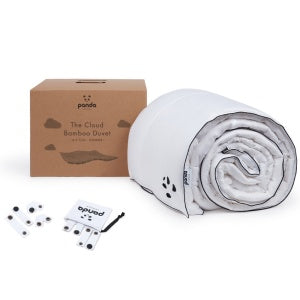
The bed you're getting into matters too. Part of the signal that it's safe to rest is simply wanting to be there — so if your duvet is still set up for summer, this is the moment to change it. Our Cloud Bamboo Duvet at 10.5 tog is fluffy, snug and breathable enough that you stay comfortable rather than overheating. Browse the full range of bamboo duvets to find your tog.
To keep the habit going, anchor it to something you already do — start the routine after the dishes are done, or when you put the lamp on. Set a reminder if it helps. And on the nights when thirty minutes feels like too much, do five. A dimmed light and three slow breaths still count.
Conclusion
Evenings feel different when you signal safety to your body. Start small: dim the lights, dock the phone, switch on a lamp. Run warm water over your hands or take a quick shower. Pull on your favourite socks or dressing gown. Then breathe — in for four, out for six, ten times over. Jot down tomorrow's top three.
Keep it short enough that you'll actually do it, and do it often enough that your body learns the pattern. Treat warmth and grounding as the non-negotiables and sleep stops being a struggle — it becomes a rhythm. If you're finding the darker evenings heavy going, our guide to why you feel sleepier in autumn explains what's going on, and what helps.
FAQ
1. How long before bed should I have a bath or shower?
Around one to two hours before bed works best. That gives your body time to shed the heat and let your core temperature fall, which is what helps you drop off. A shower right before bed can leave you feeling too warm to settle.
2. Does a warm bath actually help you sleep?
Yes, though not for the reason most people assume. It's not the warmth that helps — it's the cooling that follows, as blood brought to the skin's surface sheds heat and lowers your core temperature.
3. What does grounding mean in a bedtime routine?
Bringing your attention out of your thoughts and into the present, using breathwork, gentle movement and your surroundings. It's about settling the mind rather than anything to do with the ground itself.
4. How long should an evening routine be?
Thirty minutes is plenty for most people. Longer routines are fine if you enjoy them, but consistency matters far more than length — a short routine done nightly beats a long one done occasionally.
5. What if I don't have time for a wind-down routine?
Do a shorter version rather than none. Dimming the lights, putting your phone in another room and taking a few slow breaths takes five minutes and still gives your body the signal it needs.
6. Does an evening routine work for shift workers?
Yes, as long as you build it around your actual sleep window rather than the clock. Recreate the same dark, warm, calm environment whenever you're heading to bed.
About the Author:
Caroline Barnes is the Content Writer at Panda, creating content on sleep, well-being, sustainability, and home decoration. Her articles span everything from breathable bedding and sleep advice to circular initiatives that help reduce waste and support more mindful choices at home. Born and raised in West London, she studied English Literature at university before spending several years in the high-paced fashion industry, where she learned to appreciate the value of quality sleep. Outside of writing, she enjoys going to gigs and practising yoga.
![[GreyEyeMask] Panda London Bamboo Grey Eye Mask](http://pandalondon.com/cdn/shop/files/Grey_Eye_Mask_01.jpg?v=1718269260&width=1000)
![[GreyEyeMask] Panda London Bamboo Grey Eye Mask Full](http://pandalondon.com/cdn/shop/files/Grey_Eye_Mask_02.jpg?v=1718269260&width=1000)
![[GreyEyeMask] Panda London Bamboo Grey Eye Mask Package](http://pandalondon.com/cdn/shop/files/Grey_Eye_Mask_03.jpg?v=1718269259&width=1000)
![[BlackEyeMask] Panda London Bamboo Black Eye Mask Package](http://pandalondon.com/cdn/shop/files/Black_Eye_Mask_01.jpg?v=1718269260&width=870)
![[BlackEyeMask] Panda London Bamboo Black Eye Mask Full](http://pandalondon.com/cdn/shop/files/Black_Eye_Mask_02.jpg?v=1718269259&width=1000)
![[BlackEyeMask] Panda London Bamboo Black Eye Mask Full Package](http://pandalondon.com/cdn/shop/files/Black_Eye_Mask_03.jpg?v=1718269259&width=1000)
![[VintagePink] Pink_Eye_Mask_01](http://pandalondon.com/cdn/shop/files/Pink_Eye_Mask_01.jpg?v=1718269259&width=909)
![[VintagePink] vintage-pink Panda London Bamboo Eye mask](http://pandalondon.com/cdn/shop/files/Pink_Eye_Mask_02.jpg?v=1718269260&width=1000)
![[VintagePink] vintage-pink Panda London Bamboo Eye mask Package Full](http://pandalondon.com/cdn/shop/files/Pink_Eye_Mask_03.jpg?v=1718269259&width=1000)
![[CoconutWhite] Couples are making the bed with Bamboo and French linen bedding set](http://pandalondon.com/cdn/shop/files/Coconut_White_Bamboo_French_Linen_Bedding_Set.webp?v=1783068276&width=1080)
![[CoconutWhite] Bamboo and French linen Bedding Full Set Package](http://pandalondon.com/cdn/shop/files/Bamboo_and_French_Linen_Coconut_White_Bedding_set_-_webp.webp?v=1773611226&width=800)
![[CoconutWhite] Bamboo and French linen Bedding Set Pillows](http://pandalondon.com/cdn/shop/files/CoconutWhite_-_BambooFrenchLinen-_Bedding_Set_01.webp?v=1773611226&width=1000)
![[CoconutWhite] Bamboo and French linen Bedding Texture](http://pandalondon.com/cdn/shop/files/CoconutWhite_-_BambooFrenchLinen-_Bedding_Set_Texture.webp?v=1773611226&width=1000)
![[CoconutWhite] Bamboo and French linen Bedding Set Two Pillows](http://pandalondon.com/cdn/shop/files/CoconutWhite_-_BambooFrenchLinen-_Pillows.webp?v=1773611226&width=1000)
![[HimalayanPink] Woman smiling under bamboo and french linen duvet cover and looking](http://pandalondon.com/cdn/shop/files/Himalayan_ink_Bedding_Set_Bamboo_and_French_Linen.webp?v=1783068470&width=1080)
![[HimalayanPink] HimalayanPink Bamboo and French linen Bedding Set Package](http://pandalondon.com/cdn/shop/files/HimalayanPink_-_BambooFrenchLinen-_Bedding_Set_Package_03.webp?crop=region&crop_height=1090&crop_left=205&crop_top=0&crop_width=1090&v=1773611226&width=1500)
![[HimalayanPink] HimalayanPink Bamboo and French linen Bedding Set Pillows with flowers](http://pandalondon.com/cdn/shop/files/HimalayanPink_-_BambooFrenchLinen-_Bedding_Set_01.webp?v=1773611226&width=1000)
![[HimalayanPink] HimalayanPink Bamboo and French linen Bedding Set Package Texture](http://pandalondon.com/cdn/shop/files/HimalayanPink_-_BambooFrenchLinen-_Bedding_Set_Texture.webp?v=1773611226&width=1000)
![[HimalayanPink] HimalayanPink Bamboo and French linen Bedding Set Package Two Pillowscases](http://pandalondon.com/cdn/shop/files/HimalayanPink_-_BambooFrenchLinen-_Pillows.jpg?v=1773611226&width=1000)
![[MidnightNavy] Woman reading a book on a Bamboo and French linen bedding set](http://pandalondon.com/cdn/shop/files/Midnight_Navy_Main.webp?v=1783070500&width=1080)
![[MidnightNavy] MidnightNavy Bamboo and French linen Bedding Set Package](http://pandalondon.com/cdn/shop/files/MidnightNavy_-_BambooFrenchLinen-_Bedding_Set_03_Package.webp?crop=region&crop_height=1090&crop_left=205&crop_top=0&crop_width=1090&v=1773611226&width=1500)
![[MidnightNavy] MidnightNavy Bamboo and French linen Bedding Set Pillows with flowers](http://pandalondon.com/cdn/shop/files/MidnightNavy_-_BambooFrenchLinen-_Bedding_Set_01.webp?v=1773611226&width=1000)
![[MidnightNavy] MidnightNavy Bamboo and French linen Bedding Set Package Texture](http://pandalondon.com/cdn/shop/files/MidnightNavy_-_BambooFrenchLinen-_Bedding_Set_Texture.webp?v=1773611226&width=1000)
![[MidnightNavy] MidnightNavy Bamboo and French linen Bedding Set Package Two Pillows](http://pandalondon.com/cdn/shop/files/MidnightNavy_-_BambooFrenchLinen-_Bedding_Set_Pillows.jpg?v=1773611226&width=1000)
![[Natural] couple smiling and laying on a bamboo and french linen bedding set](http://pandalondon.com/cdn/shop/files/Natural_Bamboo_and_French_Linen_Bedding_Set.webp?v=1783068738&width=1080)
![[Natural] Natural Bamboo and French linen Bedding Set Package](http://pandalondon.com/cdn/shop/files/Natural_-_BambooFrenchLinen-_Bedding_Set_Package.webp?crop=region&crop_height=1090&crop_left=205&crop_top=0&crop_width=1090&v=1773611226&width=1500)
![[Natural] Natural Bamboo and French linen Bedding Set Full Panda London](http://pandalondon.com/cdn/shop/files/Natural_-_BambooFrenchLinen-_Bedding_Set_01.webp?v=1773611226&width=1000)
![[Natural] Natural Bamboo and French linen Bedding Set Texture](http://pandalondon.com/cdn/shop/files/Natural_-_BambooFrenchLinen-_Bedding_Set_Texture.webp?v=1773611226&width=1000)
![[Natural] Natural Bamboo and French linen Bedding Set Pillows and Pillowcases](http://pandalondon.com/cdn/shop/files/Natural_-_BambooFrenchLinen-_Bedding_Set_Pillows.jpg?v=1773611226&width=1000)
![[SlateGrey] Woman smiling while sitting on a Bamboo and French Linen Bedding Set](http://pandalondon.com/cdn/shop/files/Slate_Grey_Bamboo_and_French_Linen_Bedding_Set.webp?v=1783068772&width=1080)
![[SlateGrey] SlateGrey Bamboo and French linen Bedding Set Package](http://pandalondon.com/cdn/shop/files/SlateGrey_-_BambooFrenchLinen-_Bedding_Set_Package.webp?crop=region&crop_height=1090&crop_left=205&crop_top=0&crop_width=1090&v=1773611226&width=1500)
![[SlateGrey] SlateGrey Bamboo and French linen Bedding Set Full](http://pandalondon.com/cdn/shop/files/SlateGrey_-_BambooFrenchLinen-_Bedding_Set_01.webp?v=1773611226&width=1000)
![[SlateGrey] SlateGrey Bamboo and French linen Bedding Set Texture](http://pandalondon.com/cdn/shop/files/SlateGrey_-_BambooFrenchLinen-_Bedding_Set_Texture.webp?v=1773611226&width=1000)
![[SlateGrey] SlateGrey Bamboo and French linen Bedding Set Pillows Two](http://pandalondon.com/cdn/shop/files/SlateGrey_-_BambooFrenchLinen-_Bedding_Set_Pillows_and_pillowcases.jpg?v=1773611226&width=1000)
![[SilverLightGrey] Woman sleeping on a bamboo and french linen bedding set](http://pandalondon.com/cdn/shop/files/Silver_Lining_Grey_bamboo_and_french_linen_bedding_set.webp?v=1783068806&width=1080)
![[SilverLightGrey] SilverLightGrey Bamboo and French linen Bedding Set Package](http://pandalondon.com/cdn/shop/files/SlateGrey_-_BambooFrenchLinen-_Bedding_Set_Package_1abba039-dafb-440b-8faf-5690962c6922.webp?crop=region&crop_height=1090&crop_left=205&crop_top=0&crop_width=1090&v=1773611226&width=1500)
![[SilverLightGrey] SilverLightGrey Bamboo and French linen Bedding Set Pillow](http://pandalondon.com/cdn/shop/files/SlateGrey_-_BambooFrenchLinen-_Bedding_Set_01_b1f7b31a-7706-47e9-951a-9baeb34d589a.webp?v=1773611226&width=1000)
![[SilverLightGrey] SilverLightGrey Bamboo and French linen Bedding Set Texture](http://pandalondon.com/cdn/shop/files/SlateGrey_-_BambooFrenchLinen-_Bedding_Set_Texture_03.webp?v=1773611226&width=1000)
![[SilverLightGrey] SilverLightGrey Bamboo and French linen Bedding Set Two pillows](http://pandalondon.com/cdn/shop/files/SlateGrey_-_BambooFrenchLinen-_Bedding_Set_Pillows_both.jpg?v=1773611226&width=1000)
![[ForestGreen] Girl sleeping on a SIgnature_Bedding_Set_Forest_Green](http://pandalondon.com/cdn/shop/files/SIgnature_Bedding_Set_Forest_Green.webp?v=1783076962&width=1080)
![[ForestGreen] Panda London Bamboo Lyocell Bedding Set Package](http://pandalondon.com/cdn/shop/files/Bamboo_Lyocell_Bedding_Set_Package.jpg?v=1773611139&width=768)
![[ForestGreen] Bamboo Lyocell Green Corner Panda London](http://pandalondon.com/cdn/shop/files/GreenPCCorner.jpg?v=1773611139&width=768)
![[ForestGreen] SIgnature_Bedding_Set_Forest_Green_-_woman_making_the_bed](http://pandalondon.com/cdn/shop/files/SIgnature_Bedding_Set_Forest_Green_-_woman_making_the_bed.webp?v=1783512491&width=1080)
![[ForestGreen] Panda London Bamboo Lyocell Texture](http://pandalondon.com/cdn/shop/files/Green-Texture.jpg?v=1773611139&width=768)
![[ForestGreen] SIgnature_Bedding_Set_Forest_Green_woman_hugging_the_pillow](http://pandalondon.com/cdn/shop/files/SIgnature_Bedding_Set_Forest_Green_woman_hugging_the_pillow.webp?v=1783512490&width=1080)
![[Cream] Woman making a bed with signature plus bamboo lyocell bedding set](http://pandalondon.com/cdn/shop/files/Signature_Plus_Bedding_Set_Cream_color.webp?v=1783072086&width=1080)
![[Cream] Panda London Bamboo Lyocell Full Bedding Set](http://pandalondon.com/cdn/shop/files/Bamboo_Lyocell_Bedding_Set_Package_Cream.jpg?v=1773611139&width=768)
![[Cream] Panda London Bamboo Lyocell Full Bedding Set Cream Corner](http://pandalondon.com/cdn/shop/files/PebbleCreamPCCorner.jpg?v=1773611139&width=768)
![[Cream] Signature_Plus_Bedding_Set_Cream_color_Couple_Laying_down_laughing](http://pandalondon.com/cdn/shop/files/Signature_Plus_Bedding_Set_Cream_color_Couple_Laying_down_laughing.webp?v=1783513006&width=1080)
![[Cream] Panda London Bamboo Lyocell Cream Texture](http://pandalondon.com/cdn/shop/files/PebbleCream-Texture.jpg?v=1773611139&width=768)
![[Cream] Signature_Plus_Bedding_Set_Cream_colorWoman_making_the_bed](http://pandalondon.com/cdn/shop/files/Signature_Plus_Bedding_Set_Cream_colorWoman_making_the_bed.webp?v=1783513006&width=1080)

