
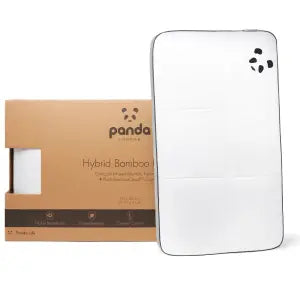
 Hybrid Bamboo Pillow
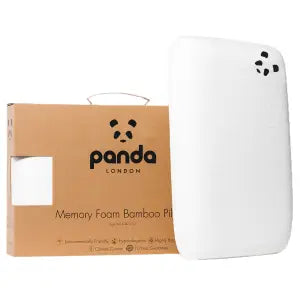 Memory Foam Bamboo Pillow
 Kids Memory Foam Bamboo Pillow
 Baby Memory Foam Bamboo Pillow
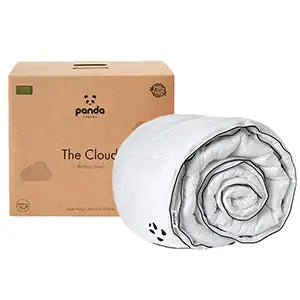 Panda Cloud Duvet
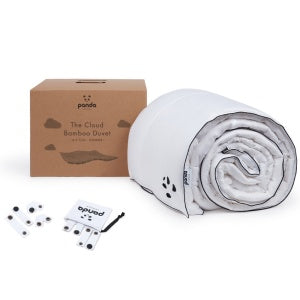 Bamboo Summer Duvet
 Kids Cloud Duvet
![[MattressTopper] Bamboo_Mattress_Topper_Package_Box-updated](http://pandalondon.com/cdn/shop/files/Bamboo_Mattress_Topper_Package_Box-updated.webp?crop=region&crop_height=1315&crop_left=92&crop_top=0&crop_width=1315&v=1782726992&width=1500)
![[MattressTopper] Woman laying on a Panda Bamboo Mattress Topper](http://pandalondon.com/cdn/shop/files/Bamboo_Mattress_Topper_Product_Image_01.webp?v=1782726484&width=1080)
![[MattressTopper] Guy laying on a Panda Bamboo Mattress Topper](http://pandalondon.com/cdn/shop/files/Bamboo_Mattress_Topper_Product_Image_02.webp?v=1782726484&width=1080)
![[MattressTopper] Woman setting up a Panda Bamboo Mattress Topper](http://pandalondon.com/cdn/shop/files/Bamboo_Mattress_Topper_Product_Image_03.webp?v=1782726484&width=1080)
![[MattressTopper] Panda London Memory Foam Bamboo Mattress Topper side](http://pandalondon.com/cdn/shop/files/Mattress_Topper_Isolated_-_resized.jpg?v=1773853354&width=800)
![[HybridMattressPro] Hybrid_Bamboo_Mattress_Pro_Product_Image_2026](http://pandalondon.com/cdn/shop/files/Hybrid_Bamboo_Mattress_Pro_Product_Image_2026.webp?v=1764944771&width=1000)
![[HybridMattressPro] A woman in white pajamas lies on her side on a mattress atop a gray upholstered bed frame in a softly lit bedroom. The mattress has a white top layer with a subtle geometric pattern and a black center band, with a small Panda Mattress logo patch visible on the side.](http://pandalondon.com/cdn/shop/files/Mattress_PRO-01.webp?v=1790672728&width=2049)
![[HybridMattressPro] Hybrid Bamboo Mattress Pro Cover Zip](http://pandalondon.com/cdn/shop/files/Hybrid_Bamboo_Mattress_Cover.jpg?v=1764944771&width=800)
![[HybridMattressPro] A woman in a cream-colored pajama set kneels beside a bed, holding down a mattress protector on a Panda Mattress to show its support and comfort.](http://pandalondon.com/cdn/shop/files/Mattress_PRO-03.webp?v=1790672728&width=2049)
![[HybridMattressPro] A woman in light pink pajamas sits on a Panda Bamboo mattress](http://pandalondon.com/cdn/shop/files/Mattress_PRO-04.webp?v=1790672728&width=2049)
![[CloudDuvet] Panda London The Cloud Bamboo Duvet Packaging](http://pandalondon.com/cdn/shop/products/Panda-London-The-Cloud-Bamboo-Duvet-Panda-Life-scaled_00a651ad-4ca3-4105-b520-12a94c1a4f71.jpg?v=1713363286&width=1920)
![[CloudDuvet] Panda London The Cloud Bamboo Duvet Rolled](http://pandalondon.com/cdn/shop/products/Duvet-Listing-Images03.jpg?v=1764079307&width=1000)
![[CloudDuvet] Guy making the bed with Panda Cloud Duvet 10.5 TOG](http://pandalondon.com/cdn/shop/files/Duvet_10.5_Tog-02.webp?v=1790607319&width=2049)
![[CloudDuvet] Guy reading a book on the bed covered with Panda Cloud Duvet 10.5 TOG](http://pandalondon.com/cdn/shop/files/Duvet_10.5_Tog-03.webp?v=1790607319&width=2049)
![[CloudDuvet] Guy making his bed with Panda Cloud Duvet 10.5 TOG](http://pandalondon.com/cdn/shop/files/Duvet_10.5_Tog-04.webp?v=1790607319&width=2049)
![[BBWhite] 100_Bamboo_Bedding_Set_Pure_White](http://pandalondon.com/cdn/shop/files/100_Bamboo_Bedding_Set_Pure_White_01.webp?v=1781082973&width=1080)
![[BBWhite] White 100% Bamboo Bedding Texture](http://pandalondon.com/cdn/shop/files/100_Bamboo_Bedding_-_Pure_White_-_Close_Up_02.webp?v=1773611287&width=1000)
![[BBWhite] 100_Bamboo_Bedding_Set_Pure_White couple laughing](http://pandalondon.com/cdn/shop/files/100_Bamboo_Bedding_Set_Pure_White_02.webp?v=1781082974&width=1080)
![[BBWhite] White 100% Bamboo Bedding Woman Duvet cover buttons](http://pandalondon.com/cdn/shop/files/hand_and_buttons_1.webp?v=1773611287&width=1000)
![[BBWhite] 100_Bamboo_Bedding_Set_Pure_White woman sleeping](http://pandalondon.com/cdn/shop/files/100_Bamboo_Bedding_Set_Pure_White_03.webp?v=1781082973&width=1080)
![[BBUrbanGrey] 100_Bamboo_Bedding_Set_Urban_Grey_guy laying on the bedding](http://pandalondon.com/cdn/shop/files/100_Bamboo_Bedding_Set_Urban_Grey_01.webp?v=1781083567&width=1080)
![[BBUrbanGrey] Cloud Duvet Urban Grey 100% Bamboo Bedding Set](http://pandalondon.com/cdn/shop/files/Cloud_Duvet_-_Grey_-_Close_up_2.webp?v=1773611287&width=1000)
![[BBUrbanGrey] 100_Bamboo_Bedding_Set_Urban_Grey_woman opening the bedding bag](http://pandalondon.com/cdn/shop/files/100_Bamboo_Bedding_Set_Urban_Grey_02.webp?v=1781083568&width=1080)
![[BBUrbanGrey] 100_Bamboo_Bedding_Set_Urban_Grey_woman making the bed](http://pandalondon.com/cdn/shop/files/100_Bamboo_Bedding_Set_Urban_Grey_04.webp?v=1781083567&width=1080)
![[BBUrbanGrey] 100_Bamboo_Bedding_Set_Urban_Grey_couple reading magazines](http://pandalondon.com/cdn/shop/files/100_Bamboo_Bedding_Set_Urban_Grey_03.webp?v=1781083567&width=1080)
![[BBNavyBlue] Deep Sea Navy Blue 100% Bamboo Bedding Set couple reading a magazine](http://pandalondon.com/cdn/shop/files/100_Bamboo_Bedding_Set_Deep_Sea_Navy_01.webp?v=1781083134&width=1080)
![[BBNavyBlue] Deep Sea Navy Blue 100% Bamboo Bedding Texture](http://pandalondon.com/cdn/shop/files/Cloud_Duvet_-_Navy_-_Close_up_2.webp?v=1773611287&width=1000)
![[BBNavyBlue] Deep Sea Navy Blue 100% Bamboo Bedding Set couple reading a magazine and smiling](http://pandalondon.com/cdn/shop/files/100_Bamboo_Bedding_Set_Deep_Sea_Navy_02.webp?v=1781083135&width=1080)
![[BBNavyBlue] Deep Sea Navy Blue 100% Bamboo Bedding Set woman resting](http://pandalondon.com/cdn/shop/files/100_Bamboo_Bedding_Set_Deep_Sea_Navy_04.png?v=1781083138&width=1080)
![[BBNavyBlue] Deep Sea Navy Blue 100% Bamboo Bedding Set guy laying and smiling](http://pandalondon.com/cdn/shop/files/100_Bamboo_Bedding_Set_Deep_Sea_Navy_03.webp?v=1781083134&width=1080)
![[BBPink] Vintage Pink Blue 100% Bamboo Bedding woman making the bed](http://pandalondon.com/cdn/shop/files/100_Bamboo_Bedding_Set_Pink_01.webp?v=1781083678&width=1080)
![[BBPink] Vintage Pink Texture 100% Bamboo Bedding](http://pandalondon.com/cdn/shop/files/Cloud_Duvet_-_Pink_-_Close_up_2.webp?v=1773611287&width=1000)
![[BBPink] Vintage Pink Blue 100% Bamboo Bedding woman hugging the pillow with vintage pink pillow case](http://pandalondon.com/cdn/shop/files/100_Bamboo_Bedding_Set_Pink_02.webp?v=1781083678&width=1080)
![[BBPink] Vintage Pink Blue 100% Bamboo Bedding woman hiding under duvet with pink duvet cover](http://pandalondon.com/cdn/shop/files/100_Bamboo_Bedding_Set_Pink_03.webp?v=1781083679&width=1080)
![[BBPink] Vintage Pink Blue 100% Bamboo Bedding woman laying and smiling on the panda bedding set](http://pandalondon.com/cdn/shop/files/100_Bamboo_Bedding_Set_Pink_04.webp?v=1781083679&width=1080)
![[BBGrey] 100_Bamboo_Bedding_Set_Quiet_Grey_ woman holding the bedding](http://pandalondon.com/cdn/shop/files/100_Bamboo_Bedding_Set_Quiet_Grey_01.webp?v=1781083287&width=1080)
![[BBGrey] Light Grey 100% Bamboo Bedding texture](http://pandalondon.com/cdn/shop/files/Texture17.webp?v=1773611287&width=1000)
![[BBGrey] 100_Bamboo_Bedding_Set_Quiet_Grey_0guy laying and smiling](http://pandalondon.com/cdn/shop/files/100_Bamboo_Bedding_Set_Quiet_Grey_02.webp?v=1781083287&width=1080)
![[BBGrey] 100_Bamboo_Bedding_Set_Quiet_Grey_0guy reading a magazine on the bed](http://pandalondon.com/cdn/shop/files/100_Bamboo_Bedding_Set_Quiet_Grey_03.webp?v=1781083287&width=1080)
![[BBGrey] 100_Bamboo_Bedding_Set_Quiet_Grey_0woman making the bed](http://pandalondon.com/cdn/shop/files/100_Bamboo_Bedding_Set_Quiet_Grey_04.webp?v=1781083287&width=1080)

Reviewed by Bethany Lawrence, Osteopath, Osteobeth
Quick Answer:
For most side sleepers, a hybrid mattress is the best all-around choice. The combination of pocket springs and memory foam cushions the hips and shoulders while keeping the spine aligned — and the zoned spring construction lets the shoulder area sit slightly softer than the hip area, which a uniform memory foam mattress can't do. Hybrids are particularly good for side sleepers with hip, shoulder or sciatica pain, and for anyone who sleeps hot.
Getting a good night's sleep is vital for our mind and body. But knowing which mattress to choose for your favoured sleeping position can be a challenge — especially if you're a side sleeper, as over 60% of adults are. Without adequate pressure relief, side sleeping is a leading cause of hip and shoulder pain.
In this blog, we'll answer the question: is a hybrid mattress best for side sleepers?
The mattress you sleep on plays a huge role. Choose the right one and your whole body is fully supported, free to relax and rejuvenate. Choose the wrong one, and you're left with aches, pains and sleepless nights.
If you're not familiar with hybrid mattresses, here's the short version: a hybrid combines a traditional pocket-spring mattress with a memory-foam mattress. The result is a multi-layered build of springs and foam that provides both deep support (from the springs) and surface contouring (from the foam) — which is exactly the combination side sleepers benefit from
The benefits of sleeping on your side
Side sleeping is very common and has real advantages — provided a quality mattress and pillows fully support your body and keep your spine aligned.
Bethany Lawrence, our Panda orthopaedic expert, advises that side sleeping contributes to better rest:
"Side sleeping, providing that your body is properly supported, can help to keep your head and neck in a neutral position, therefore optimising sleep."
Side sleeping can also help minimise lower back and joint pain, and reduce snoring, which other positions can aggravate.
The disadvantages of side sleeping
Side sleepers can experience pain and numbness — particularly in the shoulders and hips — if their mattress doesn't support the body's natural contours. A surface that's too firm concentrates pressure on these points; one that's too soft lets the spine fall out of alignment. The fix is a mattress that cushions and supports, which is where hybrids come in.

What to look for in a hybrid mattress?
Mattress Materials
Hybrid mattresses are made from multiple layers of foam and pocket springs that work together to distribute weight evenly and support your body’s natural form. The better the quality of the materials used to create the mattress, the more supportive and superior it will be.
Quality mattresses now have thousands of individually encased springs, perfect for contouring the side-sleeping position and reducing motion transfer. Therefore, even if your bed buddy moves around, you can continue snoozing blissfully undisturbed.
One common reason side sleepers wake up is overheating, often caused by the mattress material. When choosing your mattress, ensure they have a breathable layer like the hybrid bamboo mattress, which uses BioCell Foam™ to keep sleepers at the optimum sleep temperature, whatever the weather. If the layers of foam are not designed to allow airflow, they can cause sleepers to get too hot and have disturbed sleep.
Worth knowing: our Hybrid Bamboo Mattress is a Which? Best Buy — independently tested and recommended by the UK's most trusted consumer body, which assesses mattresses on exactly the pressure relief and support that matter most to side sleepers.
The firmness & support
The firmness of a mattress is determined by the materials used and their densities. Side sleepers should look for a hybrid mattress that gives enough support and is comfortable. Orthopaedic grade memory foam is perfect as it works in harmony with your body, contouring to shape to help keep your whole body fully aligned. The bamboo hybrid mattress gives you the ideal support and firmness for a restful night’s sleep.
Pressure Points
Side sleepers carry the most pressure on their hips and shoulders, so a mattress with good zoned support is essential. This is where hybrids really shine.
The pocket-spring zone construction means the shoulder zone is slightly softer than the hip zone — so your shoulder can sink in just enough while your hips stay supported and level. This zoned differentiation is something only a mattress made entirely of memory foam can replicate, because foam provides a more uniform feel across the entire surface. A hybrid is more responsive and bouncy, distributing weight evenly to relieve pressure, whereas memory foam is slower-sinking and provides all-over contouring support. For side sleepers with hip or shoulder pain, that zoned construction is the key technical advantage.

Hybrid mattresses and sciatica
A hybrid mattress can help reduce sciatic nerve compression by supporting the pelvis and keeping the lumbar spine aligned. By reducing awkward pelvic tilt, hip sinking and spinal twisting, a hybrid surface helps prevent sciatic symptoms flaring up during sleep.
The pocket springs keep the lumbar spine from sinking into misalignment, while the foam layer reduces the pressure that can aggravate inflamed nerve roots. The single most important position intervention for sciatica is to sleep on your non-painful side with a pillow between your knees — and a hybrid mattress improves the quality of that position by keeping everything properly aligned.
One caveat: a mattress is a supportive tool, not a treatment. If your sciatica is severe or persistent, please see a physiotherapist or GP to manage the underlying condition.
Hybrid mattresses and arthritis
For side sleepers with arthritis, a hybrid mattress offers a useful balance: the foam layer gently cushions sore, inflamed joints at the hip and shoulder, while the springs prevent you from sinking too far and stiffening up. The responsive surface also makes it easier to change position during the night, which matters because arthritic joints tend to stiffen when held in one position too long. A mattress that's too firm concentrates pressure on the joints; the cushioned-but-supported feel of a hybrid is usually more comfortable.
Hybrid mattresses and ankylosing spondylitis
Ankylosing spondylitis (AS) is an inflammatory spinal condition where morning stiffness and pain are common, and where keeping the spine in neutral alignment overnight matters especially. A medium-firm hybrid is generally recommended: it supports the spine without pressing into inflamed joints, while the foam layer cushions the hips and shoulders — important because side sleeping (with a pillow between the knees) is one of the positions often recommended for AS. Too soft a surface worsens the morning stiffness the condition is known for; too firm aggravates the pressure points.
As with any spinal condition, a mattress is a supportive tool rather than a treatment — for the full picture, see our guide to the best mattress for ankylosing spondylitis.
Body weight and firmness guide
The right hybrid firmness for a side sleeper depends on body weight — heavier sleepers need more support to stay aligned; lighter sleepers need more give for pressure relief.
|
Body weight |
Recommended hybrid mattress firmness |
|---|---|
|
Under 65kg |
Soft-to-medium hybrid |
|
65–90kg |
Medium-firm hybrid |
|
Over 90kg |
Firm hybrid or higher spring count |
Lighter sleepers (under 65kg) don't compress a mattress as much, so they need a softer surface to get meaningful pressure relief at the hip and shoulder. Heavier sleepers (over 90kg) need a firmer build or a higher spring count to avoid sinking too far and losing spinal alignment.
Why is a hybrid mattress the best for a side sleeper?
Sleep is the body's way of resting and rejuvenating, which is why a great night's sleep is so vital. A quality hybrid mattress offers side sleepers the contoured support and comfort needed to distribute weight evenly, relieve pressure at the hips and shoulders, and keep the spine aligned through the night.
For most side sleepers — and particularly those dealing with hip, shoulder or sciatica pain — a hybrid is the best all-around choice. If you'd like to explore the options, see our guides on what mattress is best for side sleepers and the best mattress topper for side sleepers — or browse our Hybrid Bamboo Mattresses directly.
FAQ
1. Is a hybrid mattress good for side sleepers with hip and shoulder pain?
Yes — a hybrid is one of the best choices for side sleepers with hip and shoulder pain. The foam layer cushions these pressure points while the zoned pocket springs keep the spine aligned, with the shoulder zone sitting slightly softer than the hip zone. That zoned support is something a uniform memory foam mattress can't replicate.
2. Is a hybrid or memory foam mattress better for side sleepers?
Both work well, but they feel different. A hybrid is more responsive and supportive, with zoned springs that suit side sleepers who want both cushioning and lift — and it sleeps cooler. Memory foam gives a deeper, slow-sinking, all-over contour. For side sleepers with pain, the hybrid's zoned construction usually has the edge.
3. Can a hybrid mattress help with sciatica?
A hybrid mattress can help by supporting the pelvis and keeping the lumbar spine aligned, which reduces the pelvic tilt and spinal twisting that aggravate the sciatic nerve. Combined with sleeping on your non-painful side with a pillow between your knees, it can improve comfort — though severe sciatica should be assessed by a physiotherapist.
4. Is a hybrid mattress good for arthritis?
Yes — the foam layer cushions inflamed joints at the hip and shoulder, while the springs stop you sinking too far. The responsive surface also makes it easier to shift position during the night, which helps prevent the stiffness that comes from staying in one position too long.
5. Is a hybrid mattress good for arthritis?
Yes — the foam layer cushions inflamed joints at the hip and shoulder, while the springs stop you sinking too far. The responsive surface also makes it easier to shift position during the night, which helps prevent the stiffness that comes from staying in one position too long.
About the Author:
Caroline Barnes is the Content Writer at Panda, creating content on sleep, well-being, sustainability, and home decoration. Her articles span everything from breathable bedding and sleep advice to circular initiatives that help reduce waste and support more mindful choices at home. Born and raised in West London, she studied English Literature at university before spending several years in the high-paced fashion industry, where she learned to appreciate the value of quality sleep. Outside of writing, she enjoys going to gigs and practising yoga.
![[HybridPillow] Hybrid Bamboo Pillow - Mattress Campaign](http://pandalondon.com/cdn/shop/products/Hybrid-Bamboo-Pillow-Mattress-Campaign.jpg?crop=region&crop_height=1615&crop_left=152&crop_top=0&crop_width=1615&v=1771199164&width=1920)
![[HybridPillow] Hybrid_Bamboo_Pillow_-_Woman_laying_on_a_Hybrid_Bamboo_Pillow_with_an_Eye_Mask](http://pandalondon.com/cdn/shop/files/Hybrid_Bamboo_Pillow_-_Woman_laying_on_a_Hybrid_Bamboo_Pillow_with_an_Eye_Mask.webp?v=1783514966&width=1080)
![[HybridPillow] Hybrid_Bamboo_Pillow_02_-_Woman_taking_off_the_Hybrid_Bamboo_Pillow_Cover](http://pandalondon.com/cdn/shop/files/Hybrid_Bamboo_Pillow_02_-_Woman_taking_off_the_Hybrid_Bamboo_Pillow_Cover.webp?v=1783514763&width=1080)
![[HybridPillow] Hybrid Pillow with Panda brand marking](http://pandalondon.com/cdn/shop/products/Hybrid-Pillow_8.jpg?v=1771199164&width=1920)
![[HybridPillow] Hybrid_Bamboo_Pillow_03_-_Couple_pillow_fighting_with_Hybrid_Bamboo_Pillows](http://pandalondon.com/cdn/shop/files/Hybrid_Bamboo_Pillow_03_-_Couple_pillow_fighting_with_Hybrid_Bamboo_Pillows.webp?v=1783514763&width=1080)
![[GreyEyeMask] Panda London Bamboo Grey Eye Mask](http://pandalondon.com/cdn/shop/files/Grey_Eye_Mask_01.jpg?v=1718269260&width=1000)
![[GreyEyeMask] Panda London Bamboo Grey Eye Mask Full](http://pandalondon.com/cdn/shop/files/Grey_Eye_Mask_02.jpg?v=1718269260&width=1000)
![[GreyEyeMask] Panda London Bamboo Grey Eye Mask Package](http://pandalondon.com/cdn/shop/files/Grey_Eye_Mask_03.jpg?v=1718269259&width=1000)
![[BlackEyeMask] Panda London Bamboo Black Eye Mask Package](http://pandalondon.com/cdn/shop/files/Black_Eye_Mask_01.jpg?v=1718269260&width=870)
![[BlackEyeMask] Panda London Bamboo Black Eye Mask Full](http://pandalondon.com/cdn/shop/files/Black_Eye_Mask_02.jpg?v=1718269259&width=1000)
![[BlackEyeMask] Panda London Bamboo Black Eye Mask Full Package](http://pandalondon.com/cdn/shop/files/Black_Eye_Mask_03.jpg?v=1718269259&width=1000)
![[VintagePink] Pink_Eye_Mask_01](http://pandalondon.com/cdn/shop/files/Pink_Eye_Mask_01.jpg?v=1718269259&width=909)
![[VintagePink] vintage-pink Panda London Bamboo Eye mask](http://pandalondon.com/cdn/shop/files/Pink_Eye_Mask_02.jpg?v=1718269260&width=1000)
![[VintagePink] vintage-pink Panda London Bamboo Eye mask Package Full](http://pandalondon.com/cdn/shop/files/Pink_Eye_Mask_03.jpg?v=1718269259&width=1000)

