
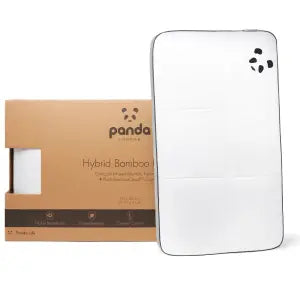
 Hybrid Bamboo Pillow
 Memory Foam Bamboo Pillow
 Kids Memory Foam Bamboo Pillow
 Baby Memory Foam Bamboo Pillow
 Panda Cloud Duvet
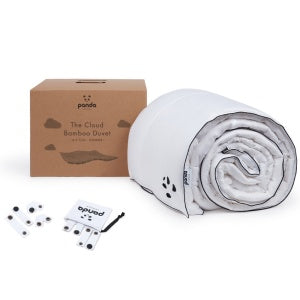 Bamboo Summer Duvet
 Kids Cloud Duvet
![[MattressTopper] Bamboo_Mattress_Topper_Package_Box-updated](http://pandalondon.com/cdn/shop/files/Bamboo_Mattress_Topper_Package_Box-updated.webp?crop=region&crop_height=1315&crop_left=92&crop_top=0&crop_width=1315&v=1782726992&width=1500)
![[MattressTopper] Woman laying on a Panda Bamboo Mattress Topper](http://pandalondon.com/cdn/shop/files/Bamboo_Mattress_Topper_Product_Image_01.webp?v=1782726484&width=1080)
![[MattressTopper] Guy laying on a Panda Bamboo Mattress Topper](http://pandalondon.com/cdn/shop/files/Bamboo_Mattress_Topper_Product_Image_02.webp?v=1782726484&width=1080)
![[MattressTopper] Woman setting up a Panda Bamboo Mattress Topper](http://pandalondon.com/cdn/shop/files/Bamboo_Mattress_Topper_Product_Image_03.webp?v=1782726484&width=1080)
![[MattressTopper] Panda London Memory Foam Bamboo Mattress Topper side](http://pandalondon.com/cdn/shop/files/Mattress_Topper_Isolated_-_resized.jpg?v=1773853354&width=800)
![[HybridMattressPro] Hybrid_Bamboo_Mattress_Pro_Product_Image_2026](http://pandalondon.com/cdn/shop/files/Hybrid_Bamboo_Mattress_Pro_Product_Image_2026.webp?v=1764944771&width=1000)
![[HybridMattressPro] A woman in white pajamas lies on her side on a mattress atop a gray upholstered bed frame in a softly lit bedroom. The mattress has a white top layer with a subtle geometric pattern and a black center band, with a small Panda Mattress logo patch visible on the side.](http://pandalondon.com/cdn/shop/files/Mattress_PRO-01.webp?v=1790672728&width=2049)
![[HybridMattressPro] Hybrid Bamboo Mattress Pro Cover Zip](http://pandalondon.com/cdn/shop/files/Hybrid_Bamboo_Mattress_Cover.jpg?v=1764944771&width=800)
![[HybridMattressPro] A woman in a cream-colored pajama set kneels beside a bed, holding down a mattress protector on a Panda Mattress to show its support and comfort.](http://pandalondon.com/cdn/shop/files/Mattress_PRO-03.webp?v=1790672728&width=2049)
![[HybridMattressPro] A woman in light pink pajamas sits on a Panda Bamboo mattress](http://pandalondon.com/cdn/shop/files/Mattress_PRO-04.webp?v=1790672728&width=2049)
![[CloudDuvet] Panda London The Cloud Bamboo Duvet Packaging](http://pandalondon.com/cdn/shop/products/Panda-London-The-Cloud-Bamboo-Duvet-Panda-Life-scaled_00a651ad-4ca3-4105-b520-12a94c1a4f71.jpg?v=1713363286&width=1920)
![[CloudDuvet] Panda London The Cloud Bamboo Duvet Rolled](http://pandalondon.com/cdn/shop/products/Duvet-Listing-Images03.jpg?v=1764079307&width=1000)
![[CloudDuvet] Guy making the bed with Panda Cloud Duvet 10.5 TOG](http://pandalondon.com/cdn/shop/files/Duvet_10.5_Tog-02.webp?v=1790607319&width=2049)
![[CloudDuvet] Guy reading a book on the bed covered with Panda Cloud Duvet 10.5 TOG](http://pandalondon.com/cdn/shop/files/Duvet_10.5_Tog-03.webp?v=1790607319&width=2049)
![[CloudDuvet] Guy making his bed with Panda Cloud Duvet 10.5 TOG](http://pandalondon.com/cdn/shop/files/Duvet_10.5_Tog-04.webp?v=1790607319&width=2049)
![[BBWhite] 100_Bamboo_Bedding_Set_Pure_White](http://pandalondon.com/cdn/shop/files/100_Bamboo_Bedding_Set_Pure_White_01.webp?v=1781082973&width=1080)
![[BBWhite] White 100% Bamboo Bedding Texture](http://pandalondon.com/cdn/shop/files/100_Bamboo_Bedding_-_Pure_White_-_Close_Up_02.webp?v=1773611287&width=1000)
![[BBWhite] 100_Bamboo_Bedding_Set_Pure_White couple laughing](http://pandalondon.com/cdn/shop/files/100_Bamboo_Bedding_Set_Pure_White_02.webp?v=1781082974&width=1080)
![[BBWhite] White 100% Bamboo Bedding Woman Duvet cover buttons](http://pandalondon.com/cdn/shop/files/hand_and_buttons_1.webp?v=1773611287&width=1000)
![[BBWhite] 100_Bamboo_Bedding_Set_Pure_White woman sleeping](http://pandalondon.com/cdn/shop/files/100_Bamboo_Bedding_Set_Pure_White_03.webp?v=1781082973&width=1080)
![[BBUrbanGrey] 100_Bamboo_Bedding_Set_Urban_Grey_guy laying on the bedding](http://pandalondon.com/cdn/shop/files/100_Bamboo_Bedding_Set_Urban_Grey_01.webp?v=1781083567&width=1080)
![[BBUrbanGrey] Cloud Duvet Urban Grey 100% Bamboo Bedding Set](http://pandalondon.com/cdn/shop/files/Cloud_Duvet_-_Grey_-_Close_up_2.webp?v=1773611287&width=1000)
![[BBUrbanGrey] 100_Bamboo_Bedding_Set_Urban_Grey_woman opening the bedding bag](http://pandalondon.com/cdn/shop/files/100_Bamboo_Bedding_Set_Urban_Grey_02.webp?v=1781083568&width=1080)
![[BBUrbanGrey] 100_Bamboo_Bedding_Set_Urban_Grey_woman making the bed](http://pandalondon.com/cdn/shop/files/100_Bamboo_Bedding_Set_Urban_Grey_04.webp?v=1781083567&width=1080)
![[BBUrbanGrey] 100_Bamboo_Bedding_Set_Urban_Grey_couple reading magazines](http://pandalondon.com/cdn/shop/files/100_Bamboo_Bedding_Set_Urban_Grey_03.webp?v=1781083567&width=1080)
![[BBNavyBlue] Deep Sea Navy Blue 100% Bamboo Bedding Set couple reading a magazine](http://pandalondon.com/cdn/shop/files/100_Bamboo_Bedding_Set_Deep_Sea_Navy_01.webp?v=1781083134&width=1080)
![[BBNavyBlue] Deep Sea Navy Blue 100% Bamboo Bedding Texture](http://pandalondon.com/cdn/shop/files/Cloud_Duvet_-_Navy_-_Close_up_2.webp?v=1773611287&width=1000)
![[BBNavyBlue] Deep Sea Navy Blue 100% Bamboo Bedding Set couple reading a magazine and smiling](http://pandalondon.com/cdn/shop/files/100_Bamboo_Bedding_Set_Deep_Sea_Navy_02.webp?v=1781083135&width=1080)
![[BBNavyBlue] Deep Sea Navy Blue 100% Bamboo Bedding Set woman resting](http://pandalondon.com/cdn/shop/files/100_Bamboo_Bedding_Set_Deep_Sea_Navy_04.png?v=1781083138&width=1080)
![[BBNavyBlue] Deep Sea Navy Blue 100% Bamboo Bedding Set guy laying and smiling](http://pandalondon.com/cdn/shop/files/100_Bamboo_Bedding_Set_Deep_Sea_Navy_03.webp?v=1781083134&width=1080)
![[BBPink] Vintage Pink Blue 100% Bamboo Bedding woman making the bed](http://pandalondon.com/cdn/shop/files/100_Bamboo_Bedding_Set_Pink_01.webp?v=1781083678&width=1080)
![[BBPink] Vintage Pink Texture 100% Bamboo Bedding](http://pandalondon.com/cdn/shop/files/Cloud_Duvet_-_Pink_-_Close_up_2.webp?v=1773611287&width=1000)
![[BBPink] Vintage Pink Blue 100% Bamboo Bedding woman hugging the pillow with vintage pink pillow case](http://pandalondon.com/cdn/shop/files/100_Bamboo_Bedding_Set_Pink_02.webp?v=1781083678&width=1080)
![[BBPink] Vintage Pink Blue 100% Bamboo Bedding woman hiding under duvet with pink duvet cover](http://pandalondon.com/cdn/shop/files/100_Bamboo_Bedding_Set_Pink_03.webp?v=1781083679&width=1080)
![[BBPink] Vintage Pink Blue 100% Bamboo Bedding woman laying and smiling on the panda bedding set](http://pandalondon.com/cdn/shop/files/100_Bamboo_Bedding_Set_Pink_04.webp?v=1781083679&width=1080)
![[BBGrey] 100_Bamboo_Bedding_Set_Quiet_Grey_ woman holding the bedding](http://pandalondon.com/cdn/shop/files/100_Bamboo_Bedding_Set_Quiet_Grey_01.webp?v=1781083287&width=1080)
![[BBGrey] Light Grey 100% Bamboo Bedding texture](http://pandalondon.com/cdn/shop/files/Texture17.webp?v=1773611287&width=1000)
![[BBGrey] 100_Bamboo_Bedding_Set_Quiet_Grey_0guy laying and smiling](http://pandalondon.com/cdn/shop/files/100_Bamboo_Bedding_Set_Quiet_Grey_02.webp?v=1781083287&width=1080)
![[BBGrey] 100_Bamboo_Bedding_Set_Quiet_Grey_0guy reading a magazine on the bed](http://pandalondon.com/cdn/shop/files/100_Bamboo_Bedding_Set_Quiet_Grey_03.webp?v=1781083287&width=1080)
![[BBGrey] 100_Bamboo_Bedding_Set_Quiet_Grey_0woman making the bed](http://pandalondon.com/cdn/shop/files/100_Bamboo_Bedding_Set_Quiet_Grey_04.webp?v=1781083287&width=1080)

Reviewed by Bethany Lawrence, Osteopath, Osteobeth
Quick Answer:
The way you sleep can affect your posture because your body stays in that position for 7–9 hours each night. Back sleeping is usually best for keeping the spine in neutral alignment, while side sleeping can also support good posture with the right pillow and knee support. Stomach sleeping is the least posture-friendly, as it can strain the neck, hips and lower back over time. A supportive pillow, mattress or mattress topper can help keep your spine aligned and reduce tension while you sleep.
Many people think of posture as a daytime issue – something caused by uncomfortable desk chairs, and healed through shoulder rolls or intensive yoga sessions. With 65% of UK adults experiencing back or neck pain each month, up from 50% five years ago, it’s important to understand that poor posture can often be due to something else: your sleeping position. The way you sleep can have a big influence on your posture, as you’re in that position for around 7-9 hours every night. In this article, we explore how you can use bedtime to improve your posture – not make it worse!
How sleeping position affects daytime posture
Over the course of our lifetime, we get to spend a lot of time in bed. But if we’re not resting with efficient comfort and support, we can develop some bad bedtime habits – resulting in back and neck pain as well as muscle strain. According to our 2026 Sleep Report, 12% of Brits sleep on their stomach; this can cause anterior pelvic tilt (or APT), where your pelvis is tilted forward leading to an arched lower back. This, in turn, often results in increased pressure on the lumbar spine, tight hips, and an underactive core. When your core isn’t as active during the night, this can lead to poor posture over time.
The majority of people are side sleepers – 65% of our 2026 Sleep Report participants chose this as their preferred sleeping position. However, if you have a poor side sleeping set-up, this can result in rounded shoulders. Lying on your side for 7-8 hours every night slowly trains your shoulders to favour this position, which naturally has an impact on your daytime posture.
No matter which sleeping position you lean towards, these bodily patterns compound slowly over time – causing poor posture, which is often attributed to other causes with sleep being completely overlooked. It is vital to maintain the natural shape of your spine throughout the night, and keep it in alignment with your neck and hips. A supportive mattress topper and the right pillow can help you improve your sleeping position with a view to perfecting your posture.

What lifestyle habits cause poor posture?
If you are looking to improve your posture, it’s best to take a holistic approach. This way, you can be sure the steps you take to improve your sleep will not be sabotaged by other habits. Here are some of the common things to avoid to straighten up your posture;
1. Slouching at your desk
It’s a long day, right? Working on our laptops and computers all day can make it all so tempting to get slouchy… This is when those shoulder rolls can help. Sitting on a supportive chair with a pillow and keeping your knees straight at hip height can also help you stay in proper alignment and avoid any tension and aches, and pains.
2. Not moving… Enough
Popping to the bathroom every few hours is not going to cut the mustard. Making sure you take regular walking breaks can help prevent posture misalignment that comes with prolonged periods of sitting. Surprisingly, not moving can lead to muscle fatigue and a weakened core that regular exercise can help you avoid, keeping you fighting fit and sitting pretty.
3. Stress, much?
With never-ending email inboxes and keeping up with commitments and responsibilities, life can quickly get overwhelming. This can lead to shallow breathing and muscle contraction, which take their toll on posture. Regular breaks and slower breathing can help reduce stress, improving your posture and well-being.
Back sleepers, side sleepers, stomach sleepers — what each position means for your posture
Now we’ve got daytime straightened out; let’s move over to bed! Each of the three main sleeping positions have a different impact on your overall posture, so it’s important to recognise which you favour and whether it might be causing problems for you.
What front sleeping means for your posture
The first thing you may be wondering is whether you should change your sleeping position – and if you’re a stomach sleeper, the answer is almost always yes. This is the worst position for back health and long-term posture issues. Forcing lumbar extension and neck rotation, you’ll likely find yourself waking up feeling stiff and sore after a night on your stomach. Front sleepers should really try to switch to sleeping on their back or side, but if you really can’t swap position then consider a pillow under your pelvis to reduce lumbar compression. Adding a body pillow on one side can help train yourself towards side sleeping, which will massively improve your posture.
Back sleepers: what this means for your posture
Sleeping on your back is the best way to ensure good posture, as your spine is in a neutral position and there is no forced rotation or long-term strain on your joints. There can still be issues if your pillow is too low or too high for you, so finding a pillow that contours to your sleeping position is key.
What side sleeping means for your posture
And for side sleepers, this is a great position if your set-up is just right. A thick pillow can help keep your neck straight – but if you do find yourself struggling with your daytime posture as a side sleeper, consider hugging a pillow or popping one between your knees to keep you in proper alignment.
Whether you choose front, back, or side, each has its pros and cons, and your chosen position is likely what you find most comfortable and helps you sleep. There are other ways to keep your neck, spine, and back happy while you sleep.
How can you keep your spine in alignment while you sleep?
When it comes to spinal alignment, your sleeping surface is key to staying healthy. A mattress with naturally contouring foam will adapt and support your sleeping position. When it comes to choosing a mattress, look for orthopaedic-grade foams that come with a free home trial. This way, you can make sure you have found the perfect fit before making that final commitment. If you are not ready to upgrade your mattress, a good quality mattress topper will also do the trick as long as it provides premium adaptive memory foam that supports every sleeping position, like the Panda Bamboo Memory Foam Topper.
How can you keep your neck and back aligned while you sleep?
Keeping your neck and back in alignment while you sleep is key to maintaining a long-term healthy posture. This is where your pillow has a lot to live up to. You want a pillow that provides orthopaedic support and adapts to your sleeping position, even if you toss and turn. Bethany Lawrence, our orthopaedic expert, suggests both your mattress and pillow should be supportive:
"Invest in a pillow and mattress with an orthopaedic grade memory foam material that naturally contours to the shape of your body and adapts to your sleeping position."
If you like a cushiony pillow that still provides orthopaedic support, a hybrid like the Panda Hybrid Bamboo Pillow will keep you comfortable and in perfect alignment from lights out till morning.
The work-from-home posture cycle
Working from home is the norm for so many of us now, but it isn’t without issues when it comes to our posture. Forward head posture, or FHP, is when your head sits in front of your shoulders rather than being ‘stacked’ directly above them. So from the side, instead of a straight line, your chin would be jutting forward and your neck craning out. For every inch the head moves forward, the effective cervical load increases by around 10lbs. A lot of this is due to being on your screen all day – meetings are no longer in person around a table, but done digitally. And many of us are less likely to take a lunch break when ‘WFH’, meaning even more screen time!
This screen-use tension carries into sleep, too. You may think that when you get into bed, everything switches off – but your muscles don’t magically reset at bedtime without something to actively let them relax. This is where a properly supportive pillow comes in really helpful! The right pillow creates the perfect conditions for your muscles to actually relax. If your pillow isn’t supporting you, you’re not releasing any of that built-up tension – you’re simply locking it in for 7-8 more hours…
You should also consider a pre-bed posture reset routine:
- Neck rolls
- Shoulder circles
- Doorframe chest stretch
- Forward fold
A 30-day better posture sleep plan
Want to sleep your way to better posture in just 30 days? Let us guide you through the best way to make manageable improvements over four weeks.
- Week 1: identify your dominant (favourite) sleeping position, and make a note of where you feel stiff in the morning.
- Week 2: adjust your pillow height to match your sleeping position – side and back sleepers need a medium-thick pillow, while stomach sleepers should have a thinner pillow.
- Week 3: assess your mattress, and add a mattress topper if you think it’s necessary.
-
Week 4: introduce a pre-bed posture-reset routine (as above) and note any improvements.
Improving your posture will help keep your neck, spine and joints healthy and mobile so you can make the most of every day. This can help boost your well-being and counteract the wear and tear of muscles that comes with ageing. Taking a holistic approach to your lifestyle is key.
There is no need to make drastic changes; take things at your own pace. With a little more movement, regular breaks and a supportive pillow and mattress, you will be well on your way to sleeping soundly and striking the perfect pose.
Sweet Dreams
About the Author:
Katy Gilroy is the Partnerships and Community Lead at Panda London, specialising in sleep wellbeing, sustainable living and thoughtful home comforts. She studied journalism and creative writing, and now writes across topics such as bedding, mattresses, sleep hygiene, bamboo materials and lifestyle-led sustainability. Her goal is to turn expert-backed ideas and product knowledge into practical content that helps the Panda community sleep better and live a little more consciously.
![[HybridPillow] Hybrid Bamboo Pillow - Mattress Campaign](http://pandalondon.com/cdn/shop/products/Hybrid-Bamboo-Pillow-Mattress-Campaign.jpg?crop=region&crop_height=1615&crop_left=152&crop_top=0&crop_width=1615&v=1771199164&width=1920)
![[HybridPillow] Hybrid_Bamboo_Pillow_-_Woman_laying_on_a_Hybrid_Bamboo_Pillow_with_an_Eye_Mask](http://pandalondon.com/cdn/shop/files/Hybrid_Bamboo_Pillow_-_Woman_laying_on_a_Hybrid_Bamboo_Pillow_with_an_Eye_Mask.webp?v=1783514966&width=1080)
![[HybridPillow] Hybrid_Bamboo_Pillow_02_-_Woman_taking_off_the_Hybrid_Bamboo_Pillow_Cover](http://pandalondon.com/cdn/shop/files/Hybrid_Bamboo_Pillow_02_-_Woman_taking_off_the_Hybrid_Bamboo_Pillow_Cover.webp?v=1783514763&width=1080)
![[HybridPillow] Hybrid Pillow with Panda brand marking](http://pandalondon.com/cdn/shop/products/Hybrid-Pillow_8.jpg?v=1771199164&width=1920)
![[HybridPillow] Hybrid_Bamboo_Pillow_03_-_Couple_pillow_fighting_with_Hybrid_Bamboo_Pillows](http://pandalondon.com/cdn/shop/files/Hybrid_Bamboo_Pillow_03_-_Couple_pillow_fighting_with_Hybrid_Bamboo_Pillows.webp?v=1783514763&width=1080)

